Chapter 7
The deeds signed, the dead named
My heavens, so many of you have been crammed in here!
Summary
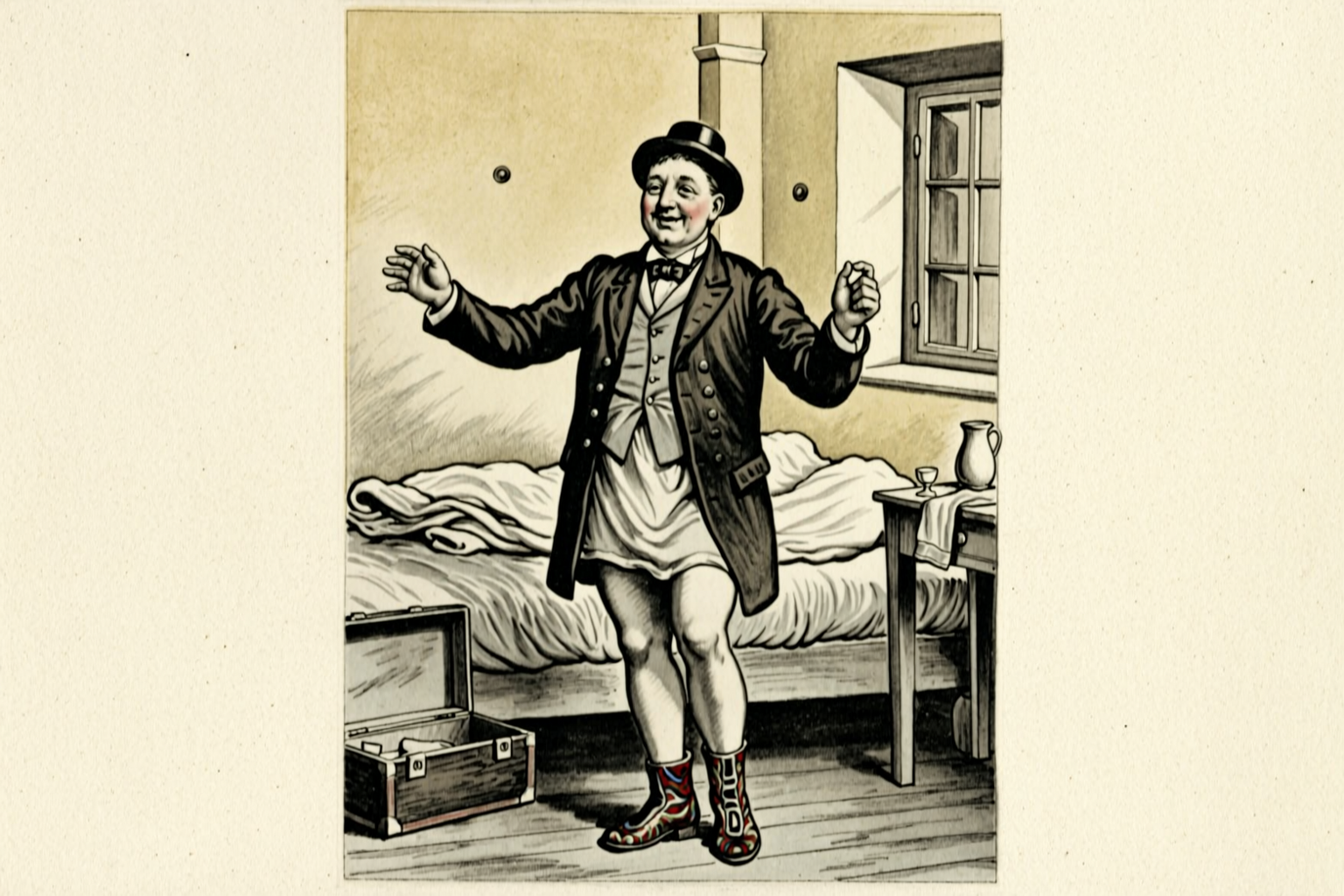
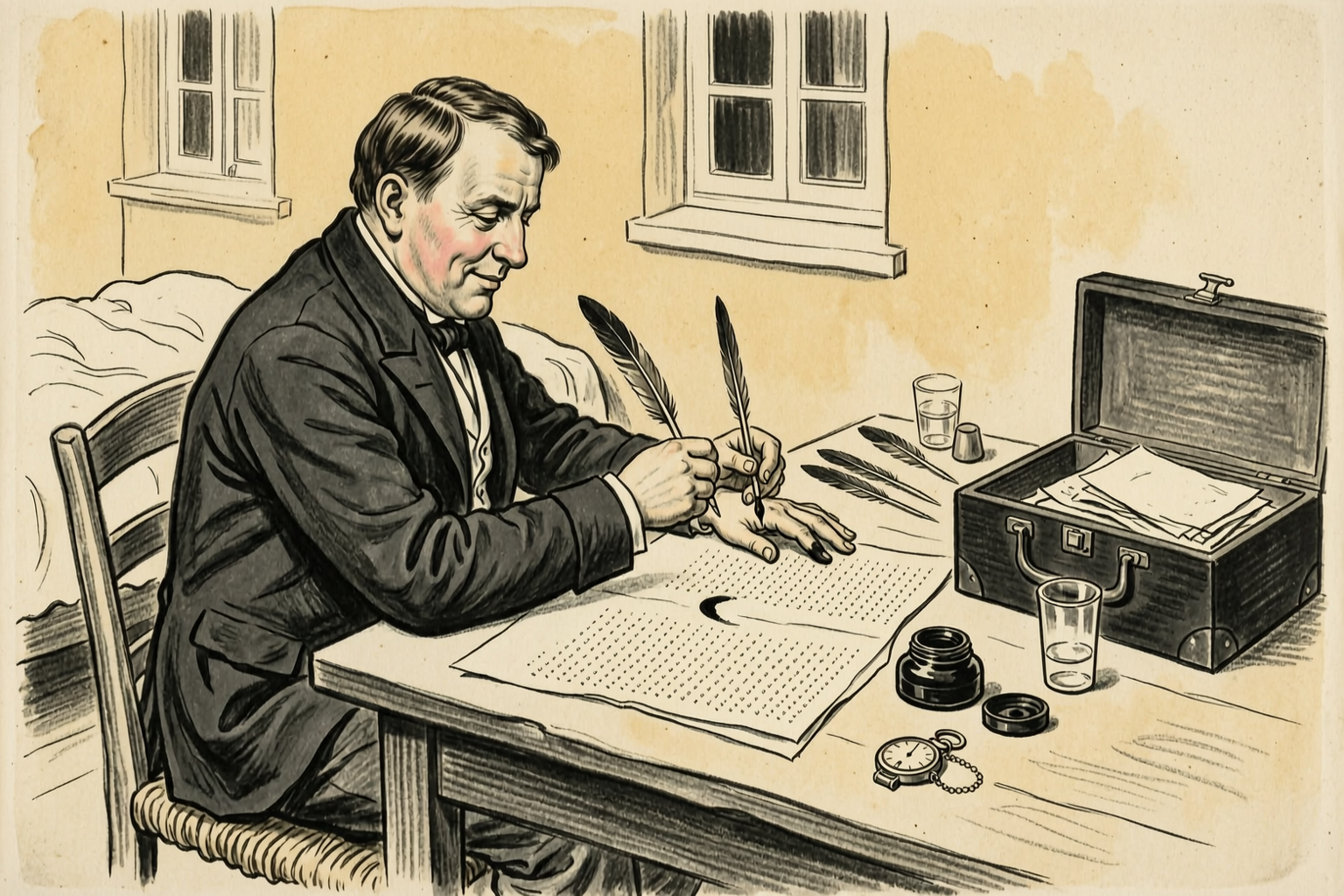
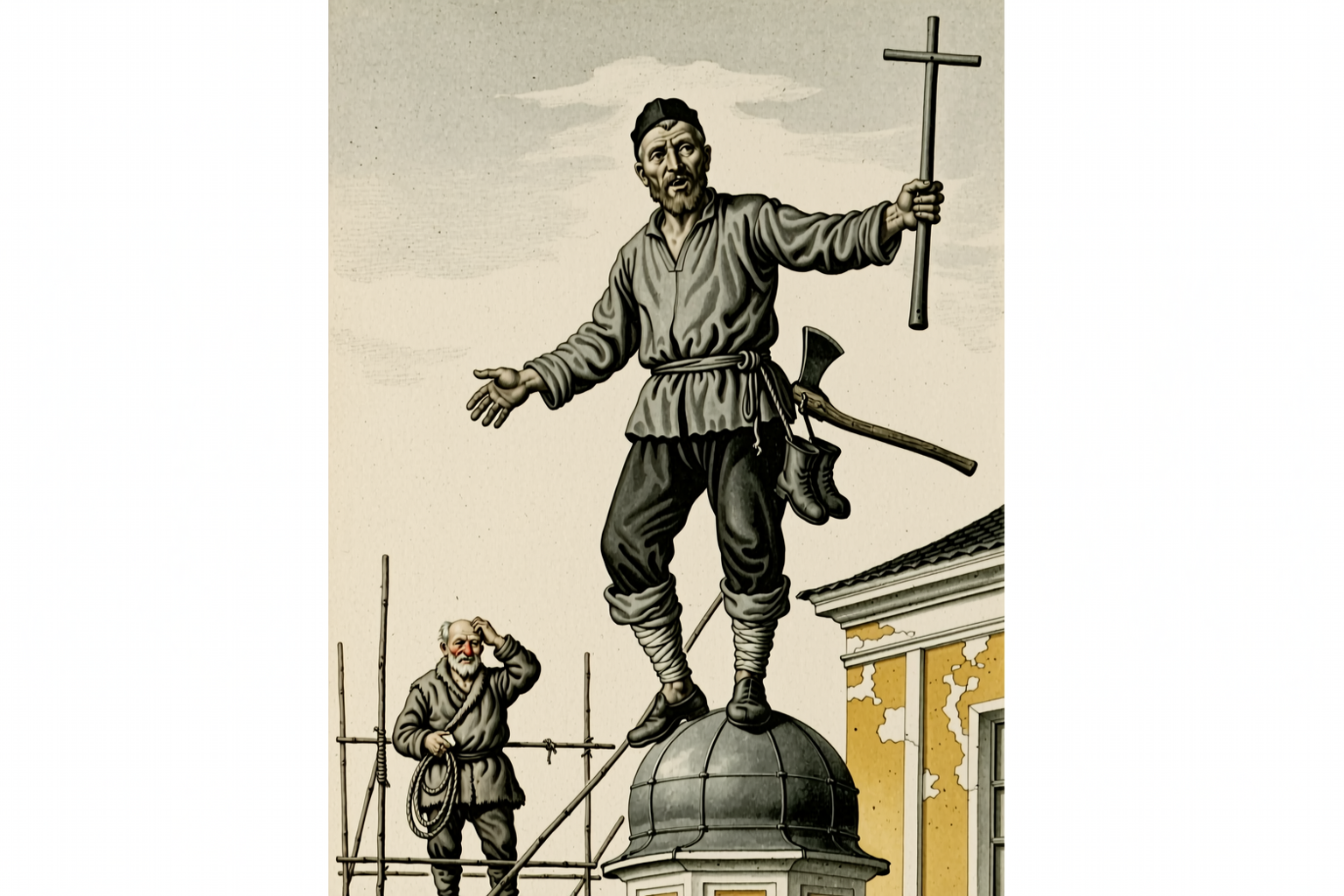
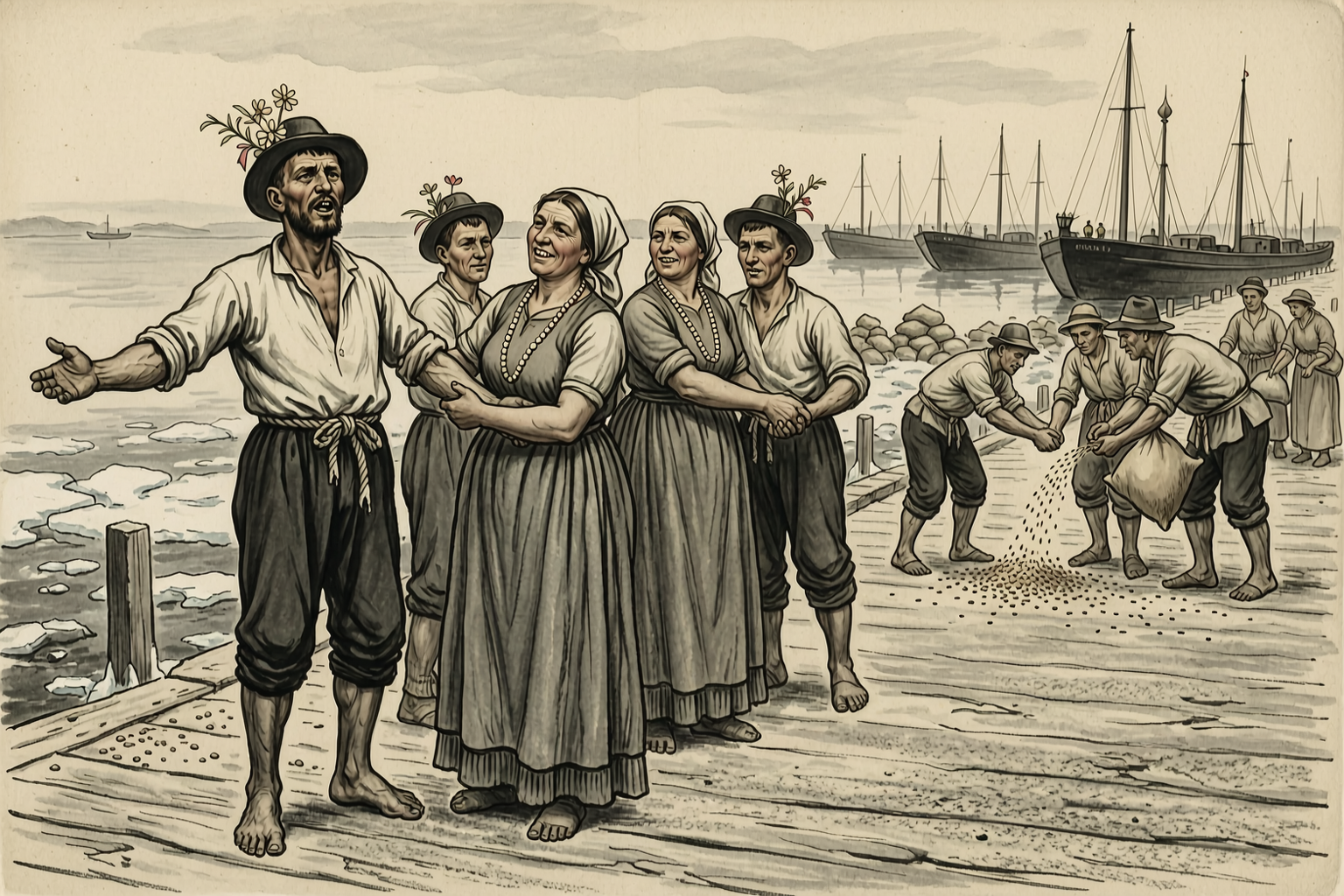
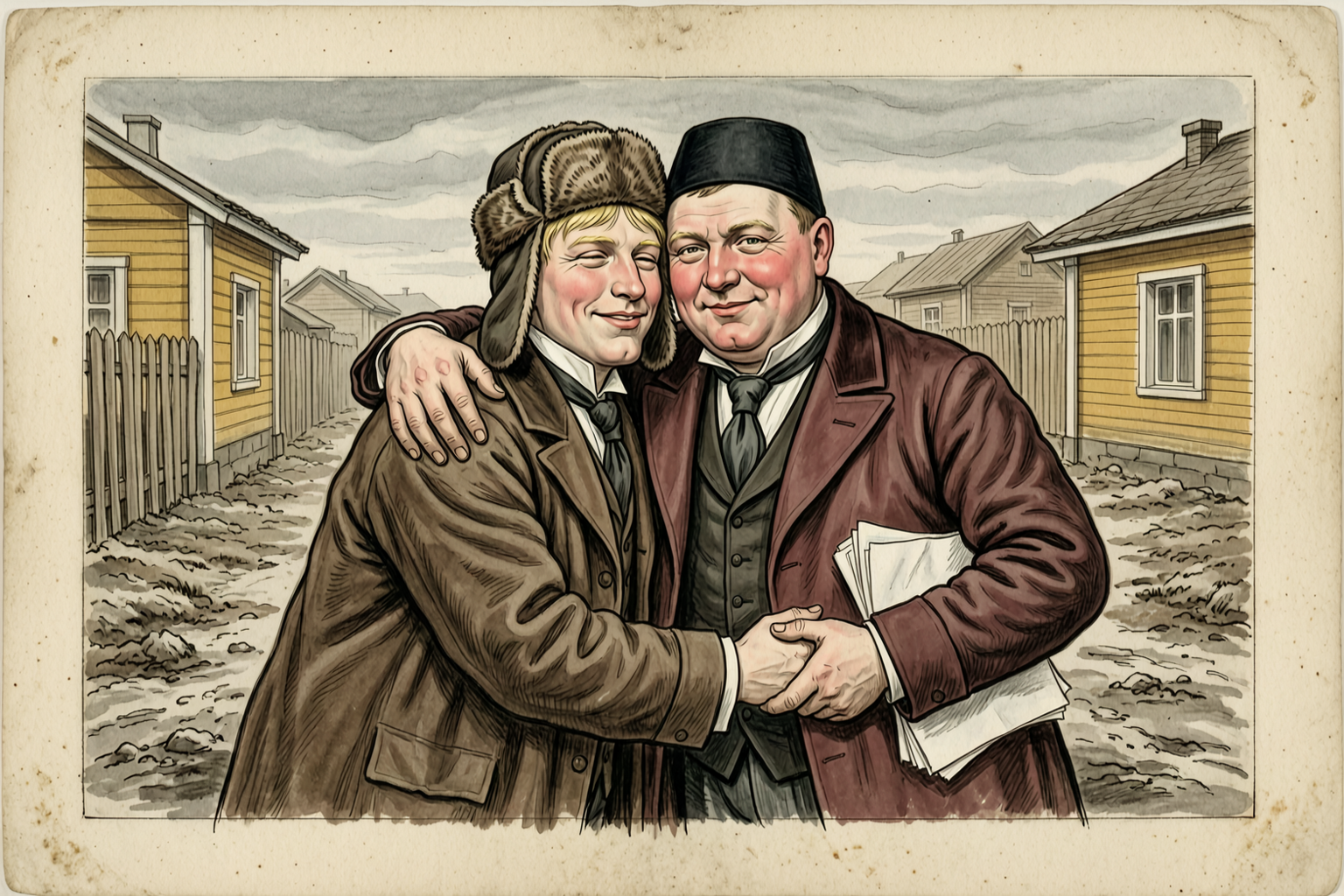
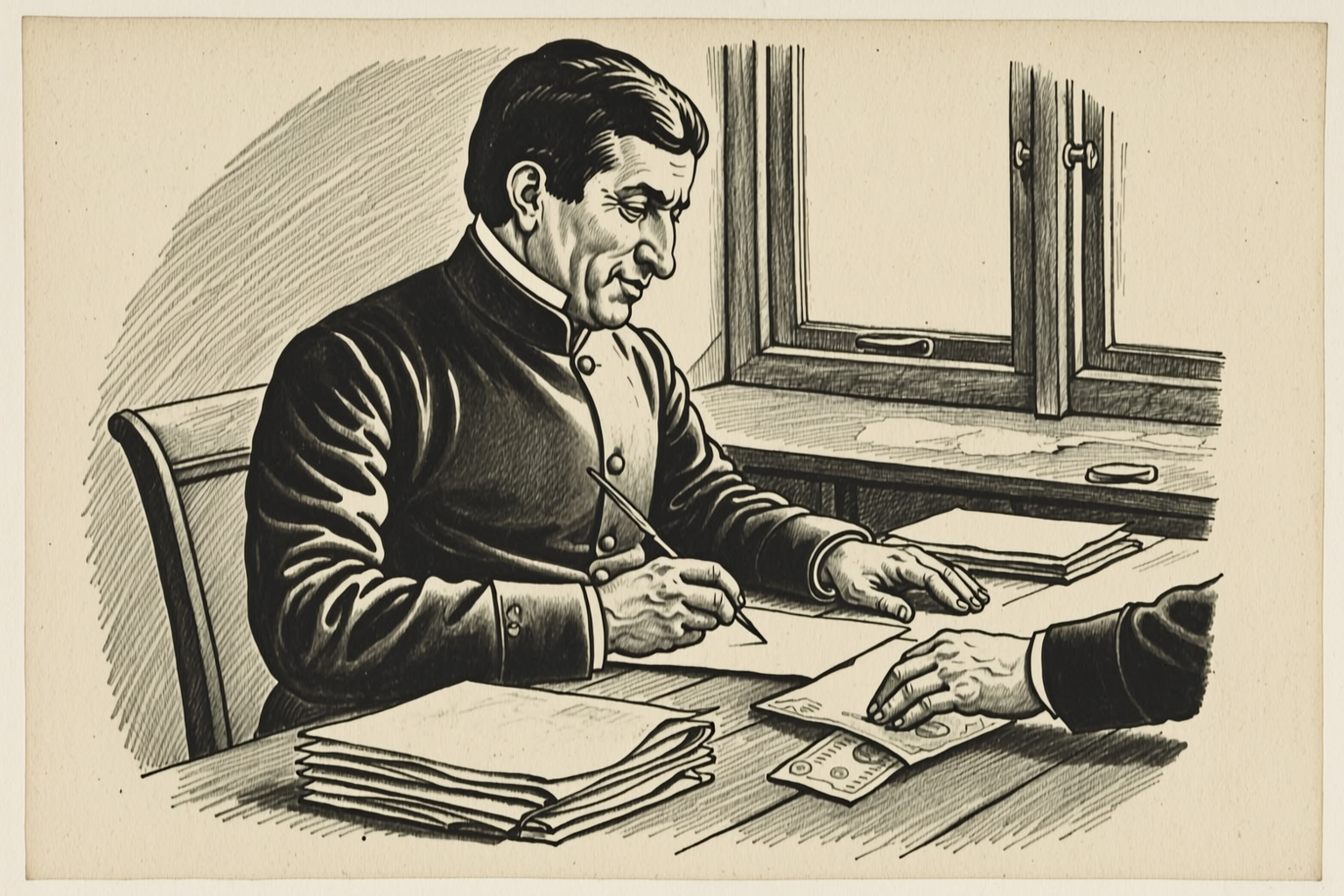
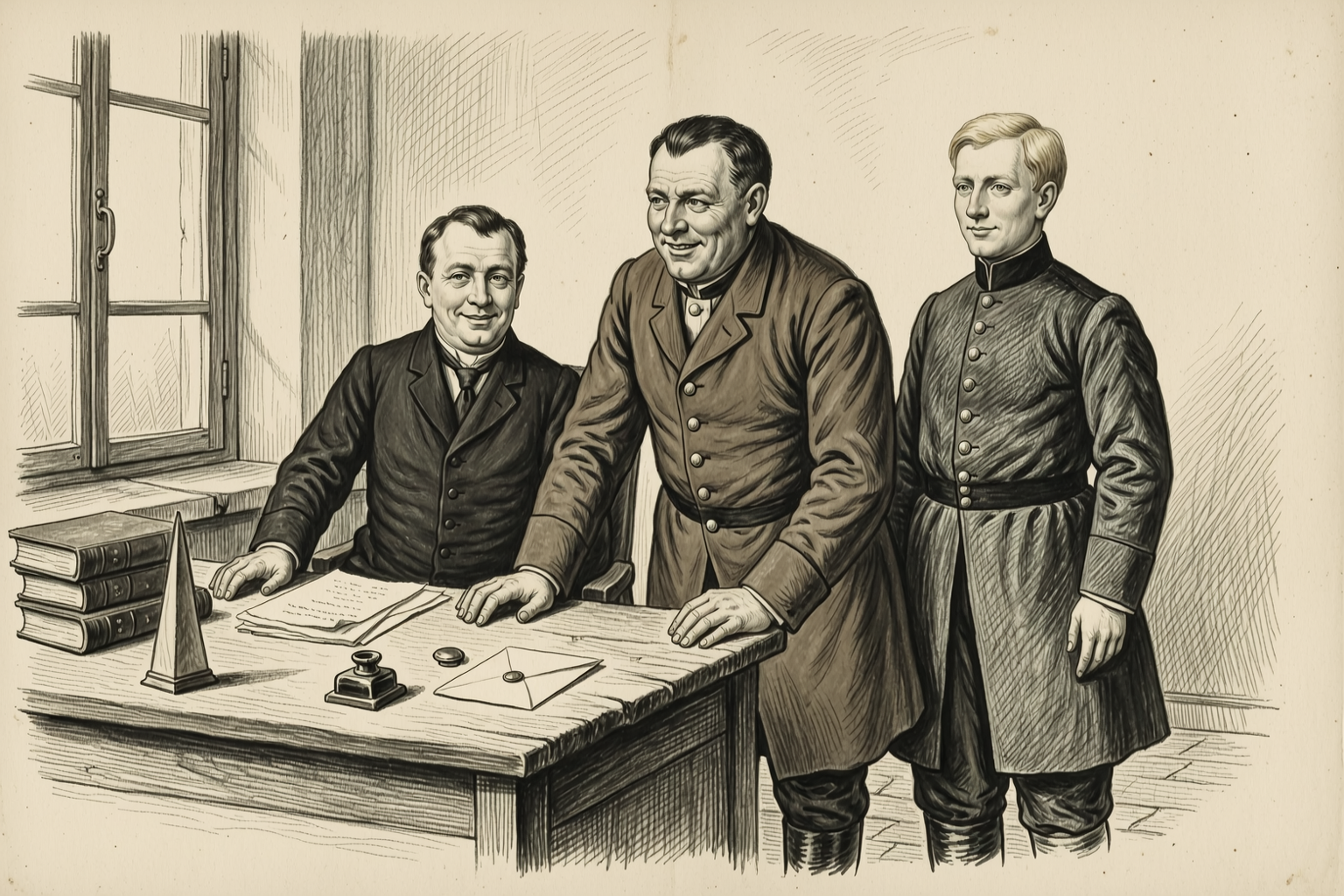
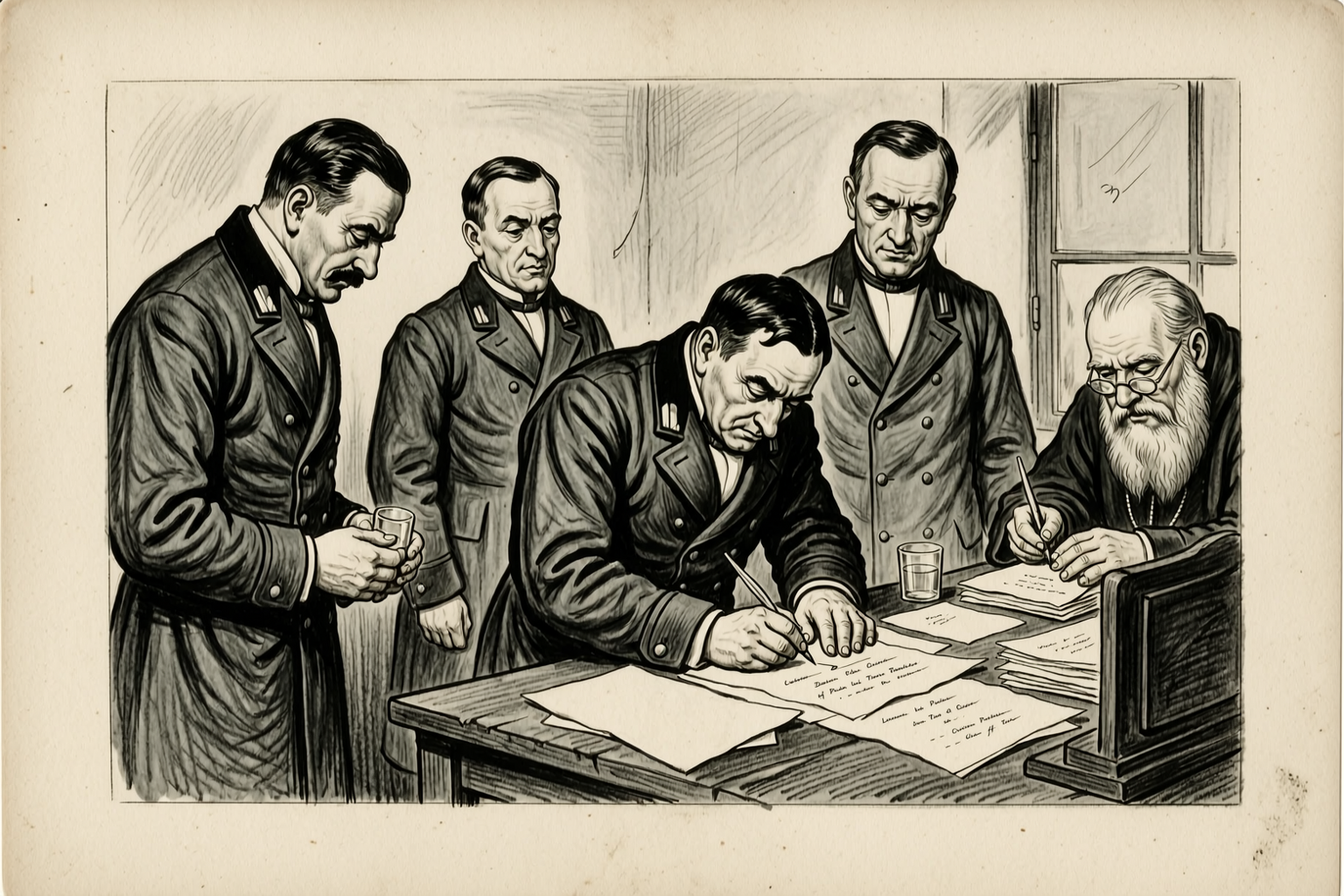
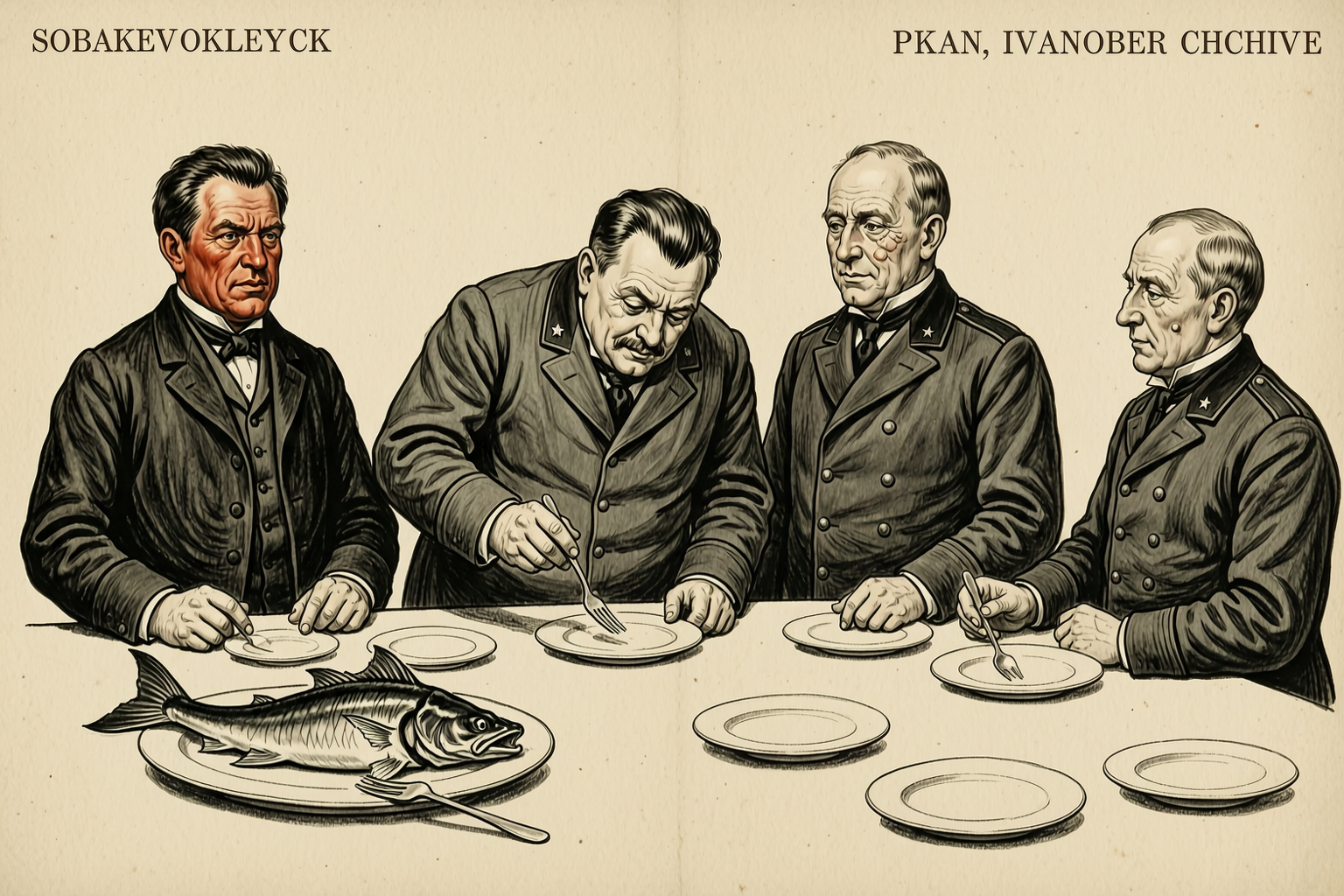
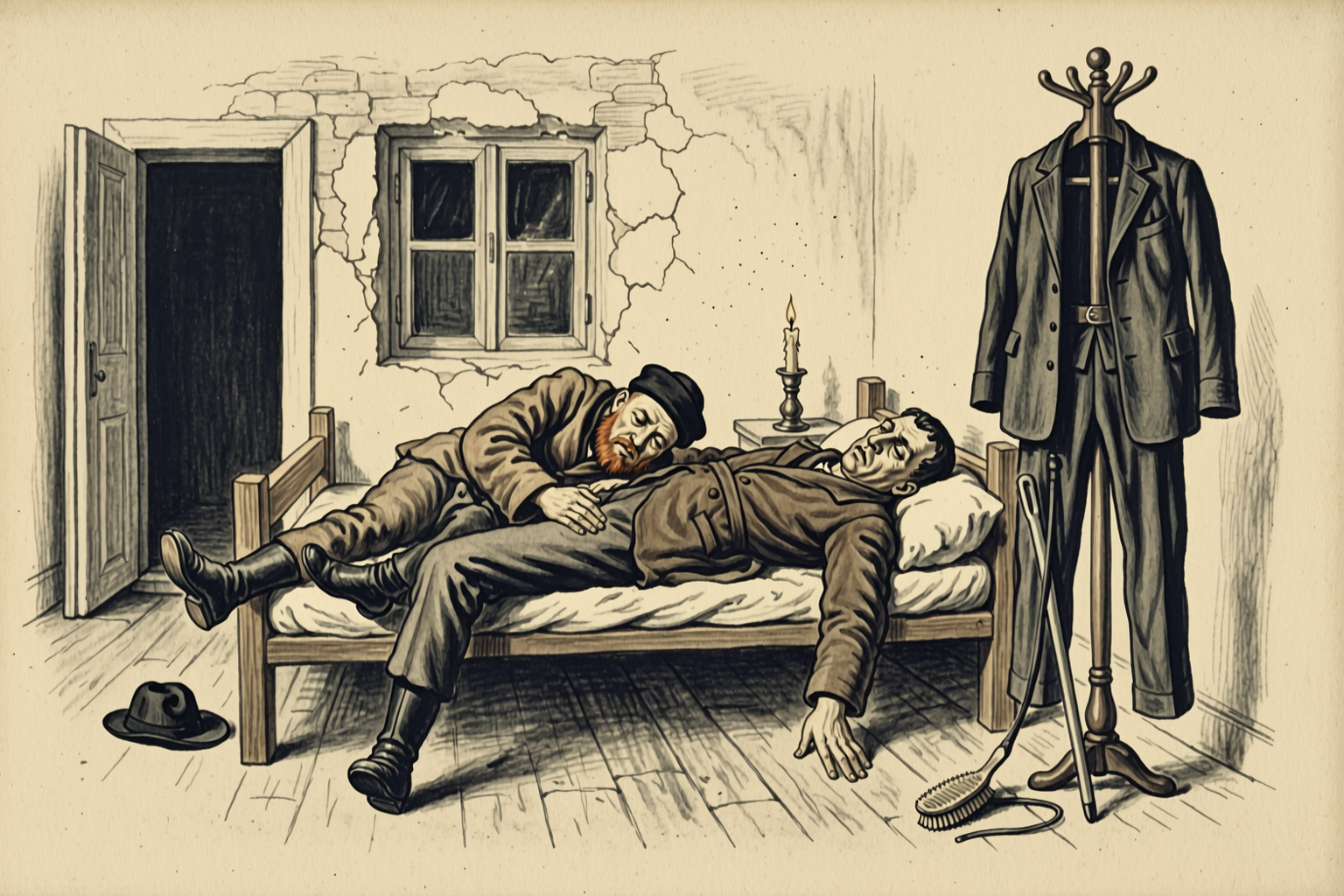
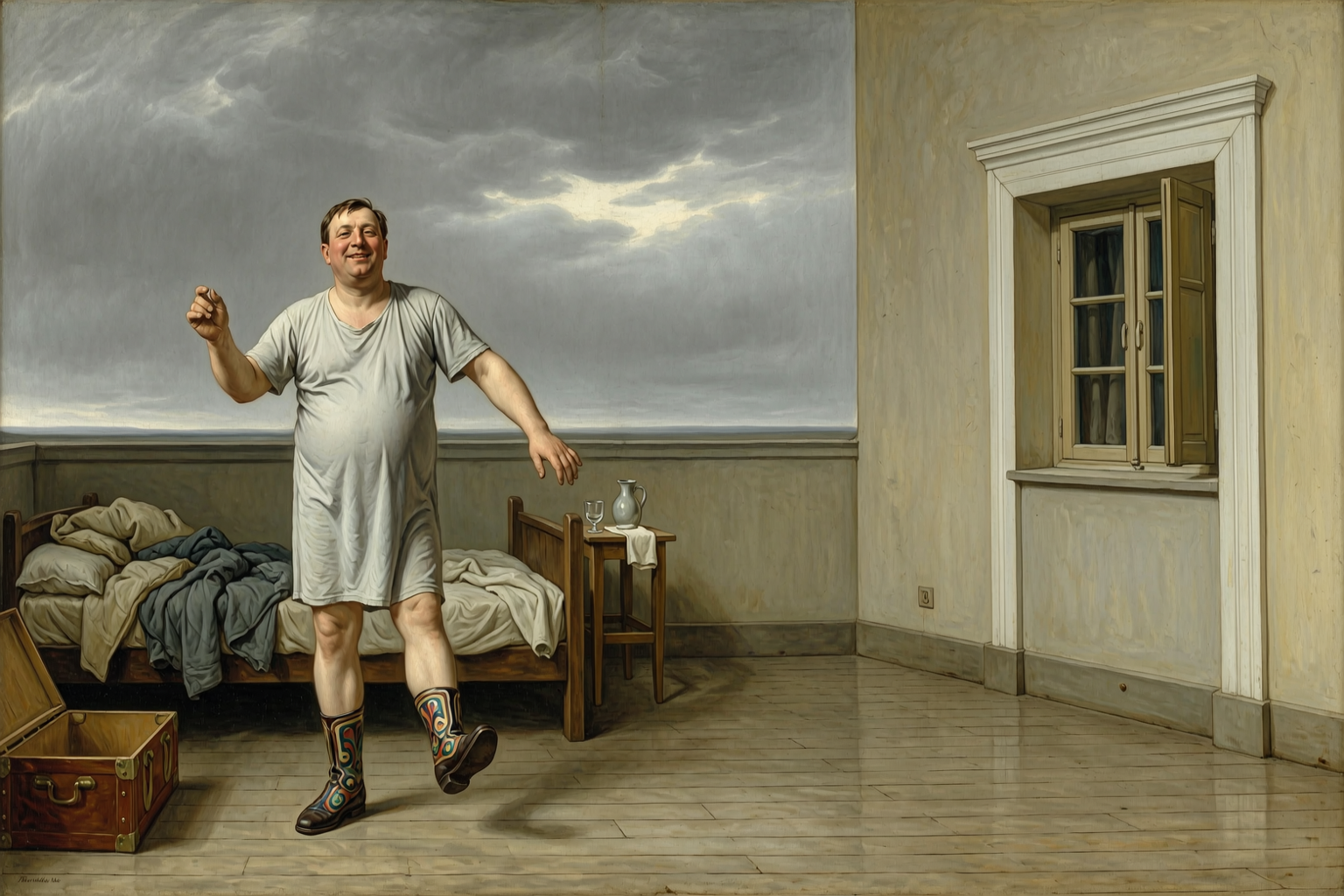
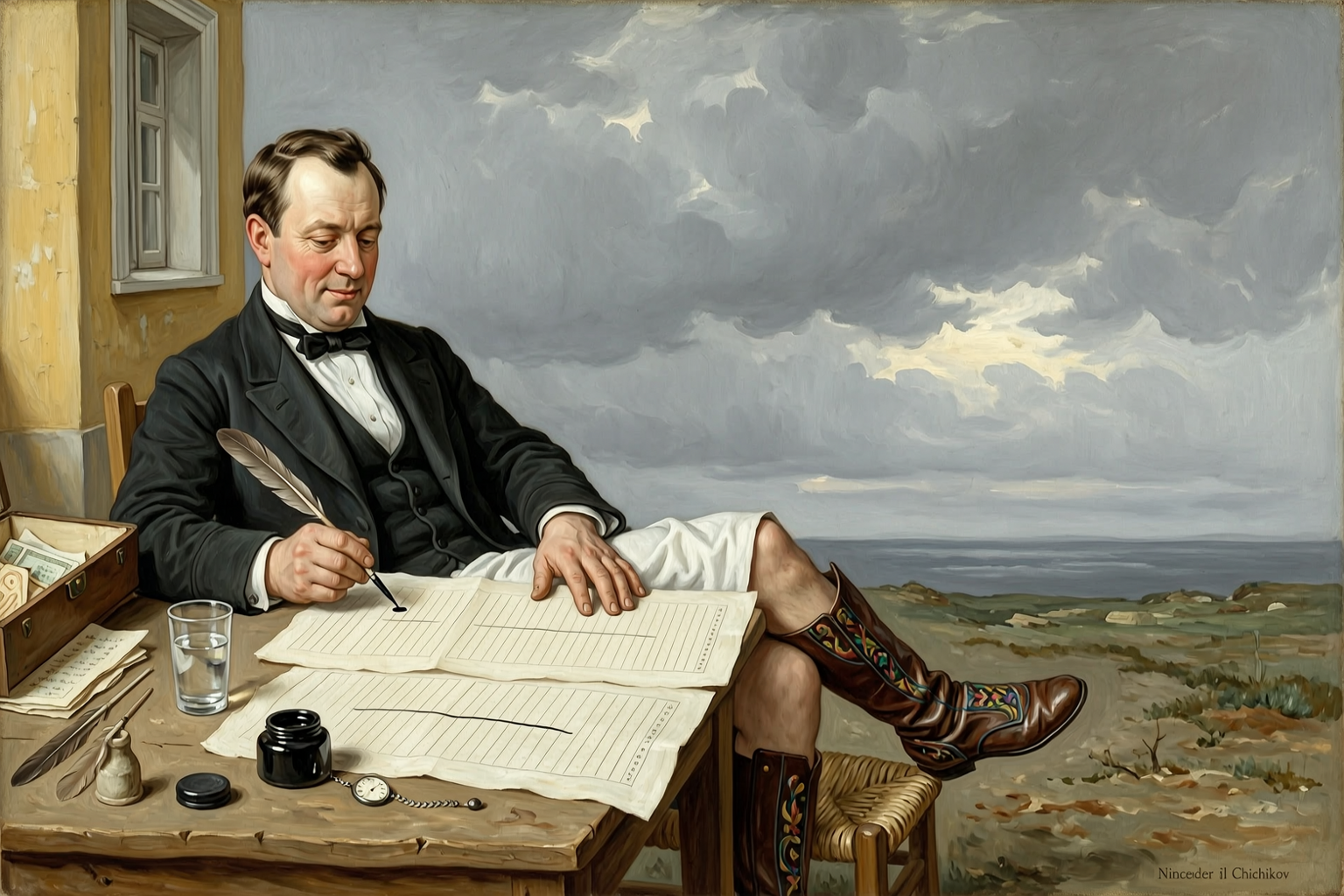
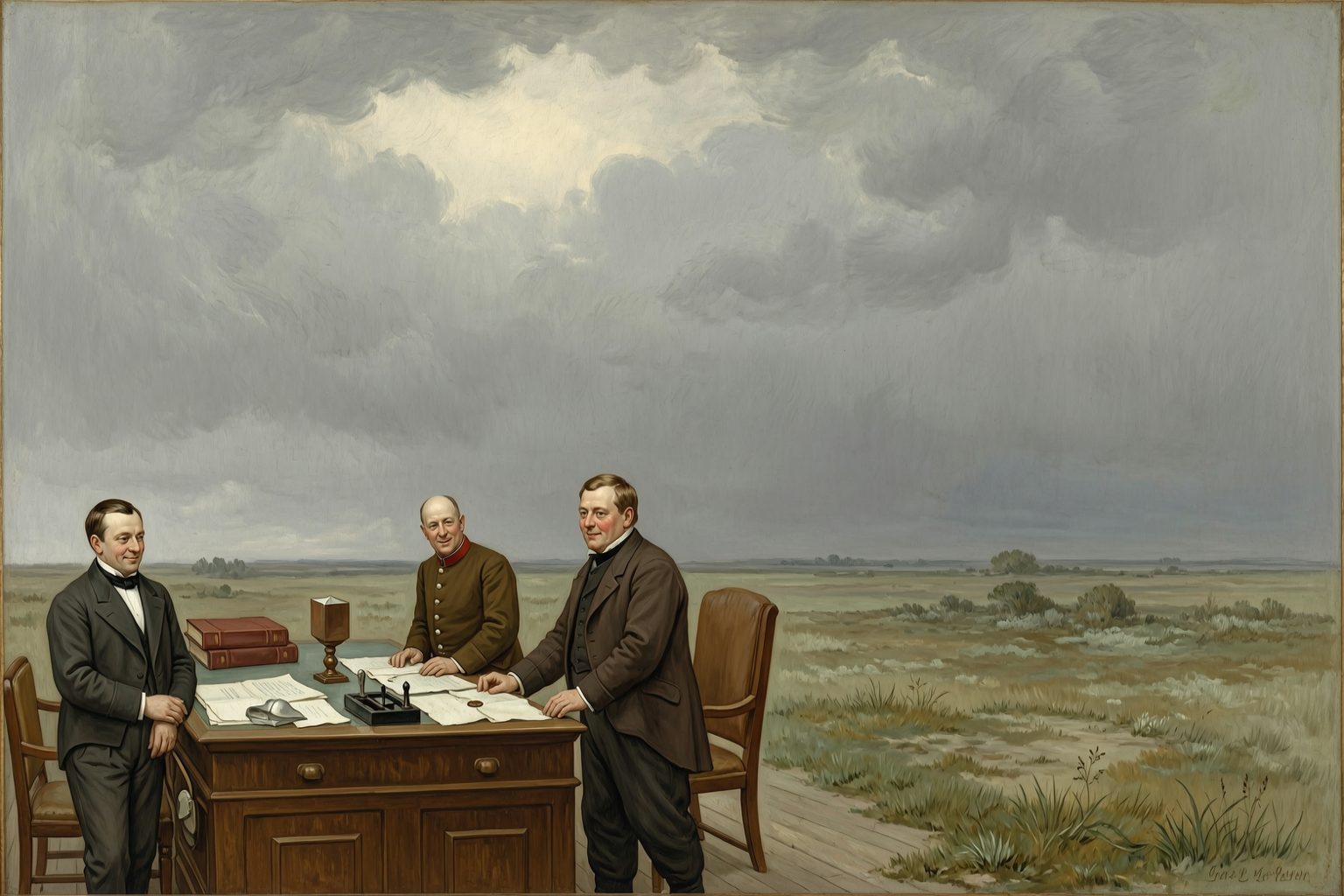
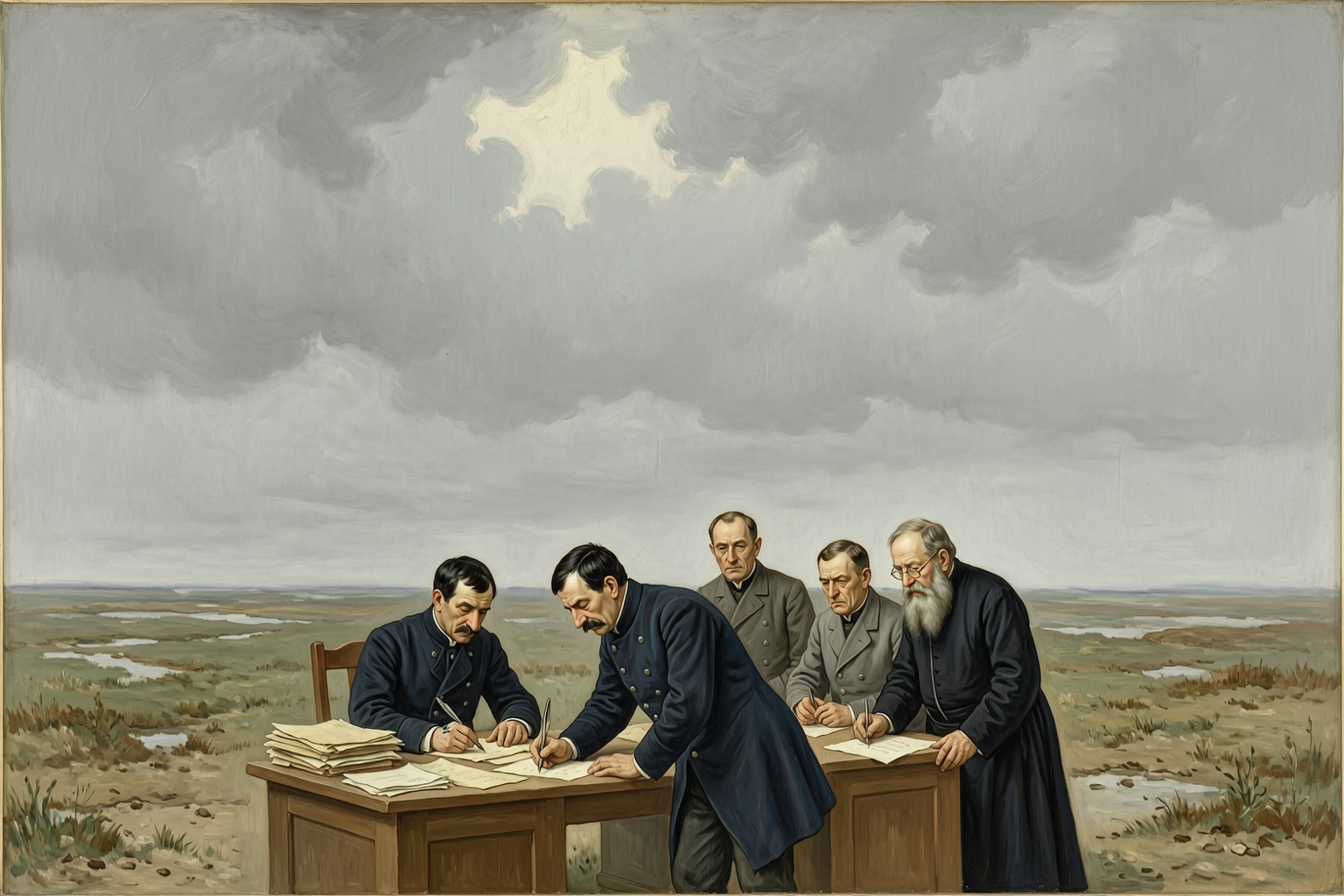
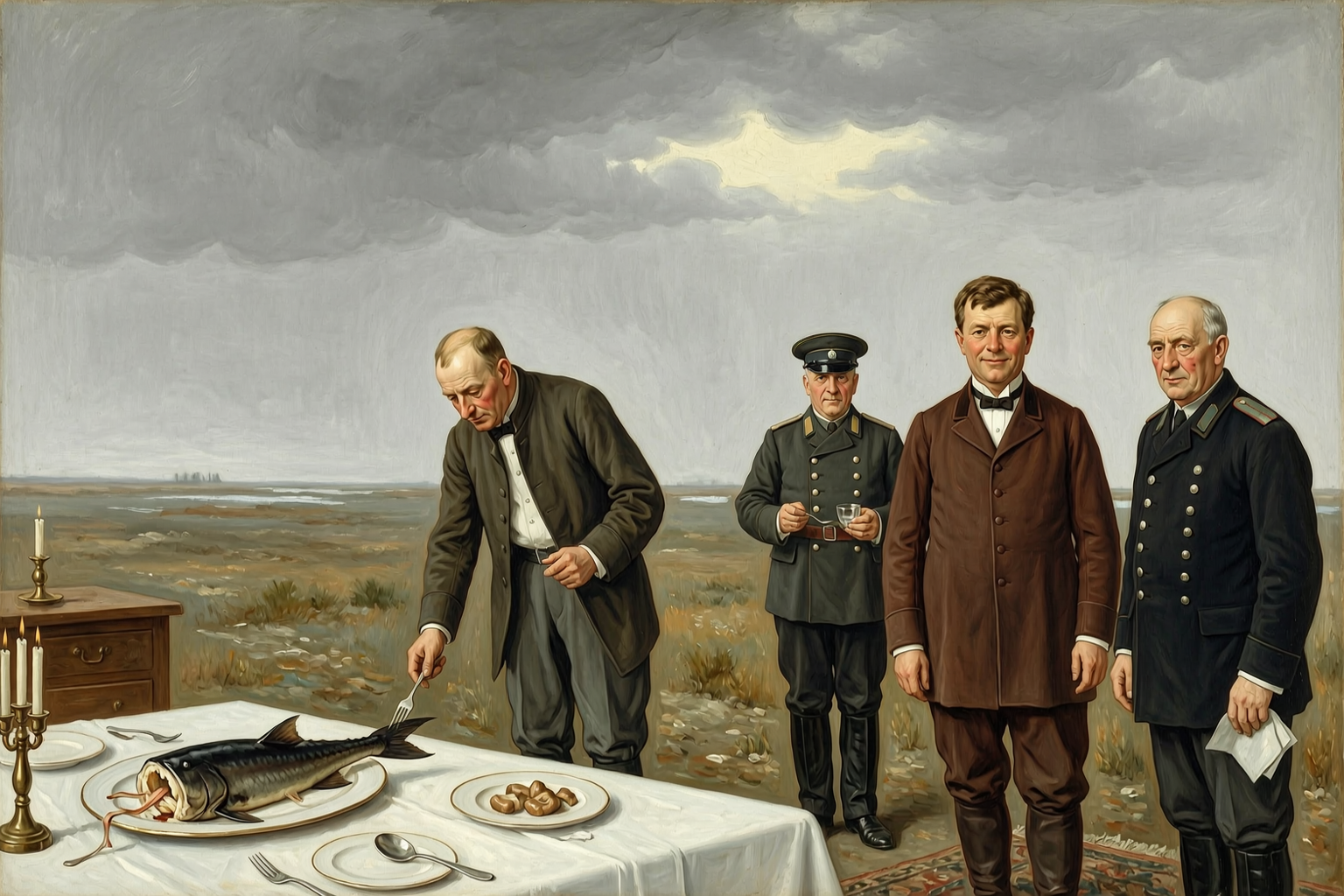
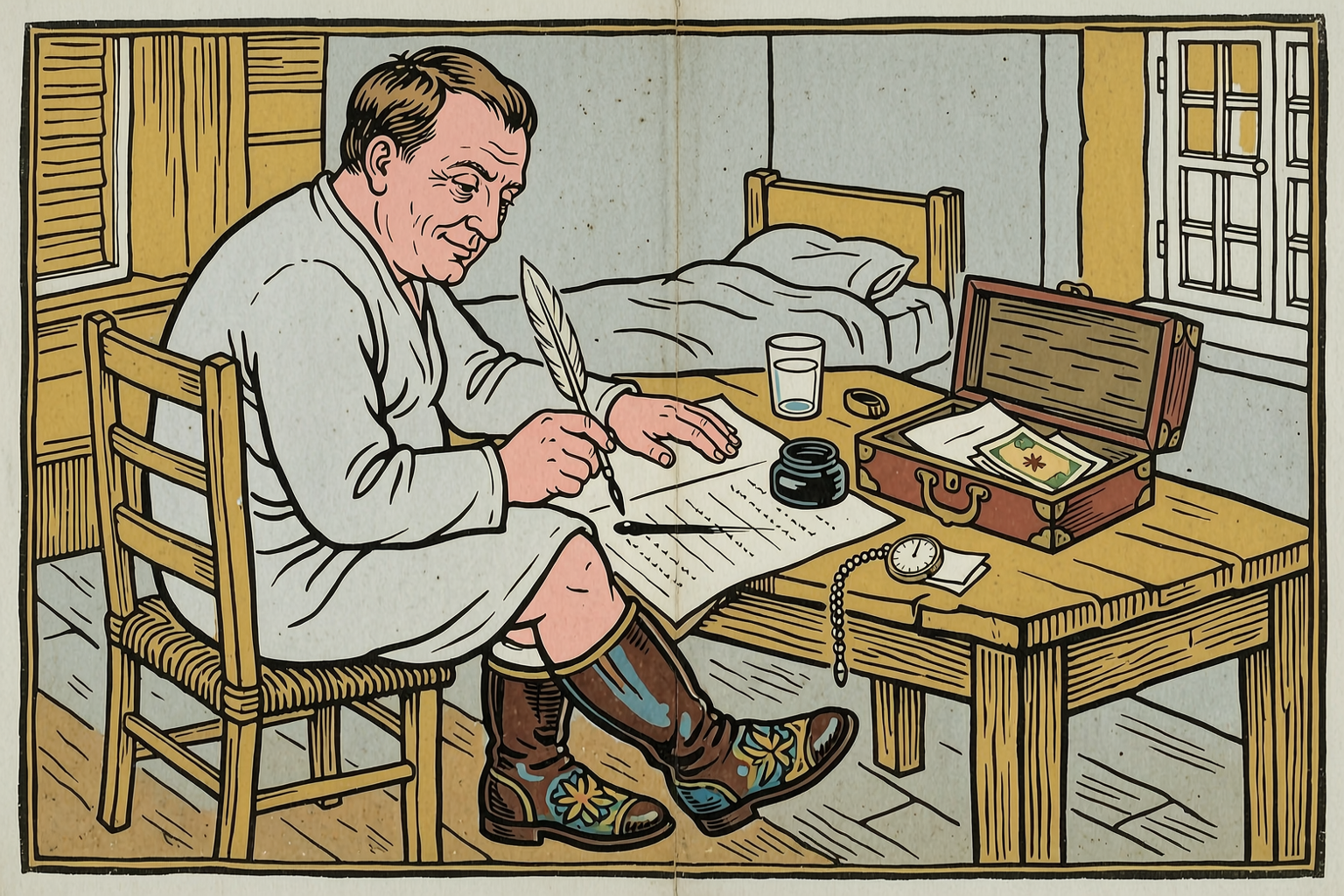
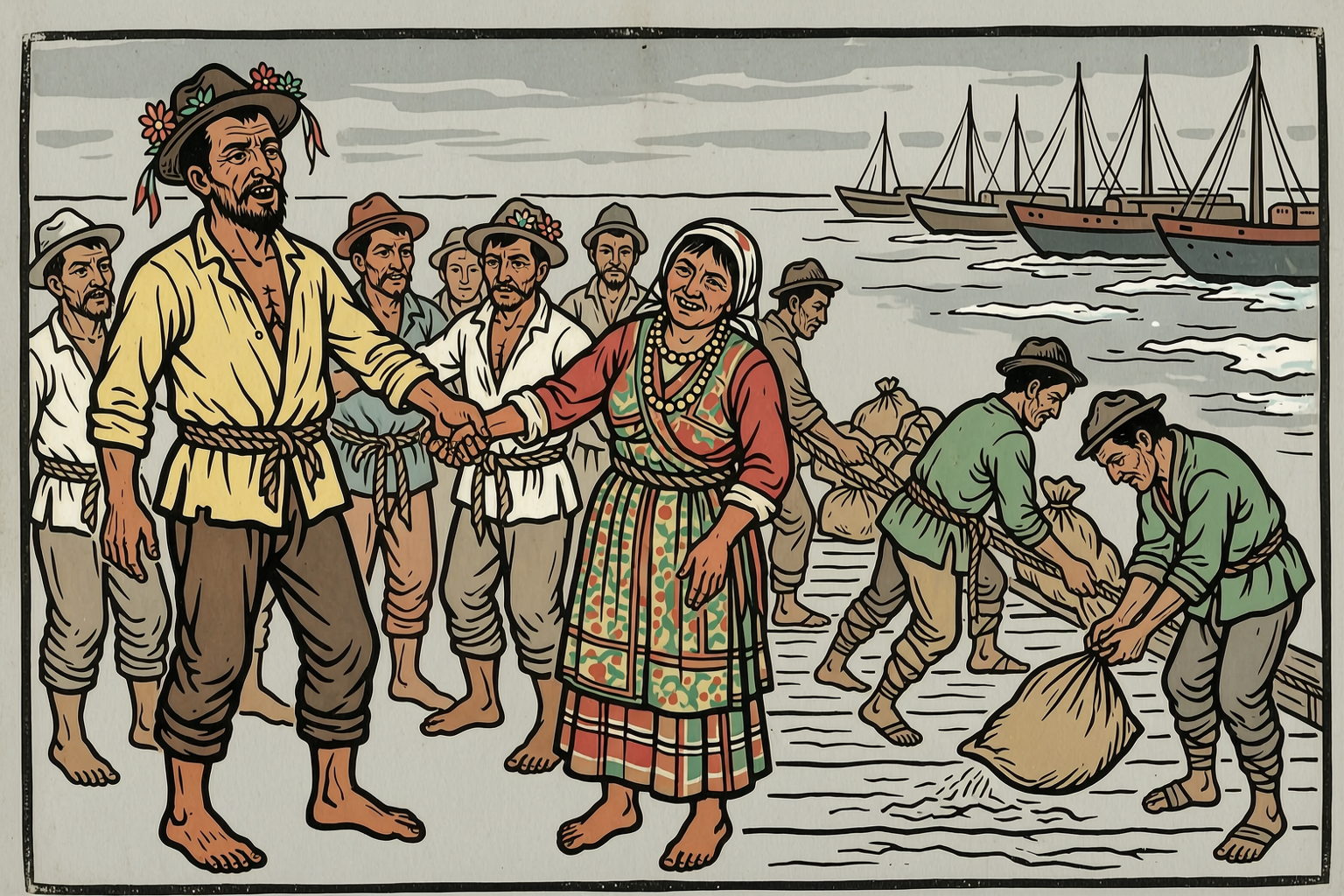
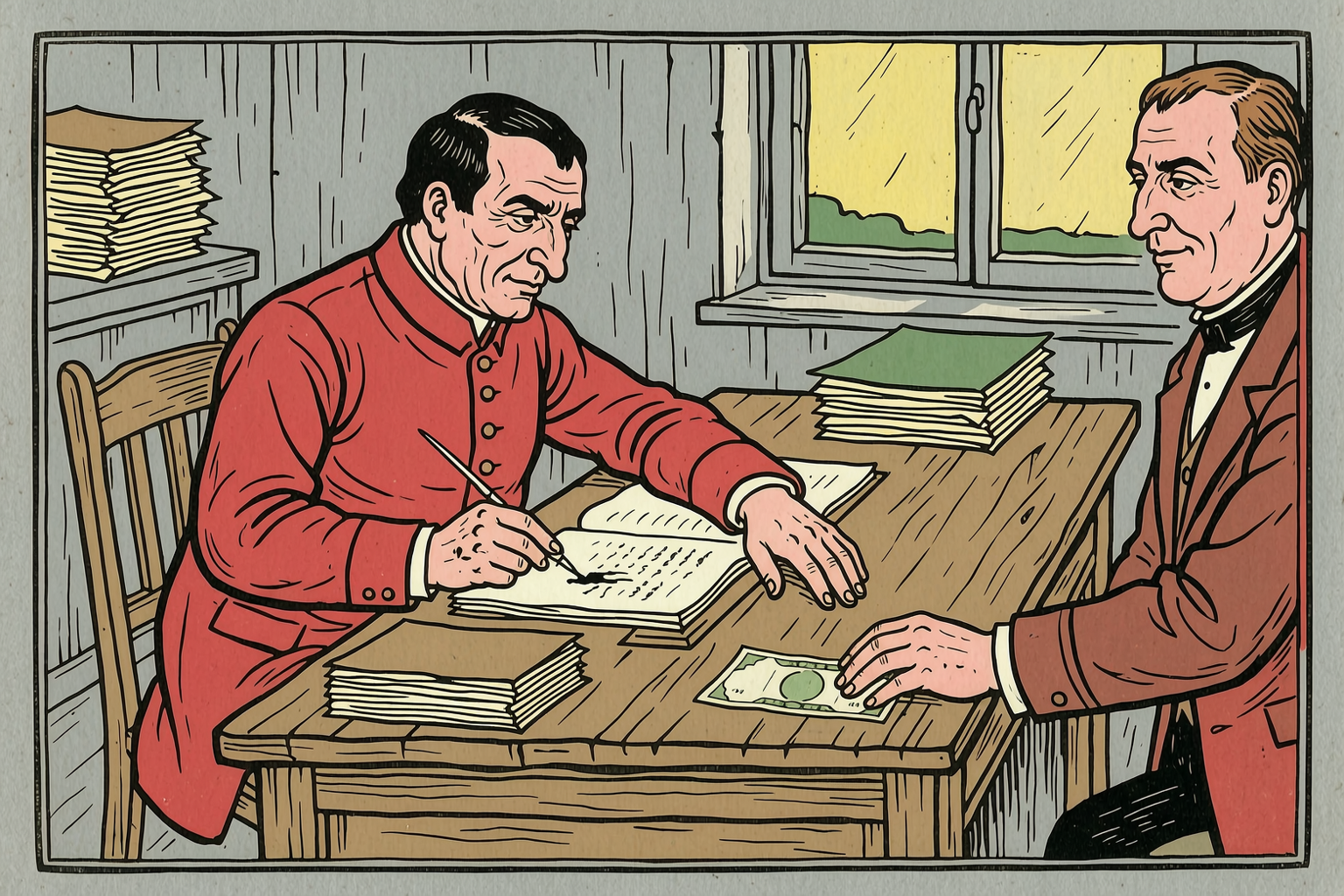
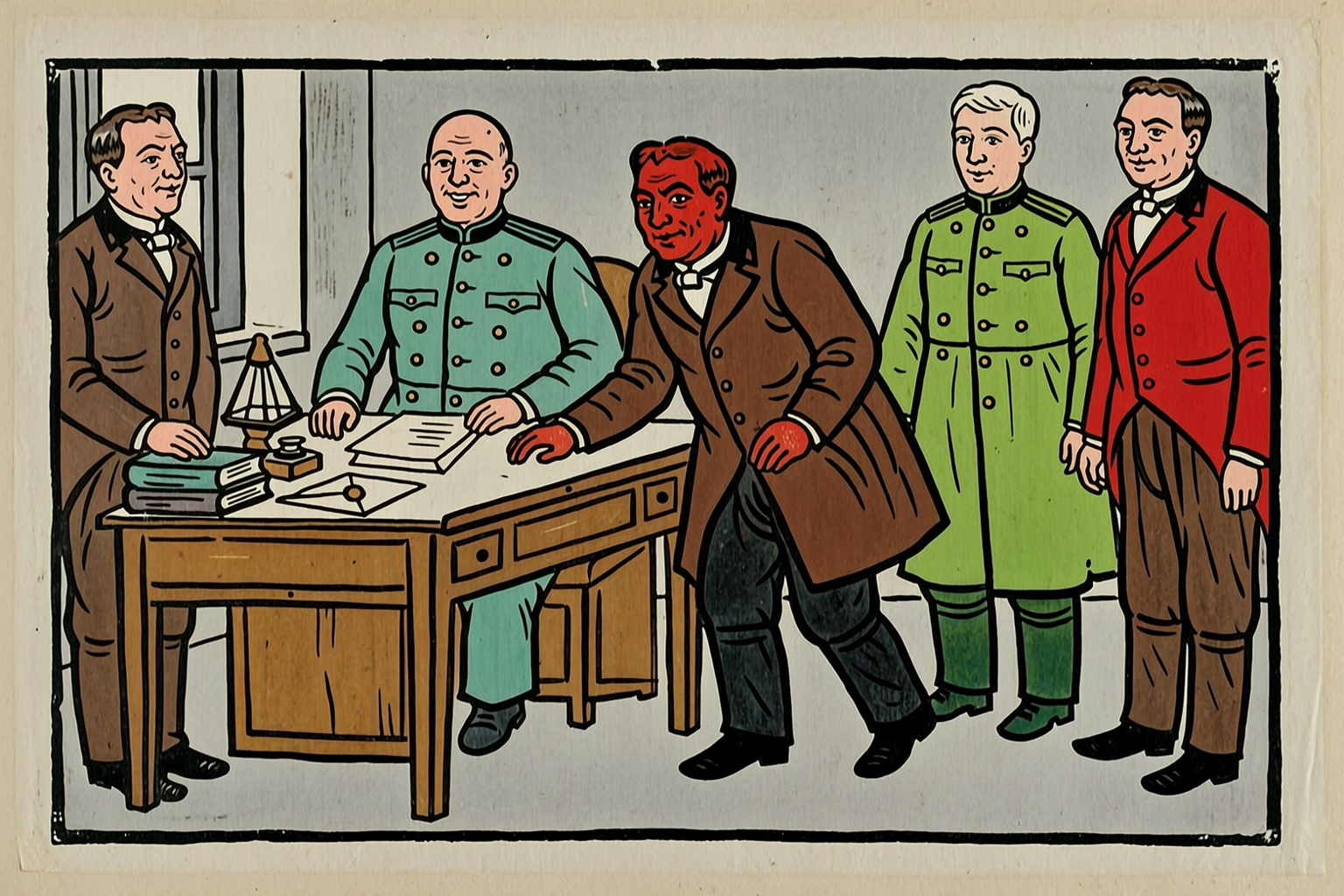
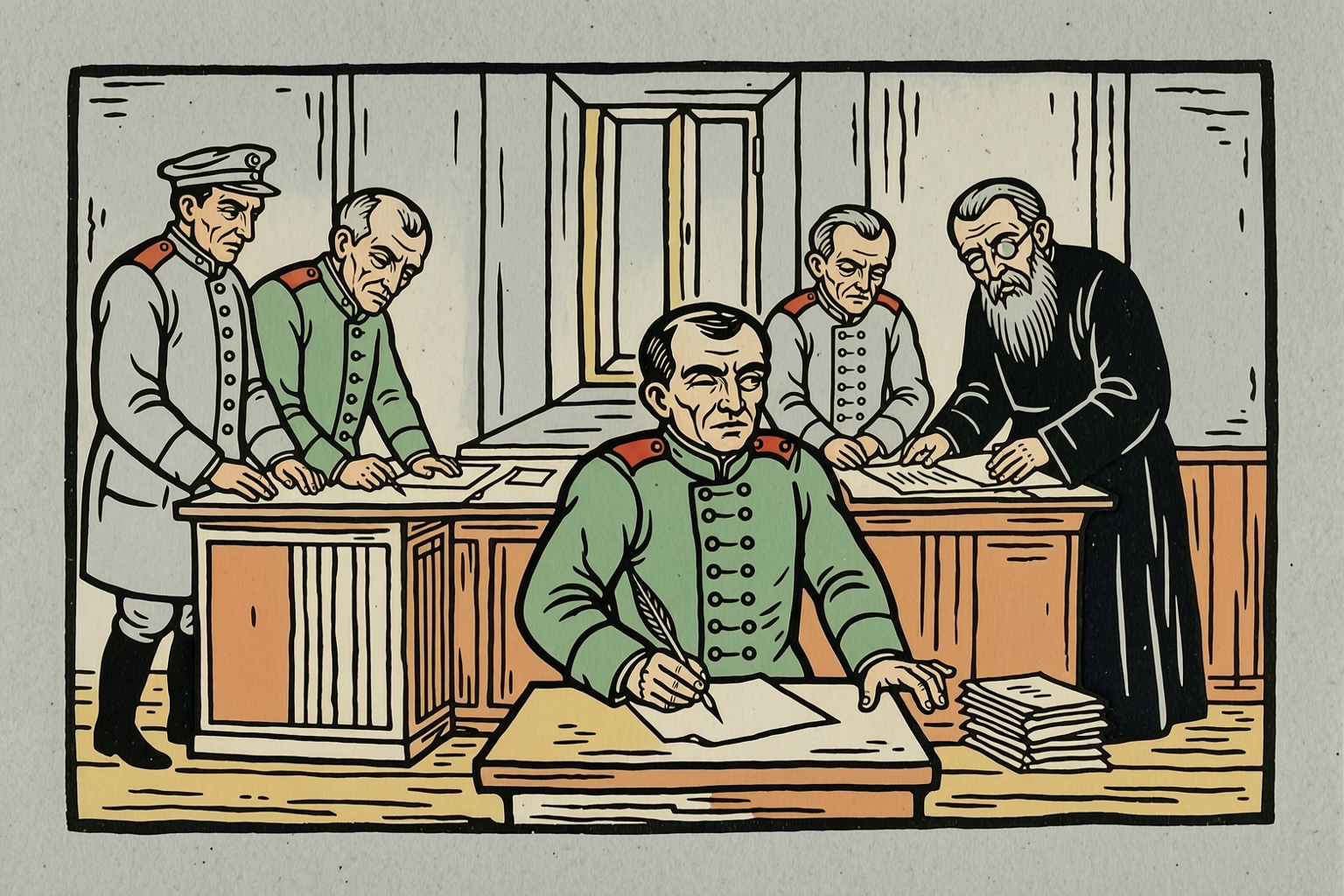
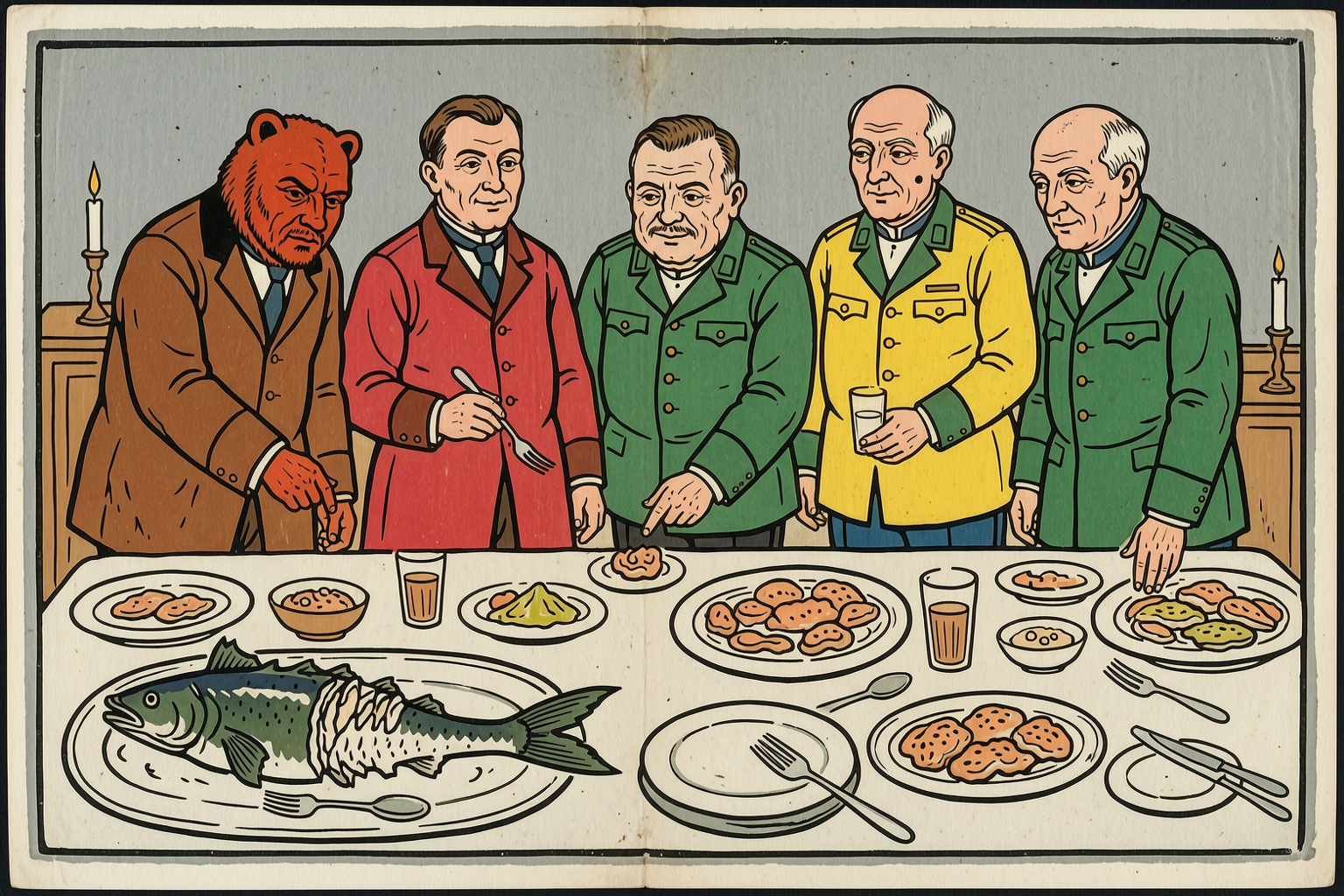
The narrator contrasts the writer who shows humanity in splendour with the one who sets forth "the dreadful, appalling morass of trifles that mires our lives", and claims the second, harder lot. Chichikov wakes owning almost four hundred souls, copies the deeds himself to save clerks' fees, then reads the names — Pyotr Savelyev Neuvazhay-Koryto, Stepan Probka the carpenter, Abakum Fyrov among the barge-haulers — inventing whole lives and deaths for each. He spots Yelizaveta Vorobey, a woman Sobakevich slipped in with a masculine ending, and strikes her out. At the Civil Chamber he meets Manilov, bribes the jug-snouted Ivan Antonovich, and finds Sobakevich already with the Chairman. The deeds are executed; Chichikov claims he is resettling the peasants in Kherson. Sobakevich blandly insists the dead Mikheyev is alive and well. The company adjourns to the Chief of Police's, where Sobakevich eats an entire sturgeon alone and the town toasts the new Kherson landowner.
Analysis
The chapter where the dead acquire lives. Reading his own list, Chichikov invents biographies for names he bought as abstractions, and the novel briefly becomes the elegy it keeps refusing to be. Then the Chamber and the sturgeon restore the comedy, and the swindle is complete — the high-water mark before the fall.
Plates
Illustration style
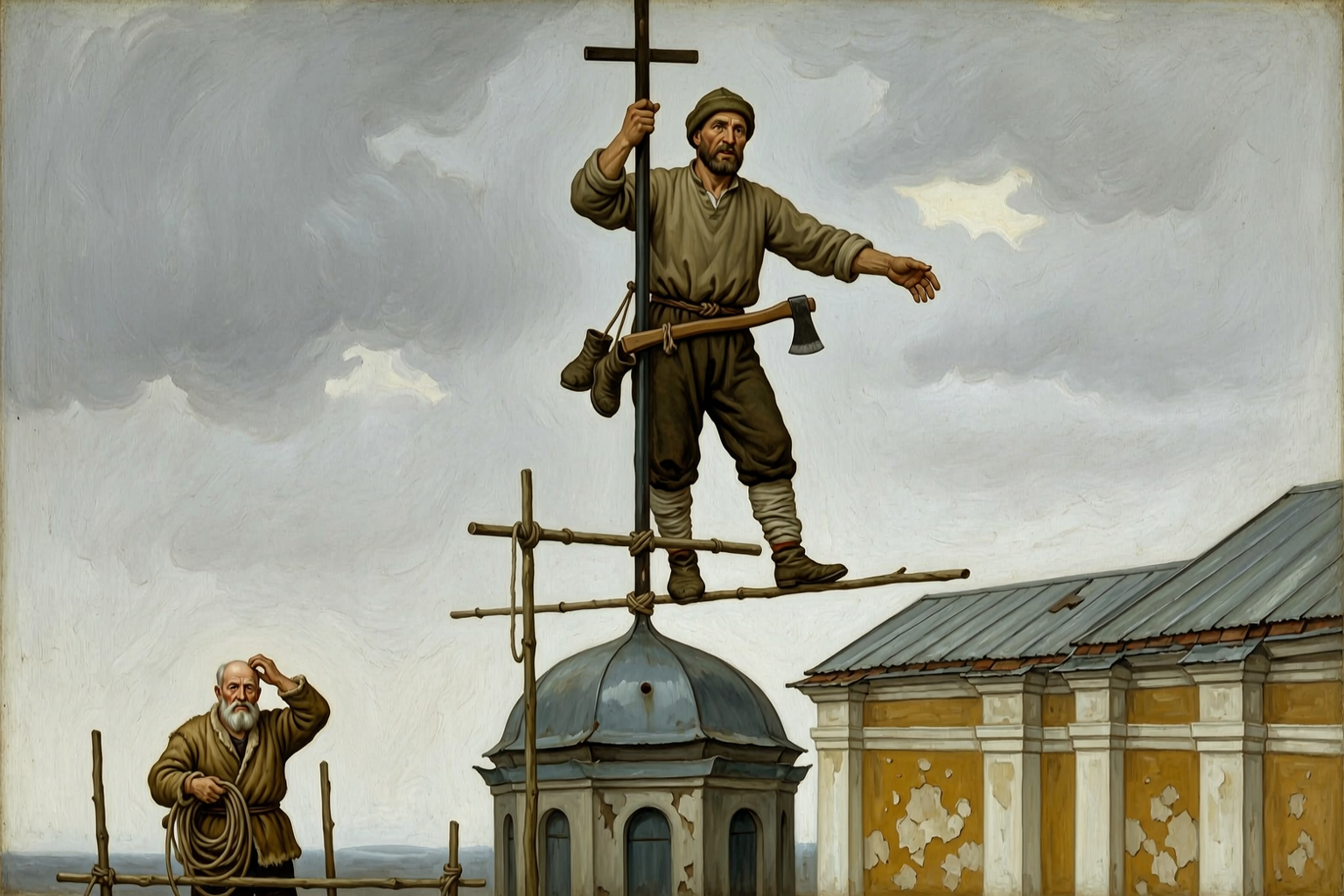
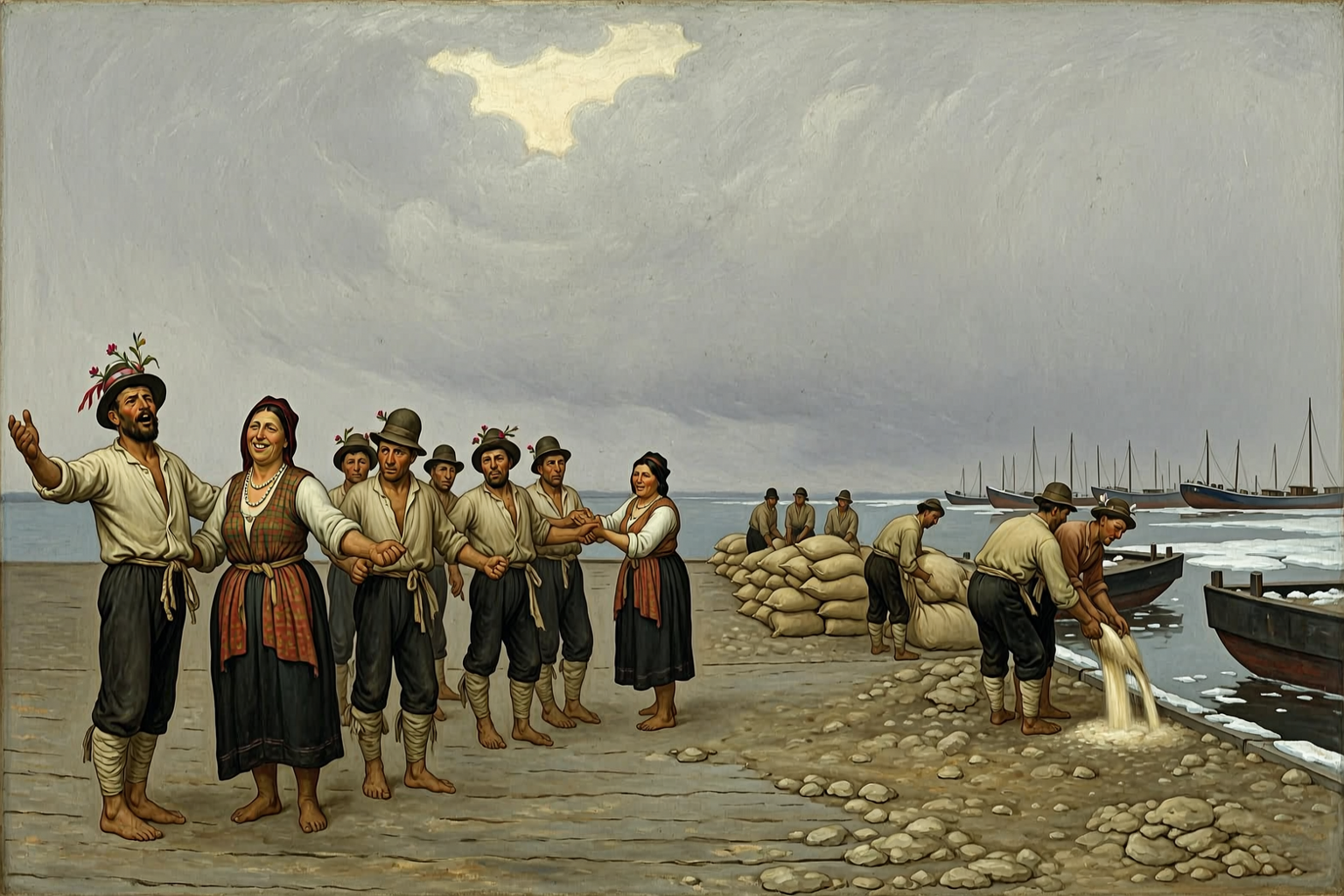
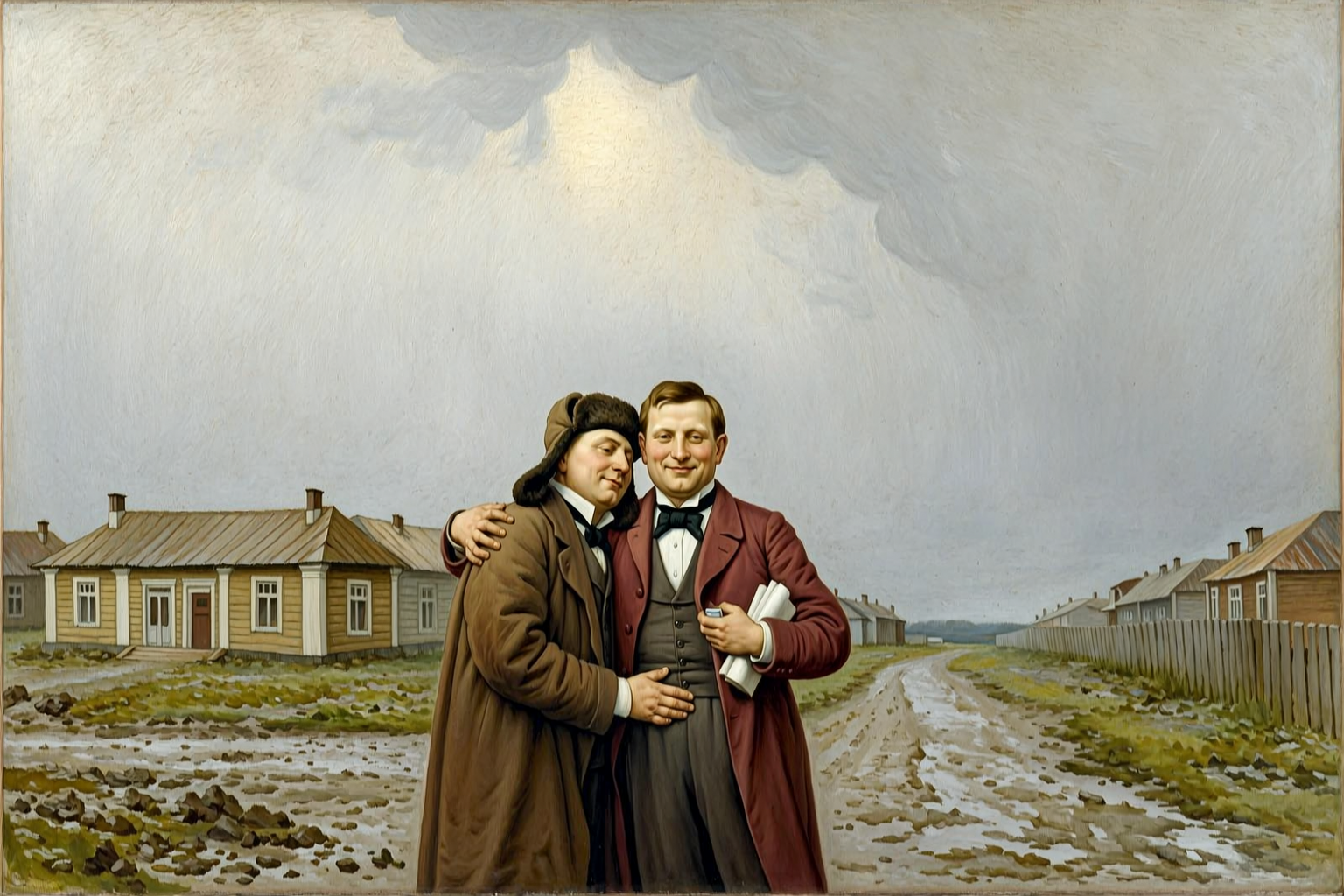
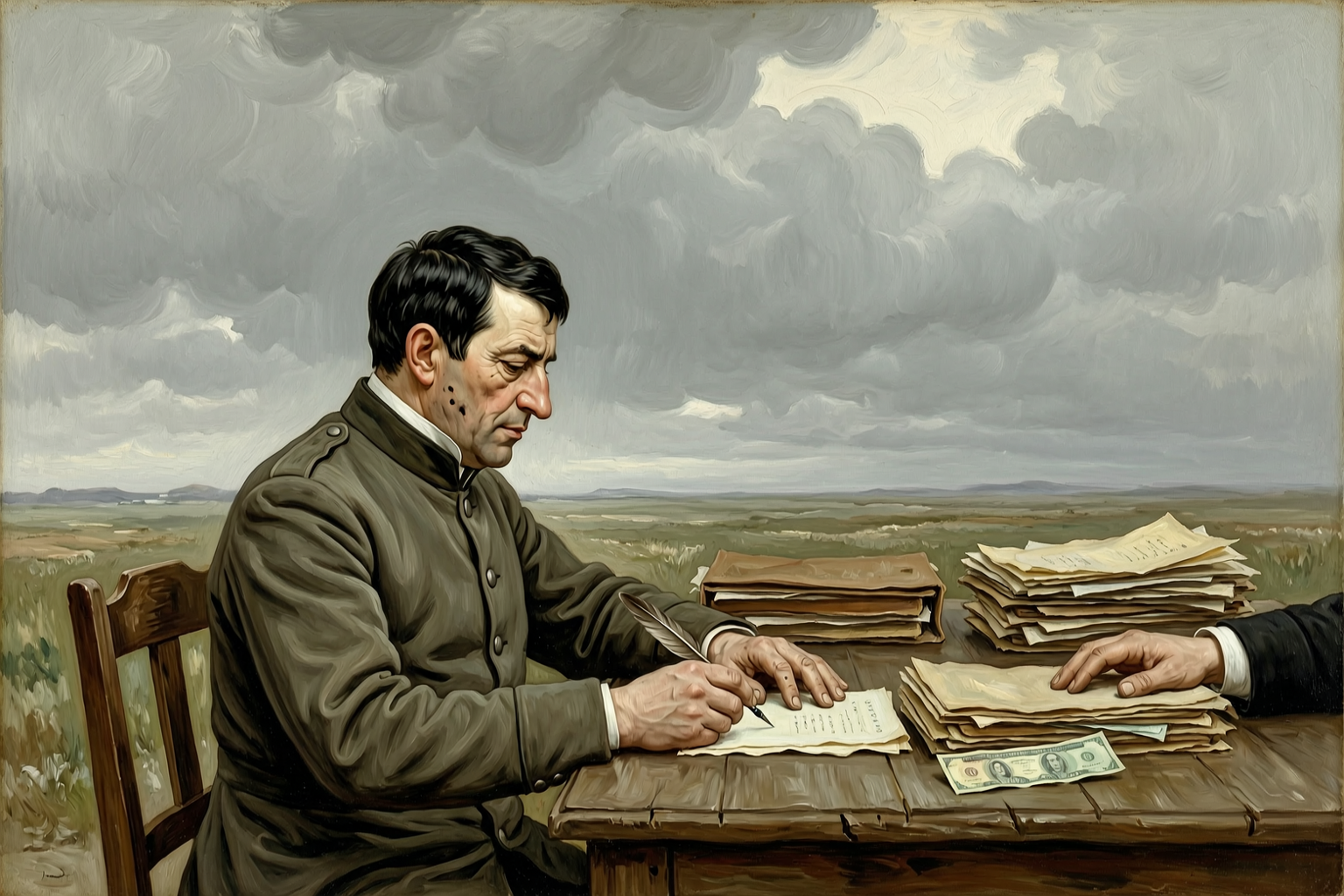
In the structure
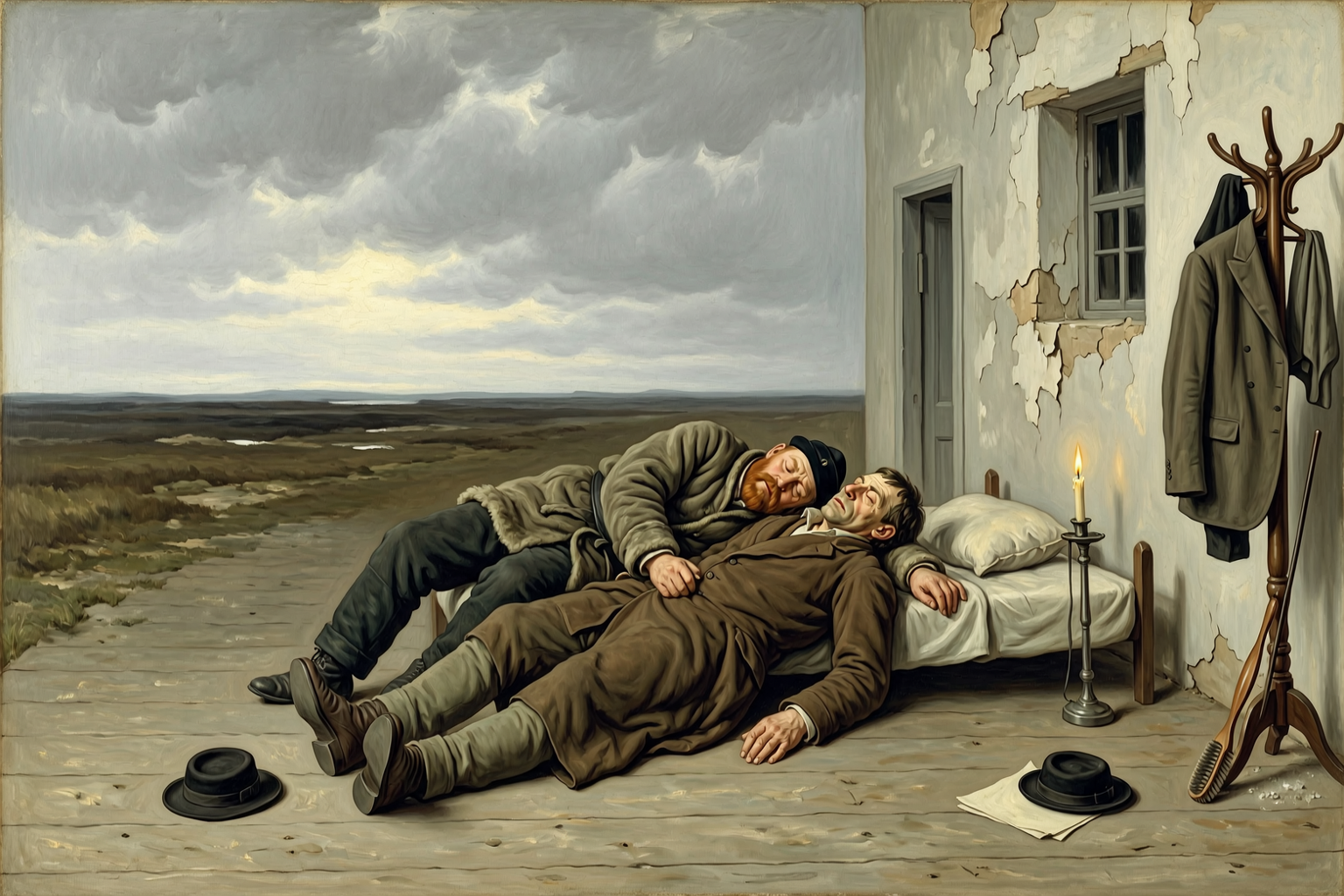
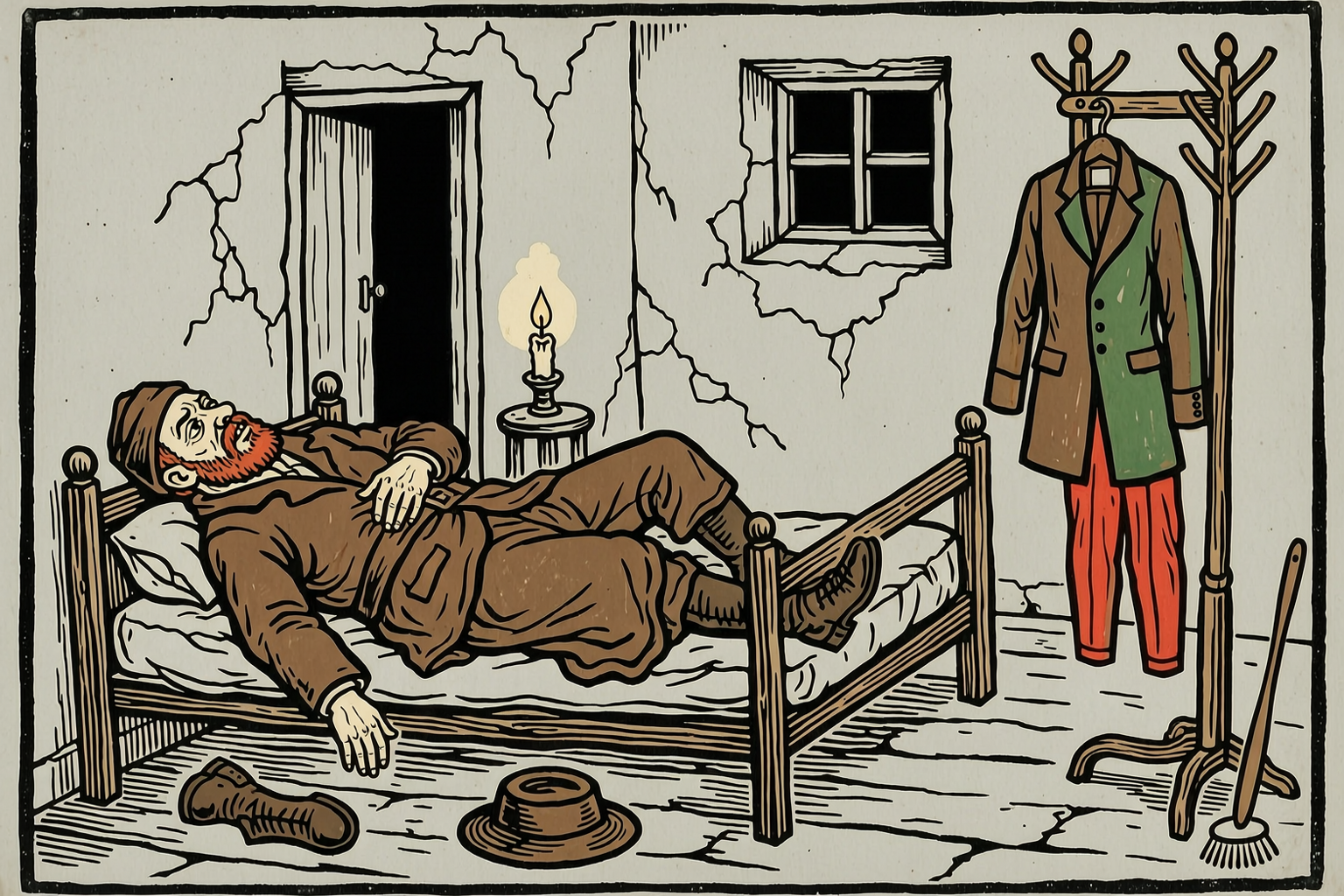
Reading his own list, Chichikov invents lives for the names, and the novel briefly becomes the elegy it keeps refusing to be.