Chapter 6
Plyushkin and his great heap
he himself had finally turned into a kind of tatter in the fabric of humanity
Summary
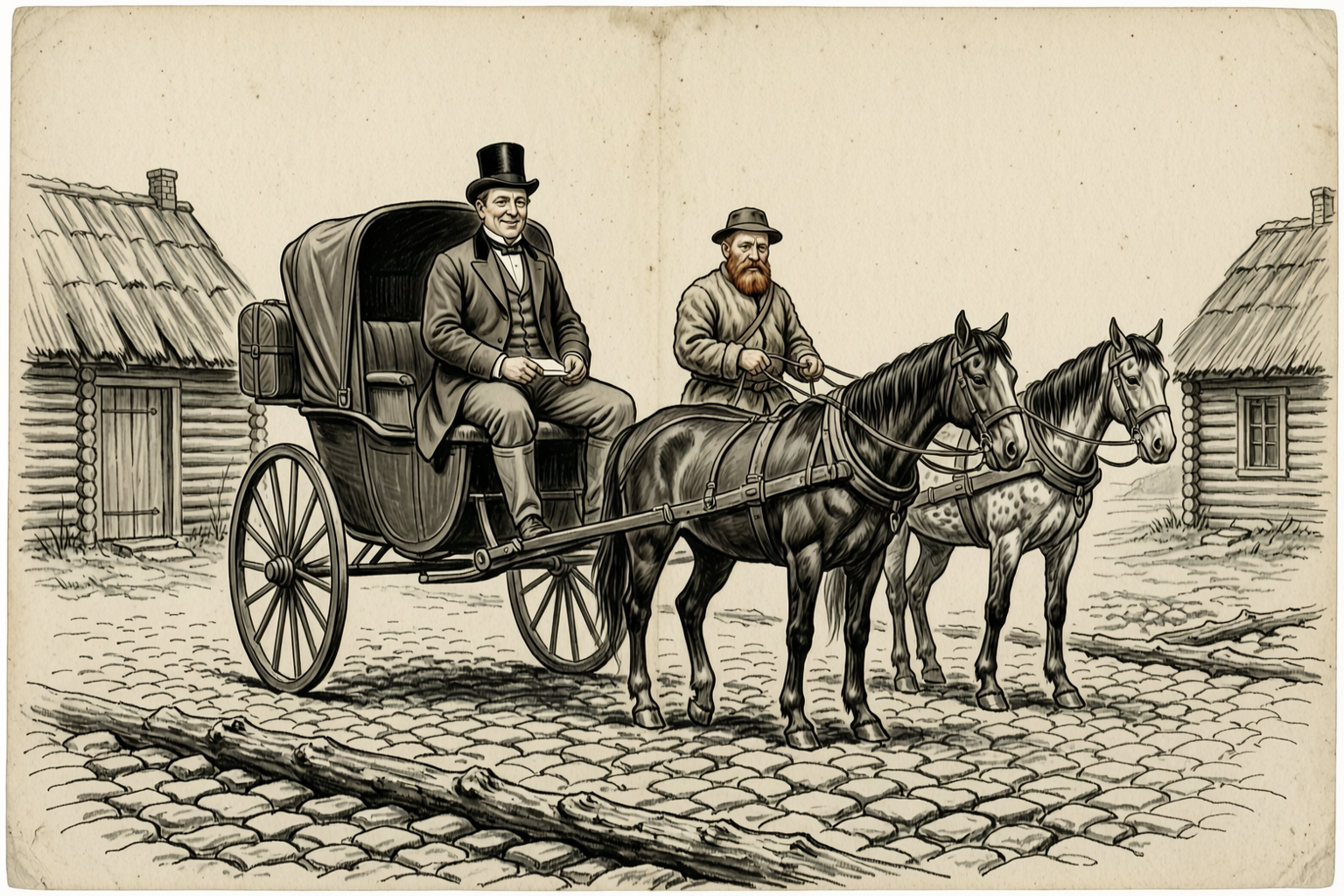
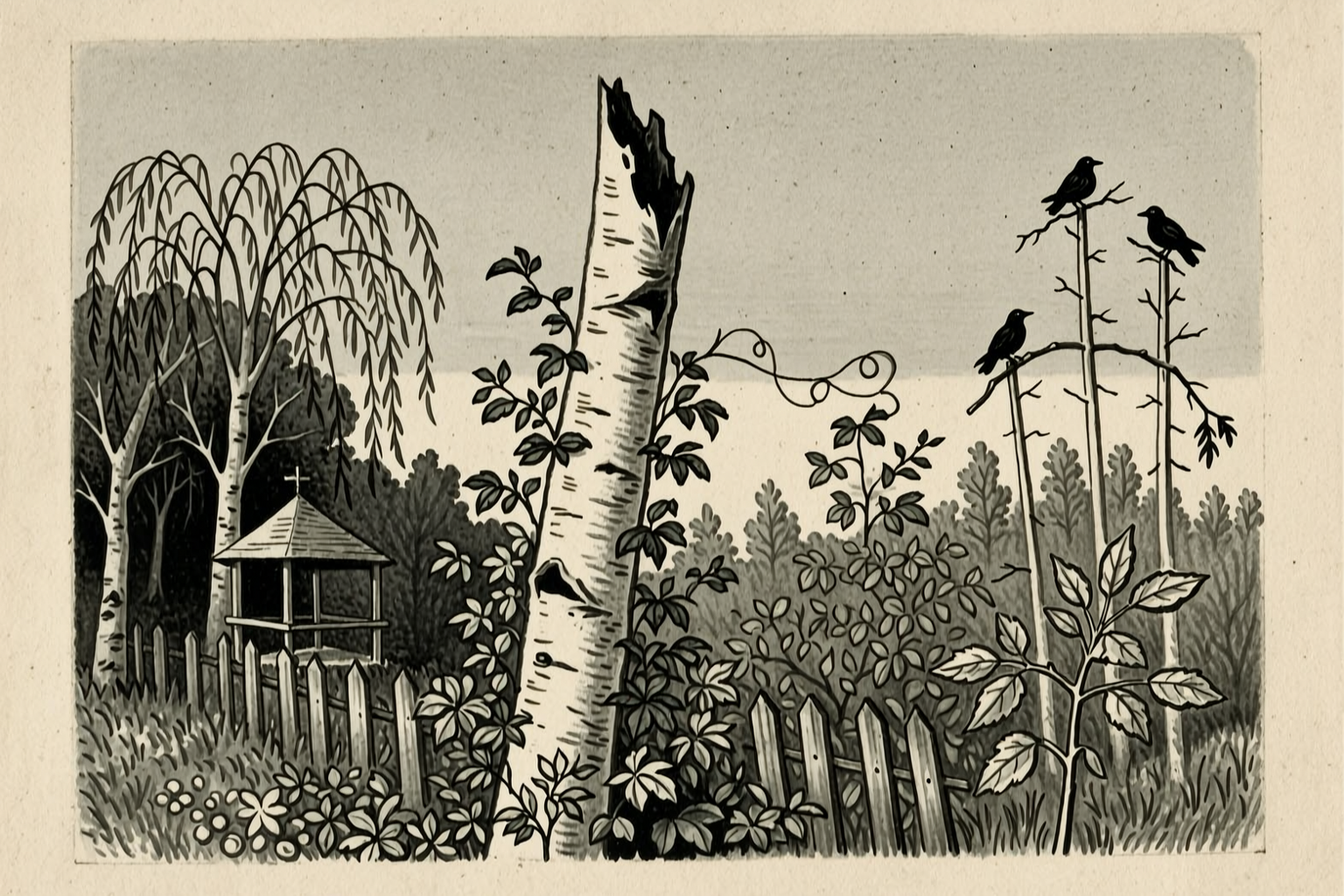
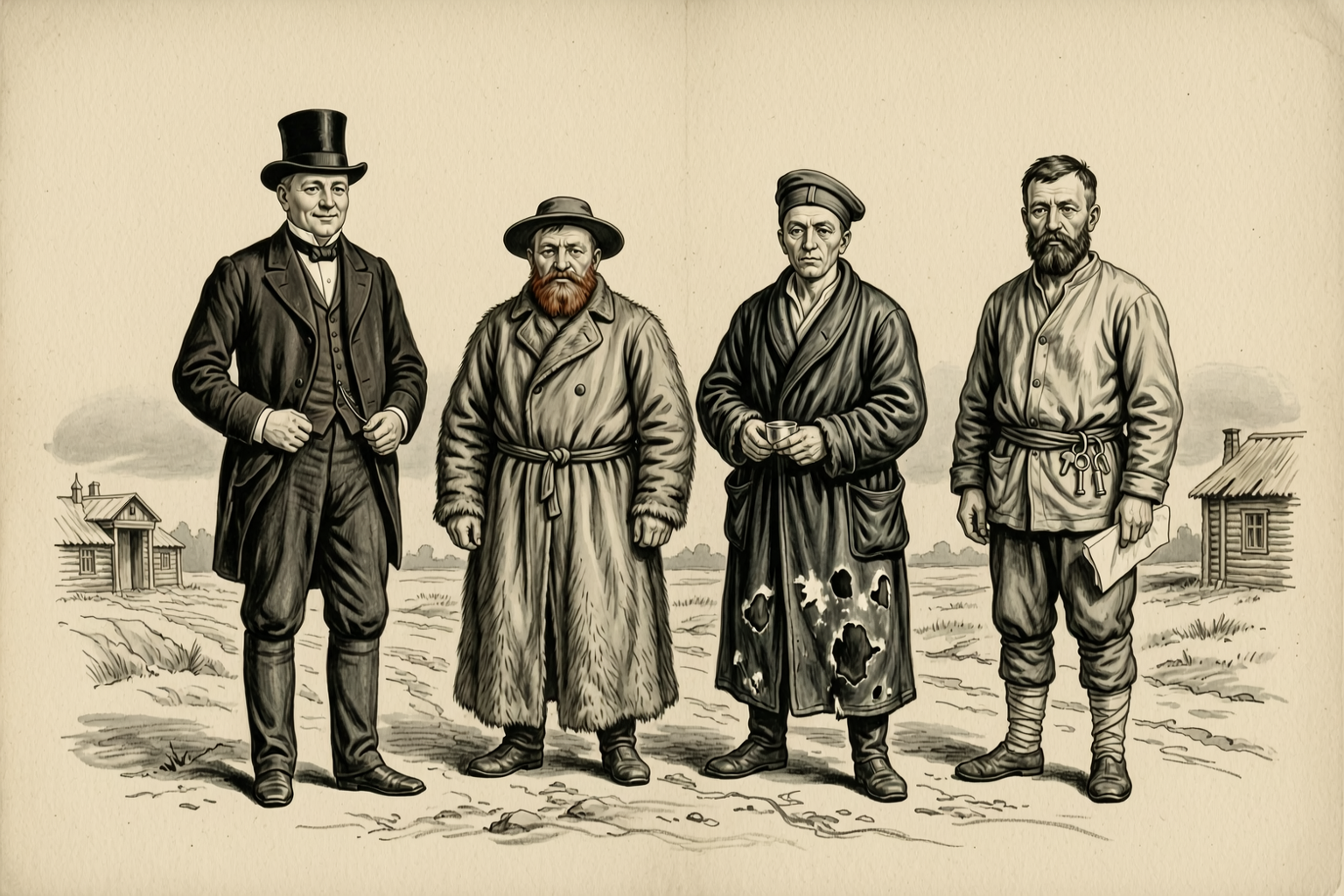
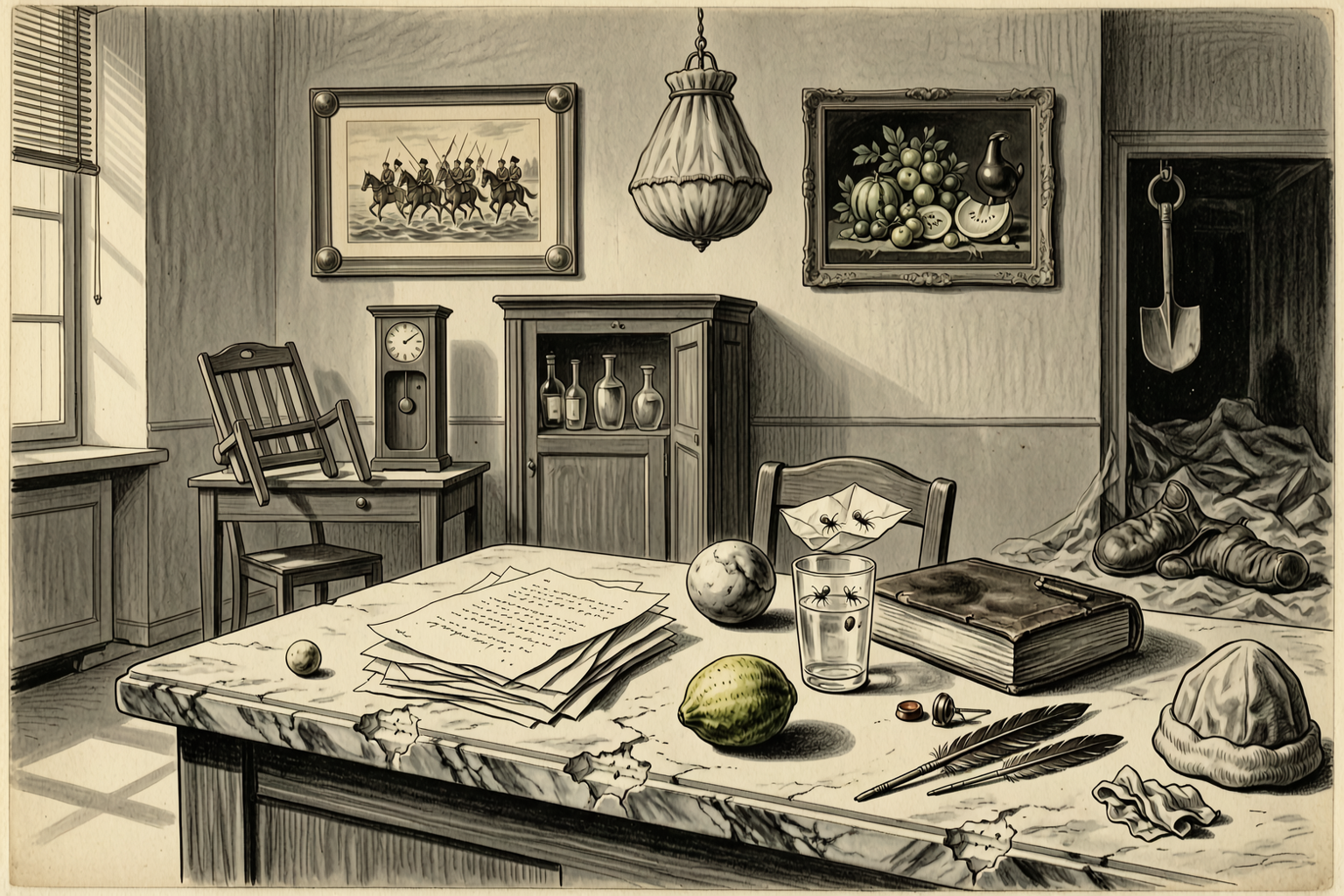
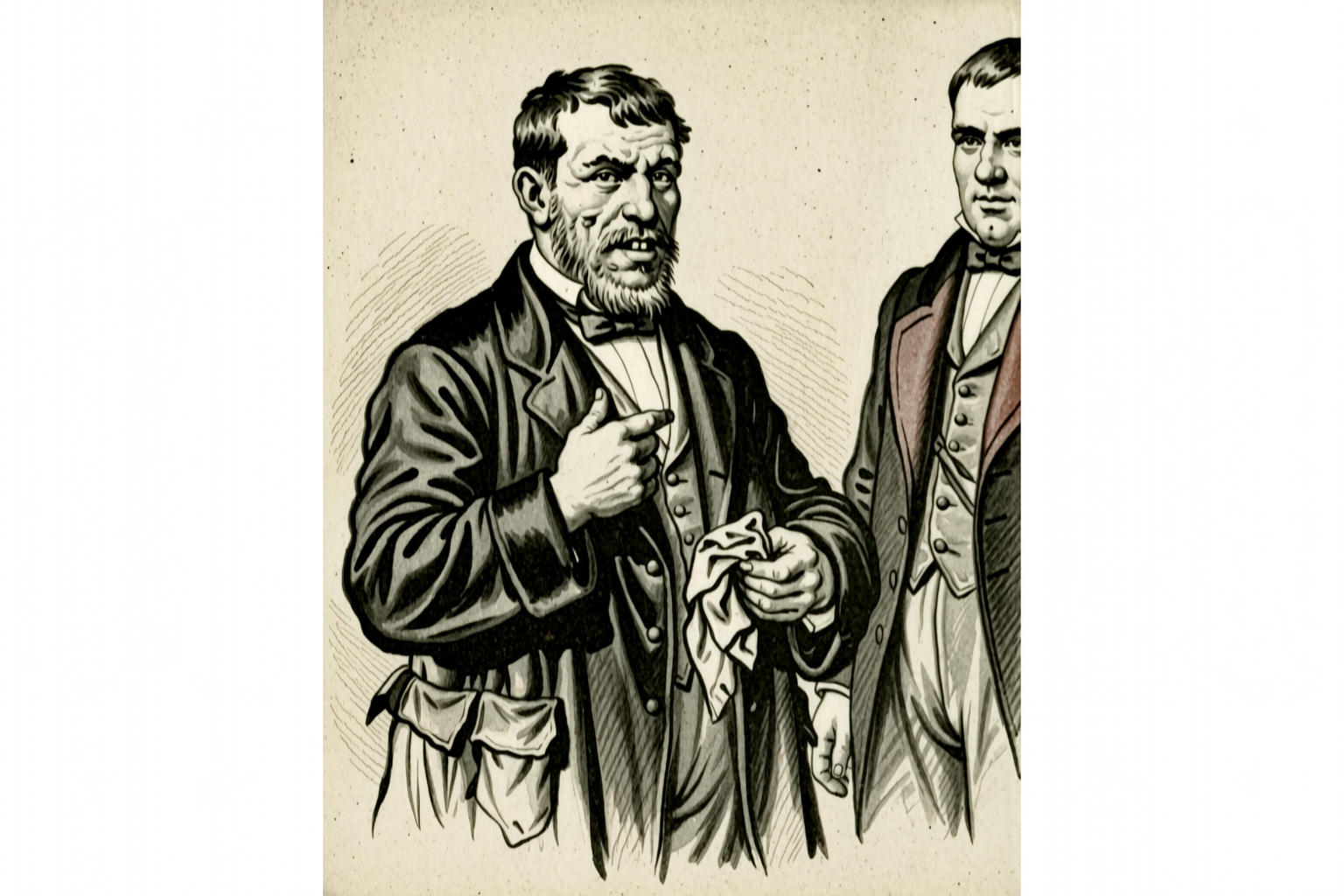
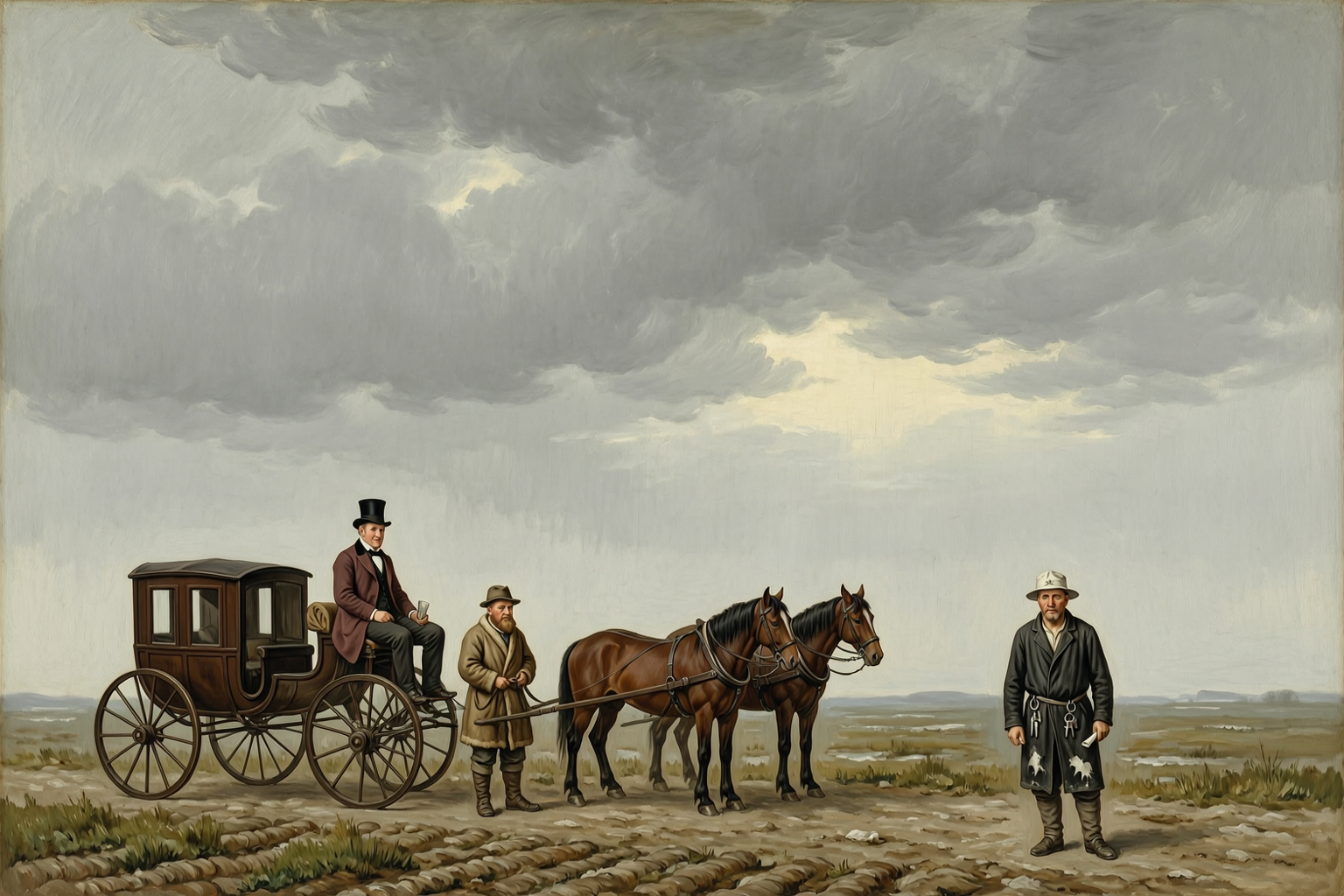
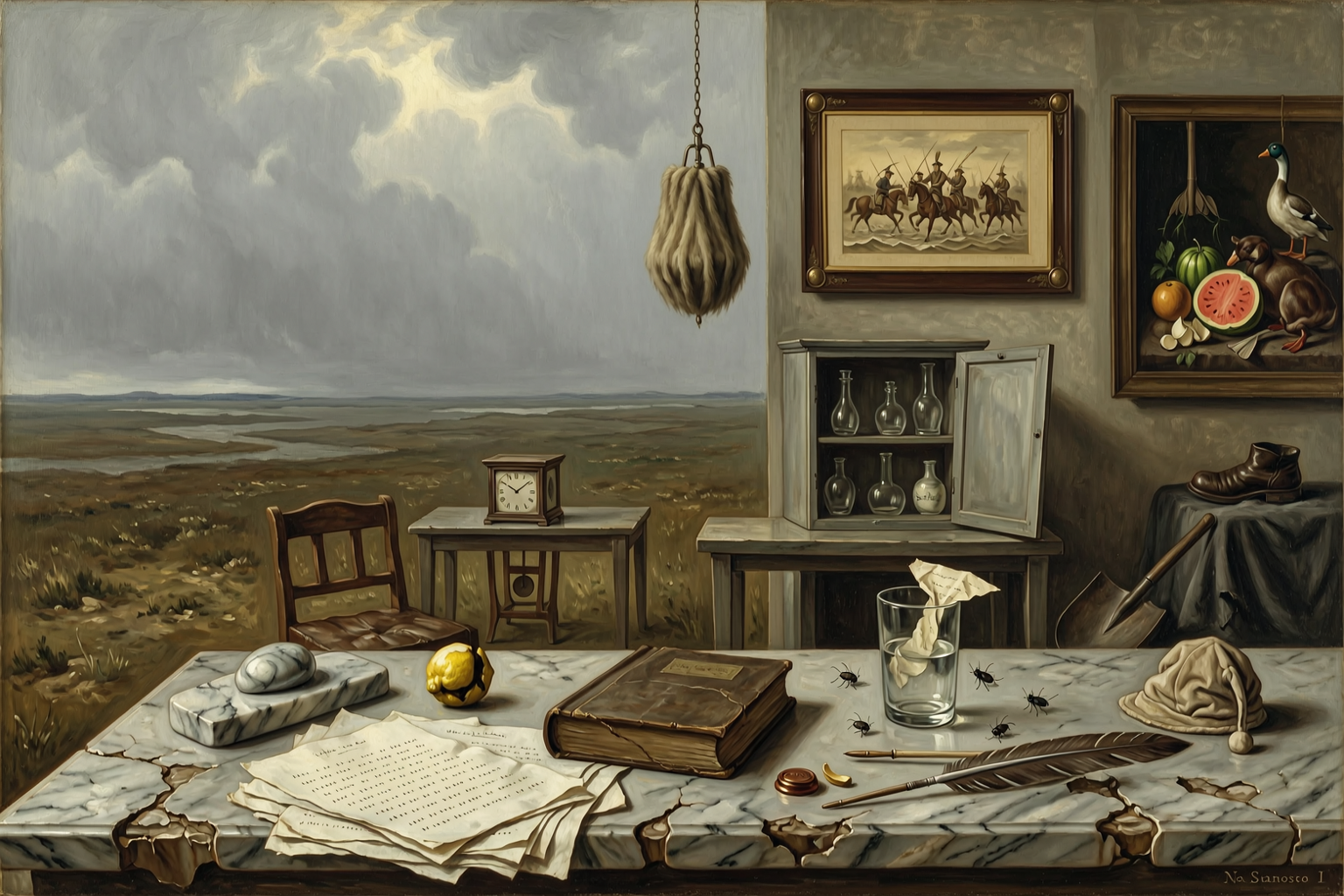
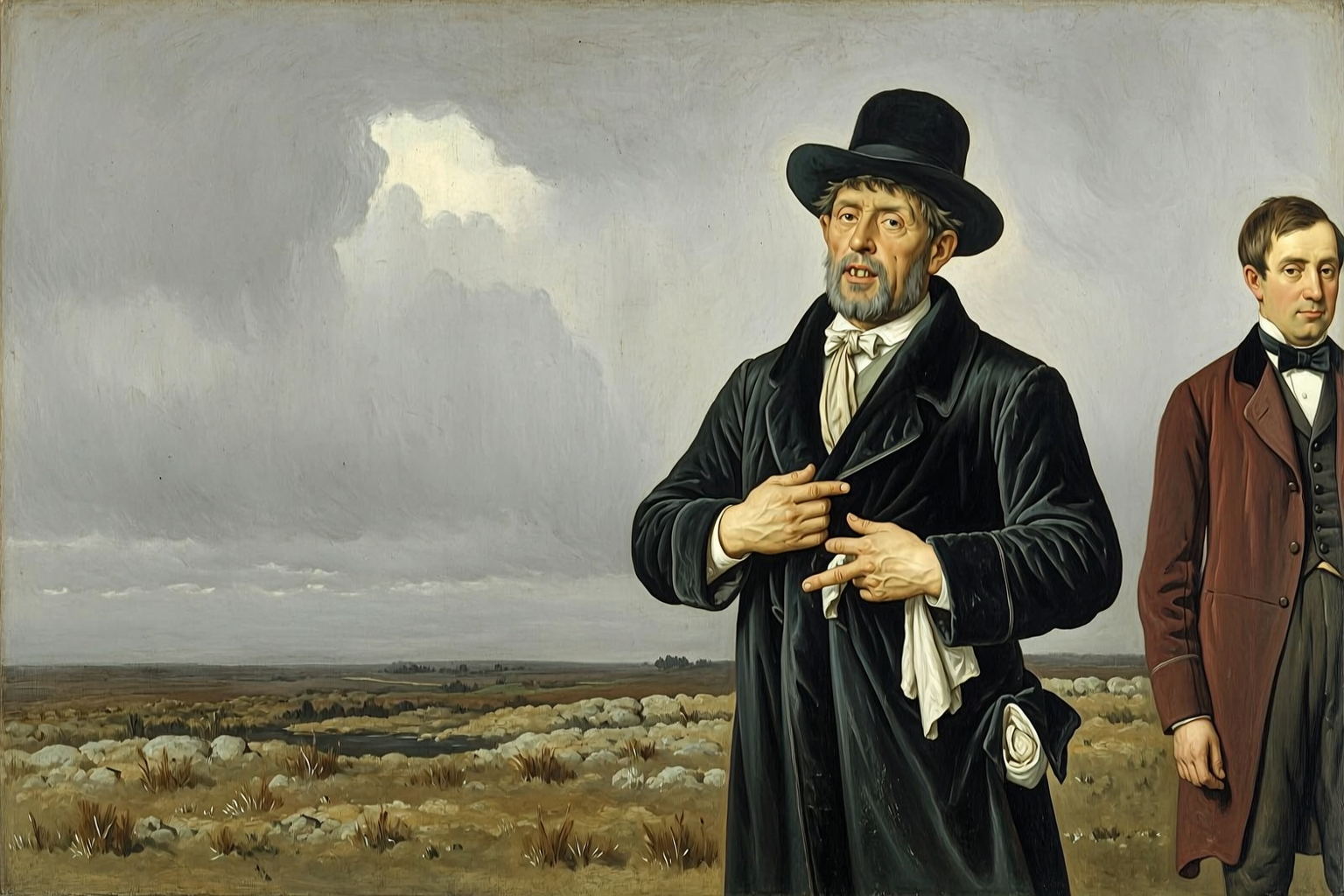
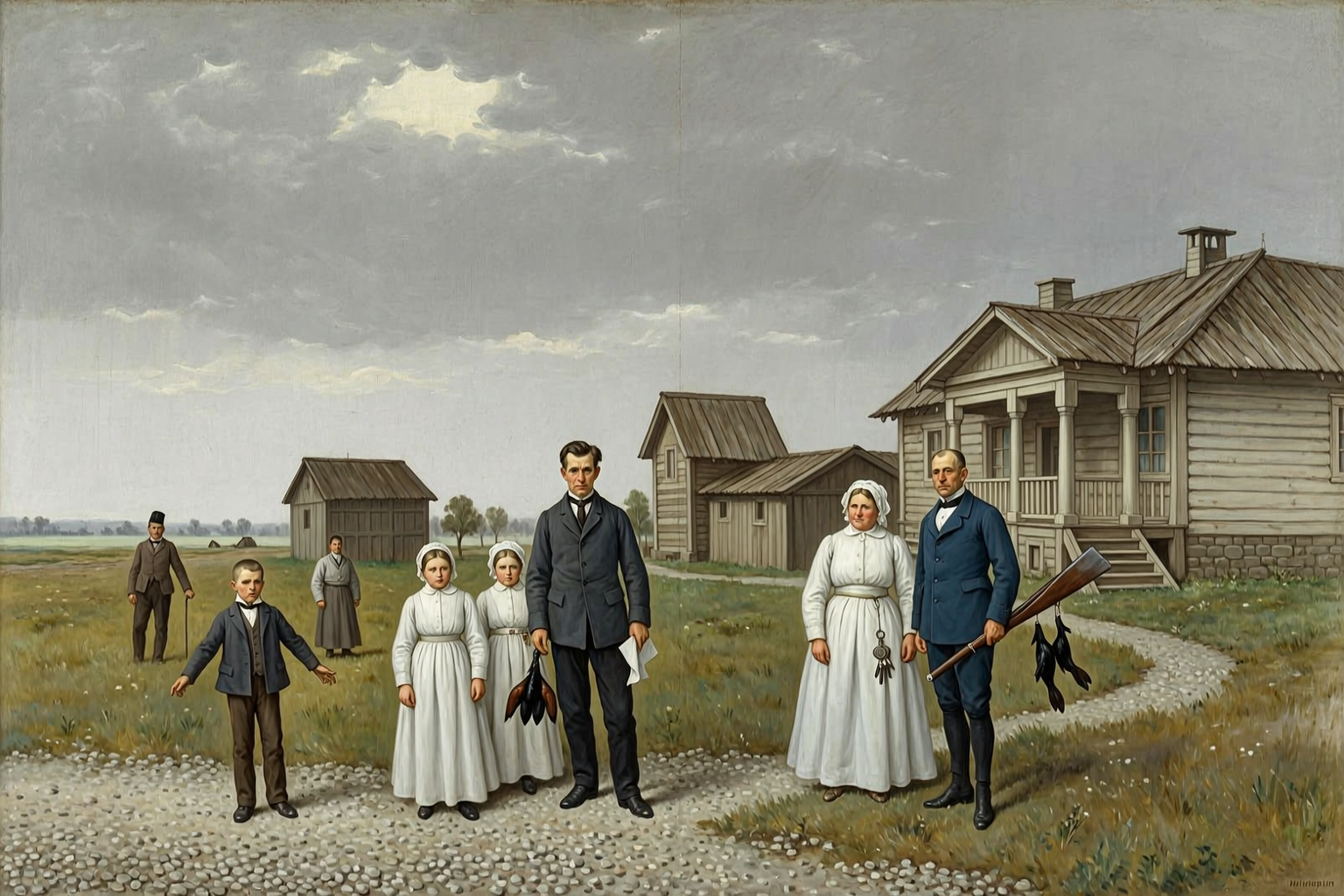
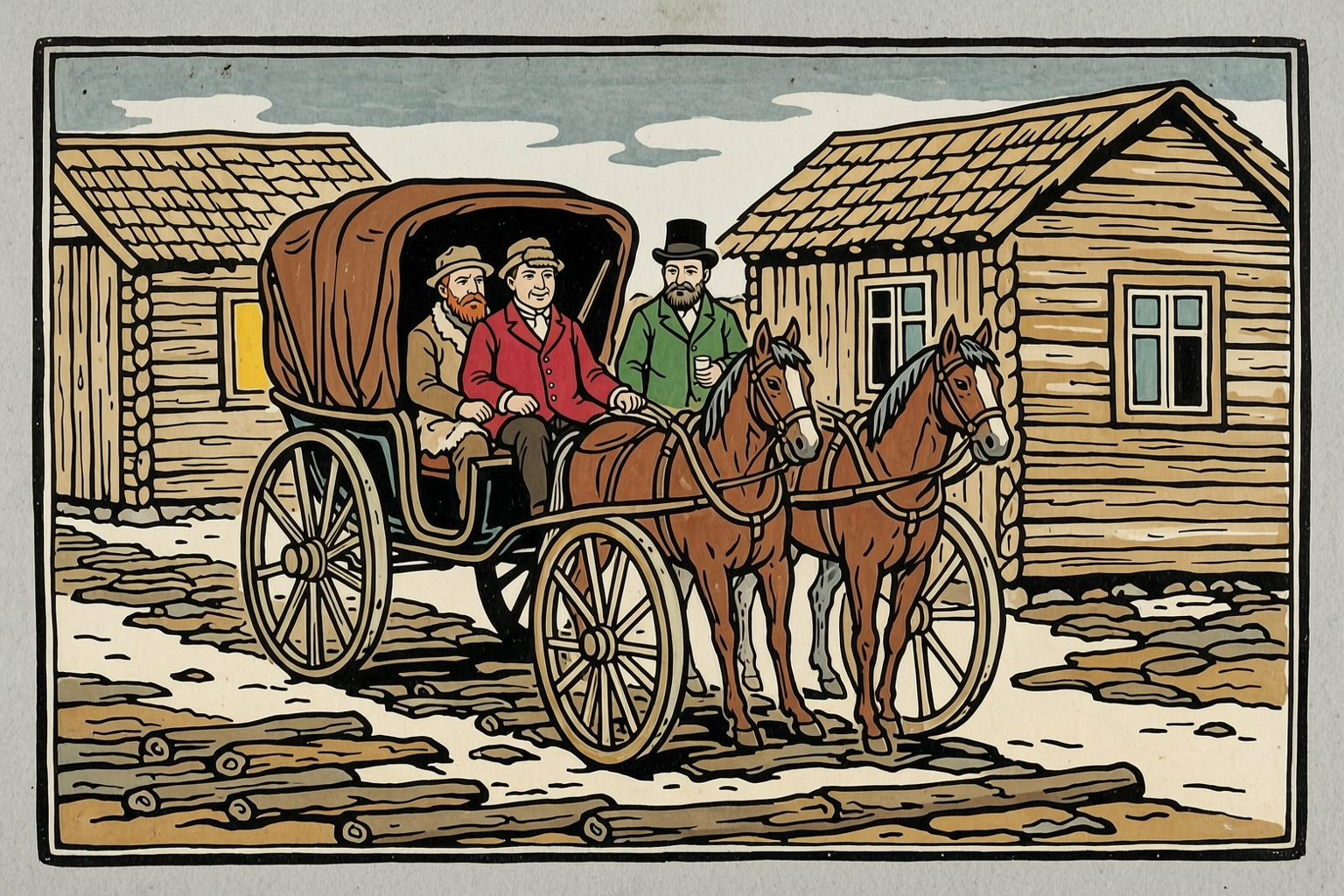
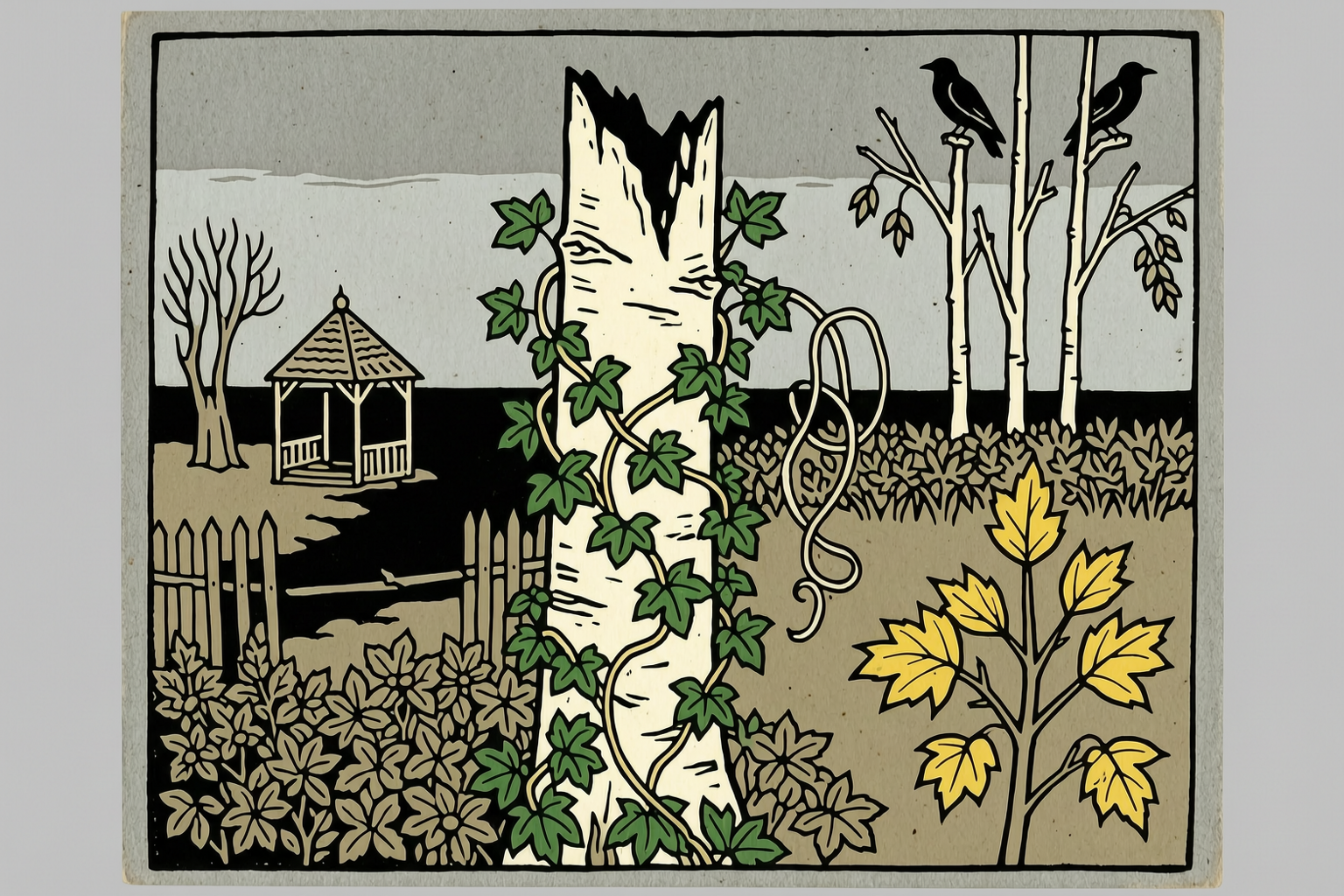
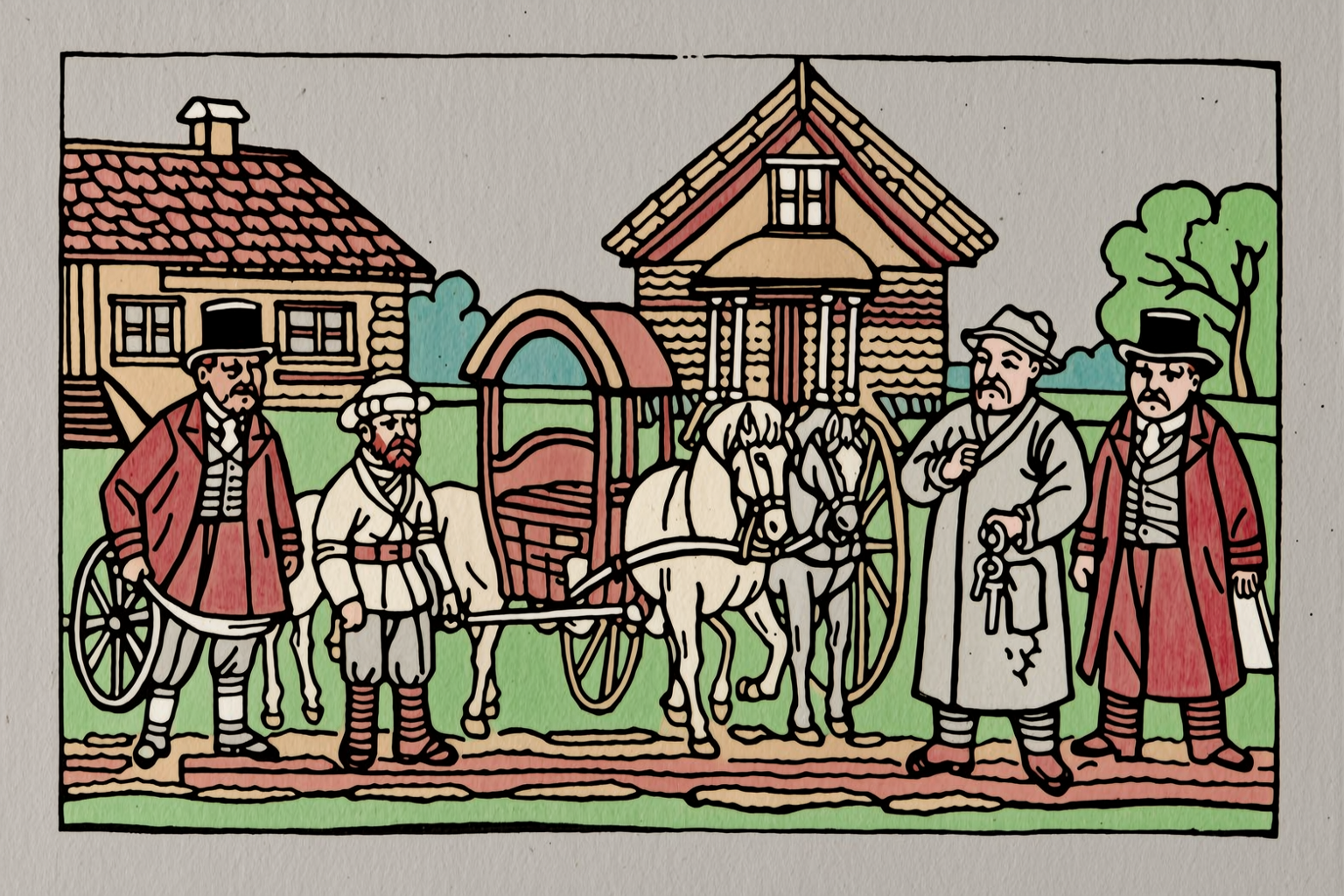
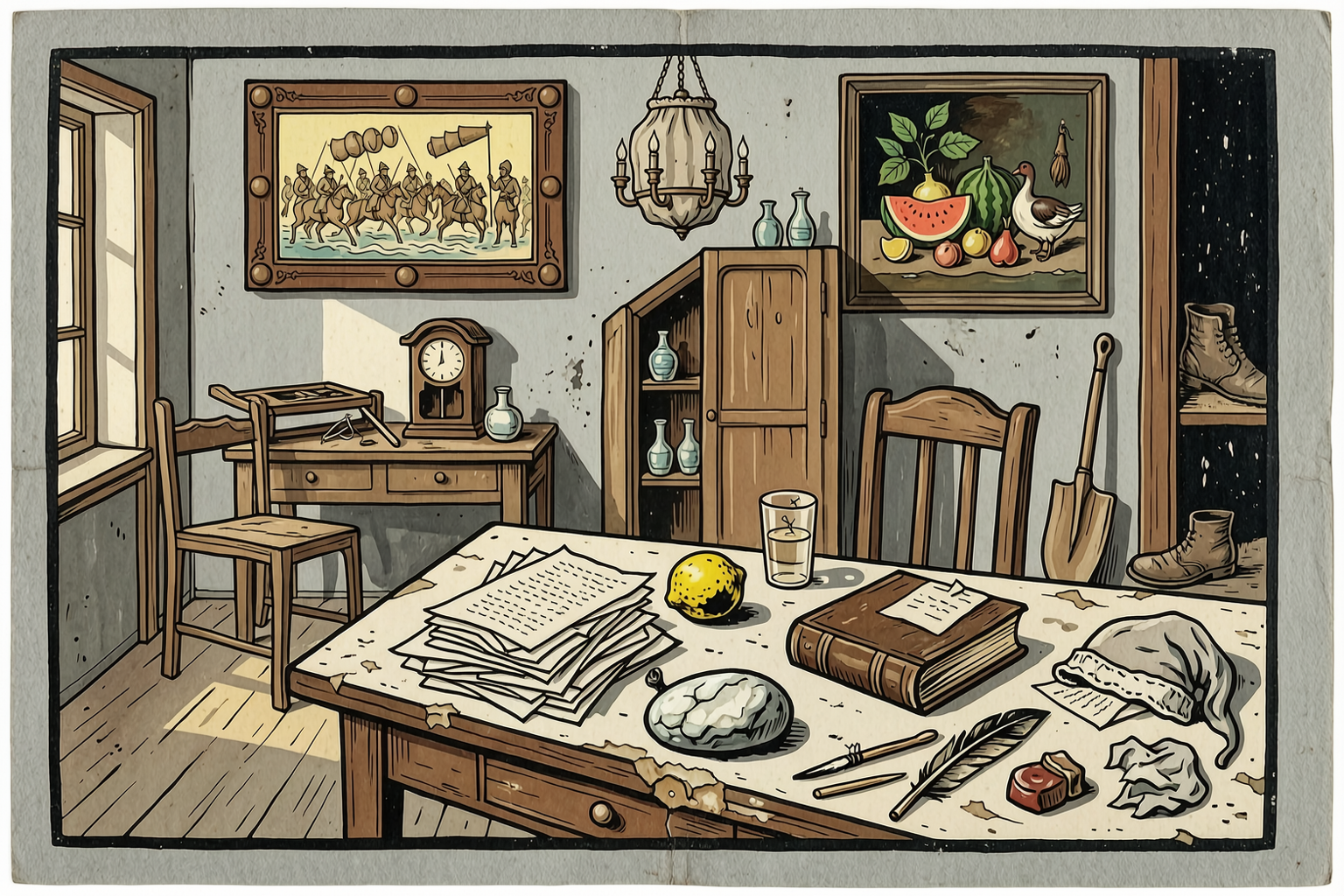
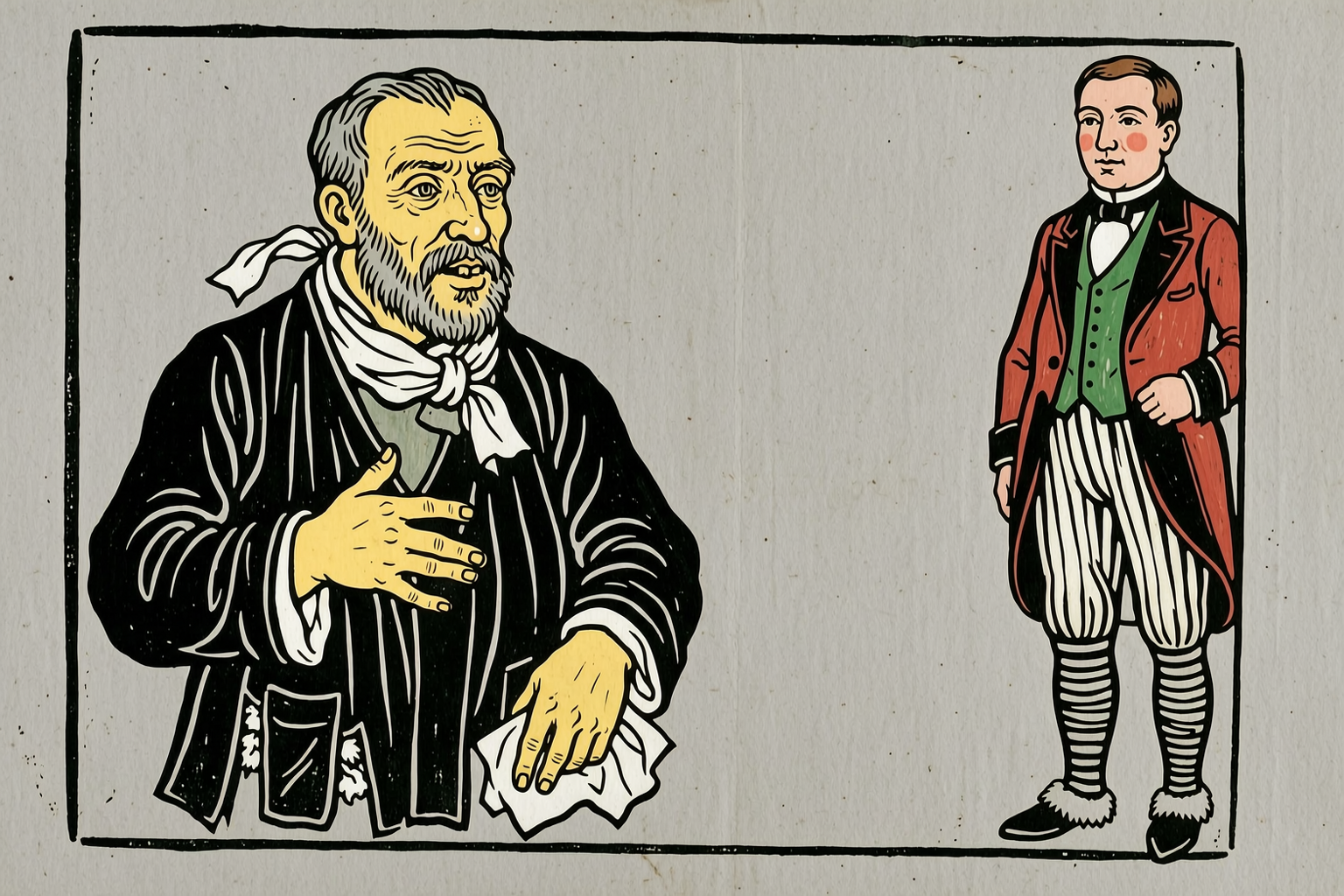
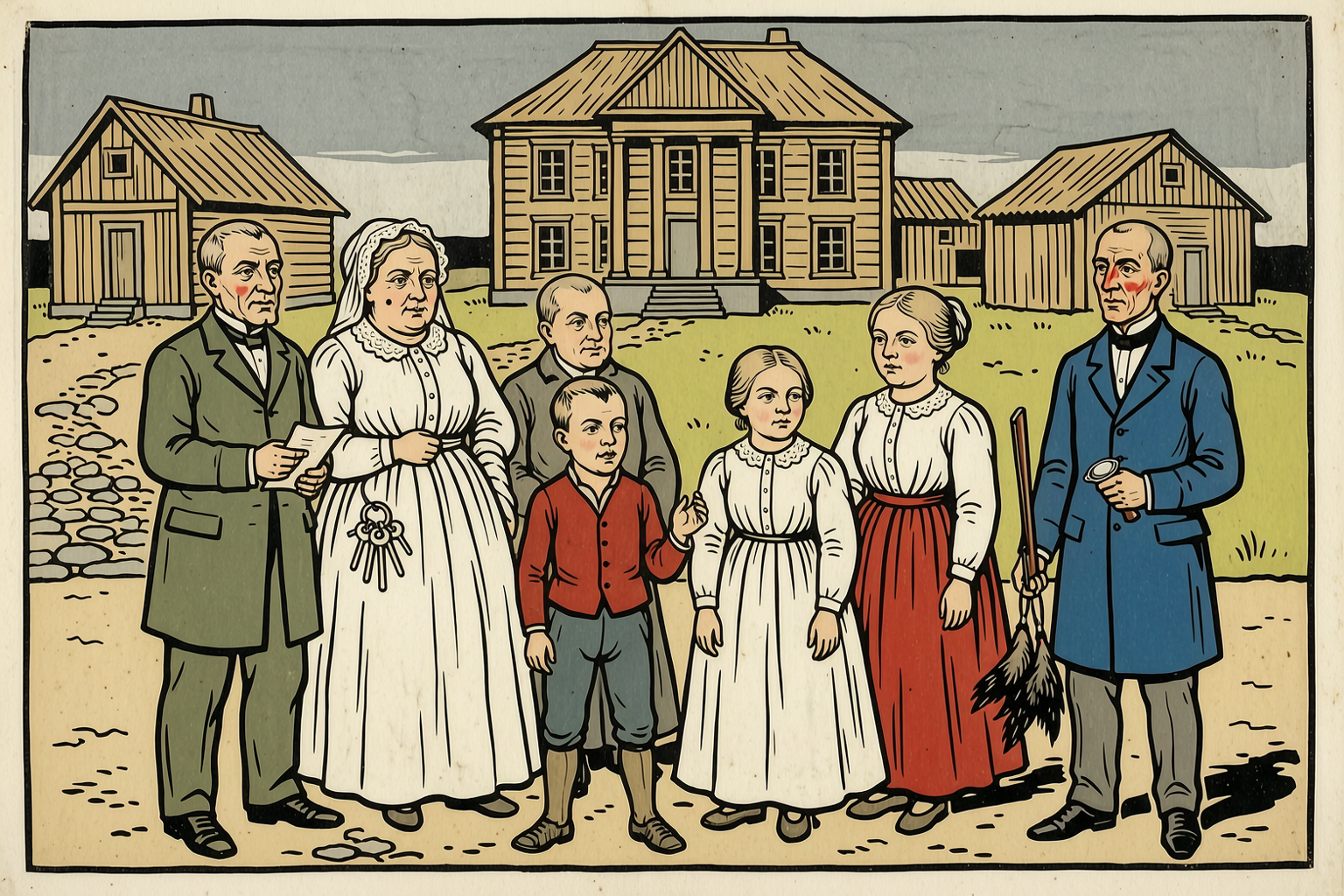
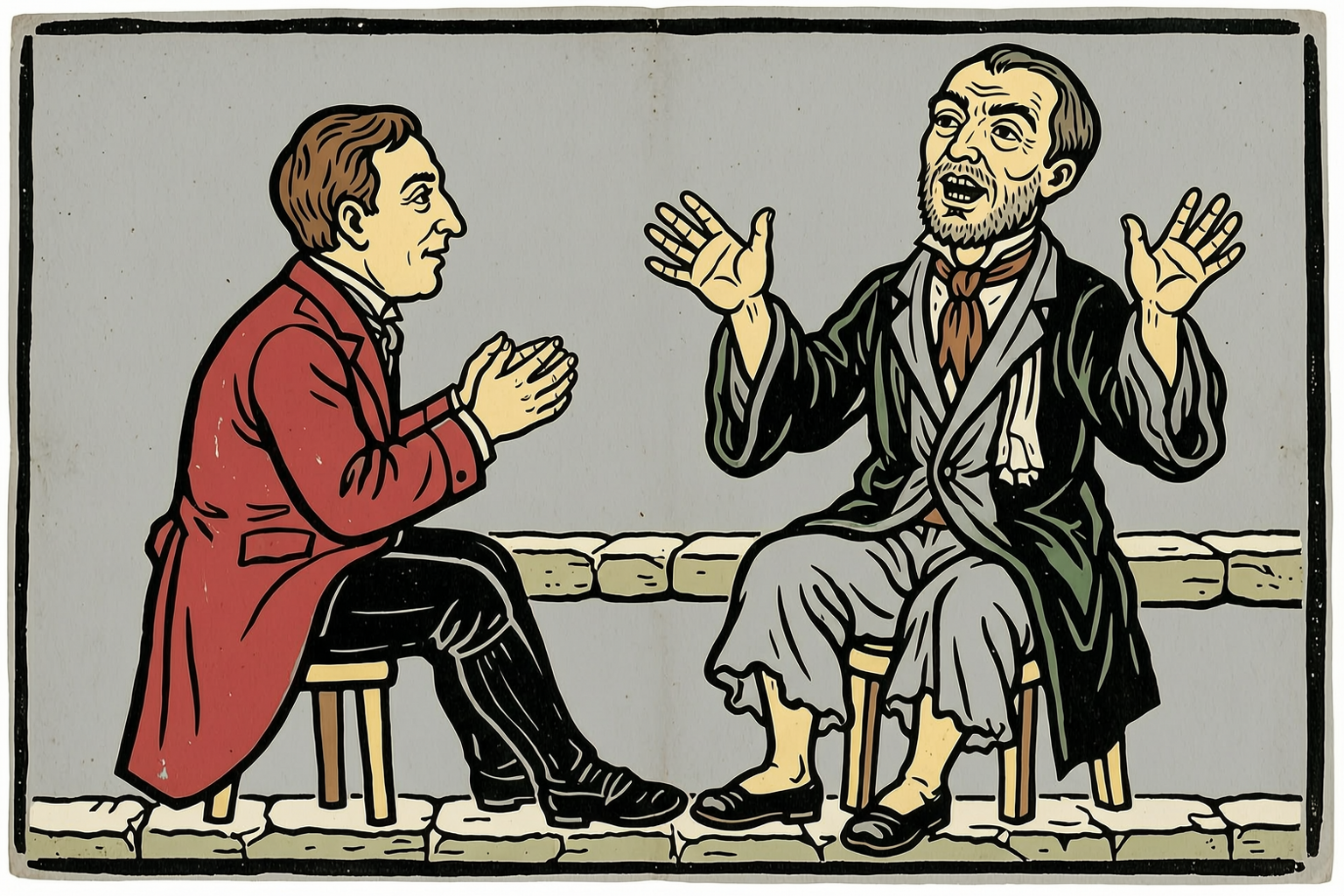
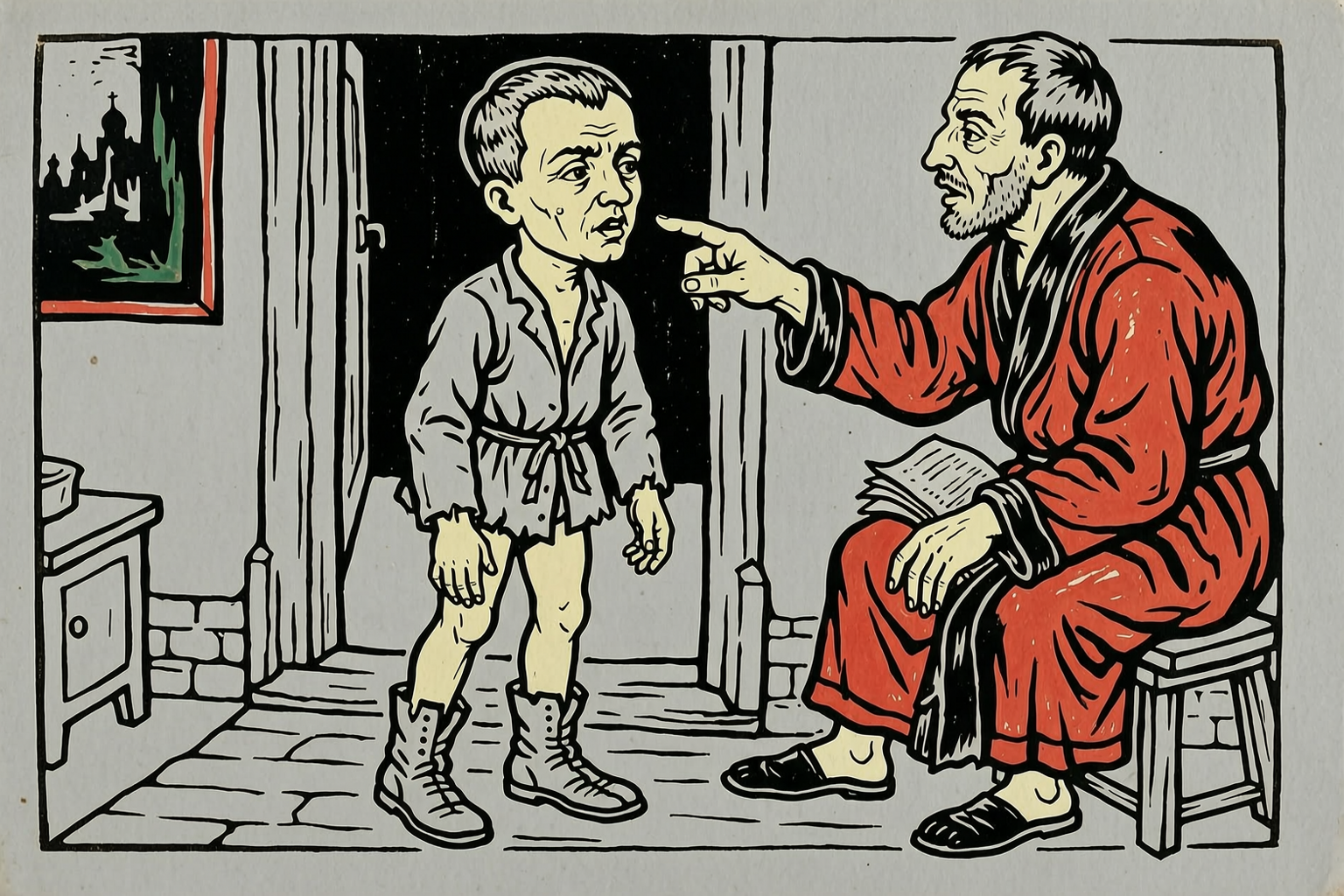
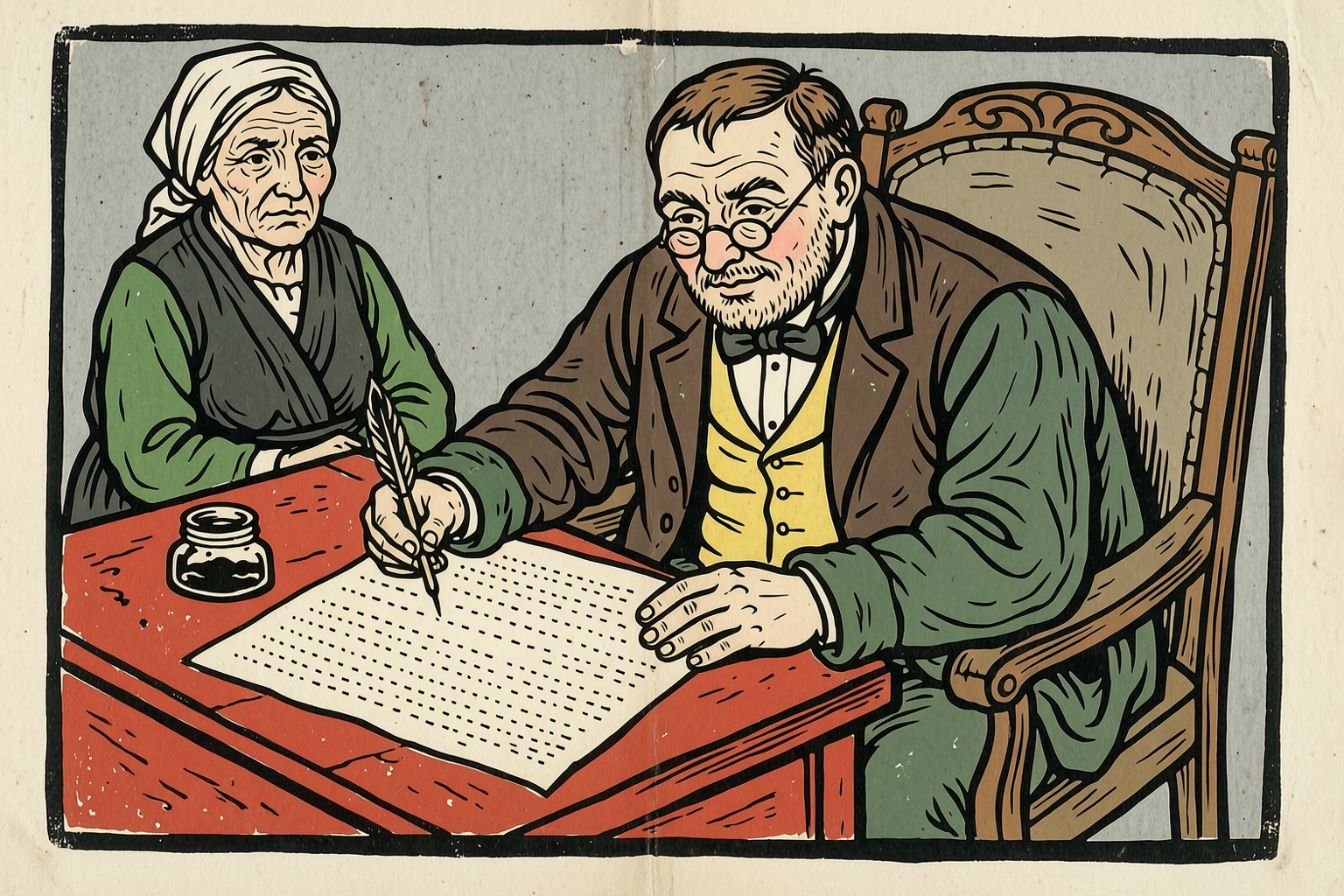
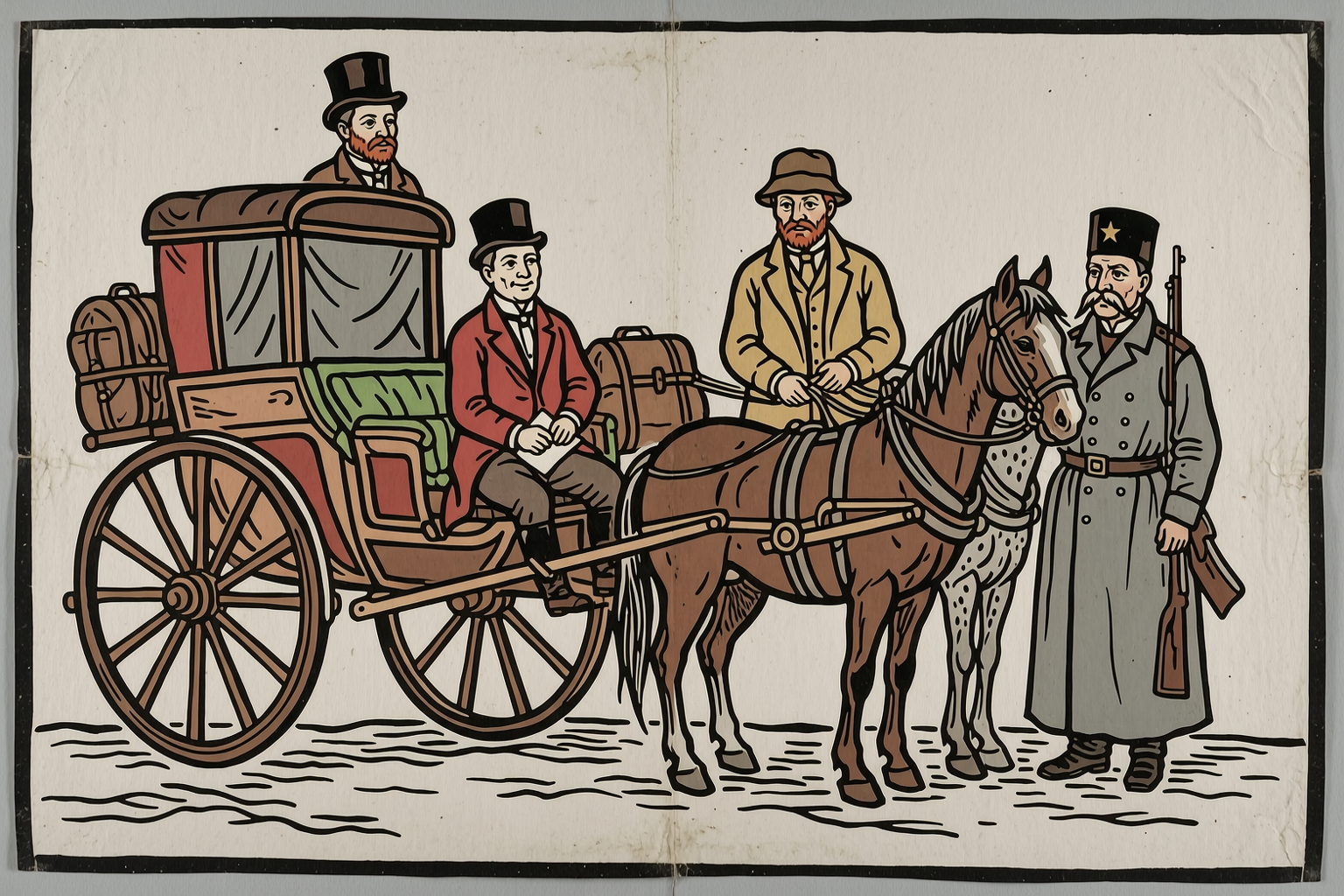
The narrator opens by mourning the lost curiosity of his youth — "Oh, my youth! Oh, my freshness!" — then delivers Chichikov to Plyushkin's village: corduroy paving, roofs like sieves, grain rotting into brick-coloured mounds, a manor house "like some disabled veteran who was on his last legs", and behind it a magnificent overgrown garden. Chichikov mistakes his host for the housekeeper. Plyushkin owns over a thousand souls and wears a dressing gown gone to tarred bootleather, with a chin like a currycomb and eyes darting like mice; he hoards nails, rags and old soles on a heap in the corner. A retrospect explains him: a capable proprietor once, hollowed out by his wife's death, a daughter's elopement, a son's debts. He sells his hundred and twenty dead gladly, plus seventy-eight runaways at thirty kopecks each. A memory of the Chairman briefly warms his wooden face, then goes out. Chichikov drives back singing.
Analysis
The gallery's floor. Gogol breaks his own method here by supplying a past, because Plyushkin is the one figure who requires explanation rather than display: the others were always hollow, he was emptied. The garden and the flash of feeling for a schoolfellow exist to prove a soul was once there to lose.
Plates
Illustration style
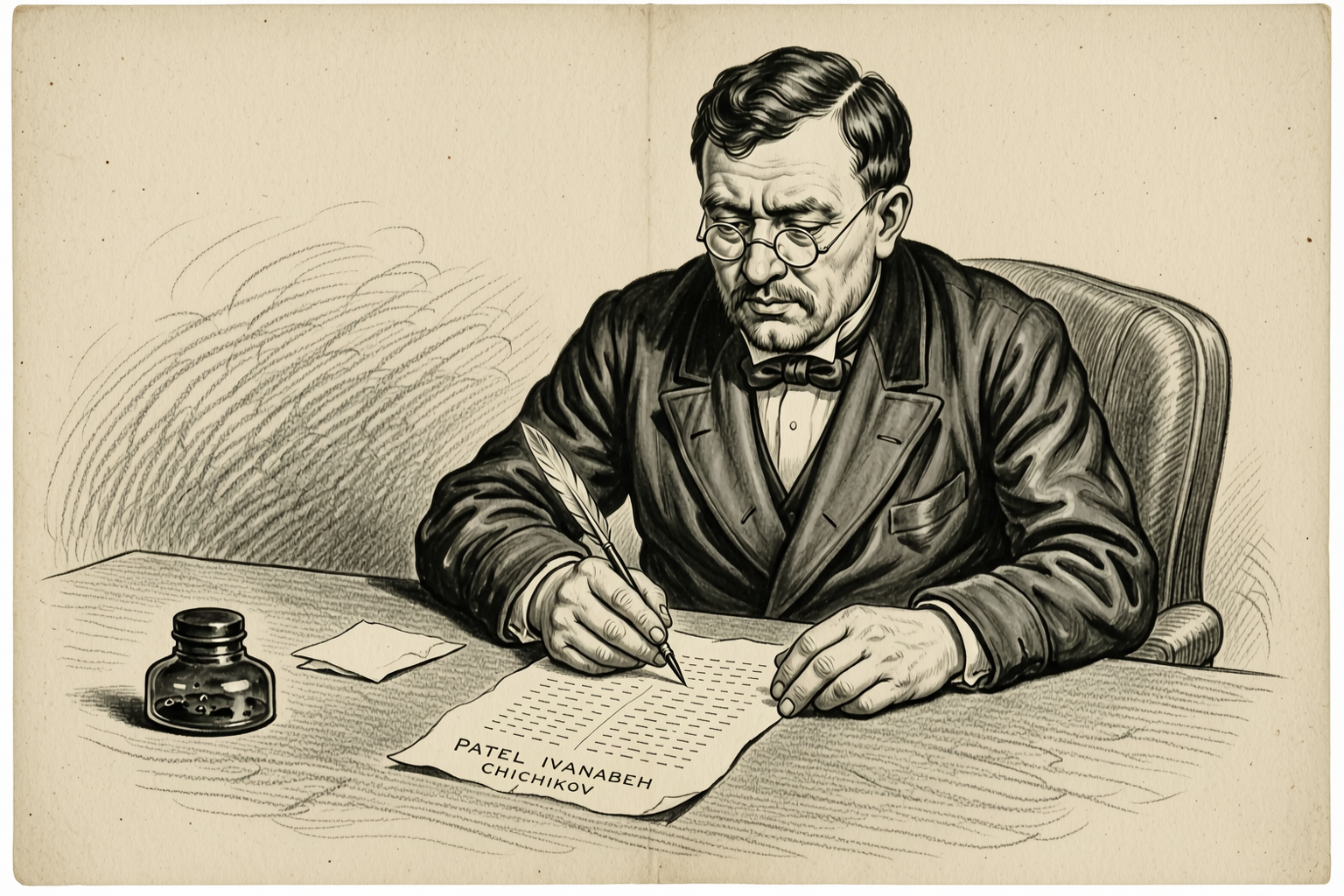
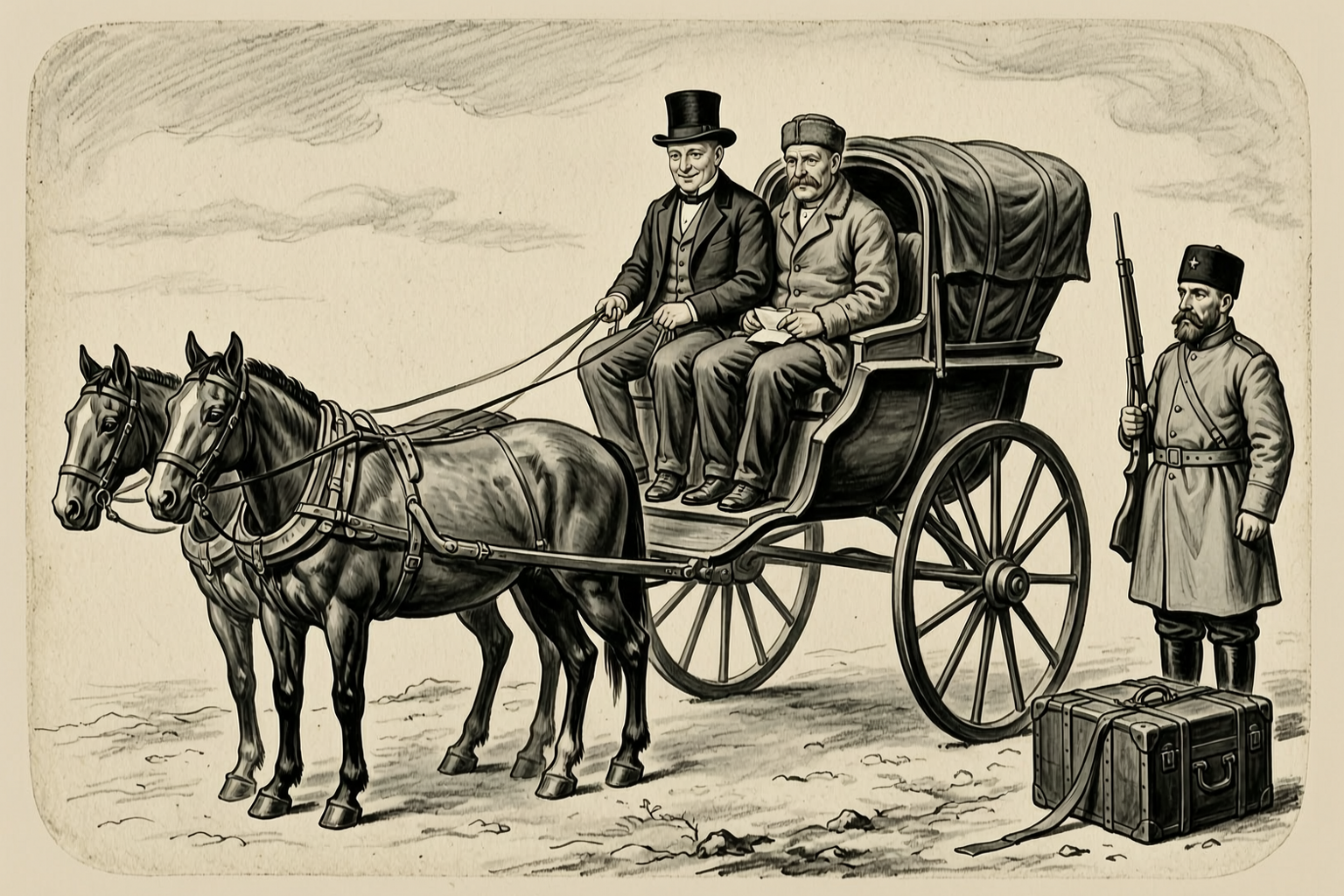
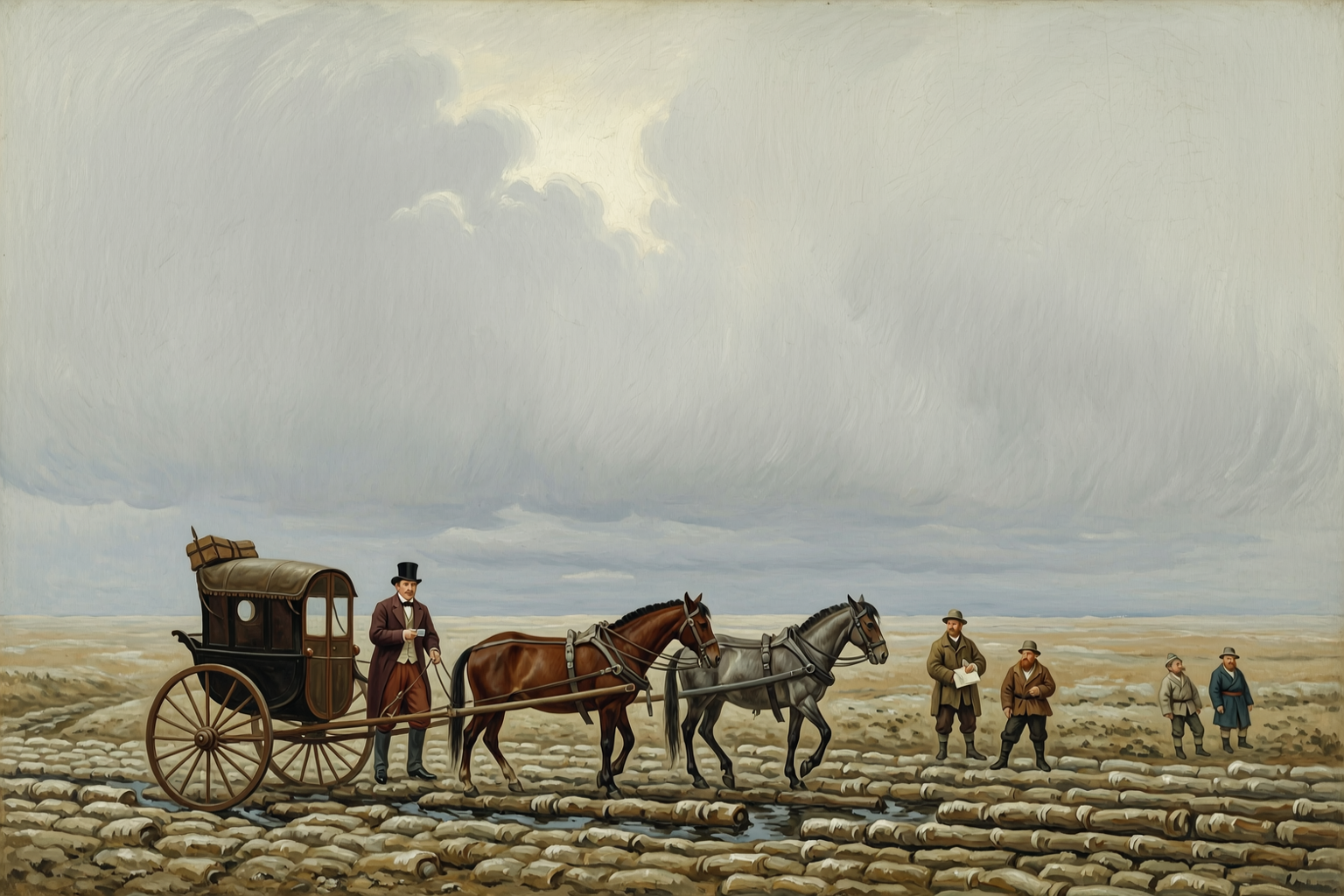
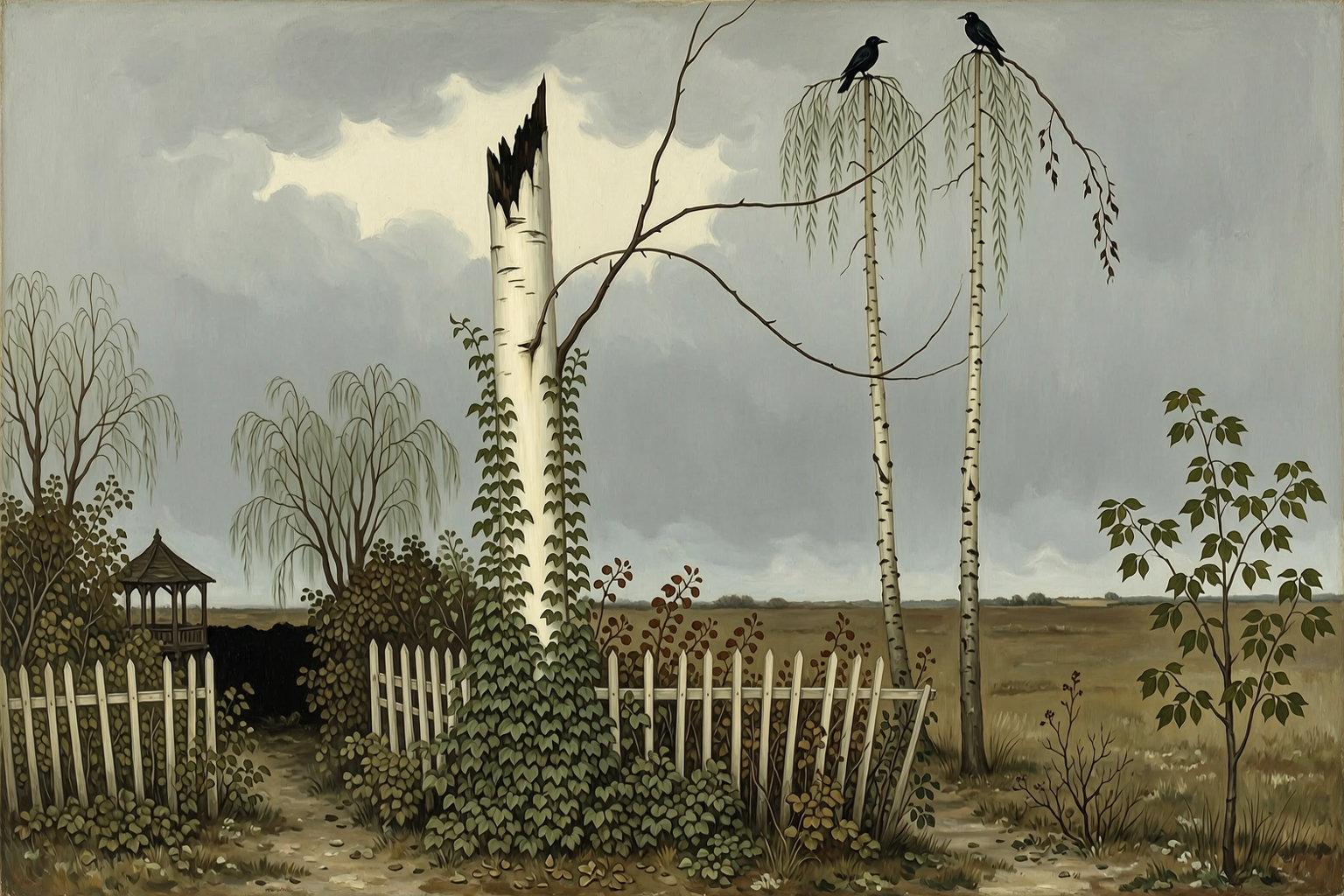
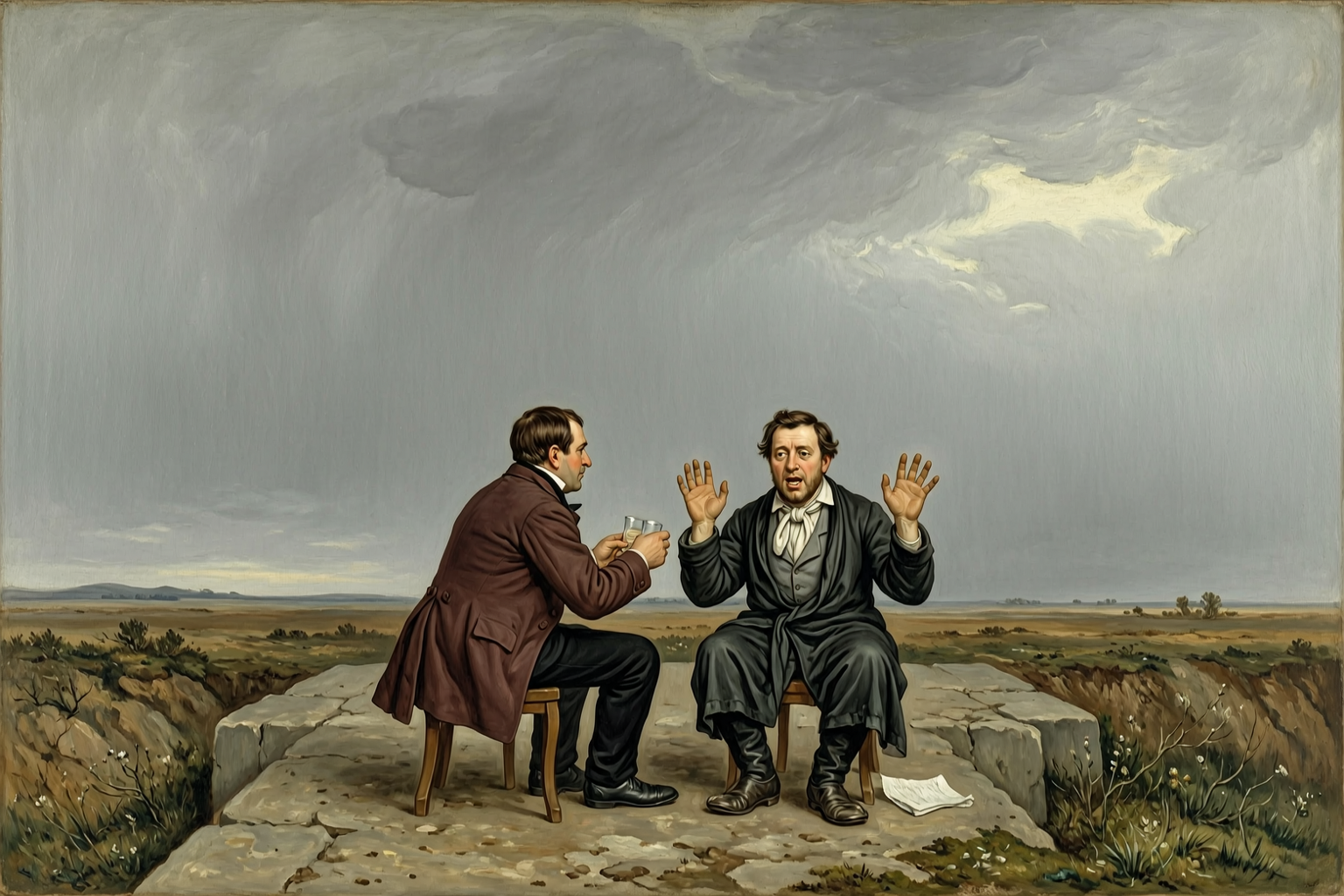
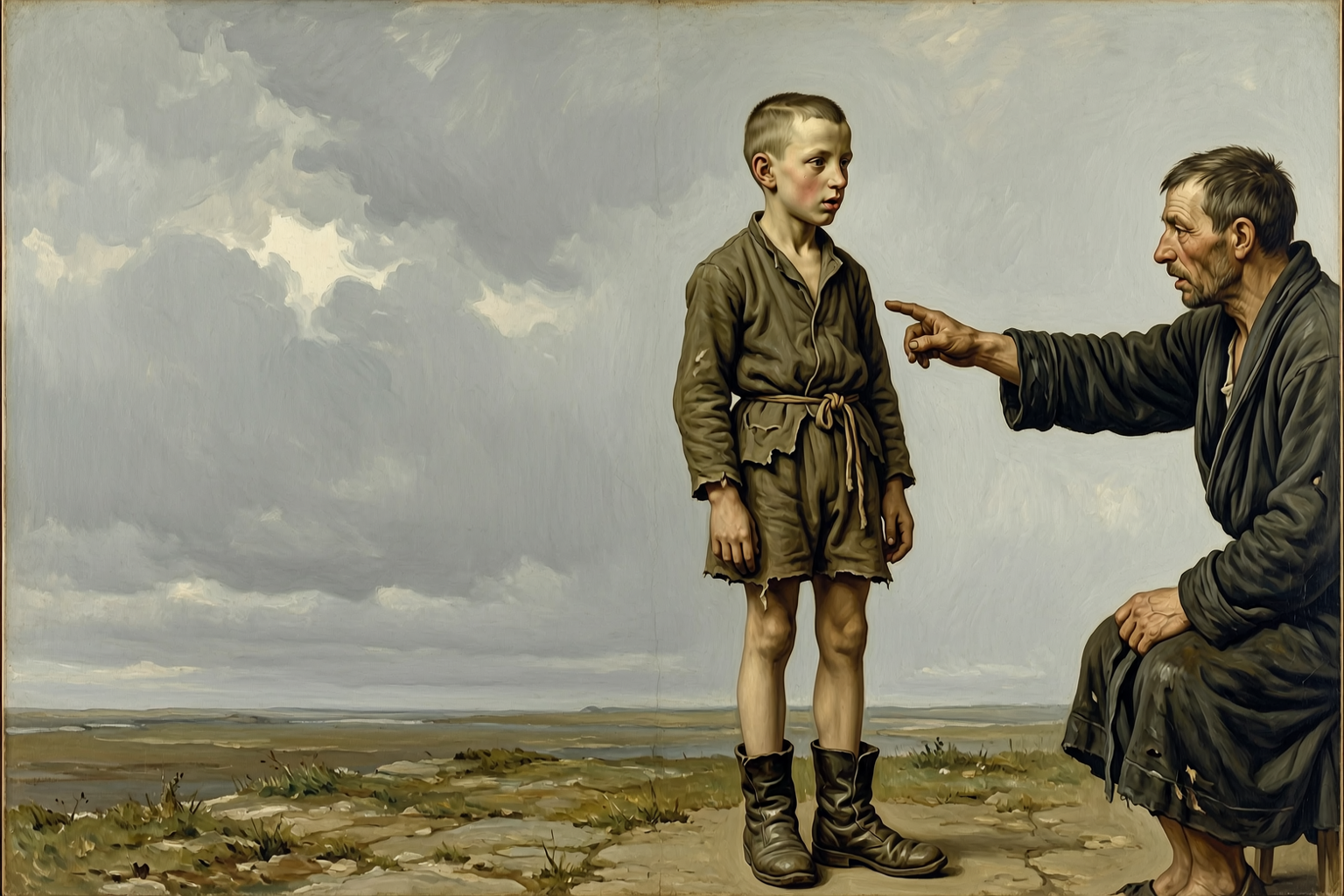
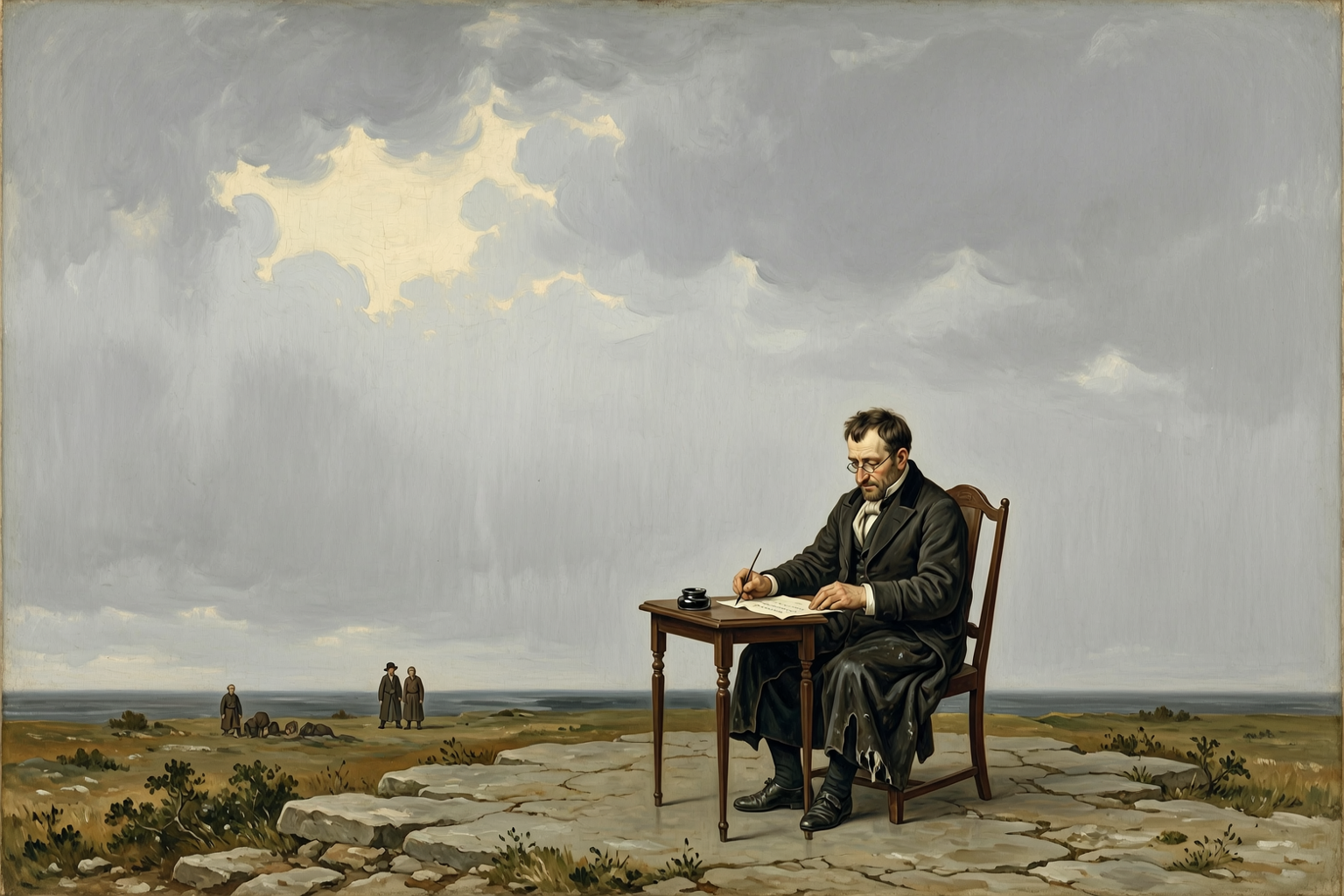
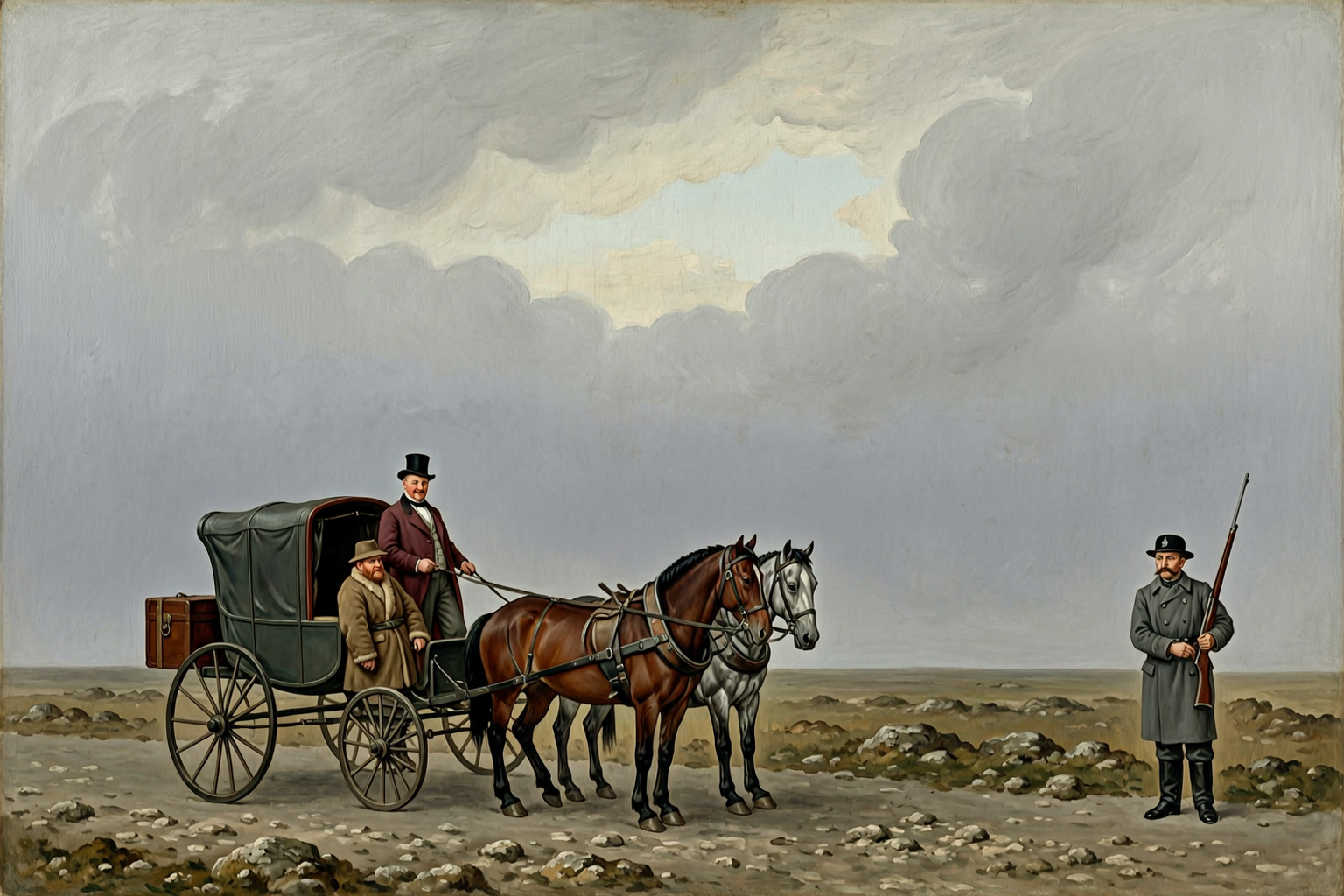
In the structure
The gallery's floor, and the only portrait Gogol gives a past — Plyushkin has to be explained where the others only had to be displayed.