Chapter 35 Part Three
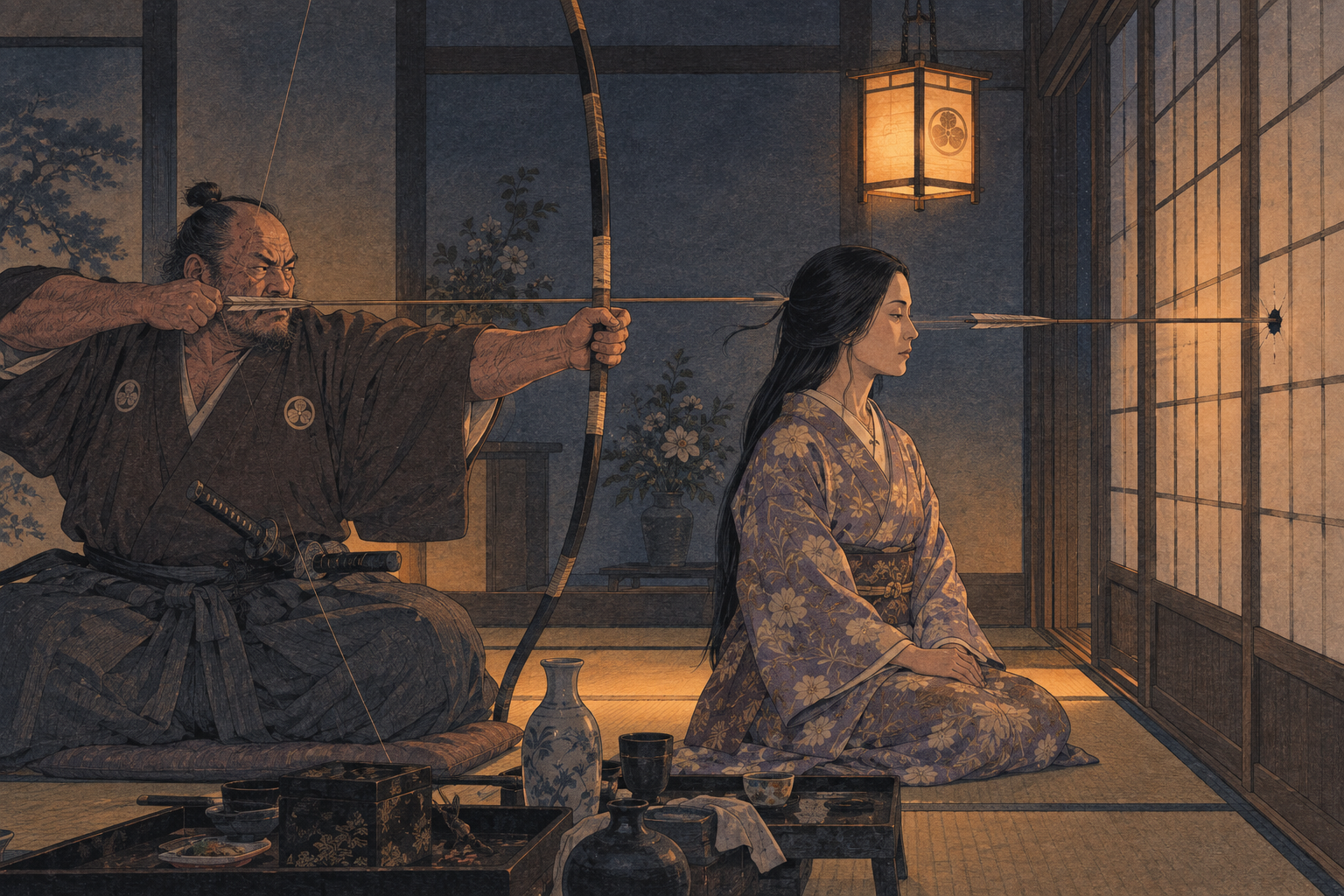
Five arrows through the shoji
Would you have gone if you'd known your husband was alive?
Summary
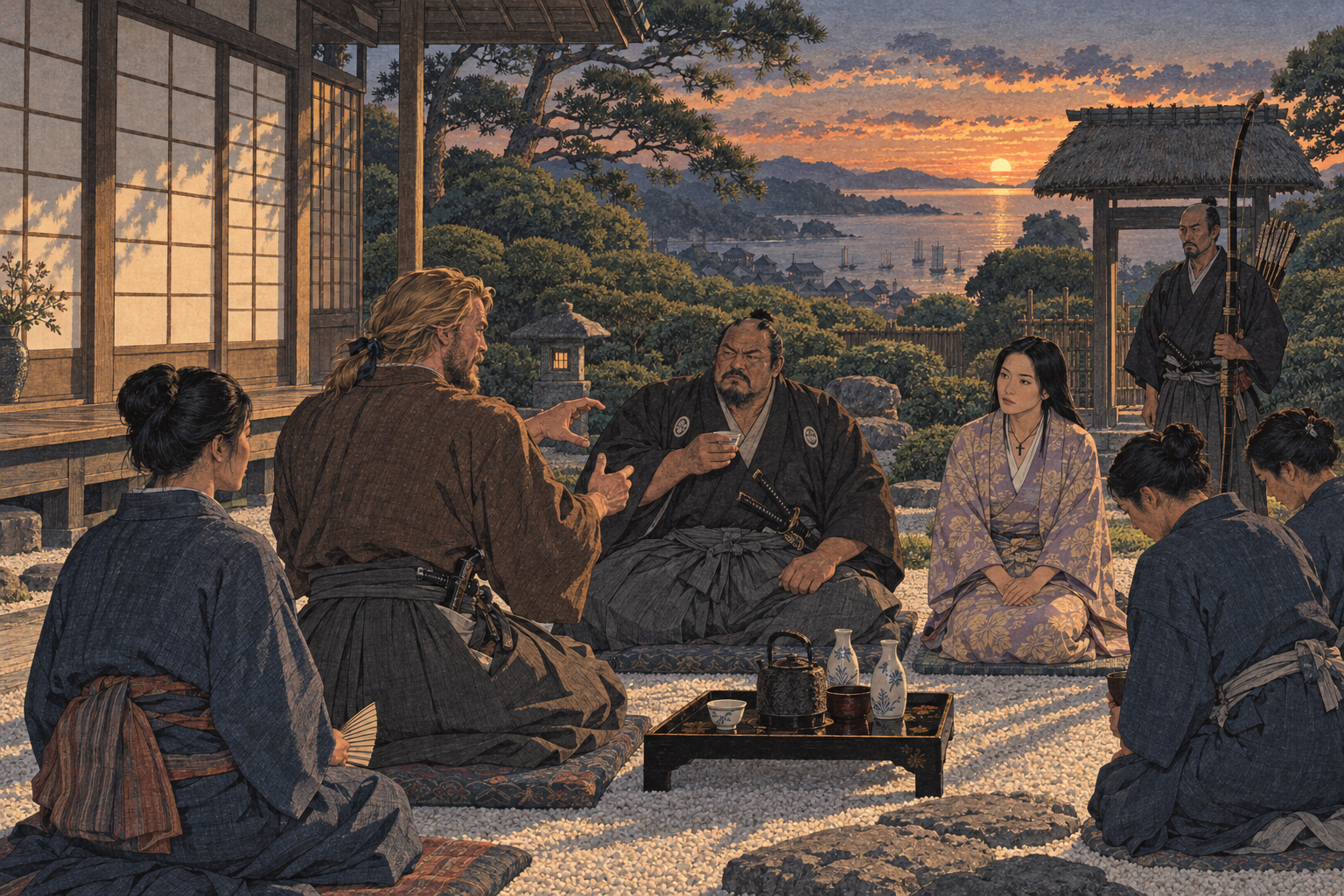
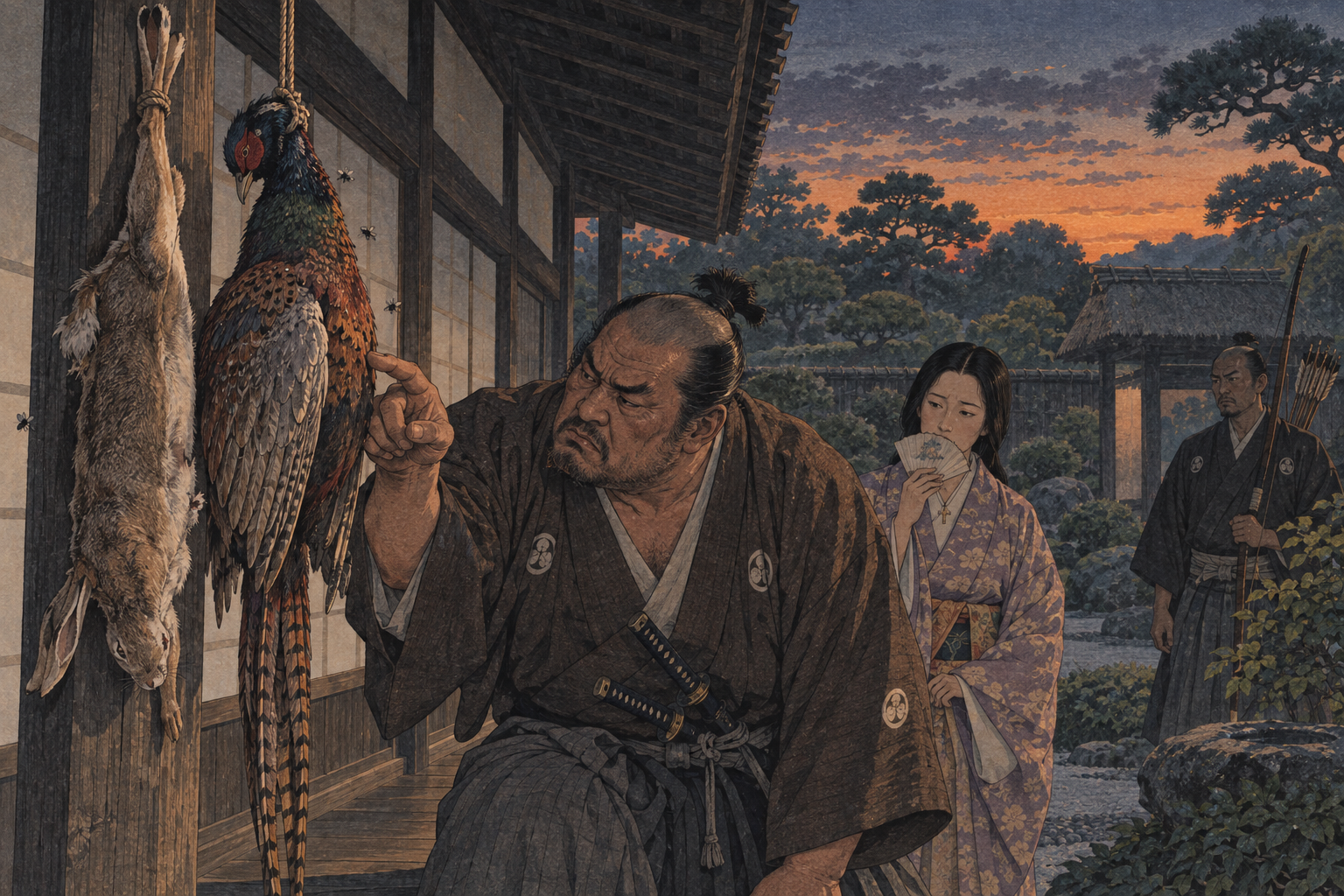
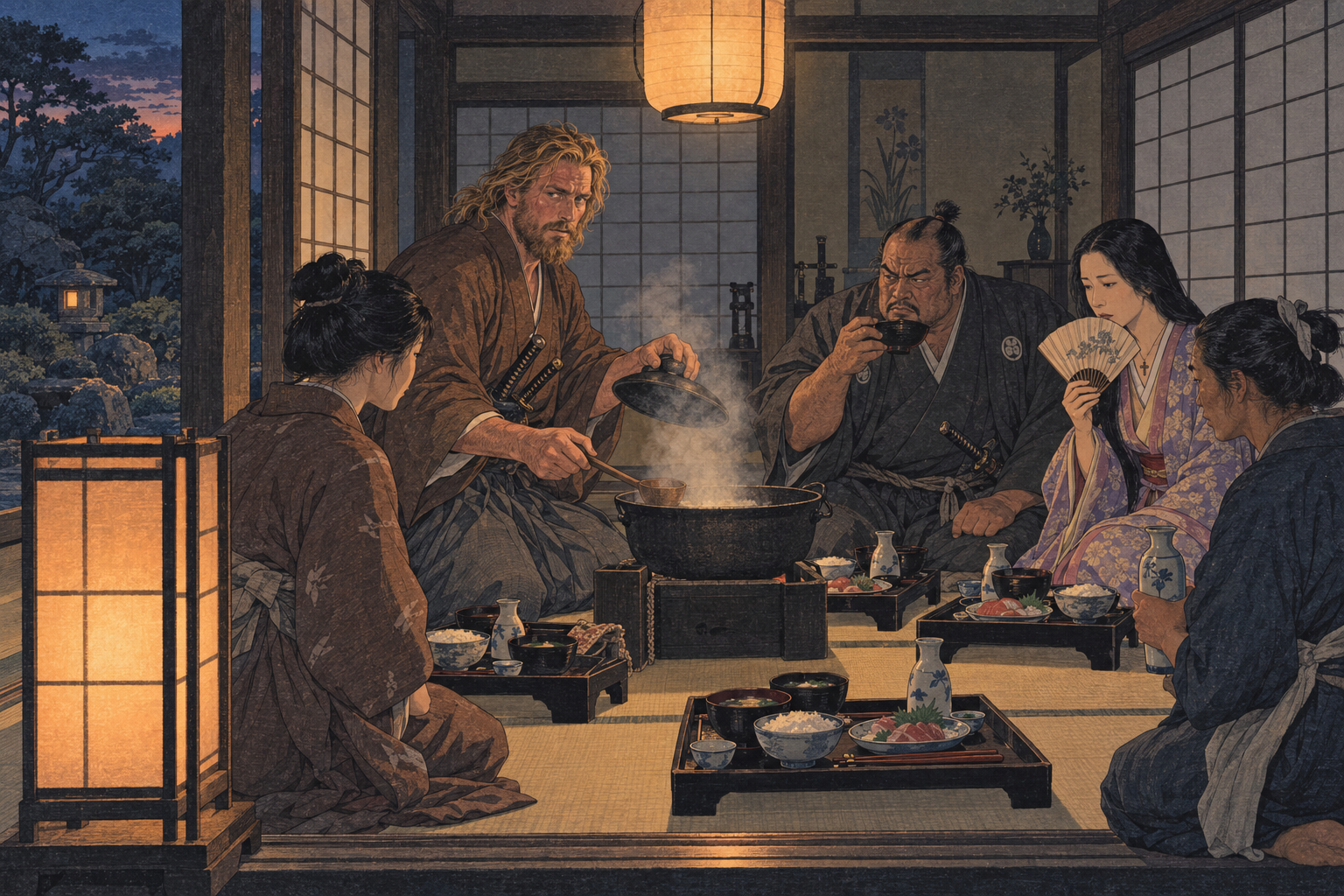
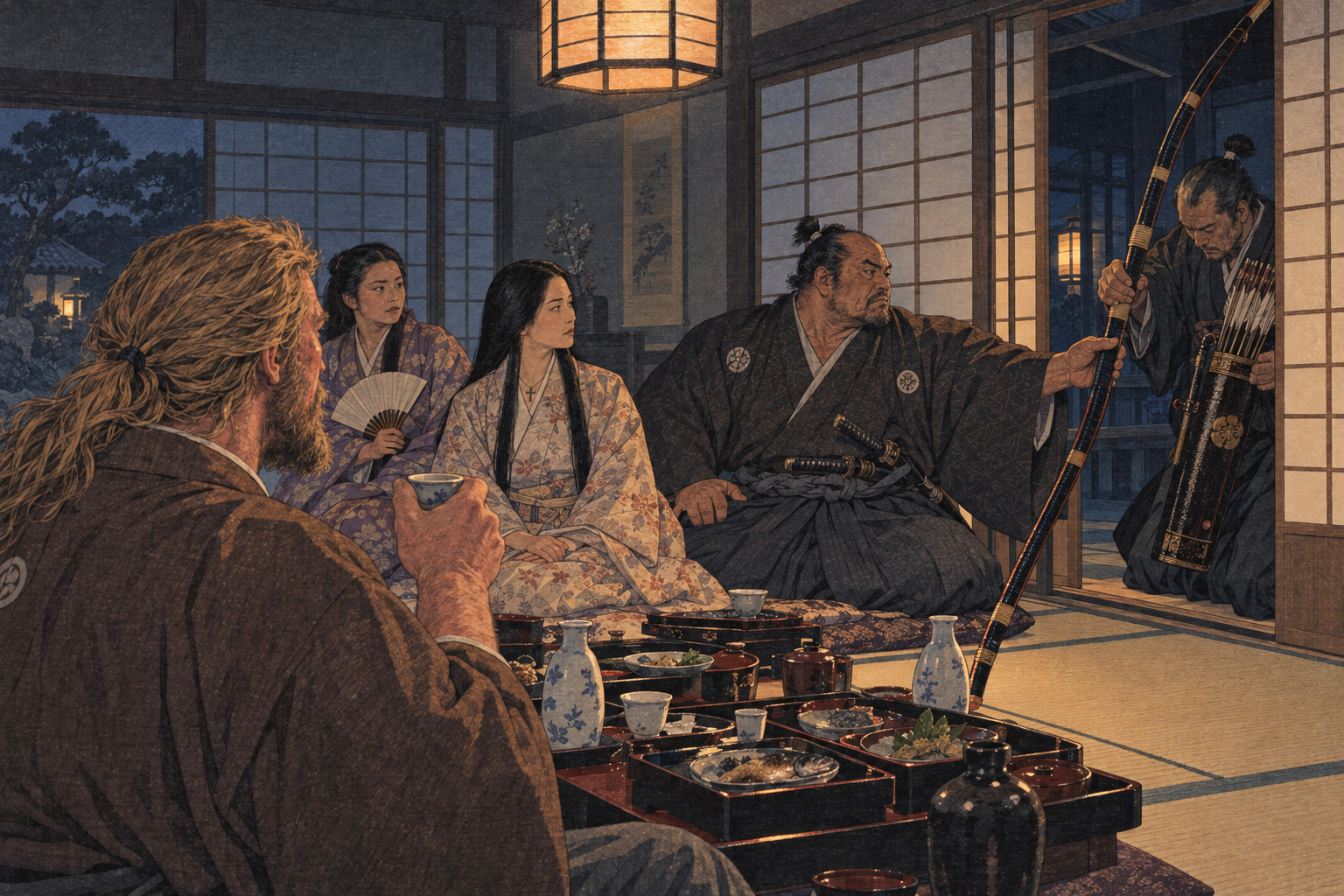
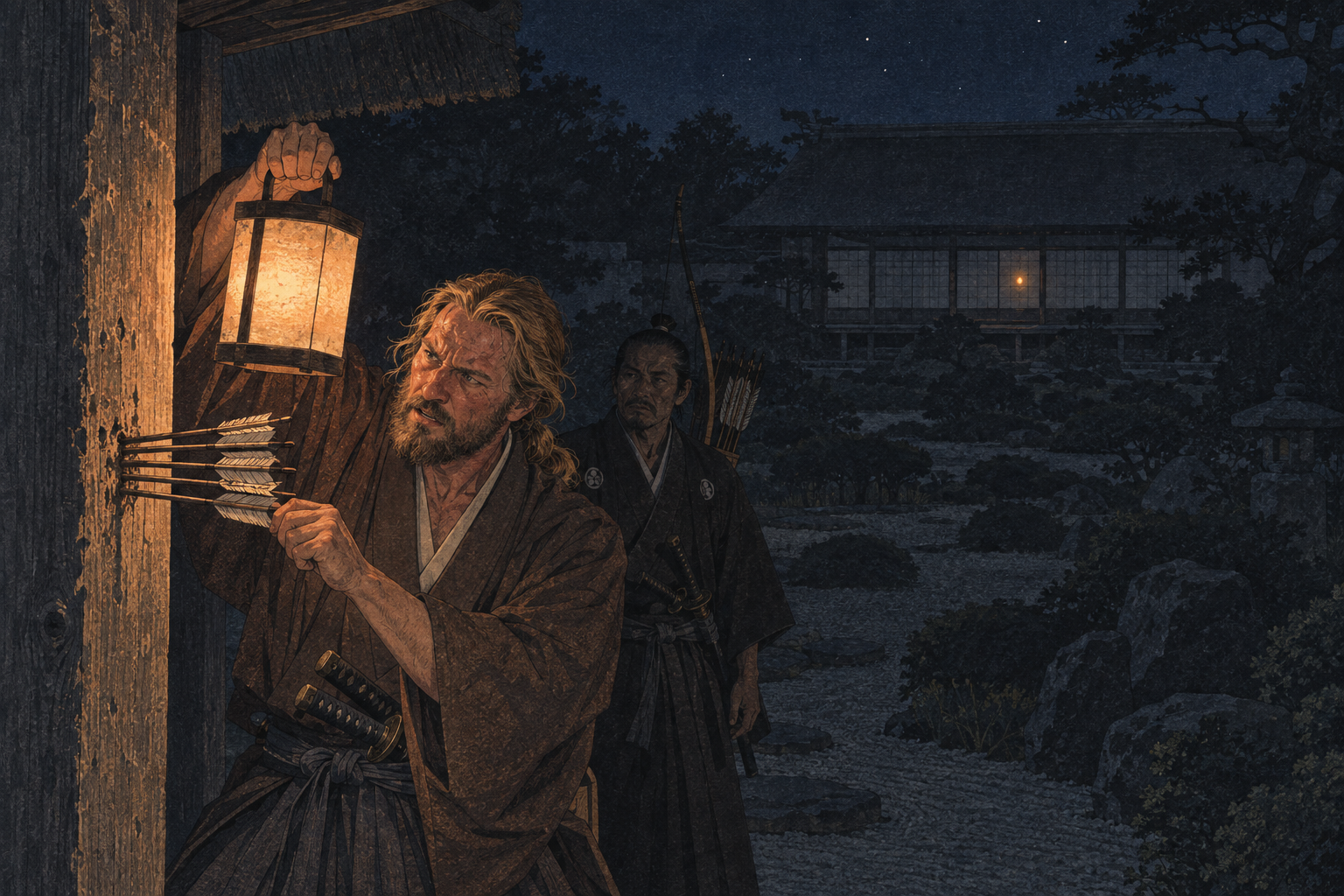
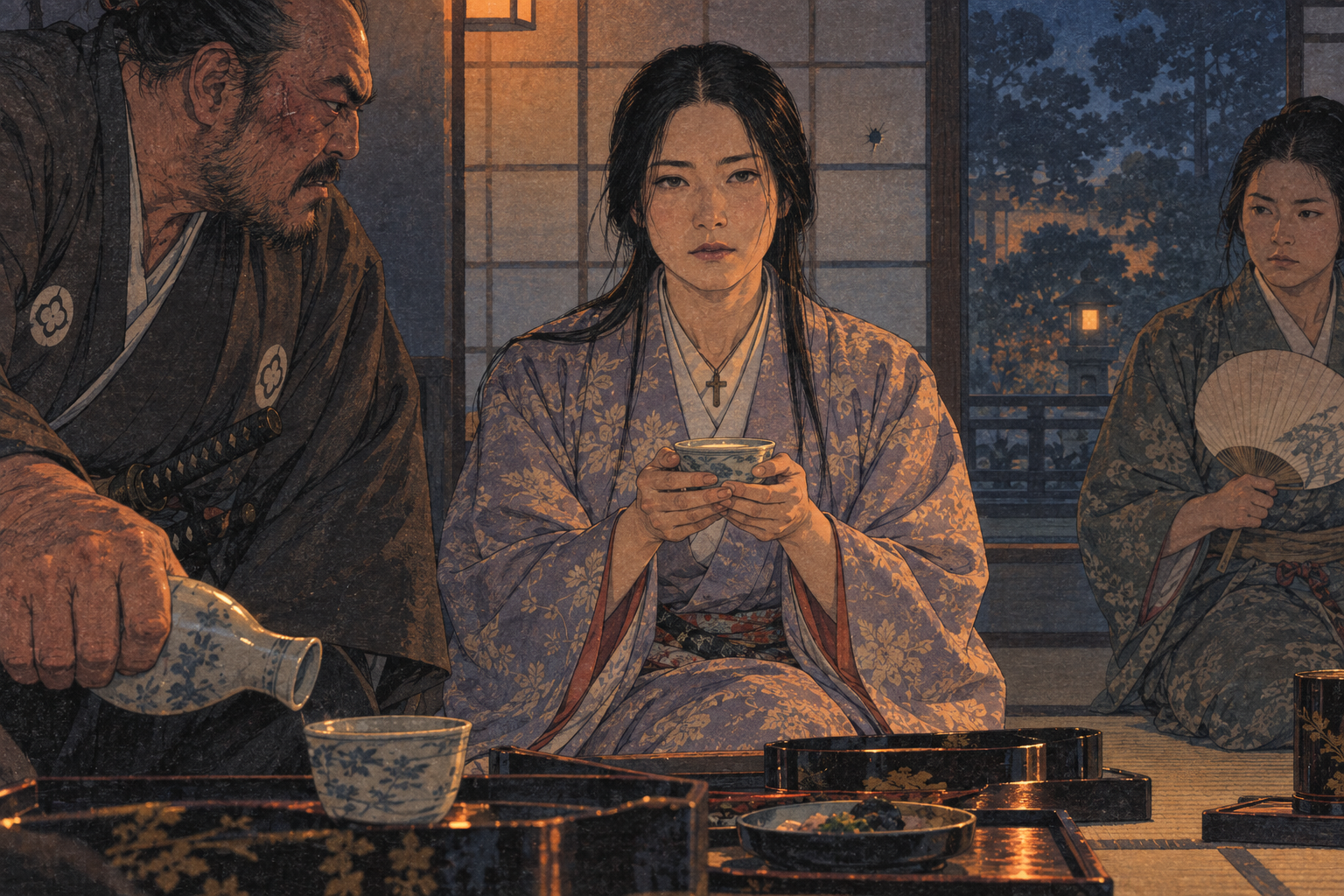
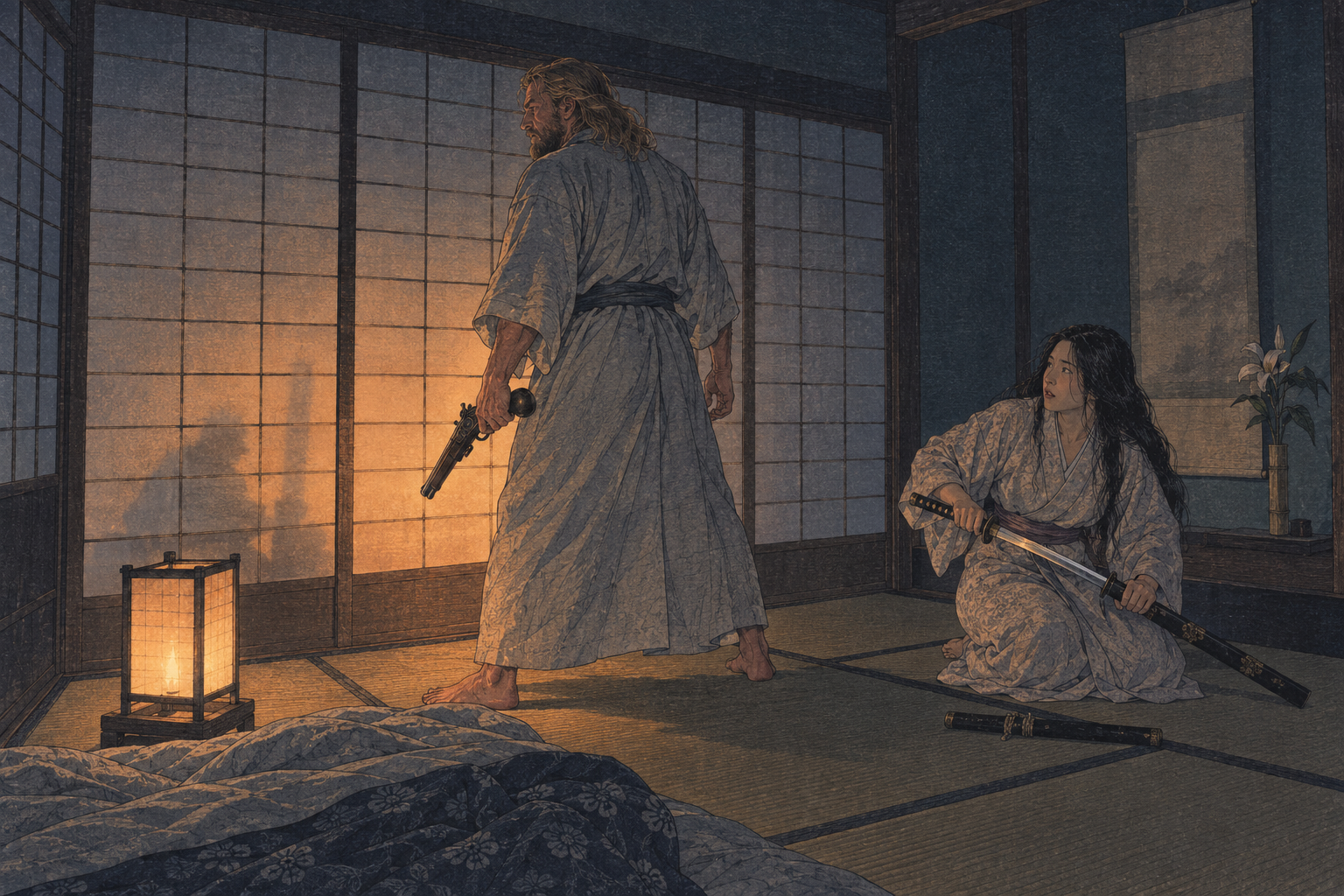
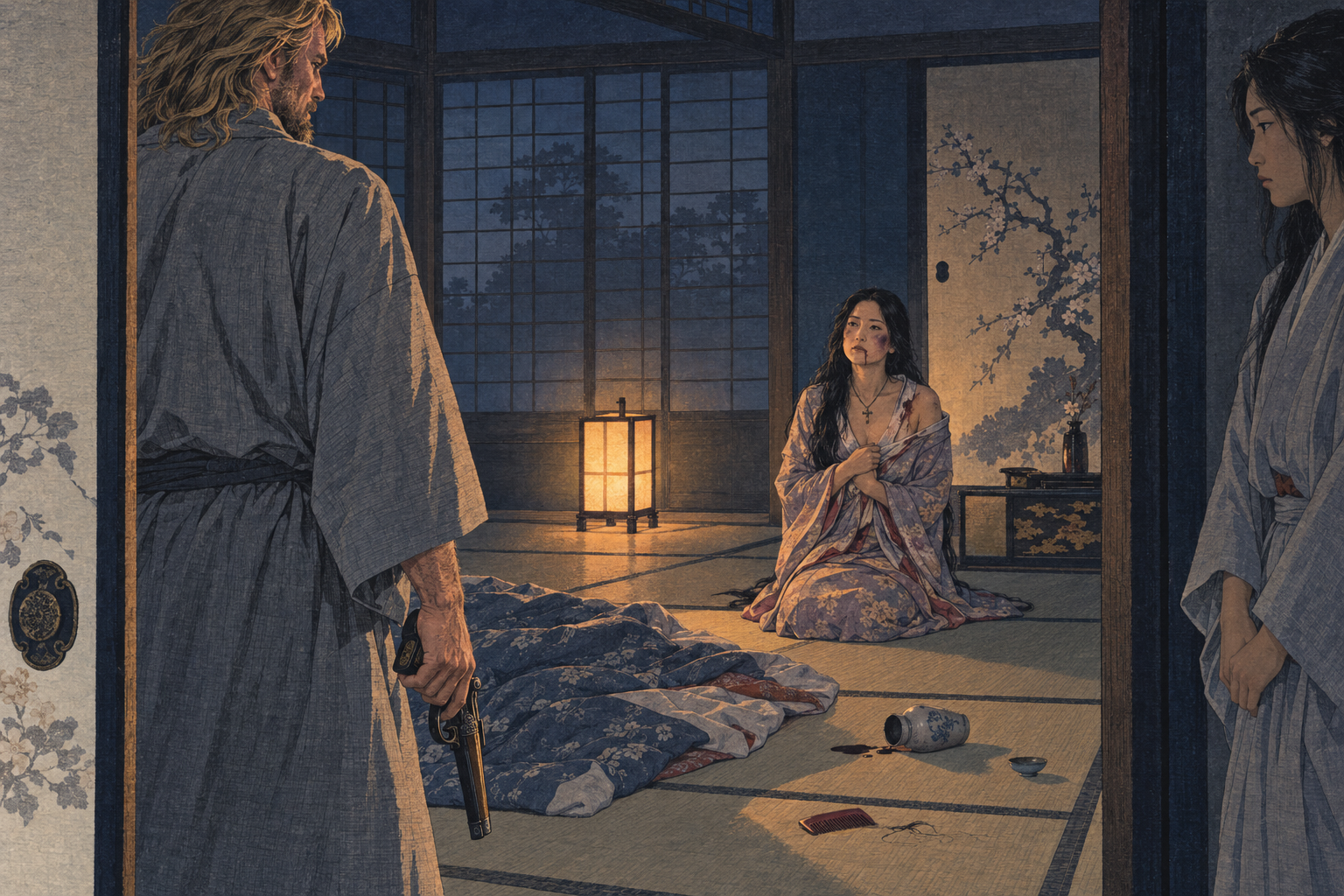
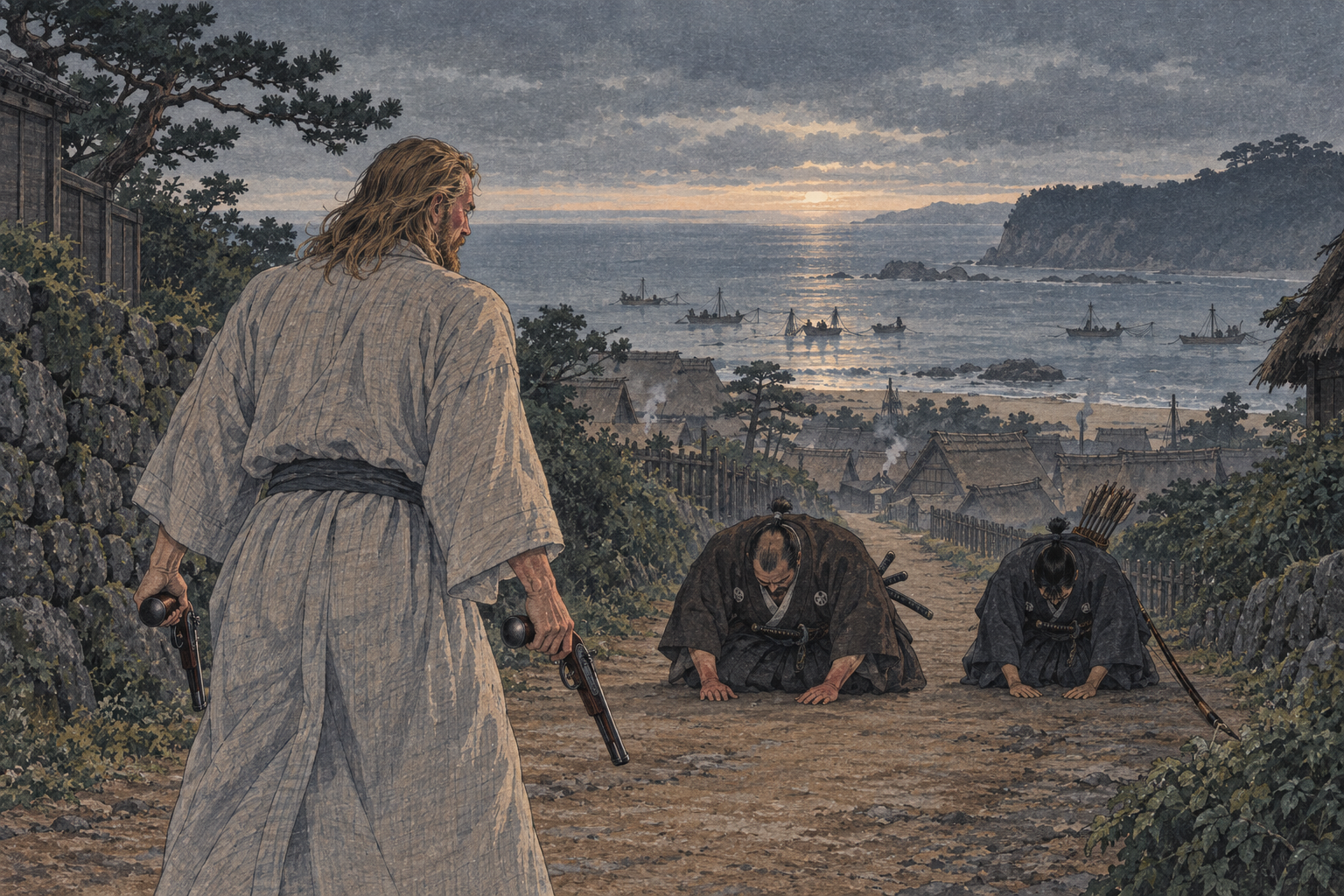
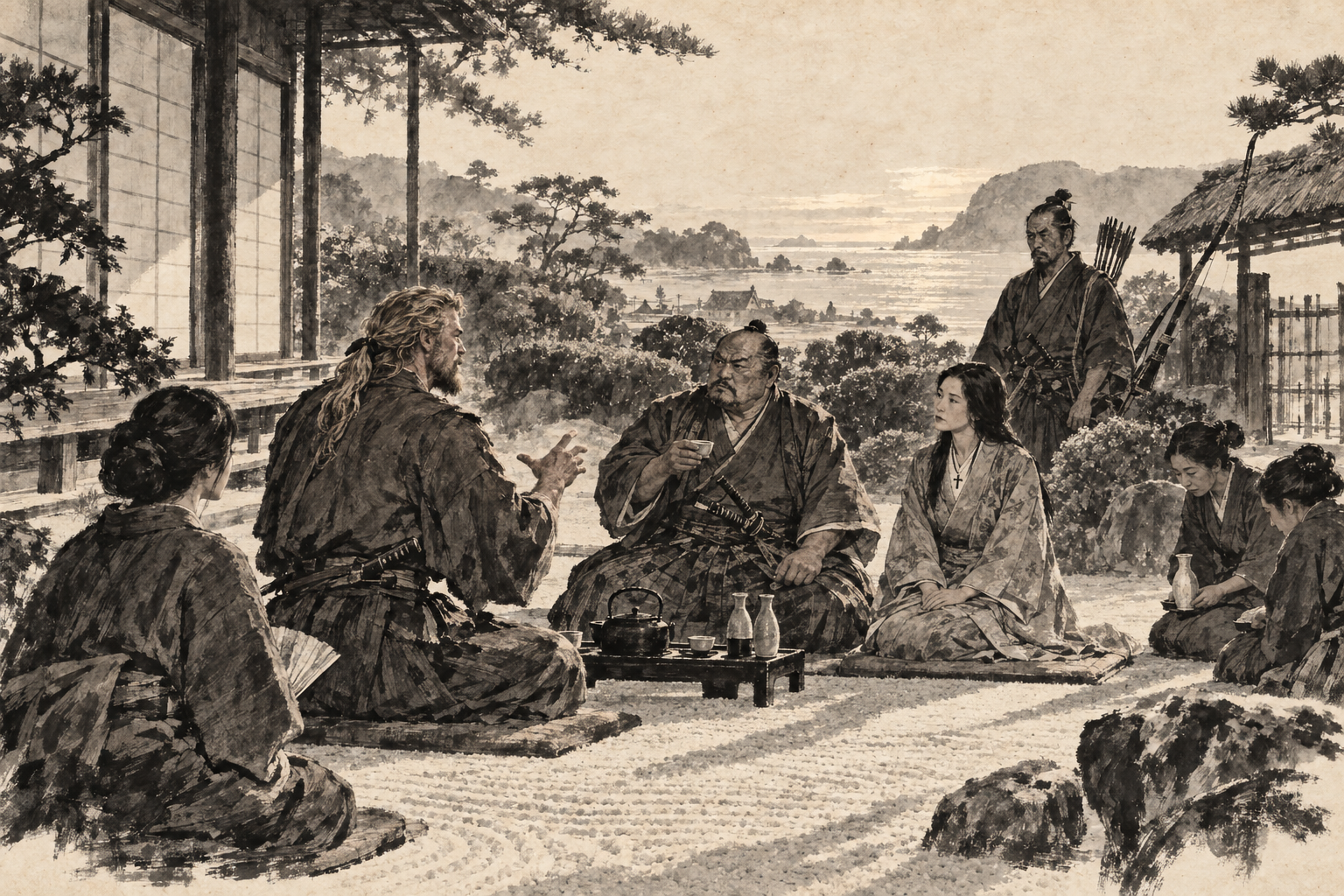
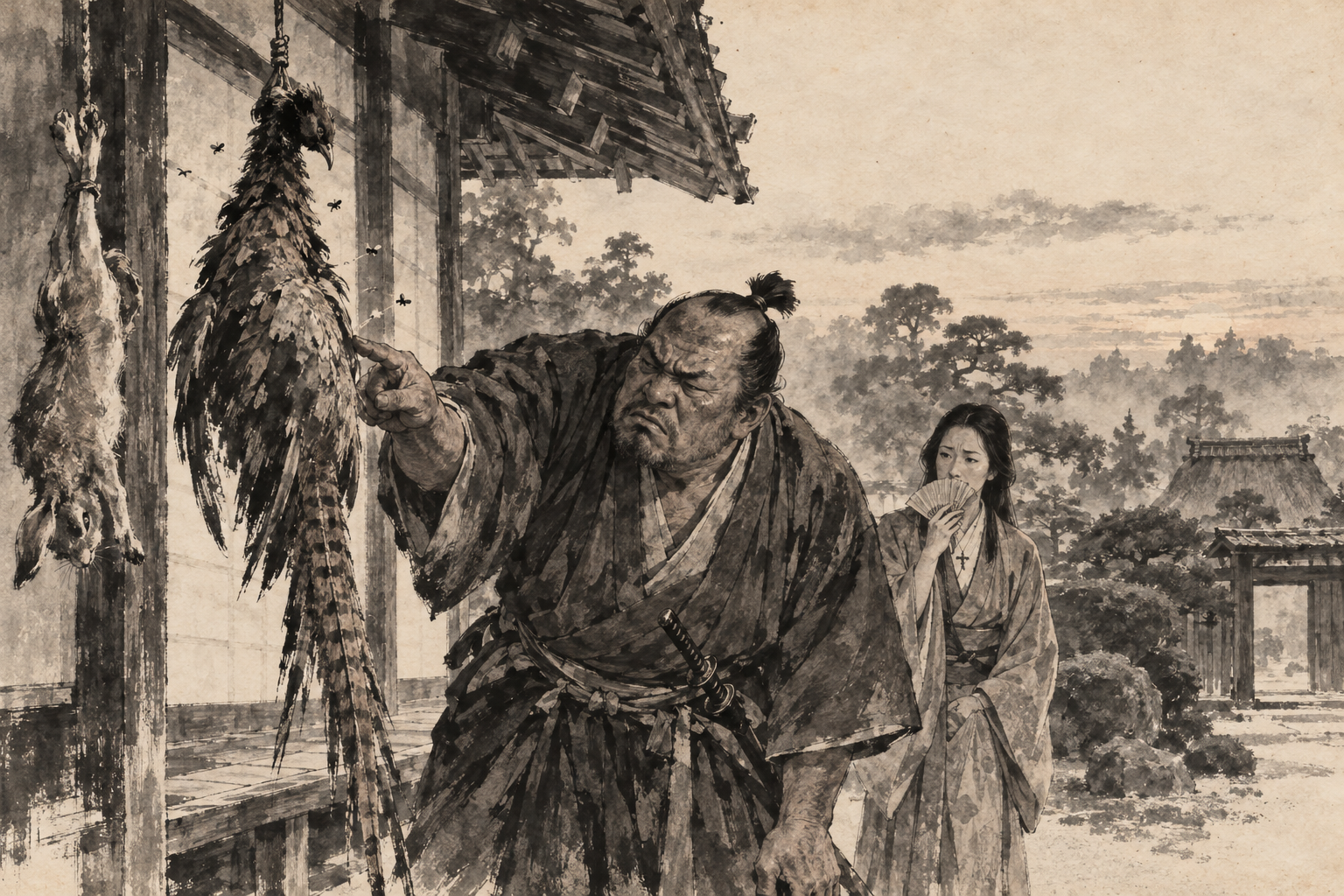
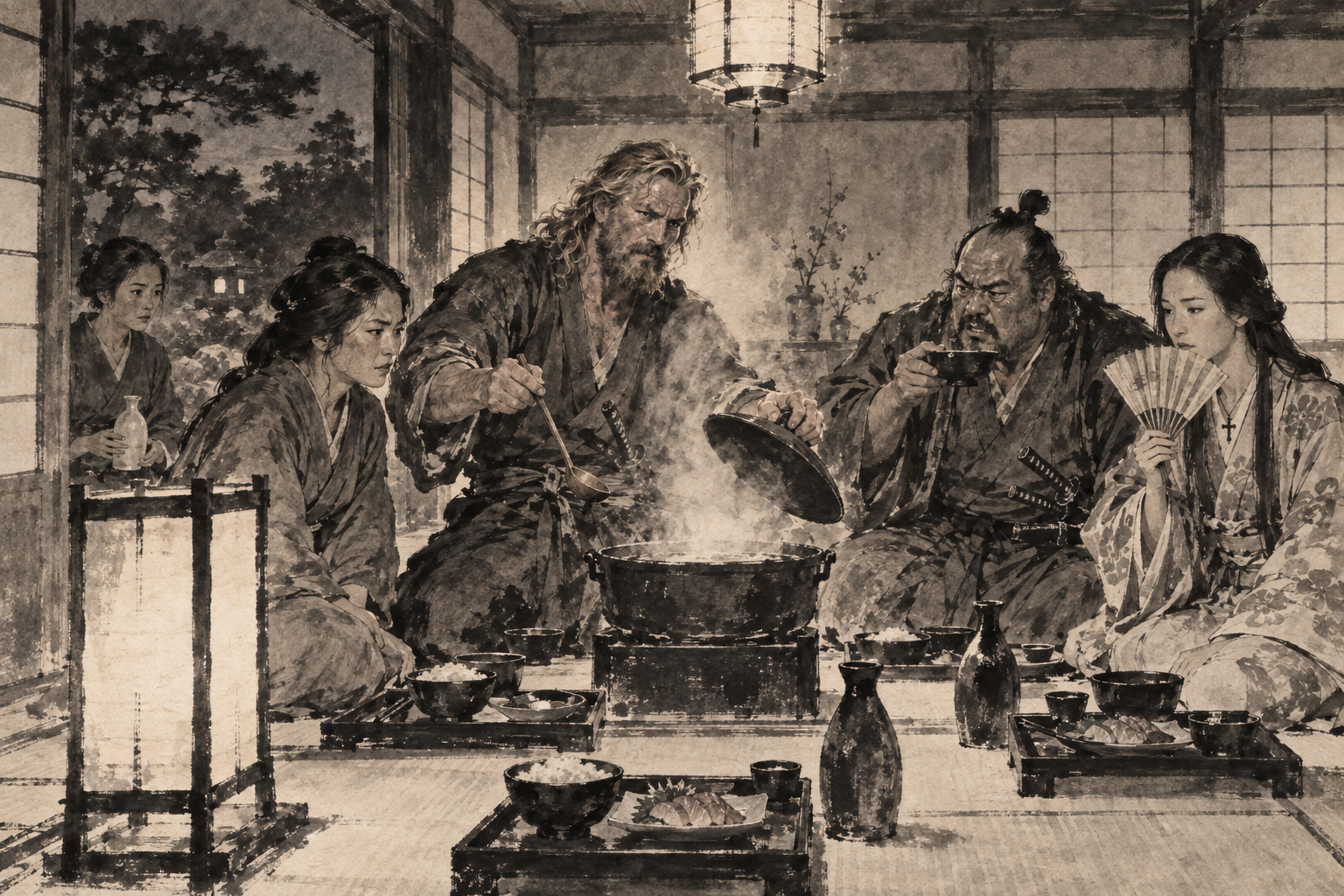
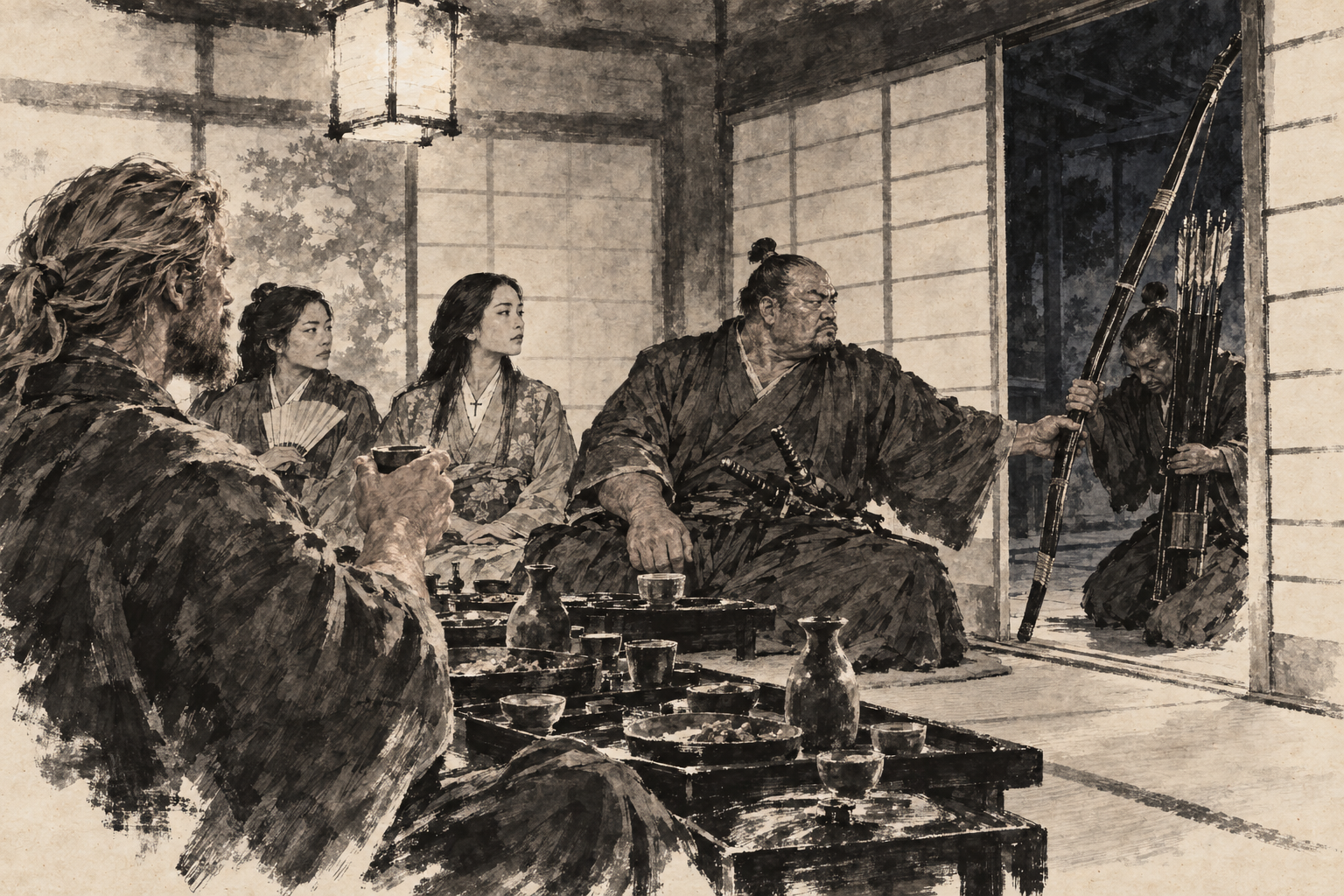
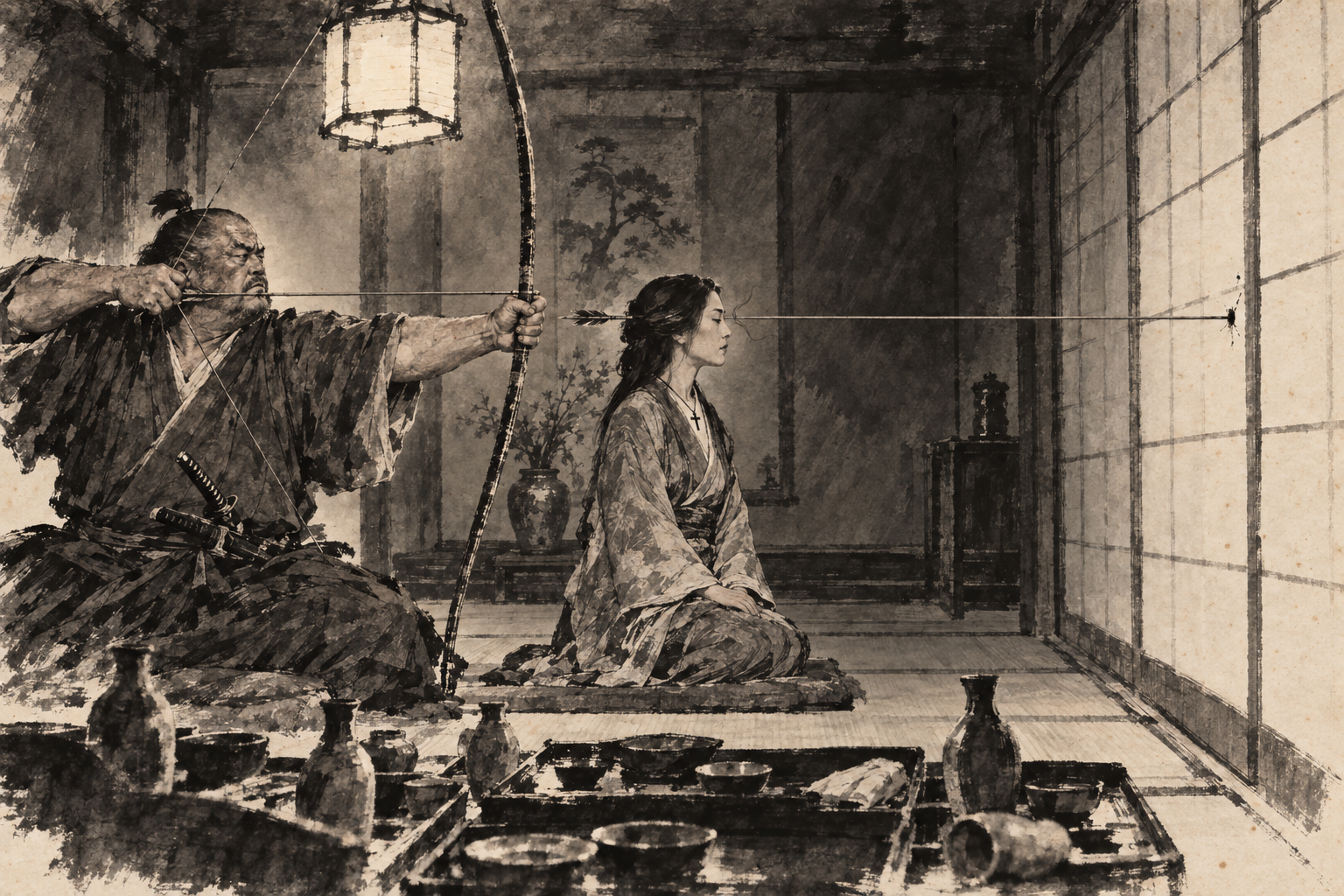
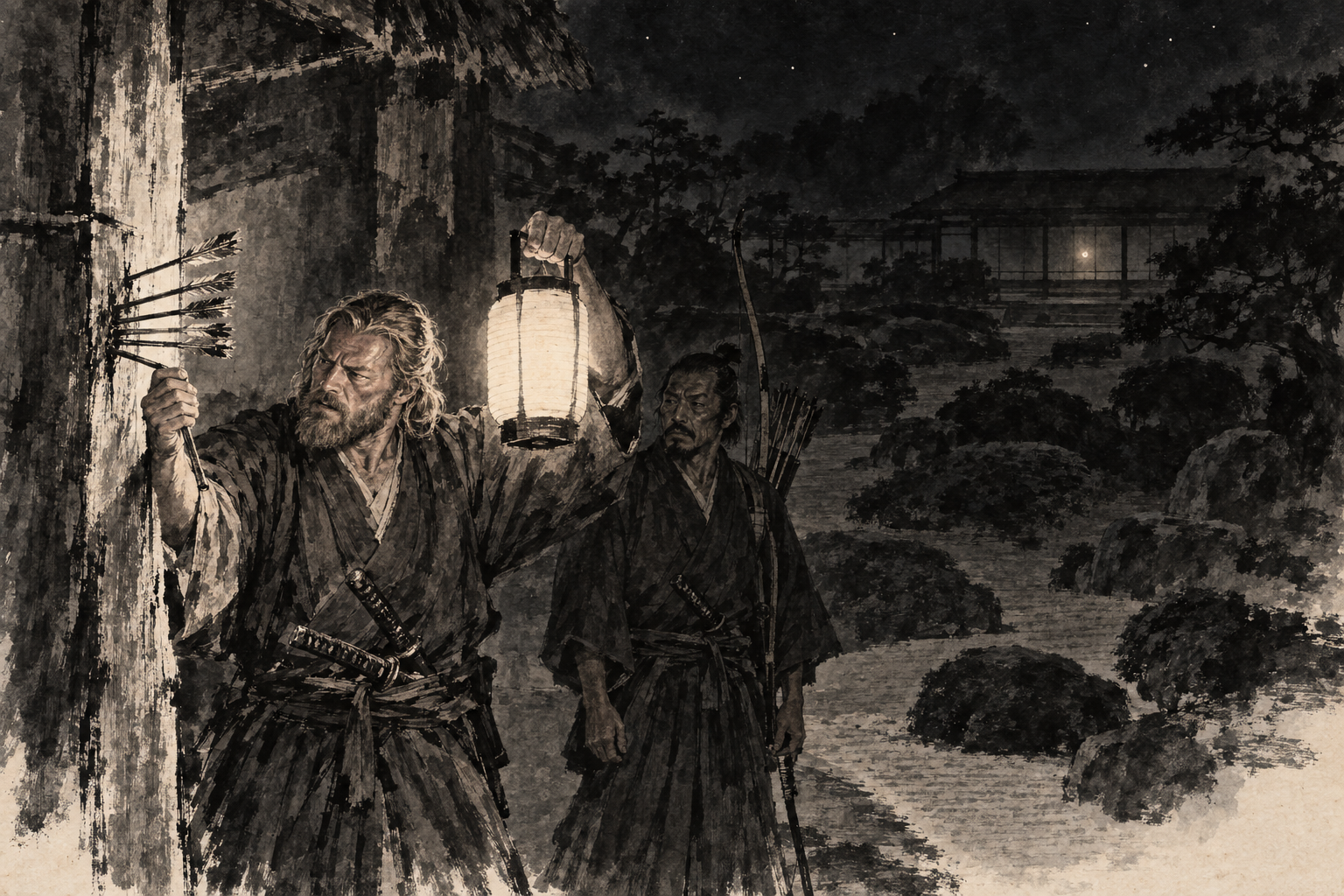
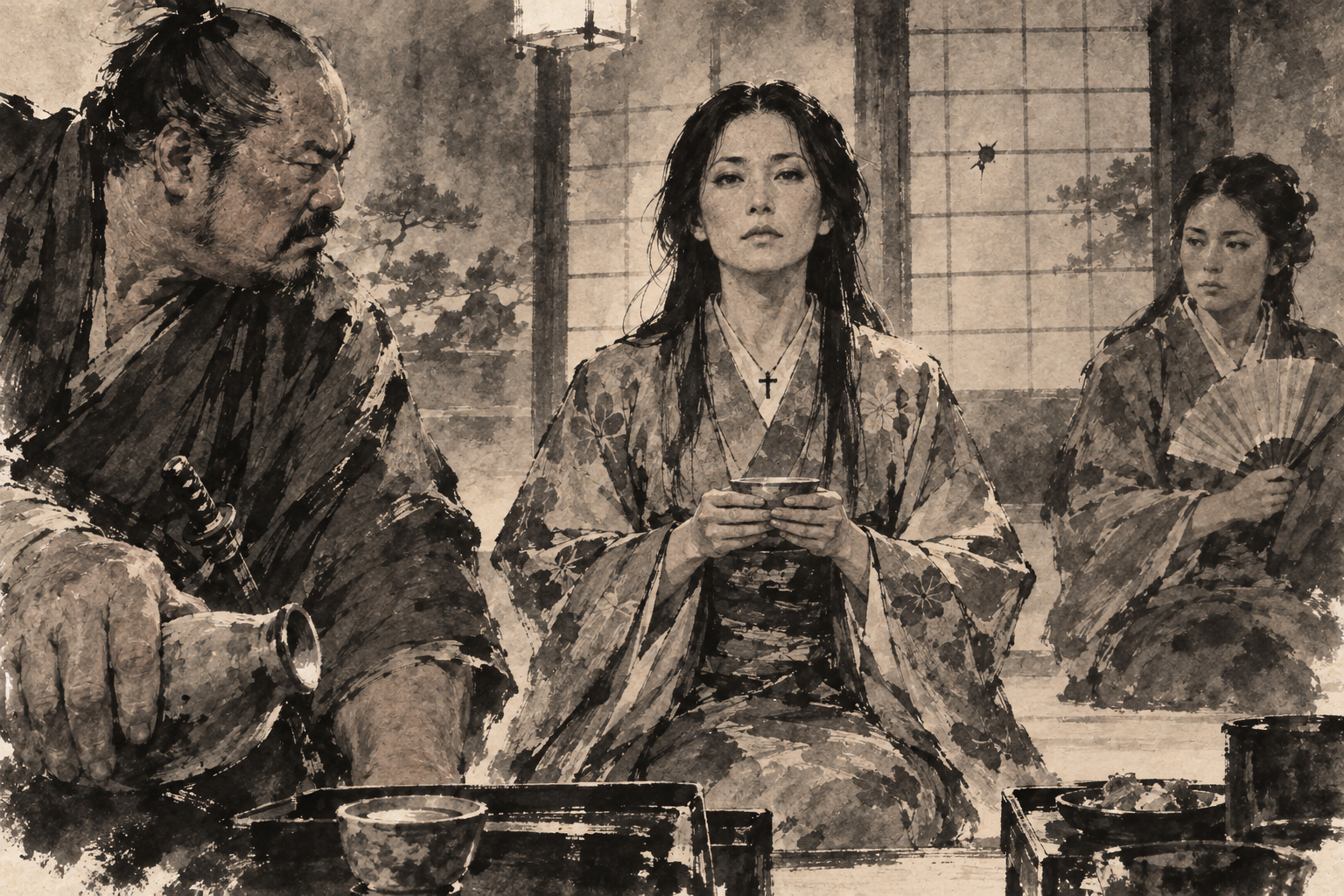
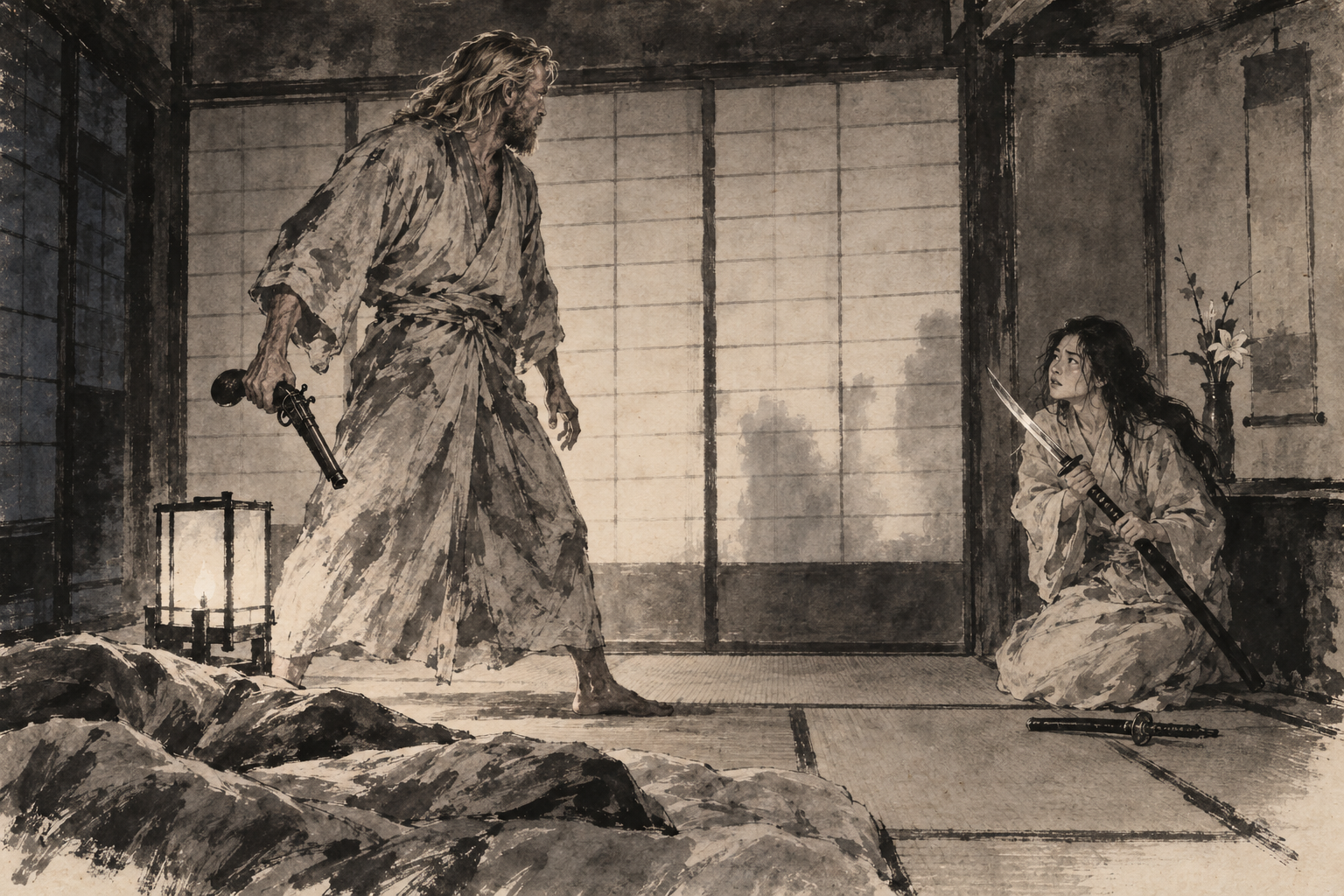
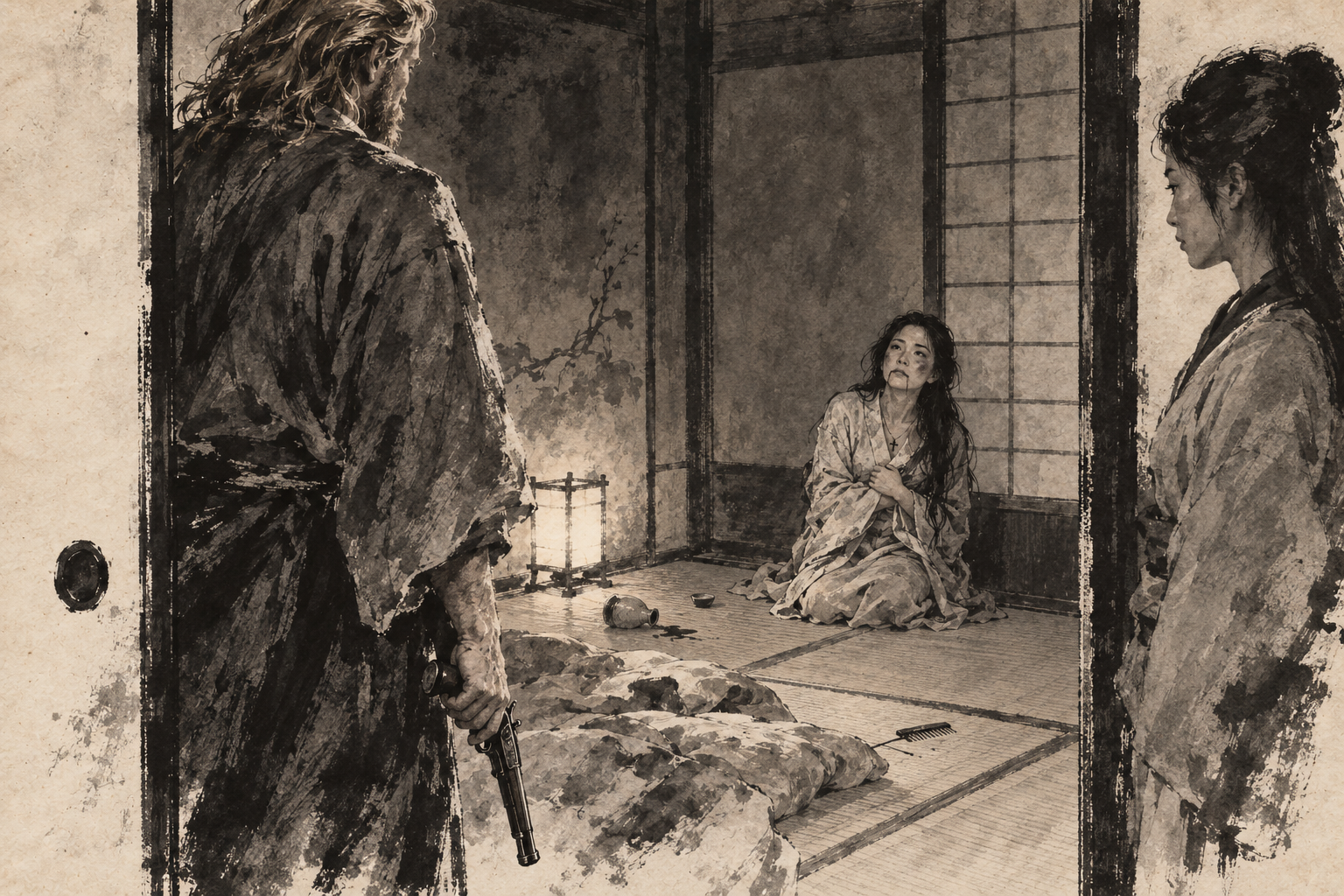
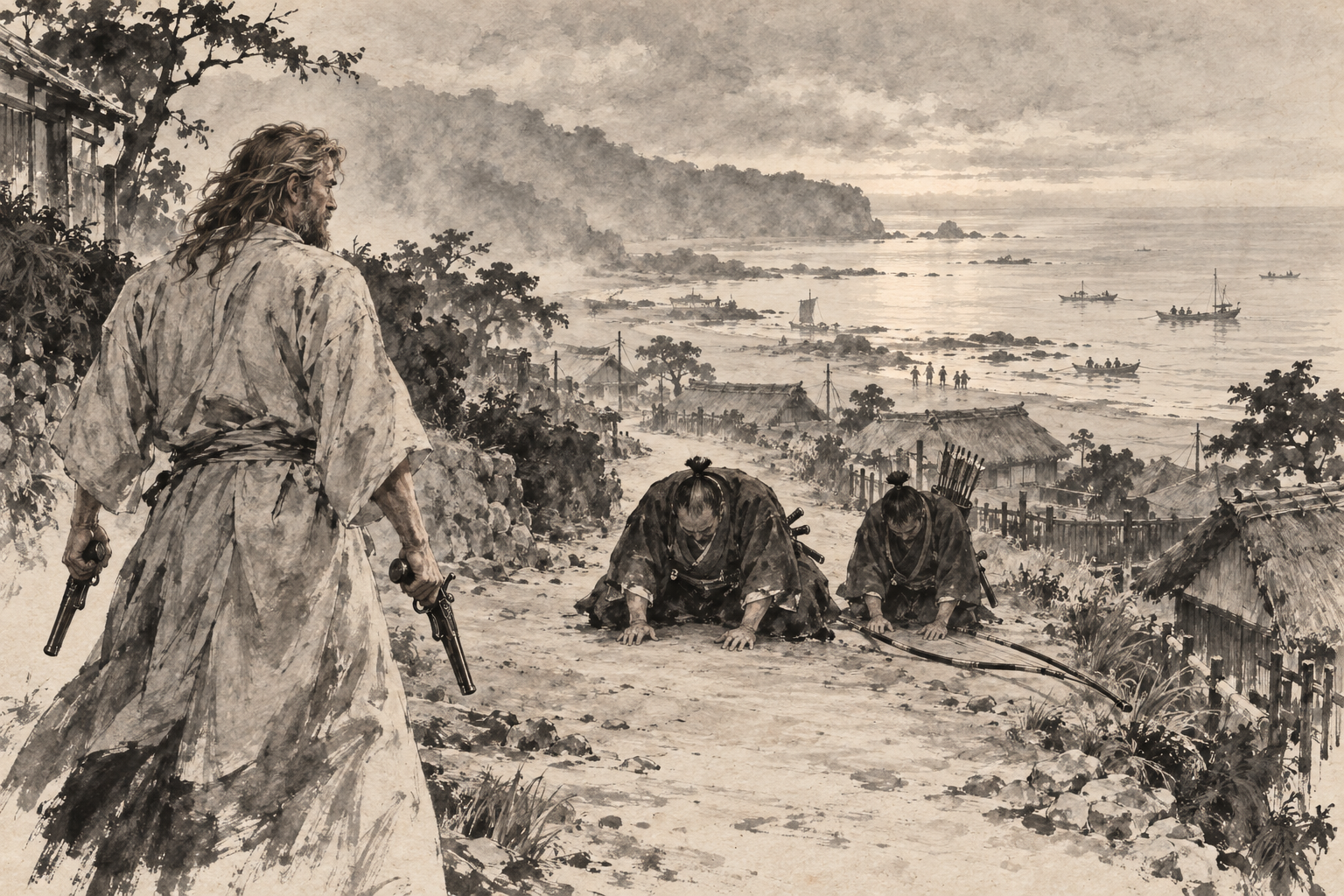
Blackthorne, pistol hidden under his sash, formally receives Buntaro. Through Mariko they discuss fire arrows, pitch and the siege of Malta, which Blackthorne sees as the key to Osaka Castle. Dinner is a disaster: the guests recoil from the pheasant hanging to mature. Toasting turns into a drinking bout. Buntaro calls for his bow and, seated, fires five arrows past Mariko's face through the same hole in the shoji into the gatepost. Drunk and vicious, he orders Mariko to tell the barbarian who she is: Akechi Mariko, daughter of the assassin of Lord Goroda, banished eight years to Shonai. In the night Blackthorne hears the blows; Fujiko bars his way, then draws his sword to follow him through the wall. Mariko, bruised and bleeding, orders him out: refusing to cringe is her revenge. At dawn Buntaro kneels in the road and apologises. Blackthorne does not see her for eight days.
Analysis
The five arrows through the shoji are the book's cleanest image of controlled violence, and Clavell follows them with Mariko's ancestry, spoken as an insult. The beating heard through the wall is the chapter's ethical test: Fujiko stops Blackthorne and then arms him. Mariko's refusal to cringe redefines revenge as bearing.
Plates
Illustration style