Chapter 33 Part Three
The Musket Regiment rehearses
You witnessed their deaths. Deaths! You understand?
Summary
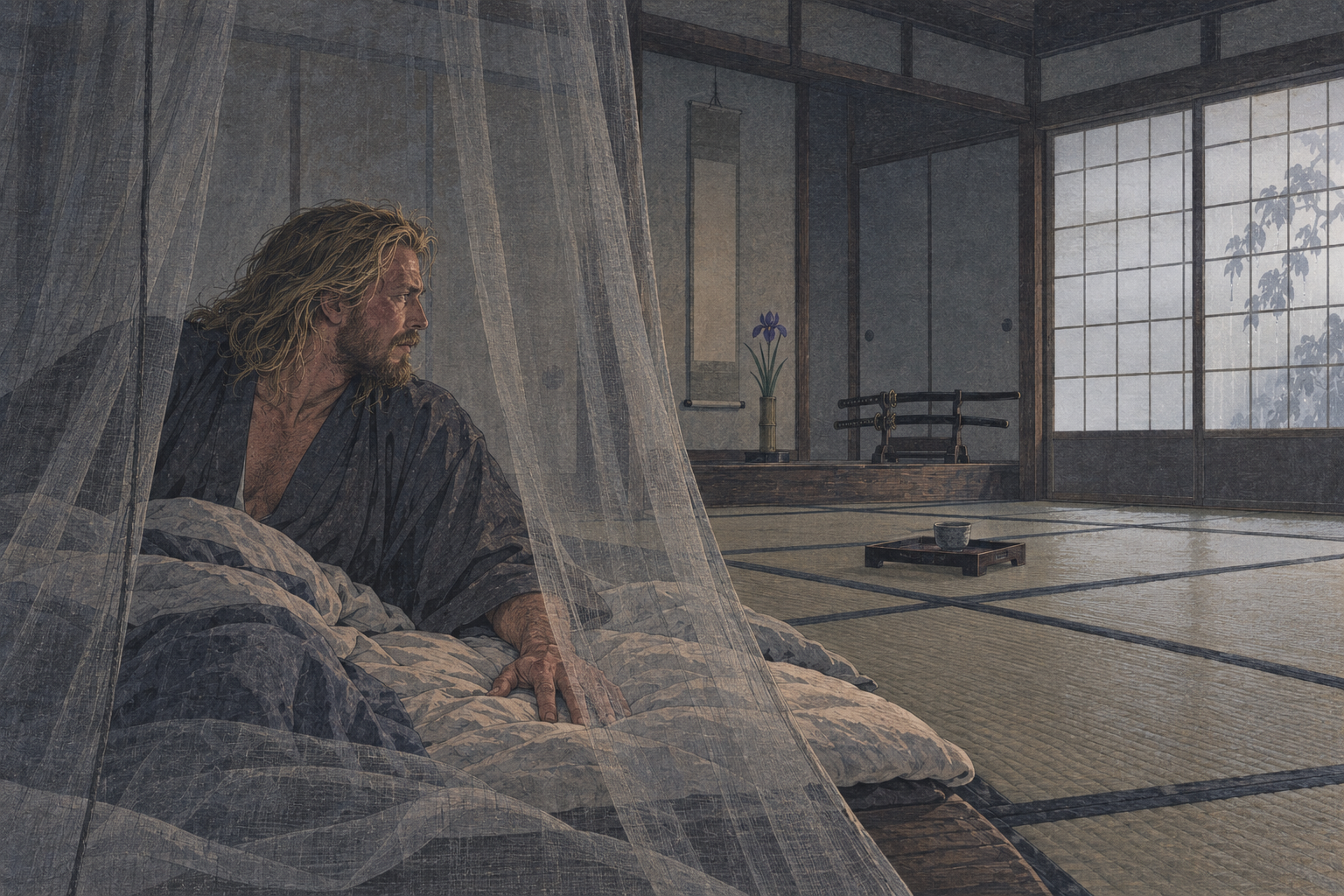
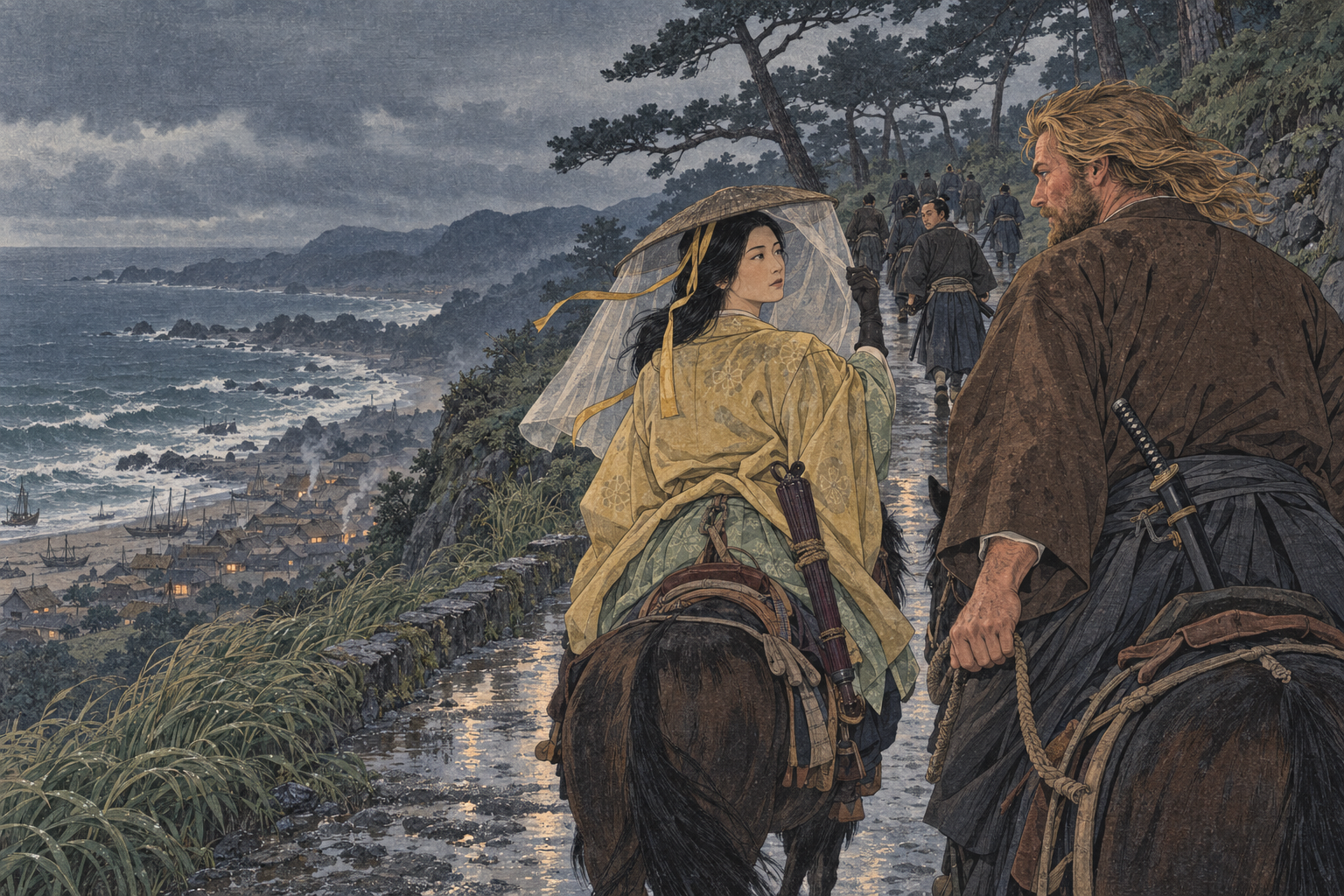
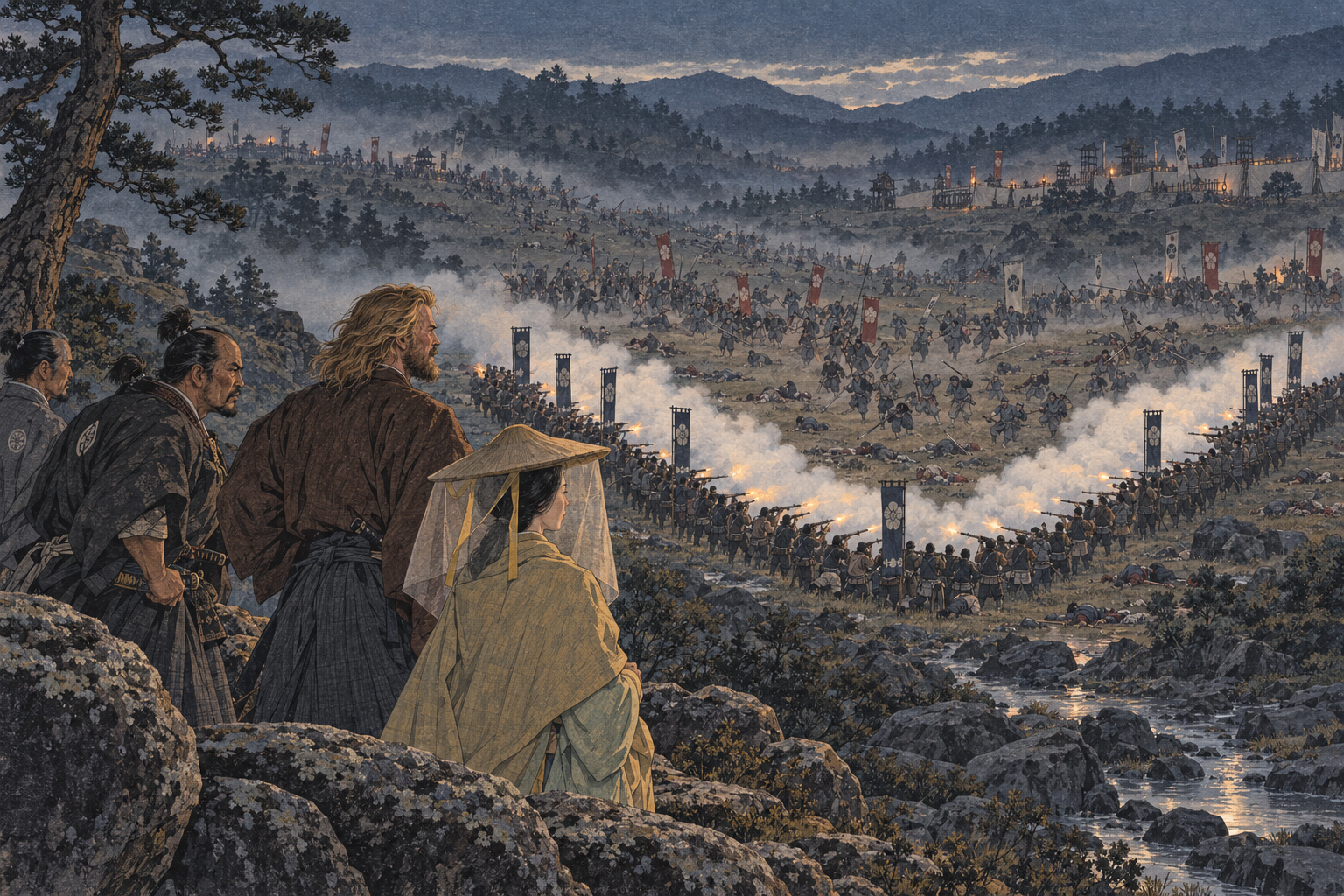
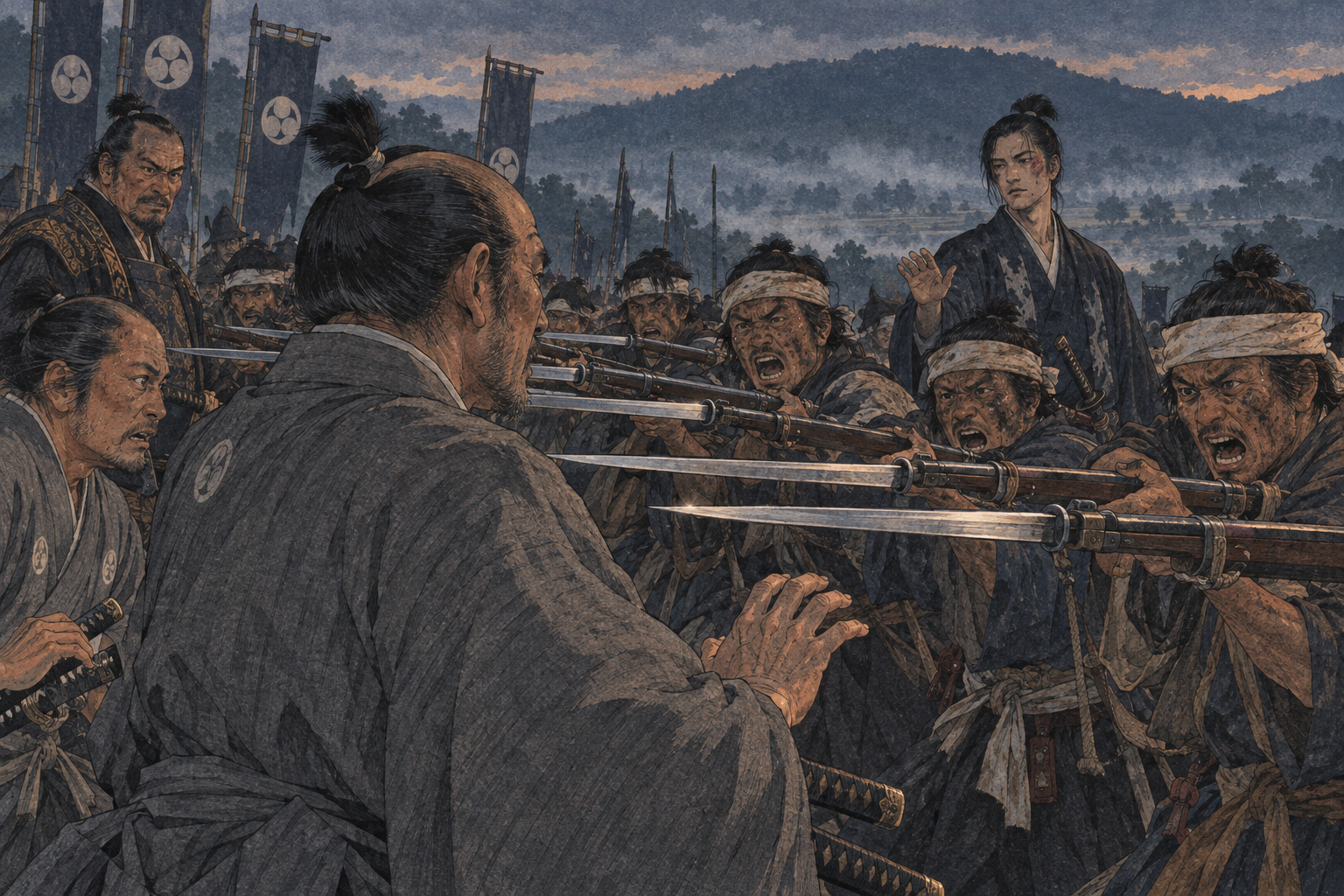
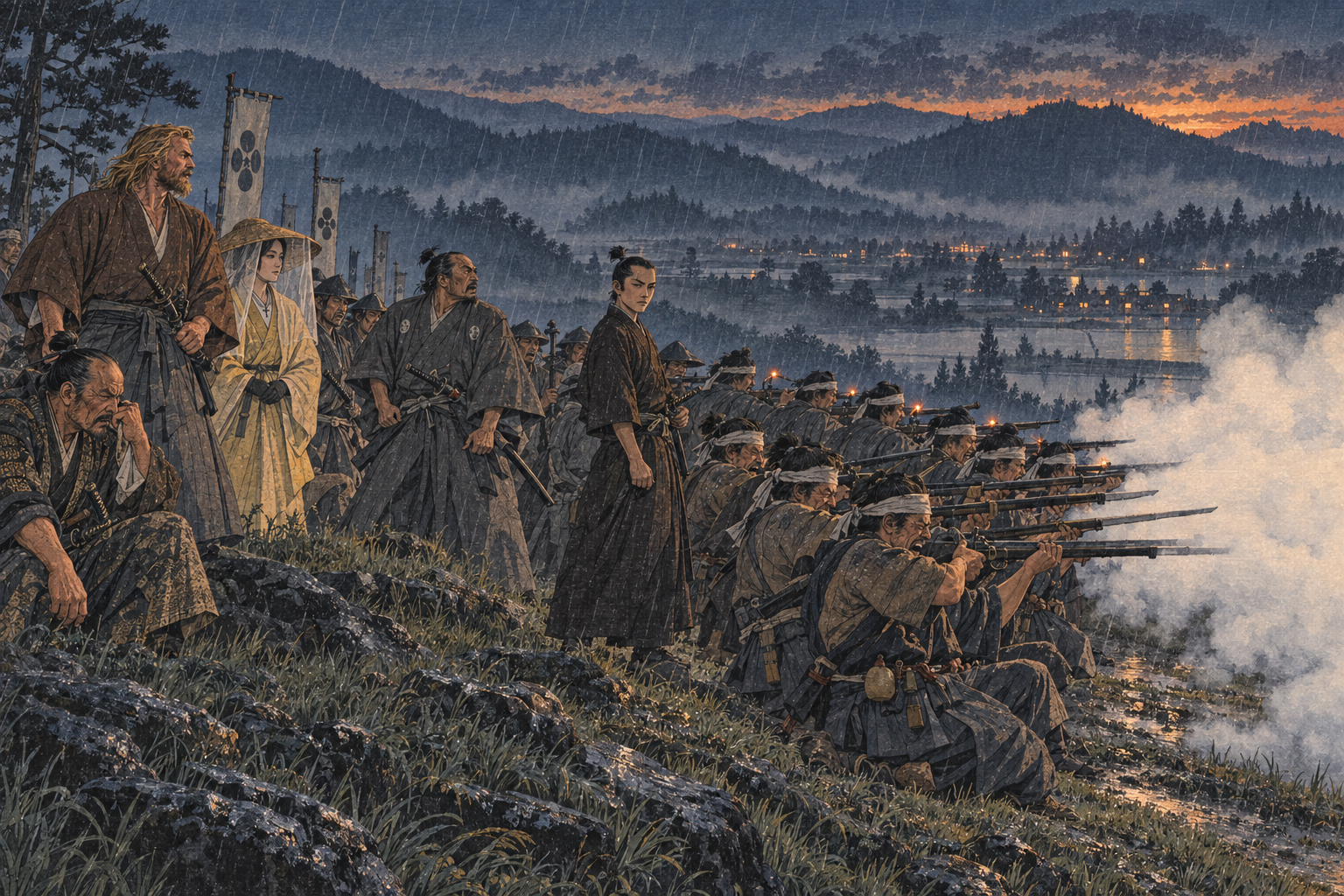
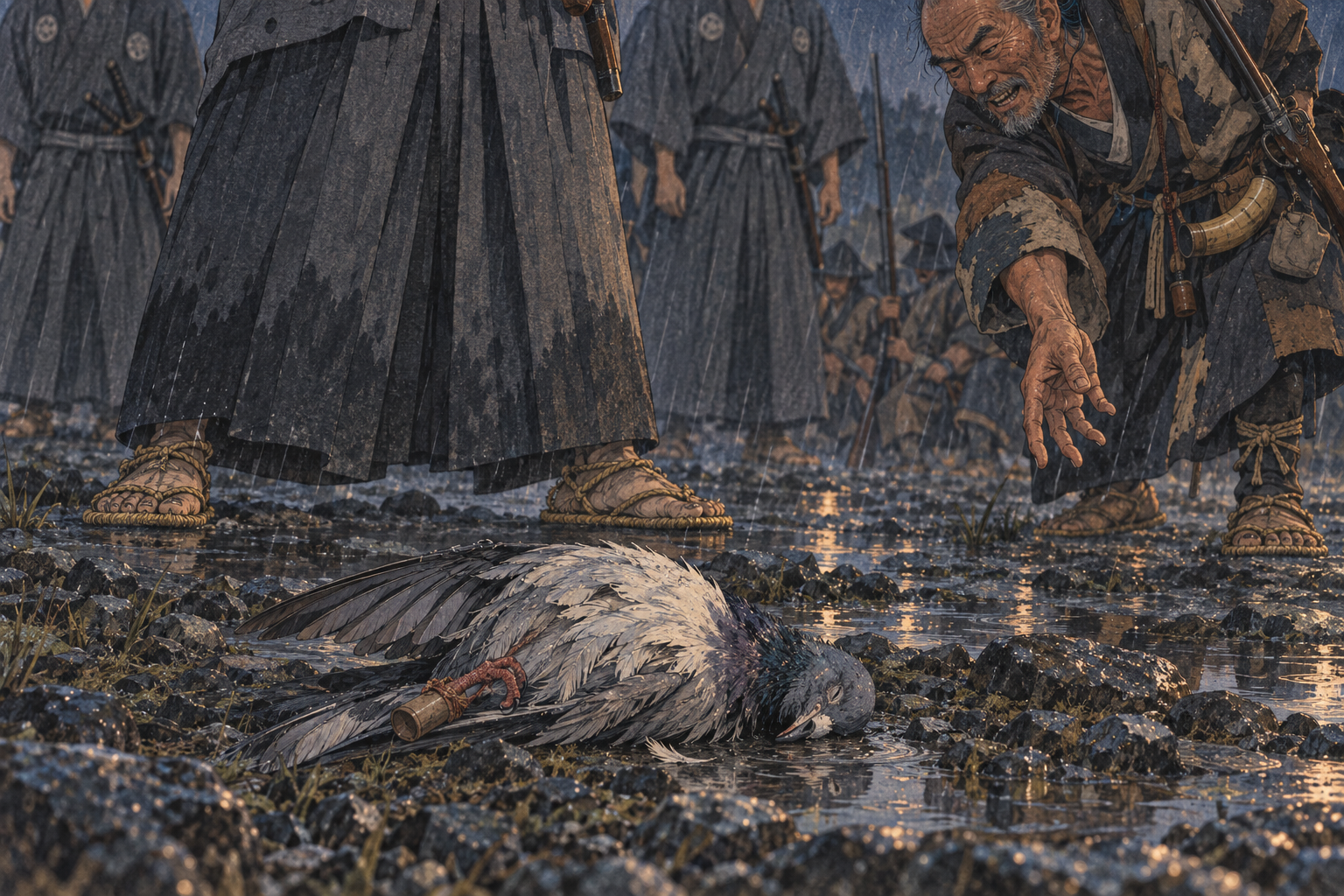
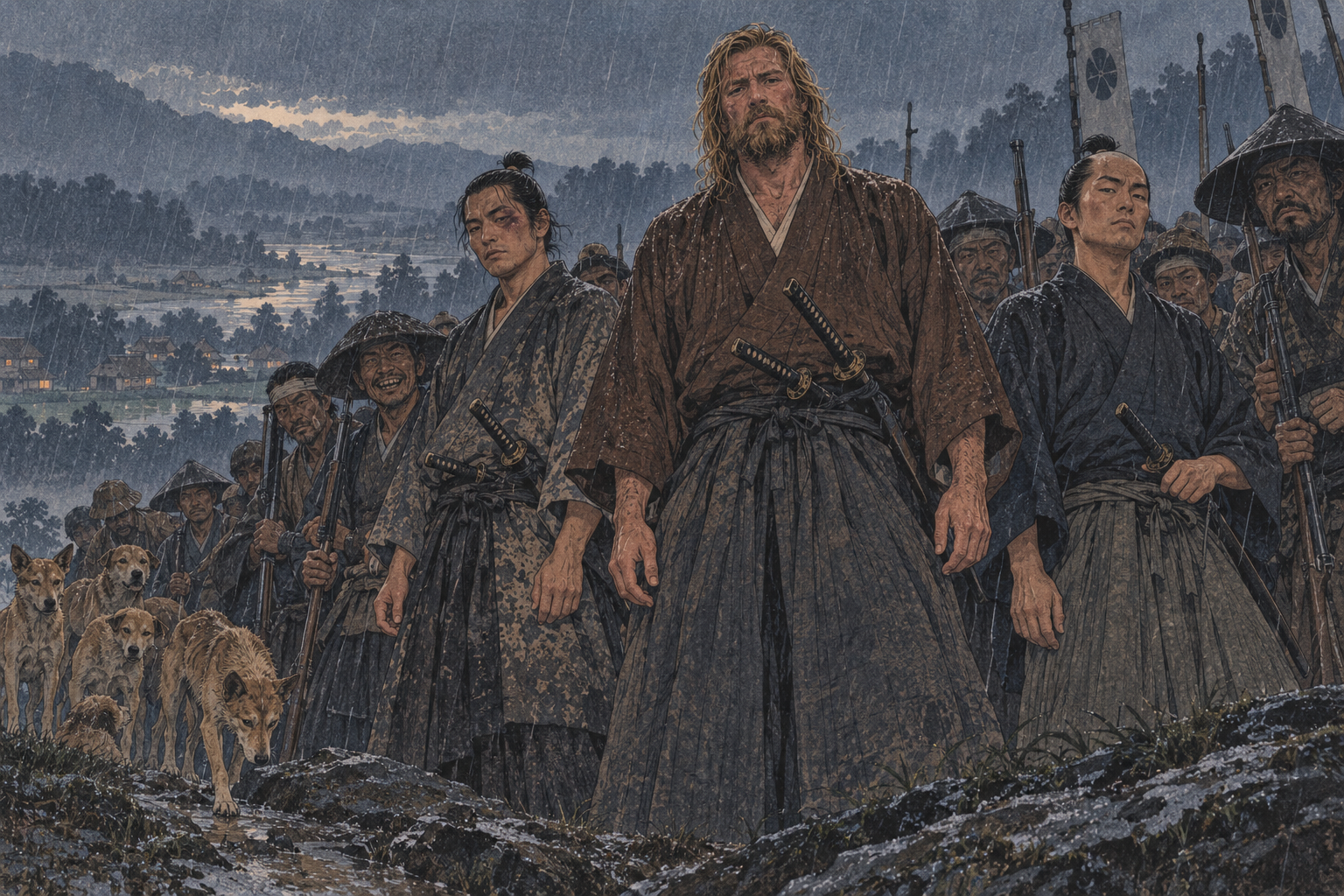
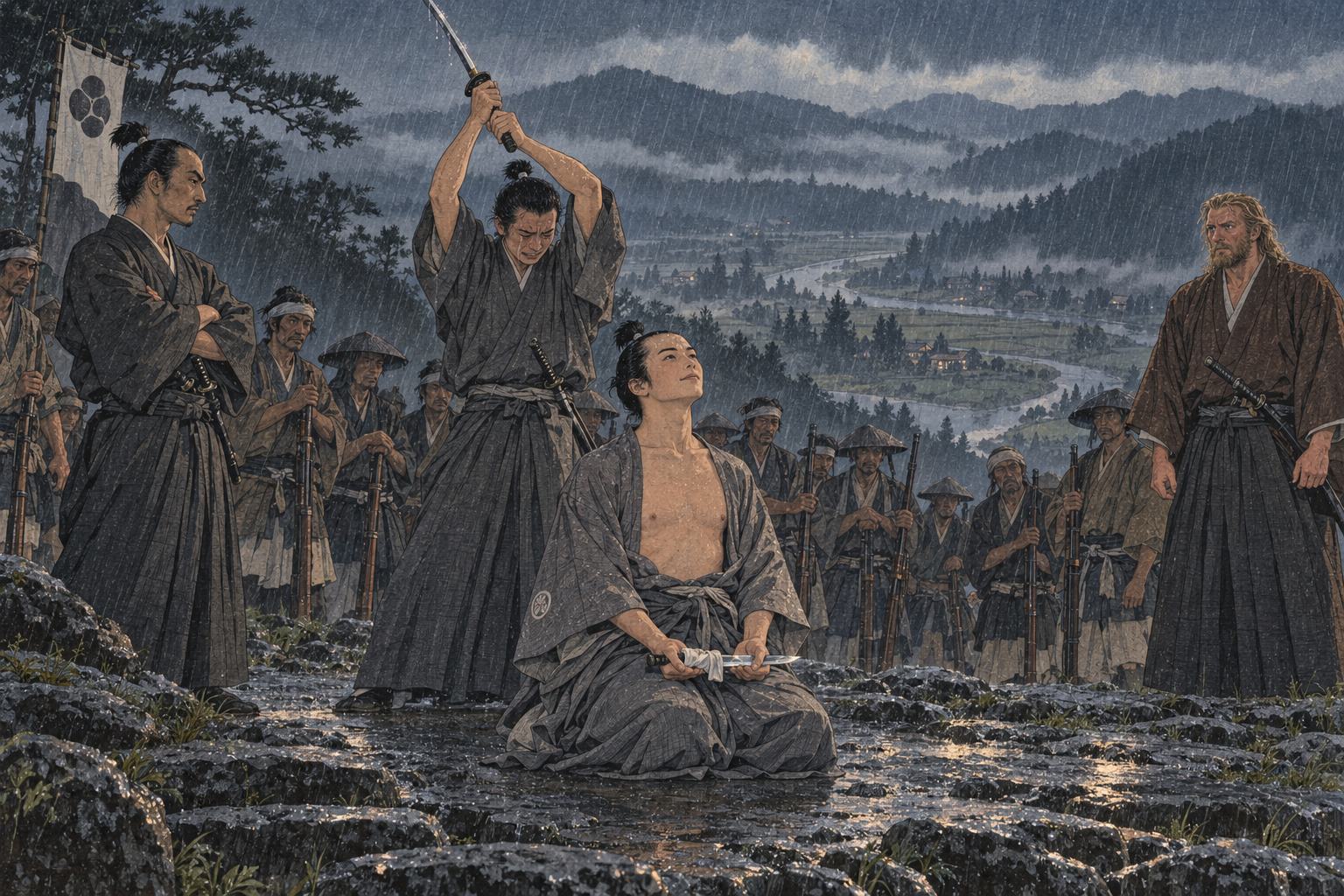
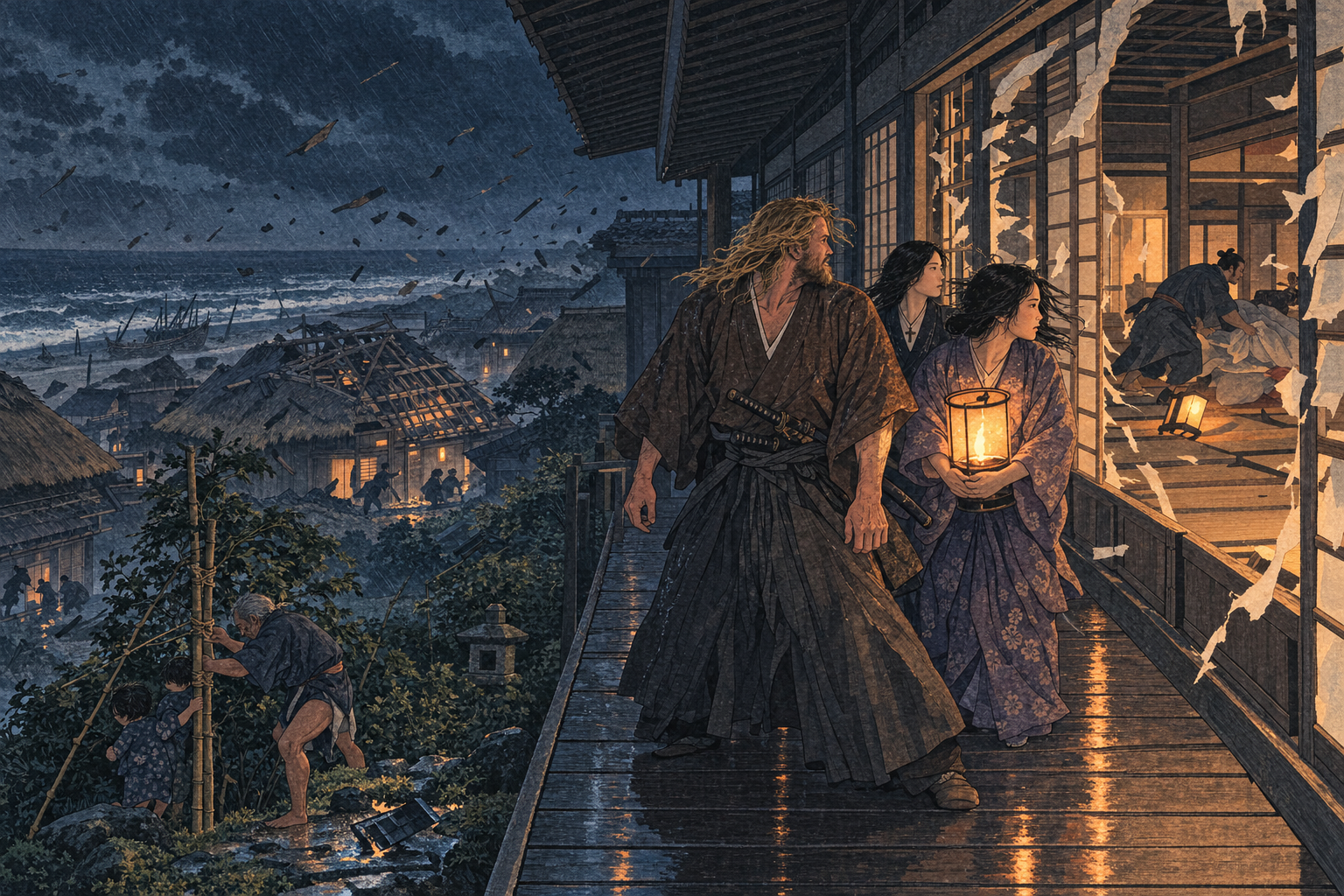
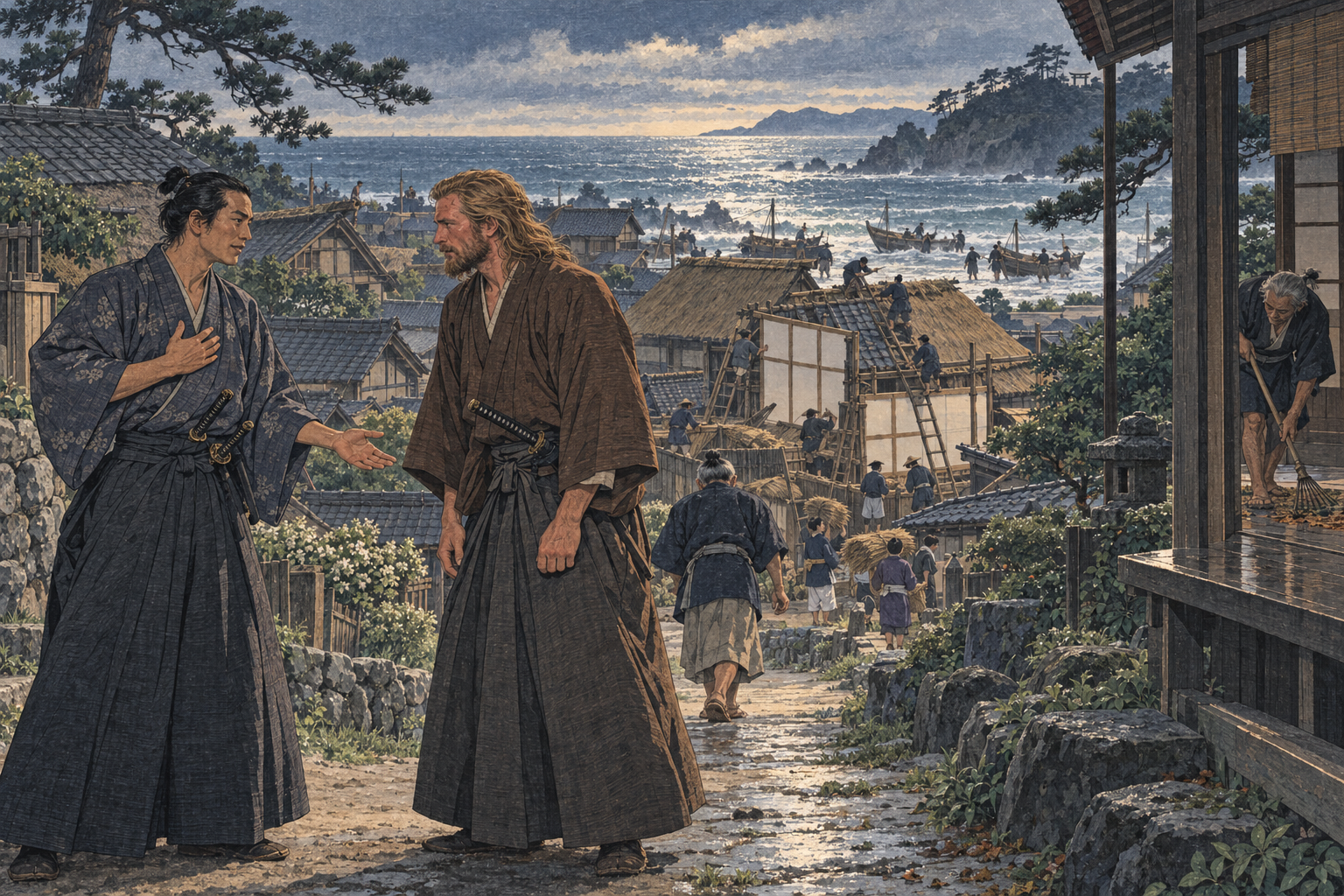
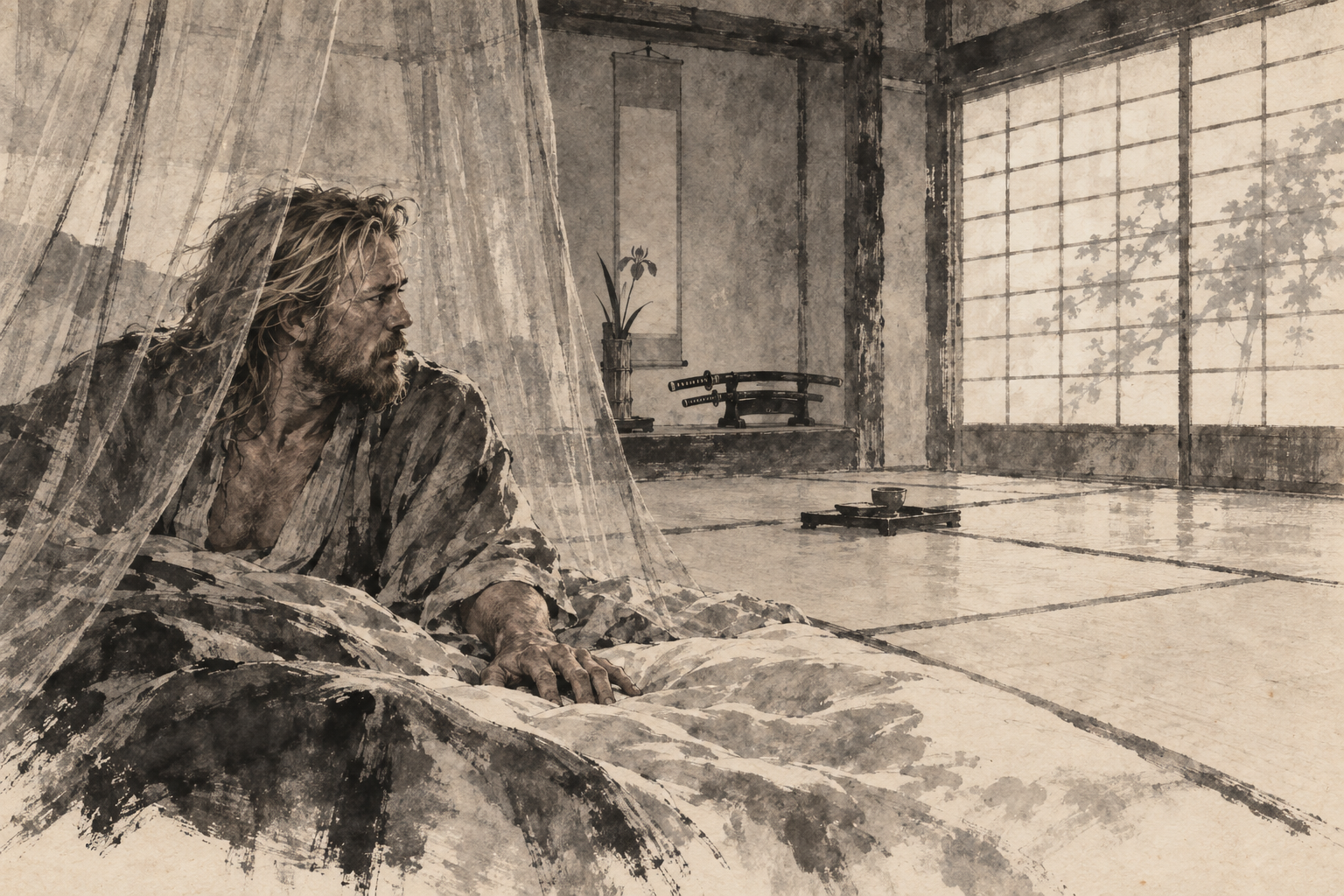
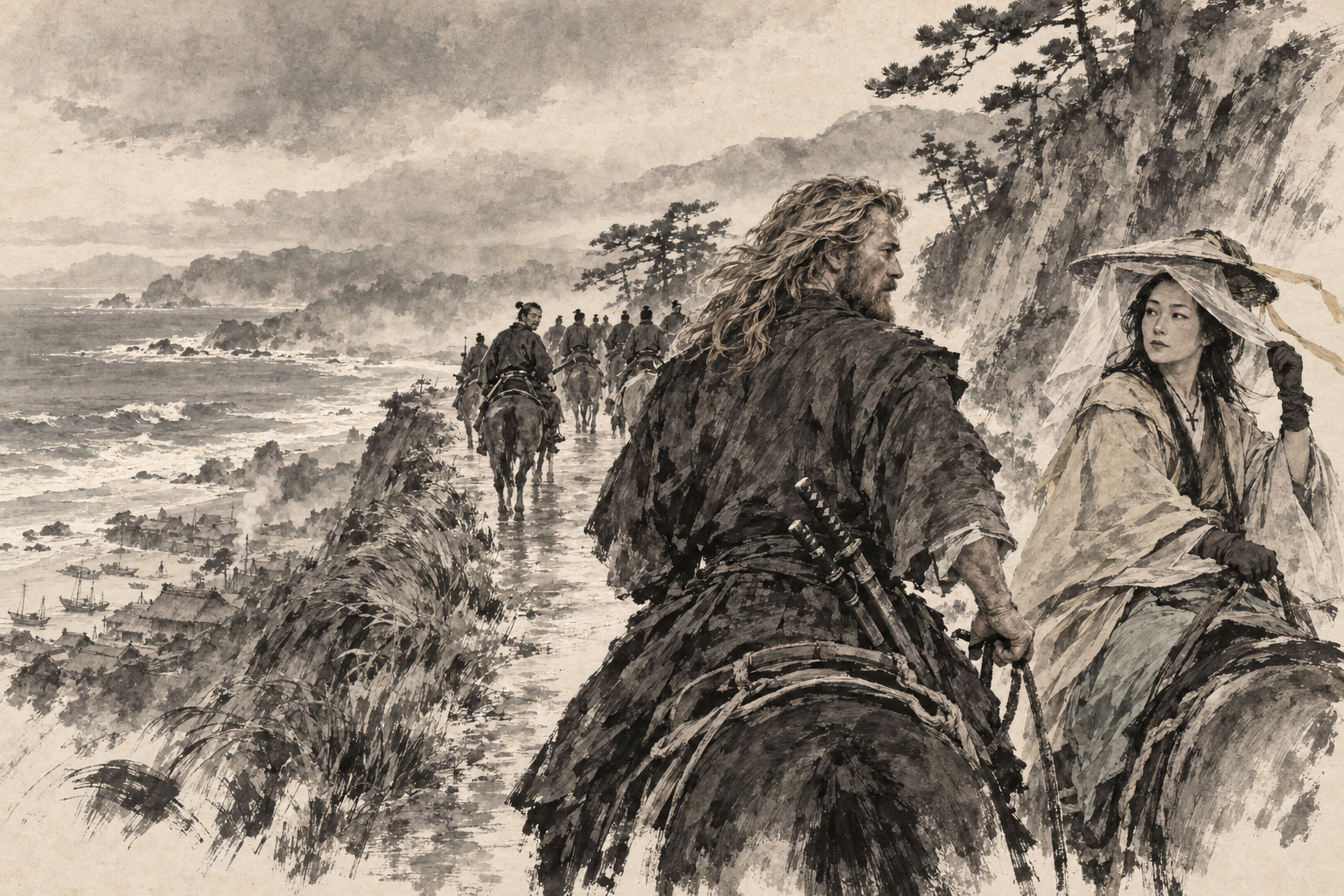
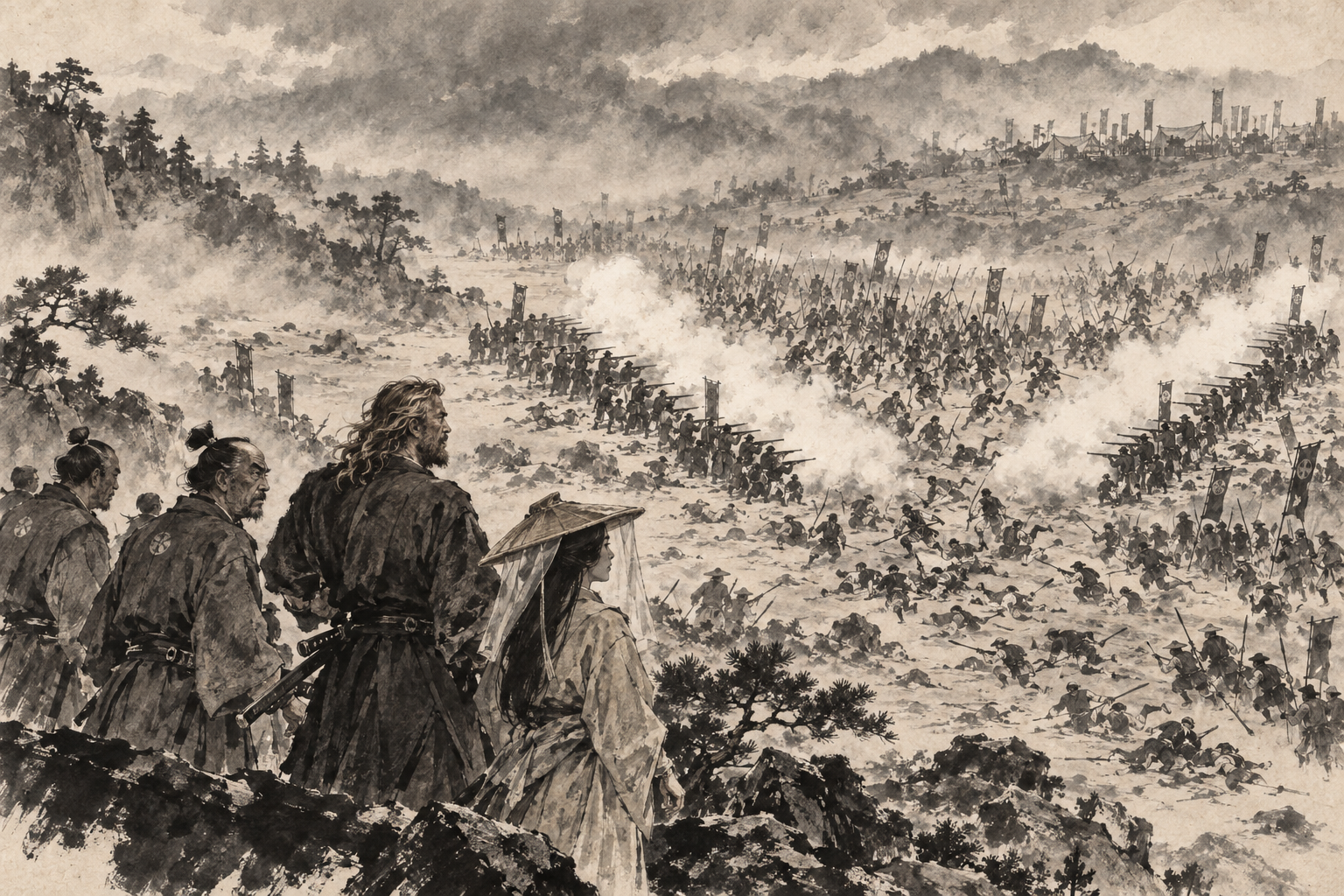
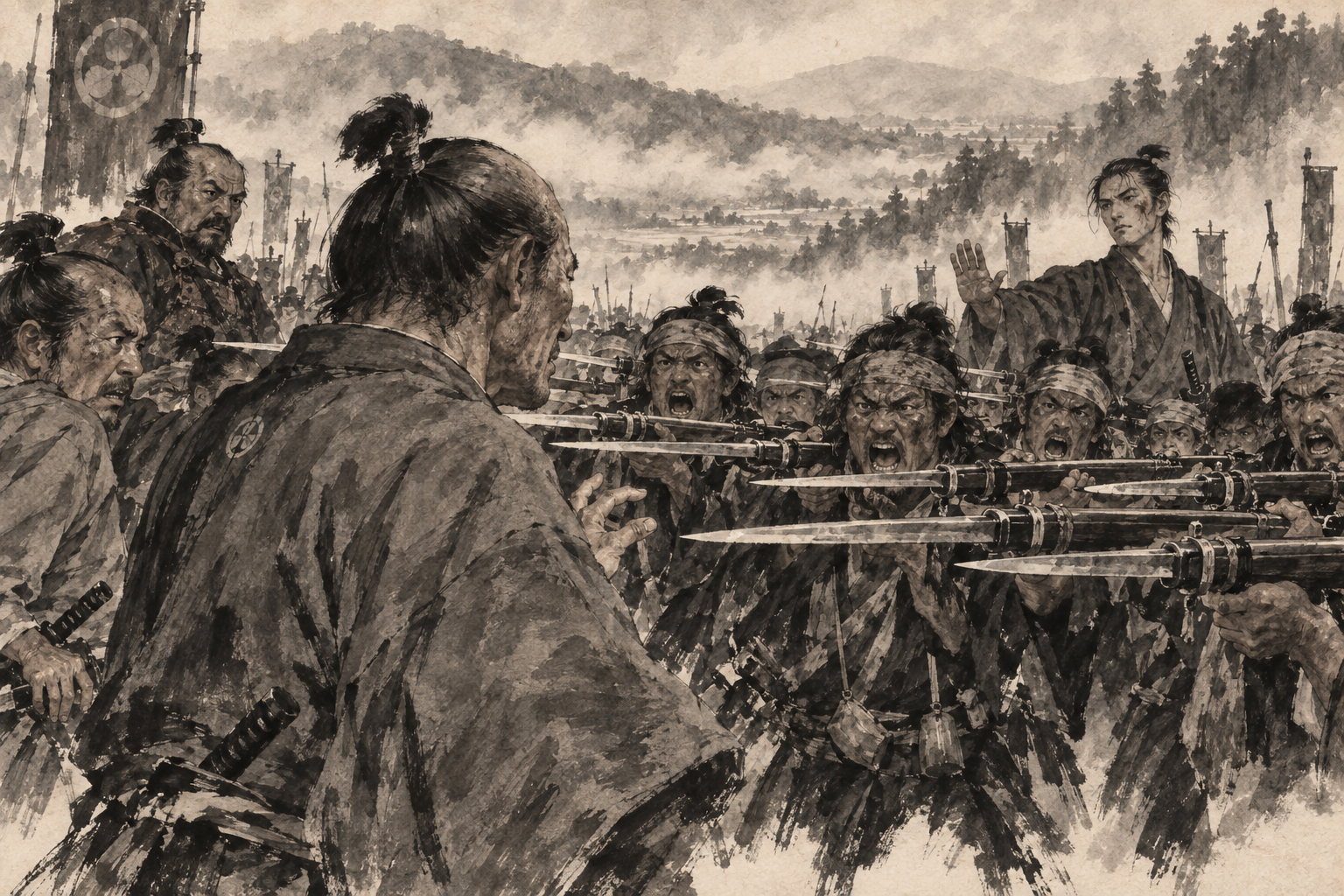
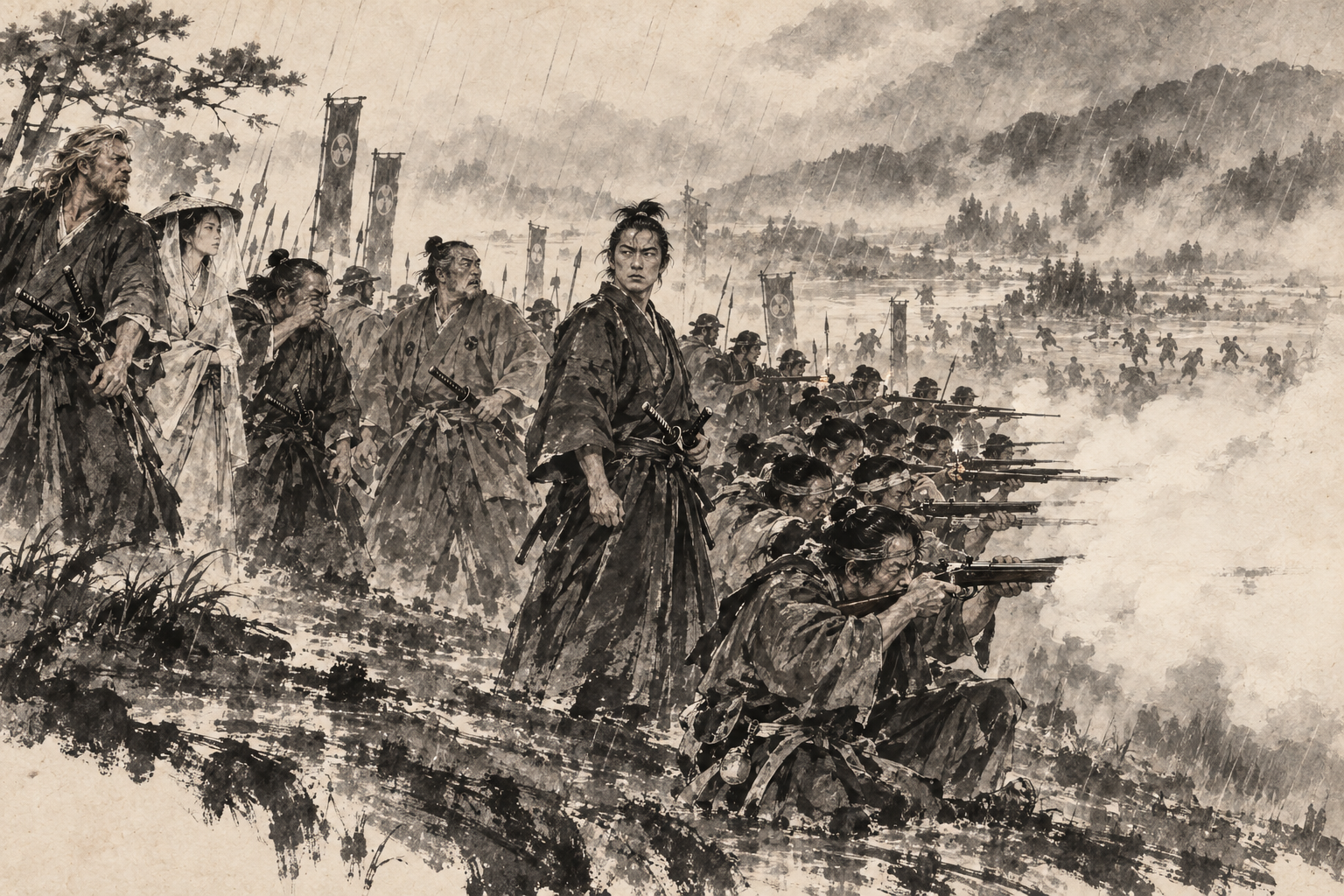
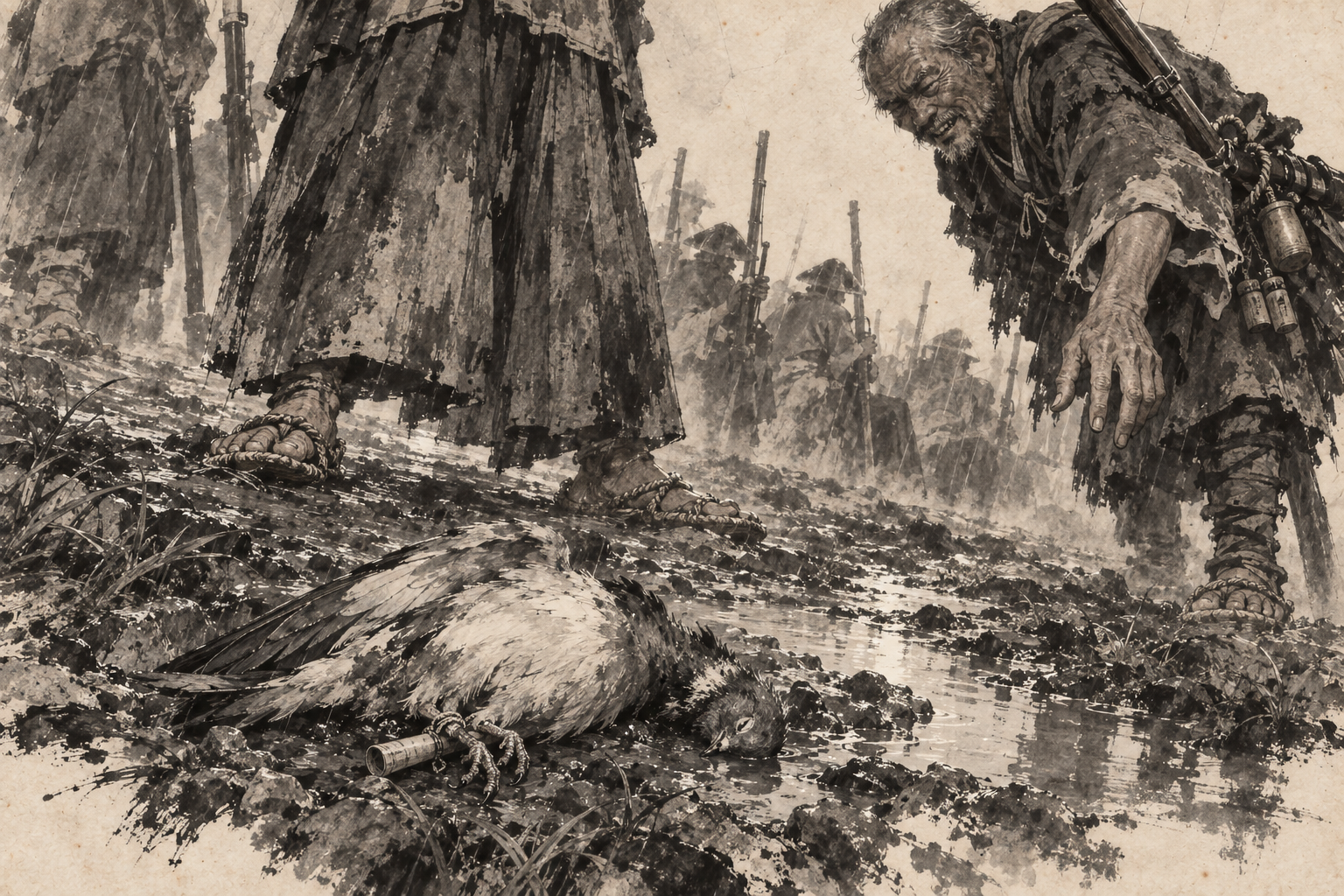
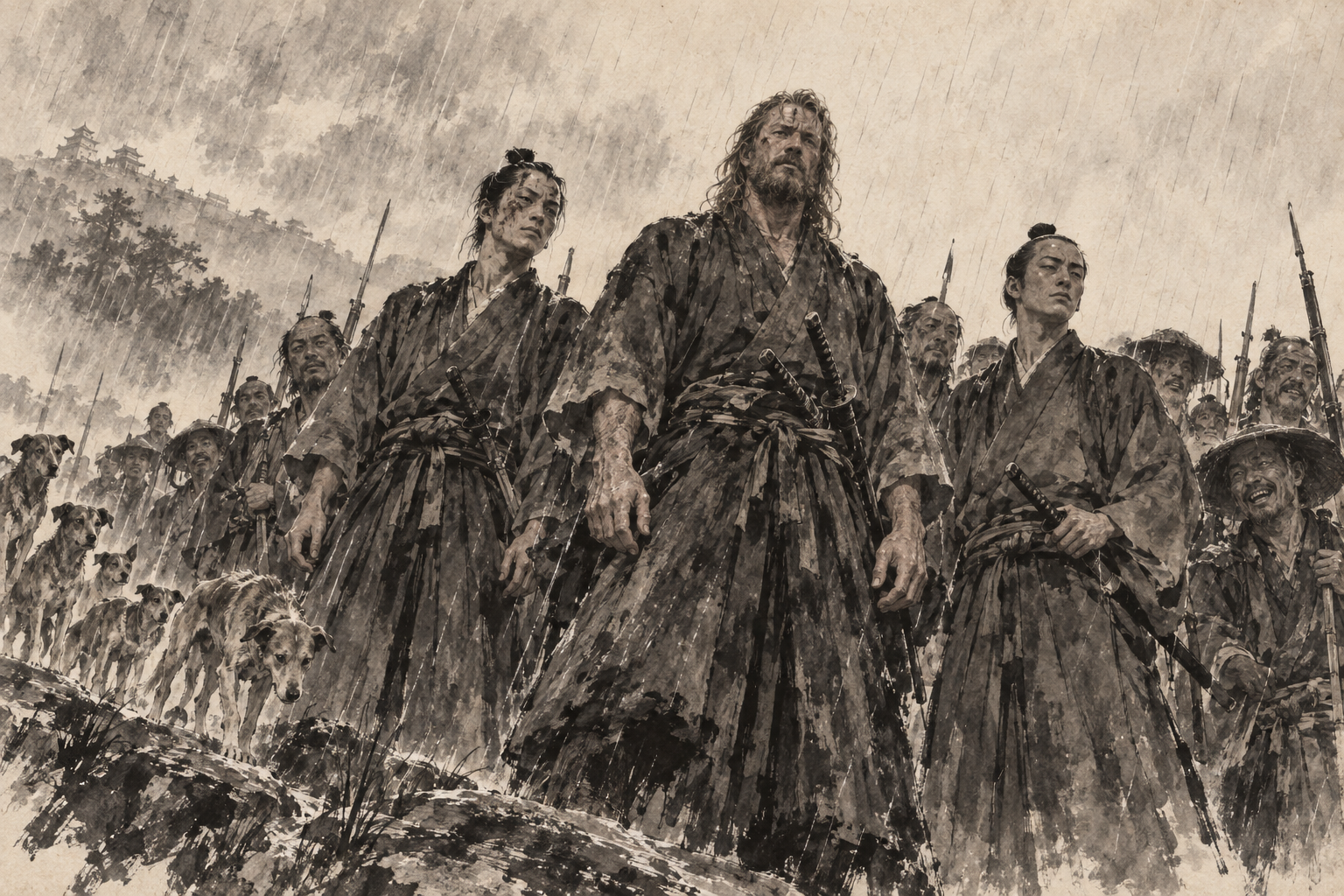
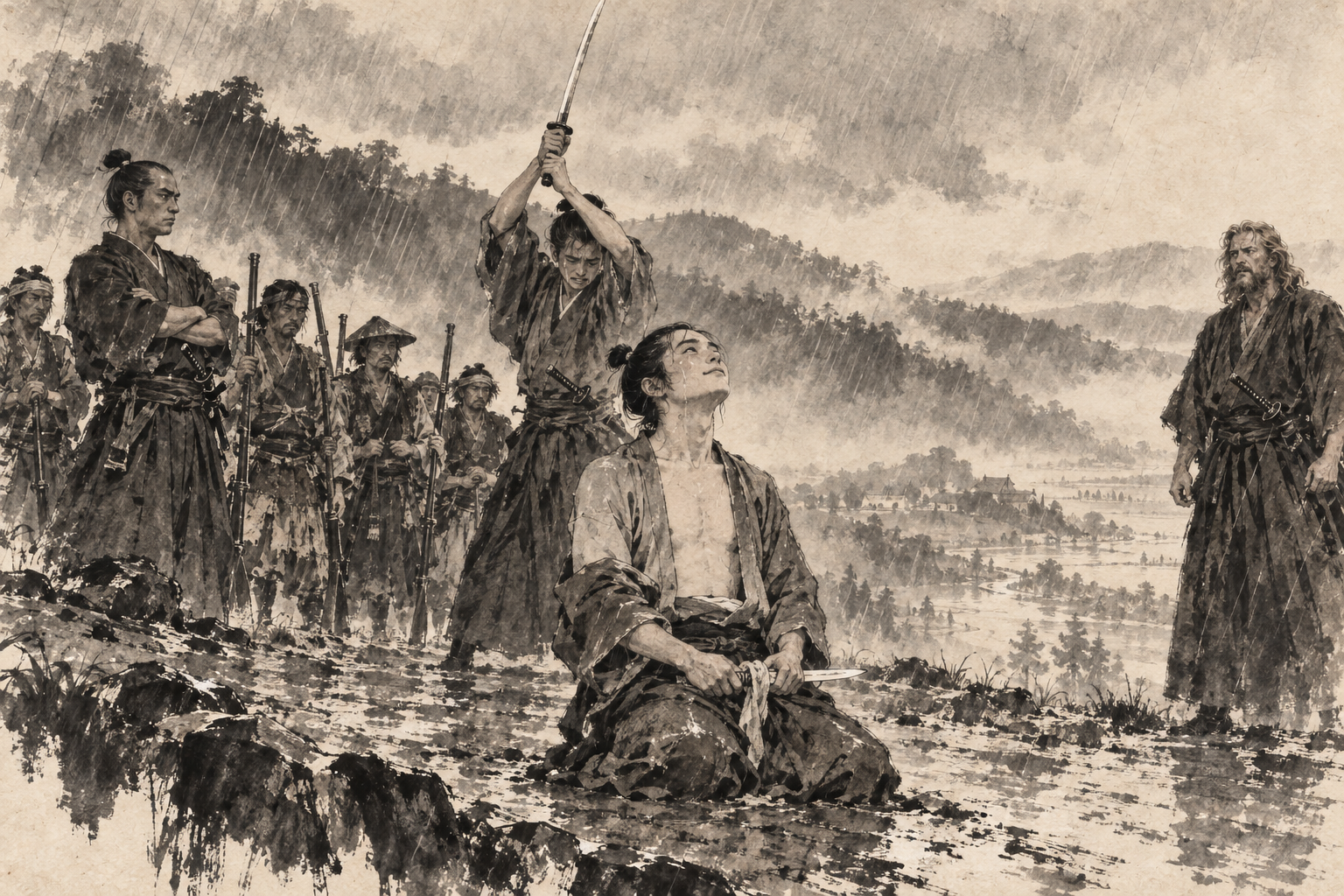
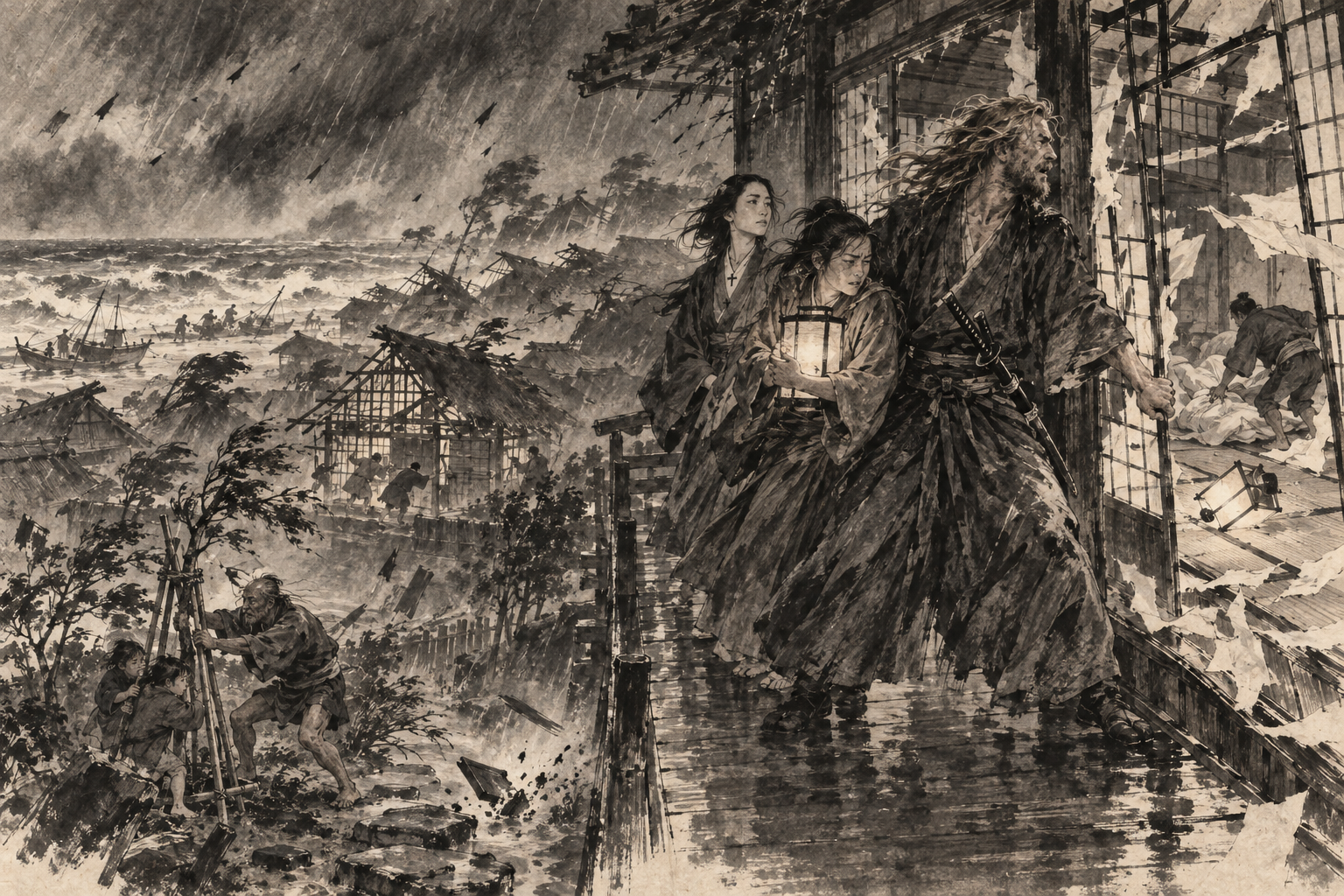
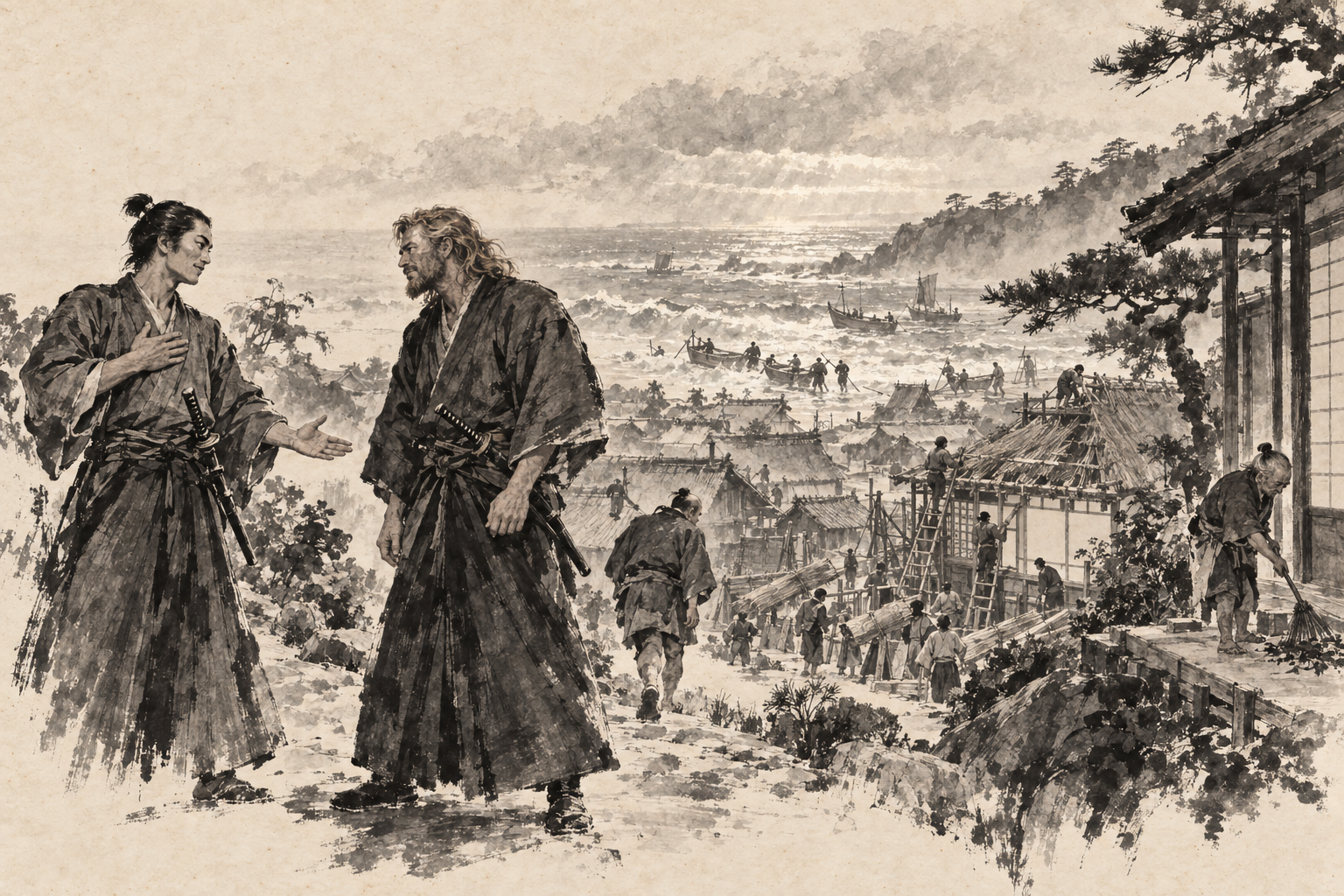
Blackthorne wakes alone, her perfume still on the air. Riding to the plateau he tells Mariko in Latin that he loves her; she insists that his night visitor was her maid Koi, and he cannot swear otherwise in the dark. Passion is only for a courtesan such as Kiku, for whom she offers to be go-between. "Nothing is to be said." The first full rehearsal of the Musket Regiment follows before Jozen: five phalanxes firing in ranks, a feigned rout, a V-formation and bayonets that stop a pace from his face. Jozen demands the barbarian's head and the guns withdrawn. When one of his men lunges, twenty muskets take off his head. Naga produces Jozen's strangled pigeon. Blackthorne is made to witness Jozen hamstrung, gutted and left to the dogs, and the samurai Kenko's perfect seppuku. A gale strips every wall in the village; by noon they are rebuilt, and Omi says he wants to be friends.
Analysis
The morning-after denial establishes the book's rule for the affair: what is not said did not happen. The musket rehearsal is the regiment's first proof and Jozen's death its first consequence, witnessed by Blackthorne so that samurai justice is felt rather than described. Kenko's seppuku is placed as a corrective to Jozen's butchery.
Plates
Illustration style
Japanese introduced here
- tokonoma
- The alcove in a room where a single scroll or flower is displayed.