Chapter 5
The tractors take the land
Summary
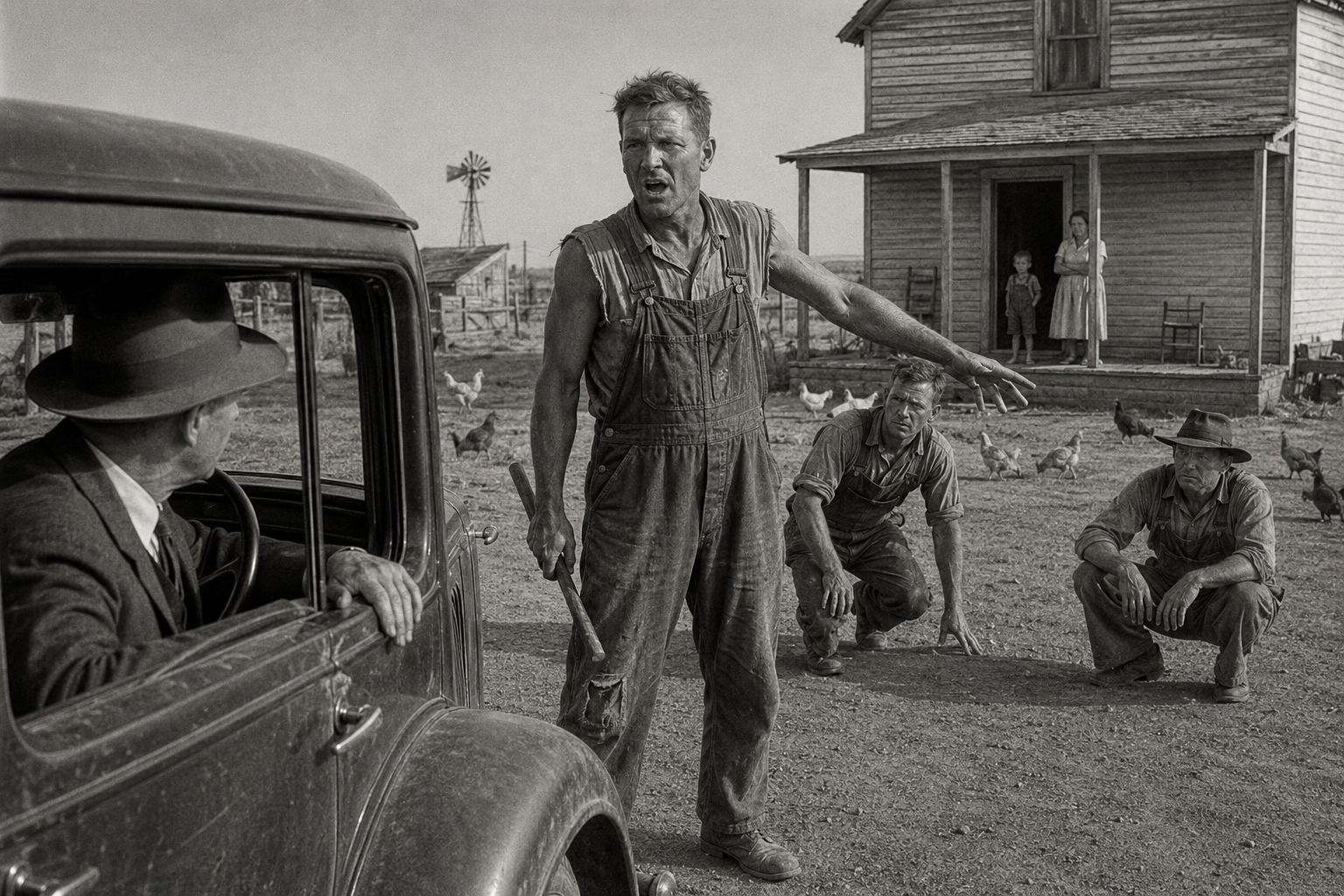
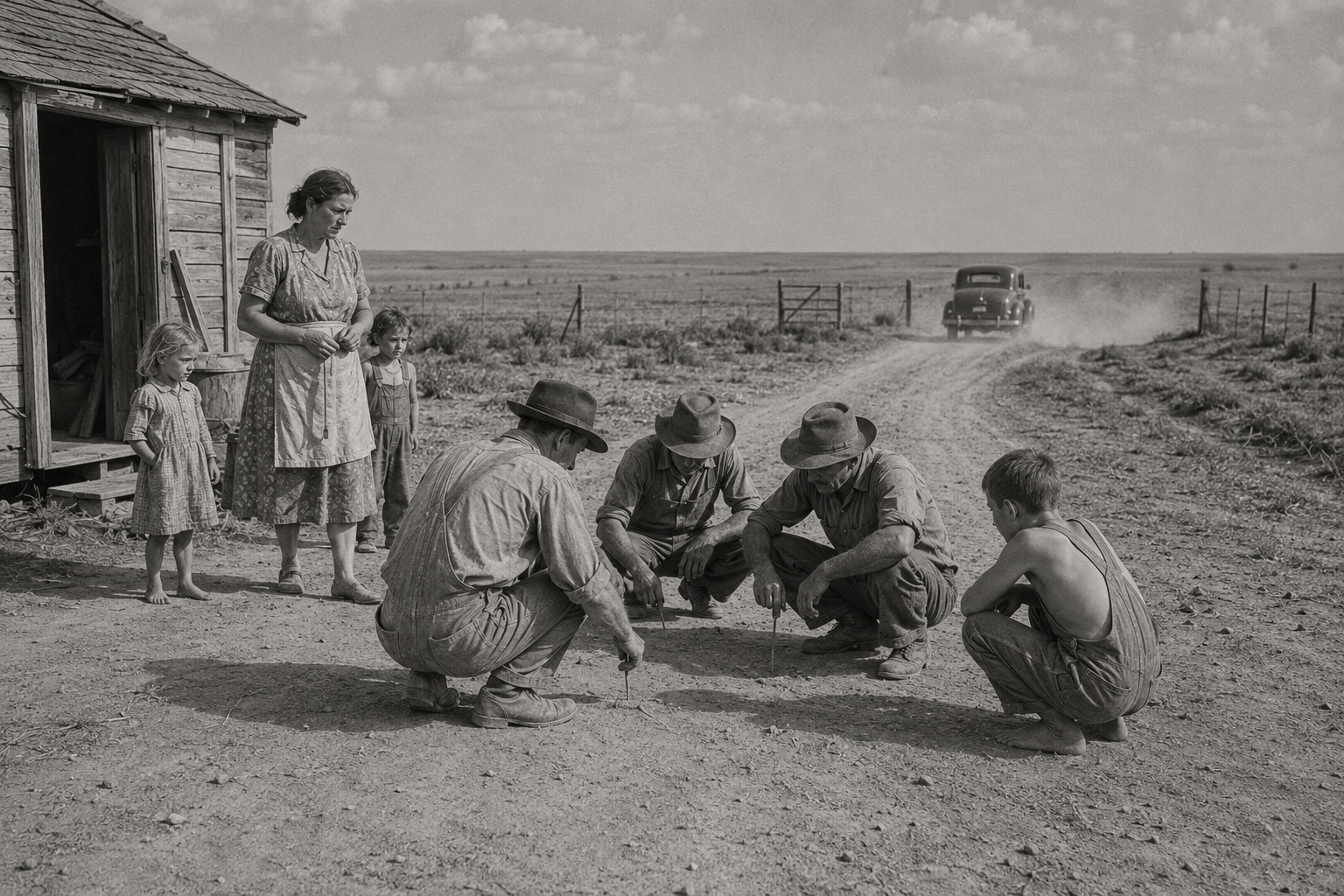
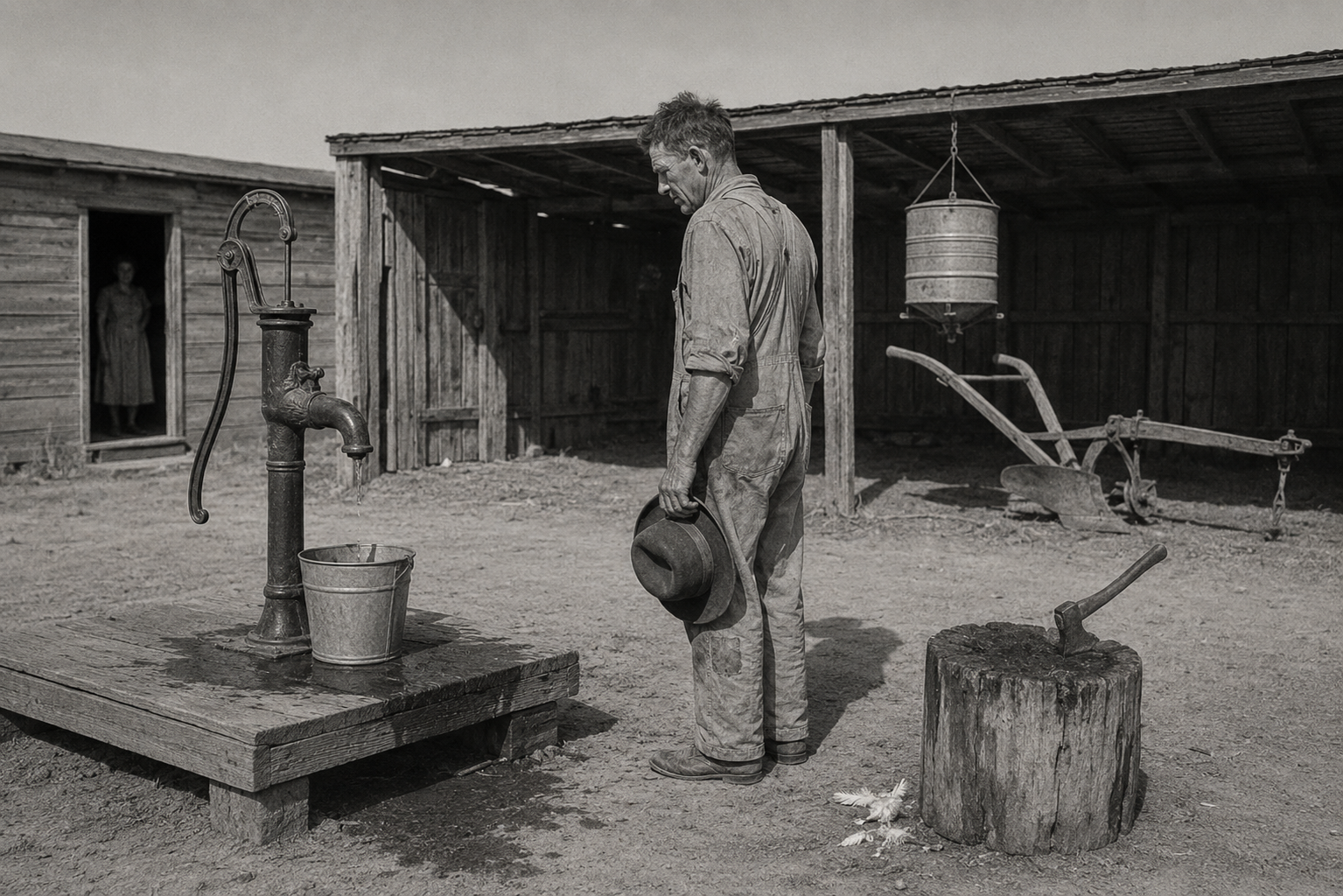
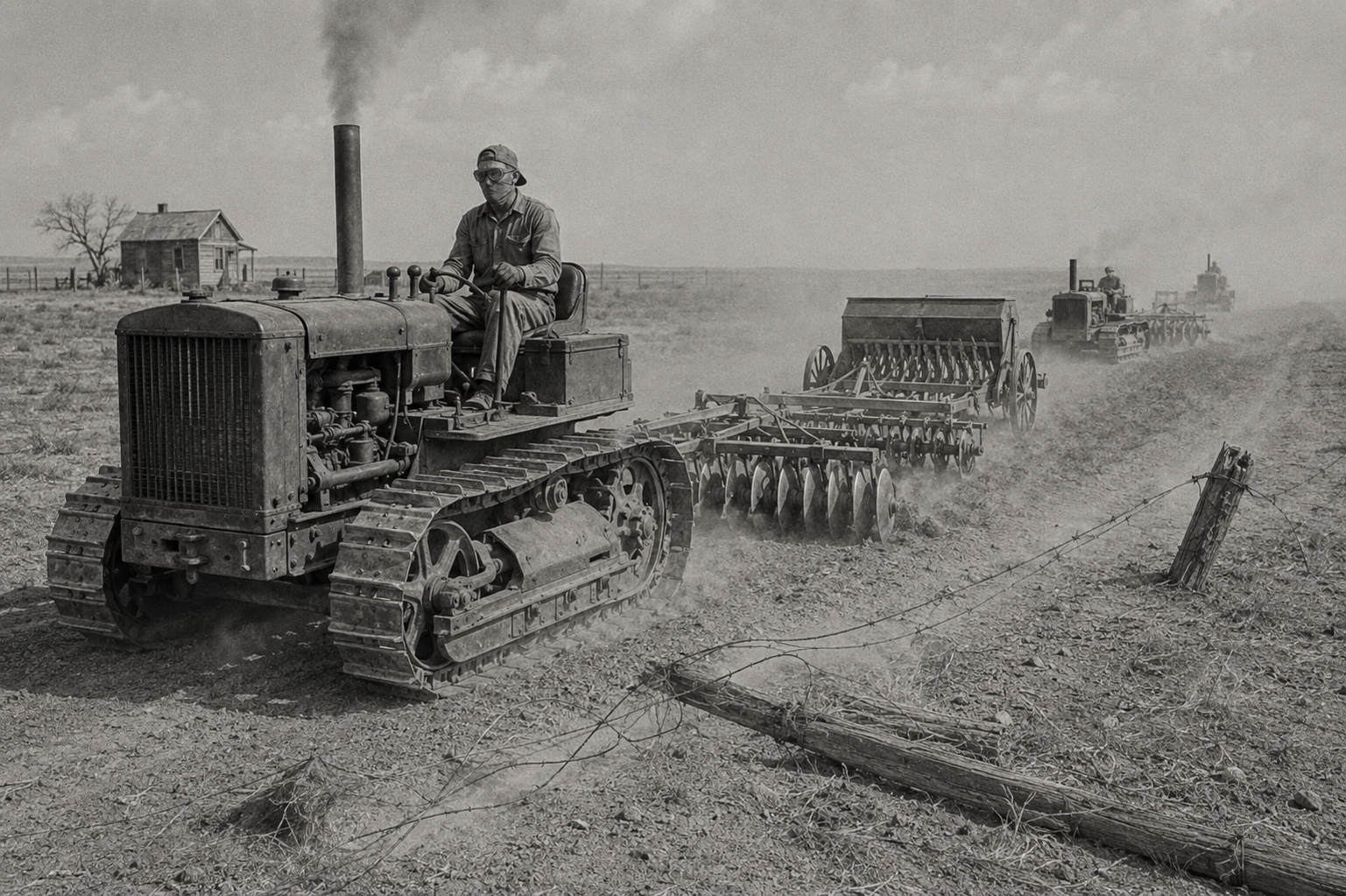
An intercalary chapter, staged as a composite dialogue between owner men and tenant men. The owners explain that the tenant system is finished: the land is worn out and one man on a tractor can replace twelve or fourteen families. Responsibility is deflected onto the bank, "the monster" that must eat profit the way a man eats air, made by men but beyond their control. The tenants argue that ownership comes from being born on the land, working it and dying on it, not from a paper with numbers. Asked where they should go, they are told to try California. Then the tractors come, driven by goggled, masked men who feel nothing for the ground they cut. One driver, Joe Davis's boy, takes three dollars a day, admits he has orders to knock the houses down, warns the tenant to get out, and drives the iron guard through the corner of the house while the family watches.
Plates
Illustration style
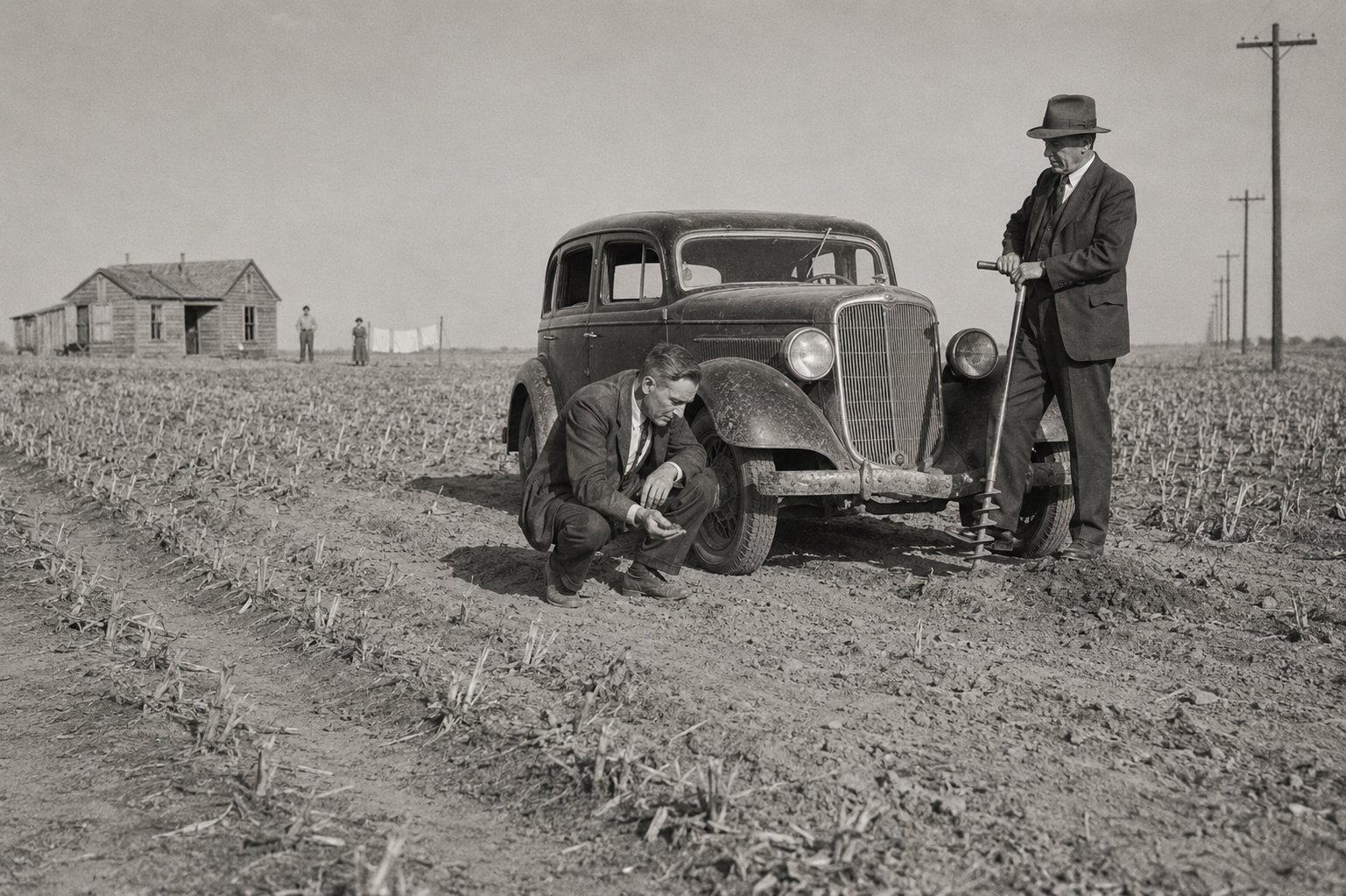
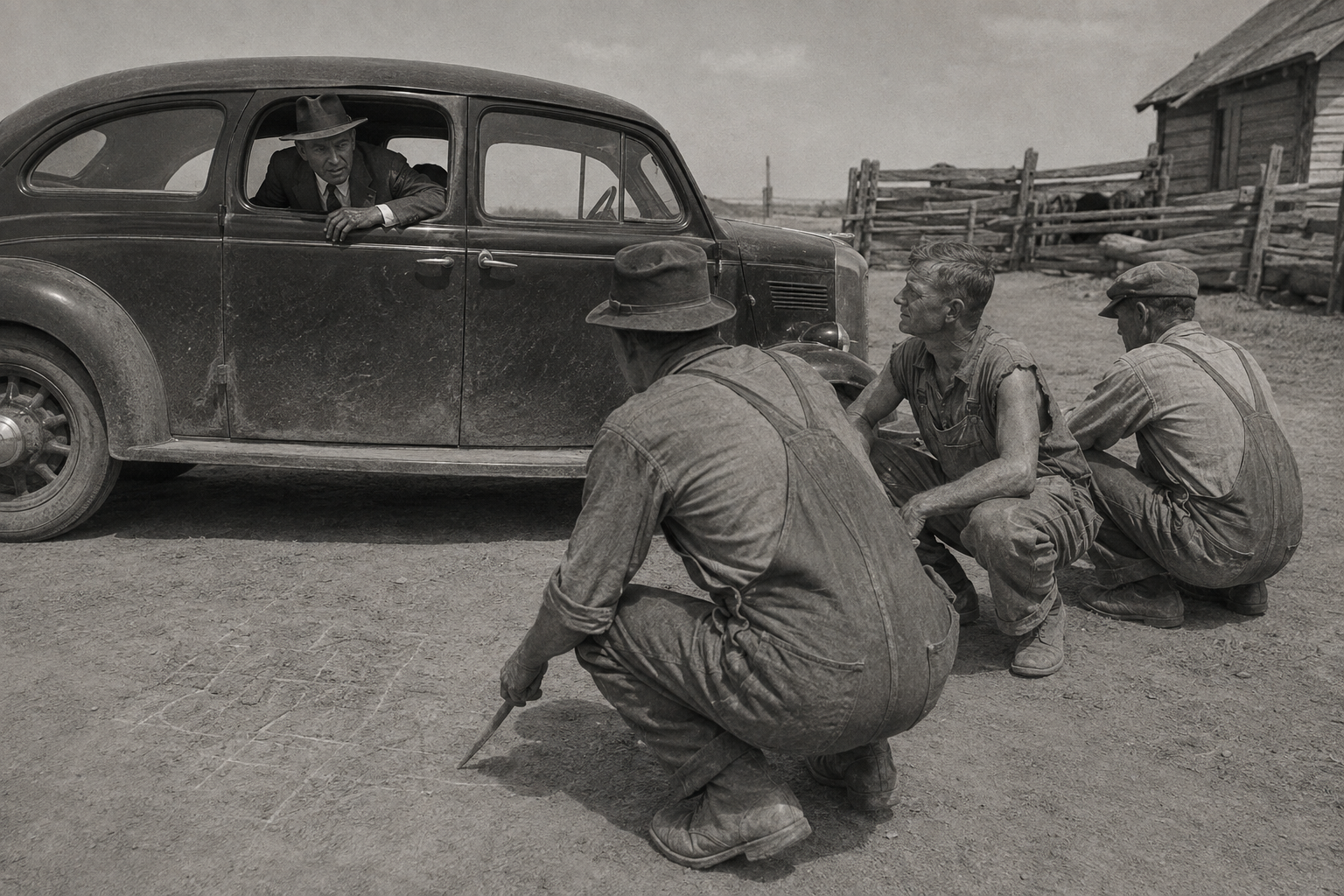
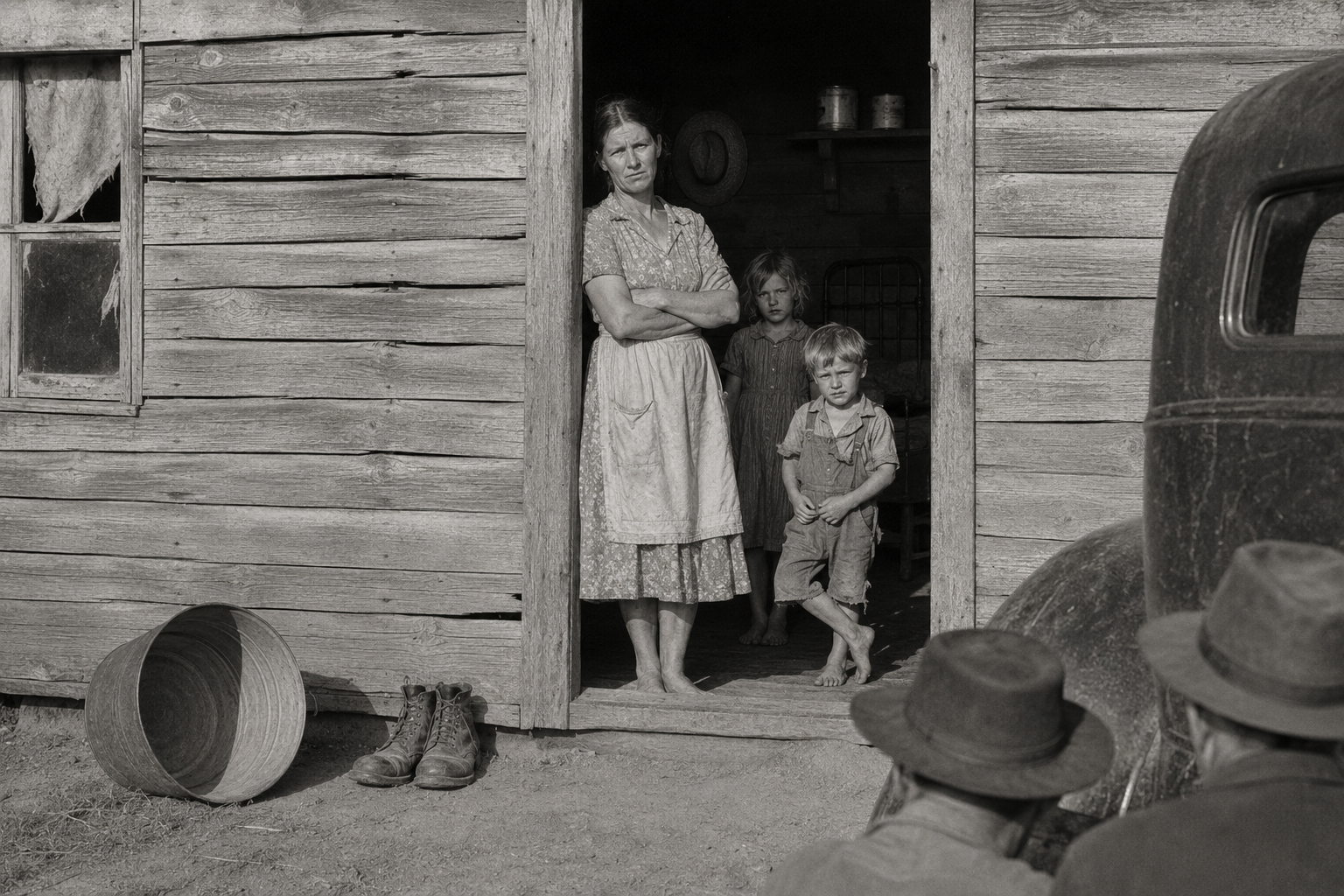
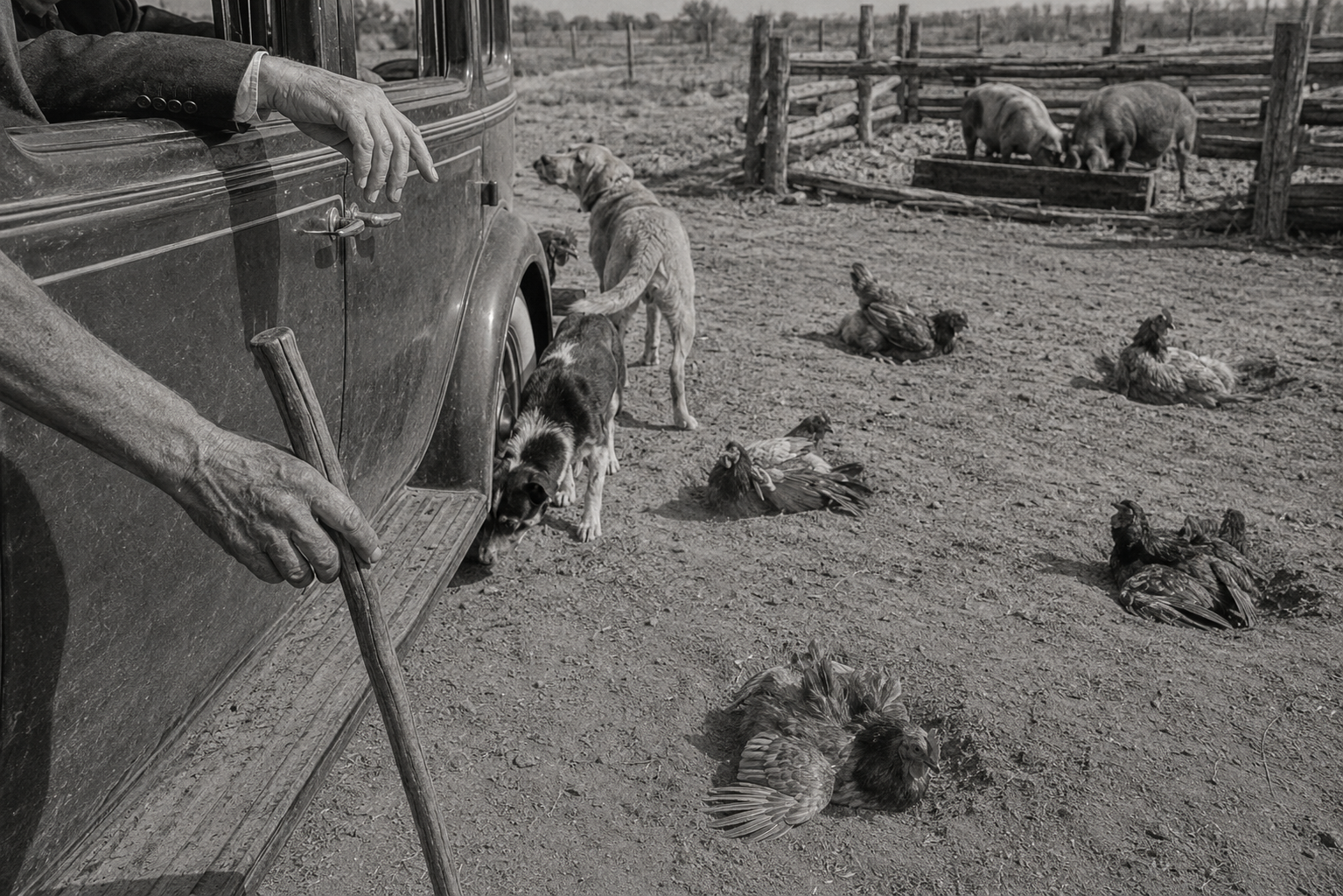
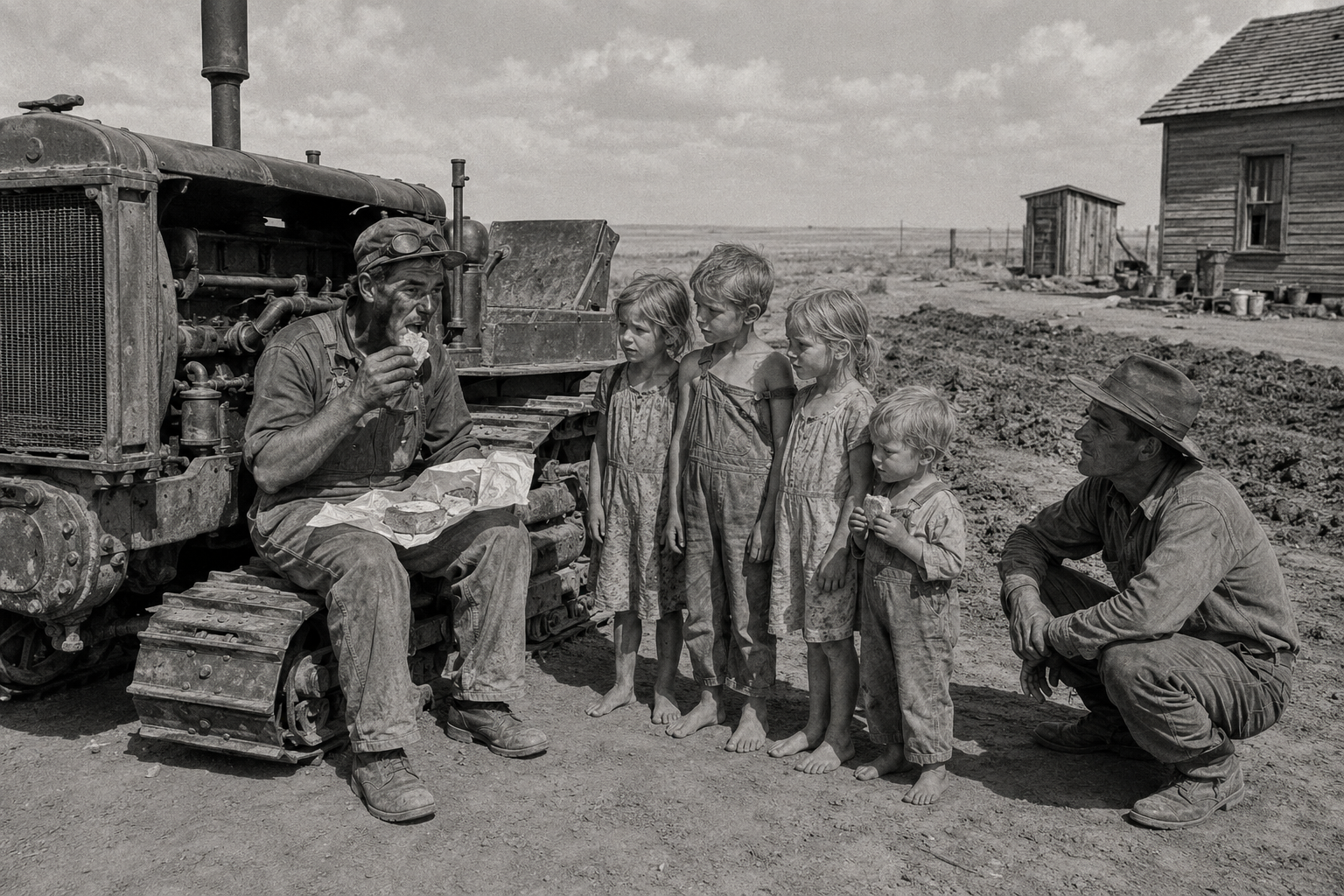
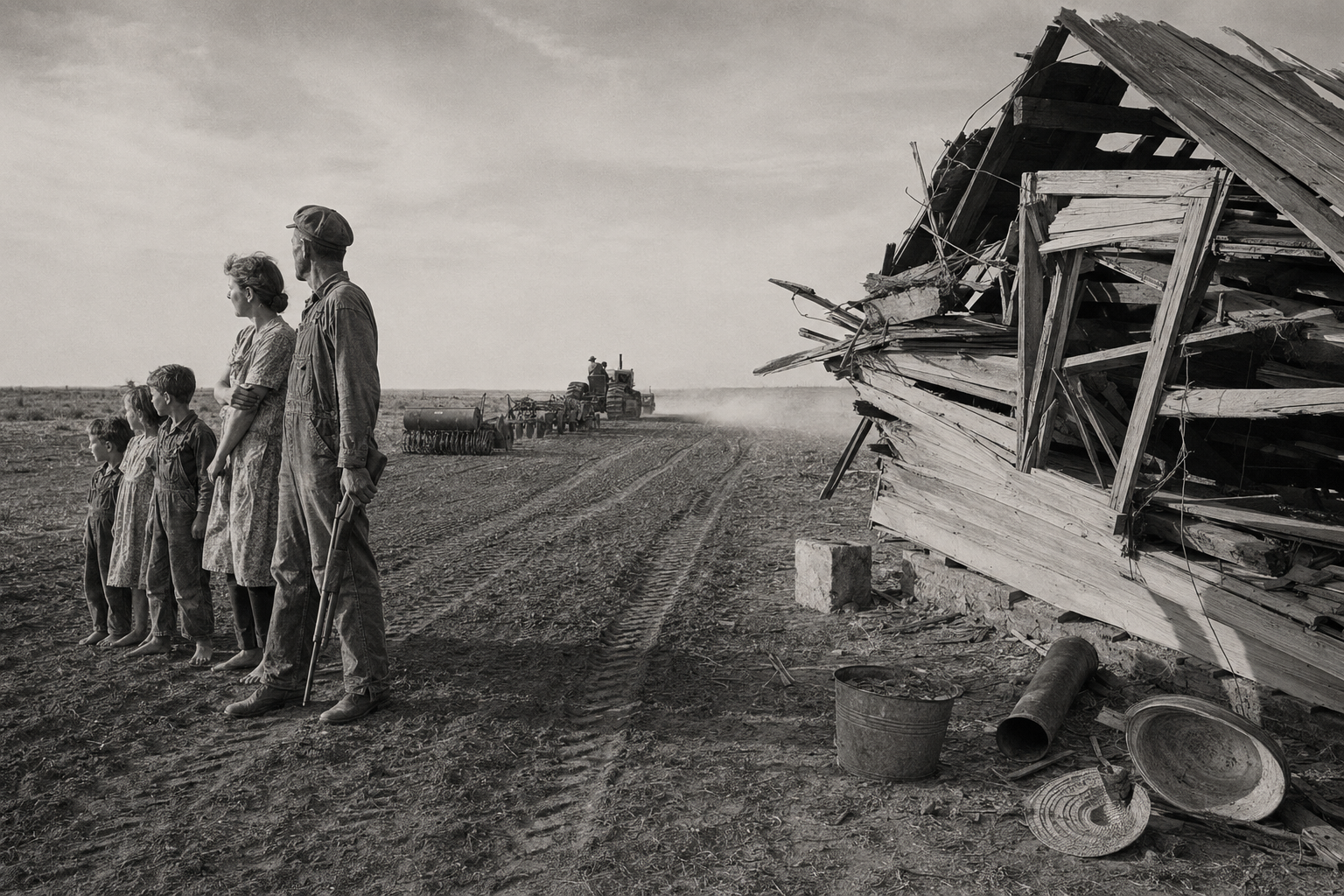
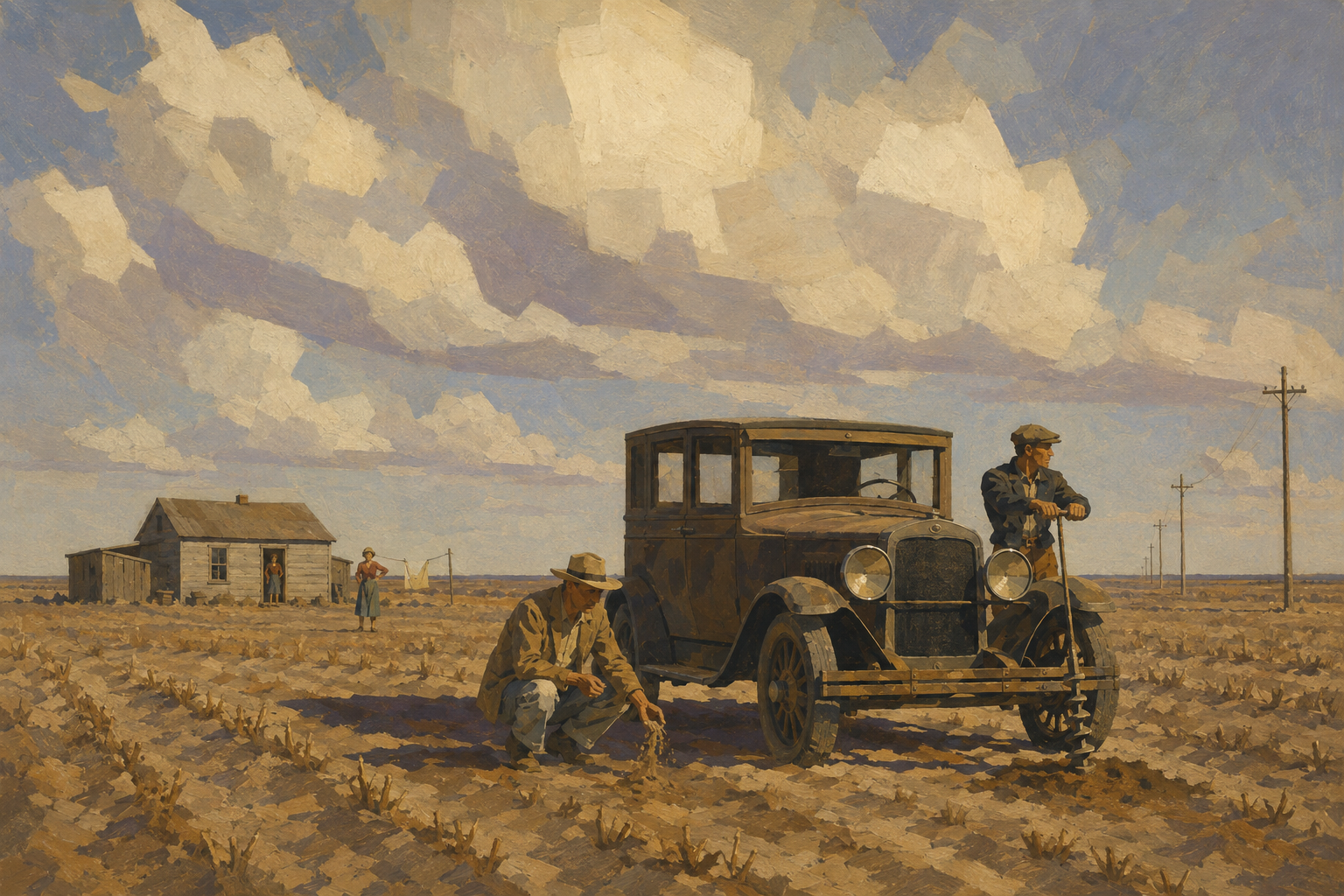
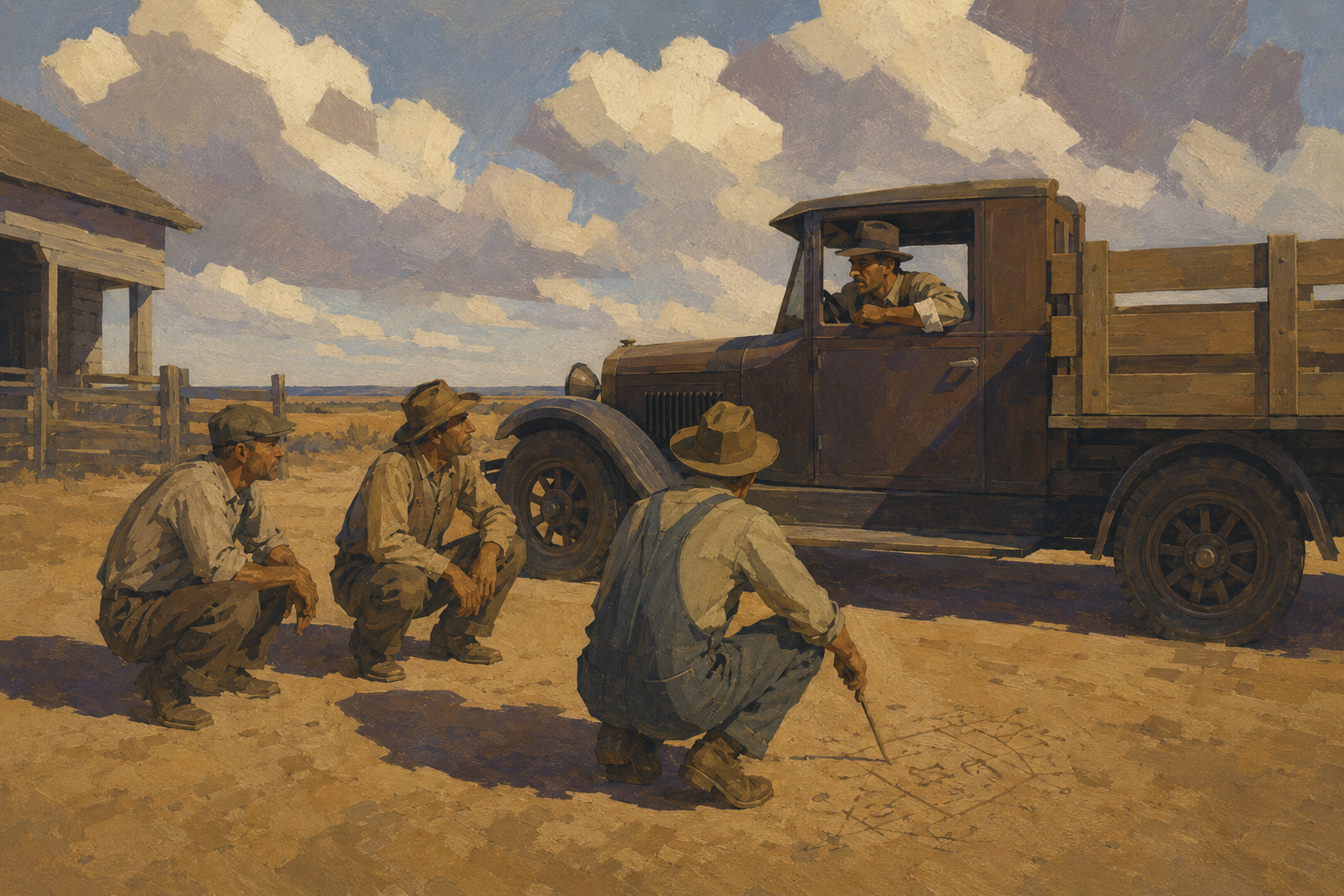
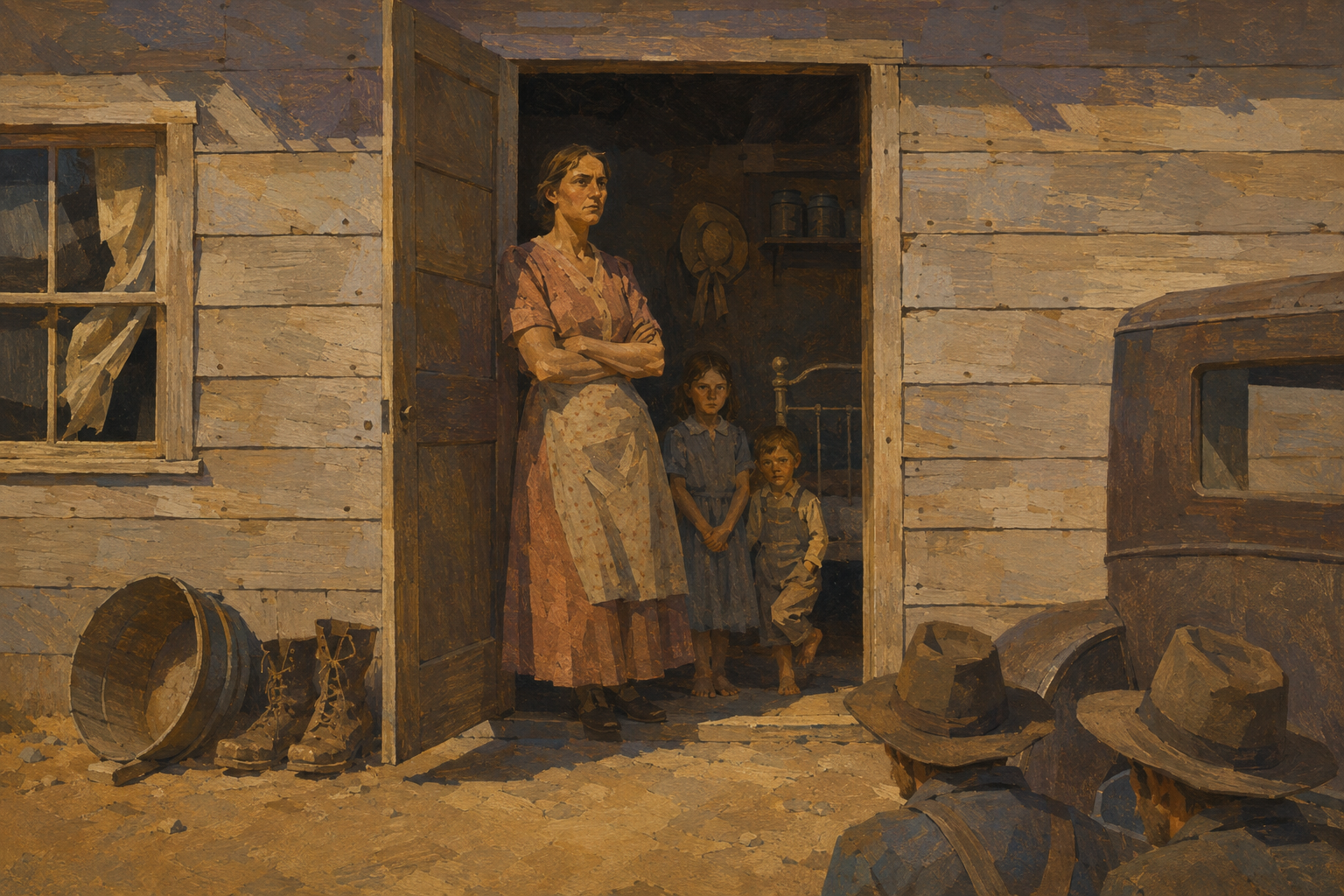
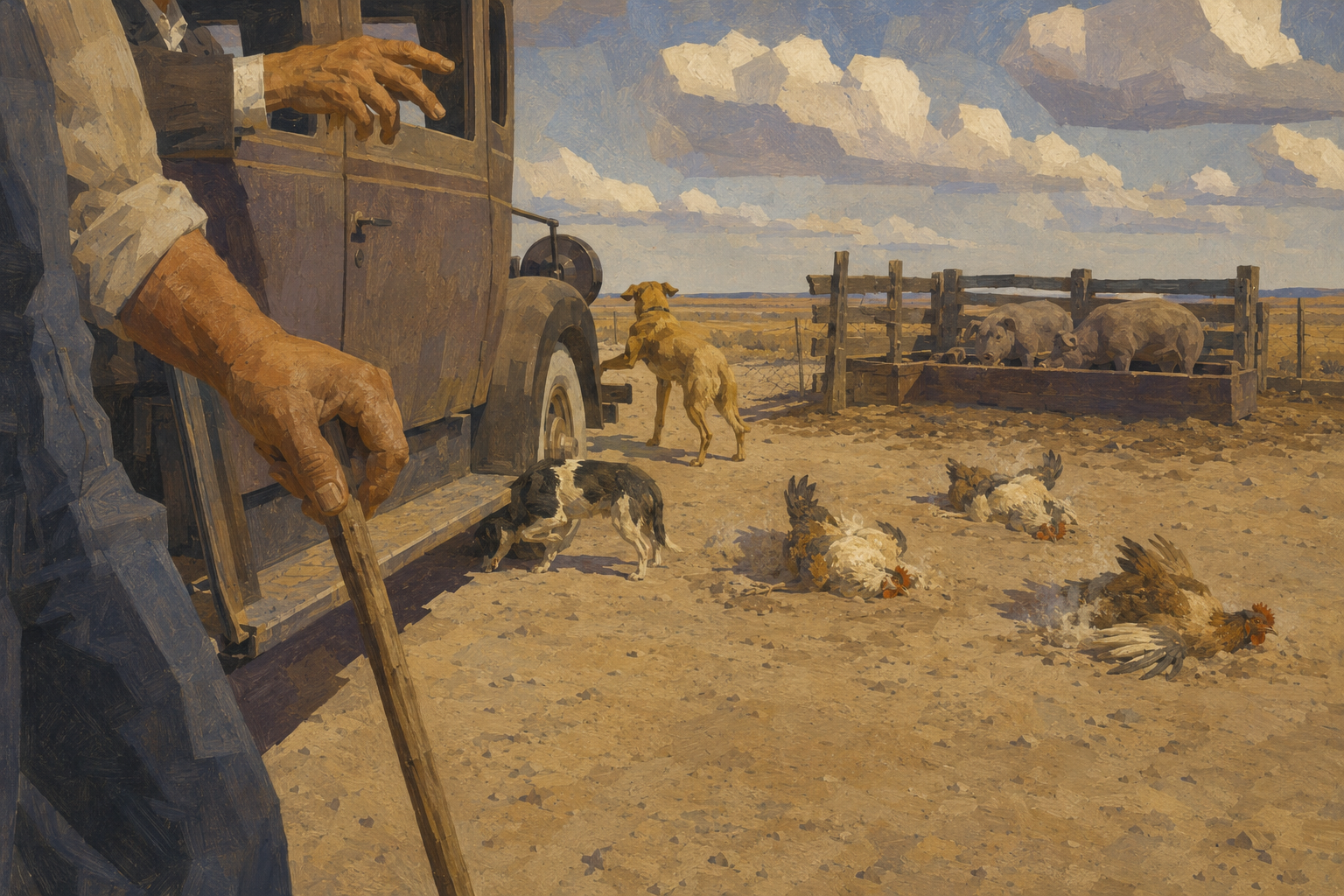
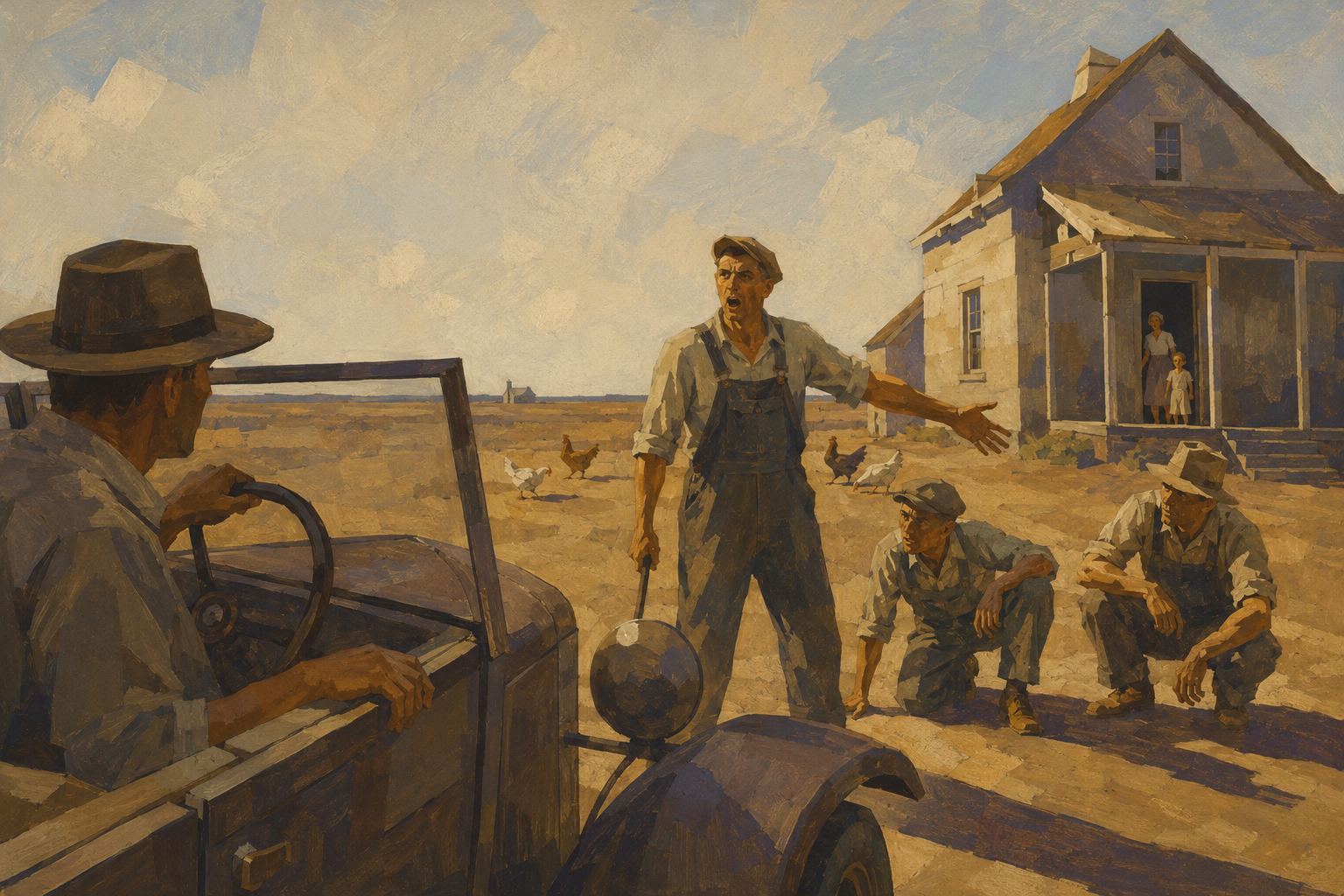
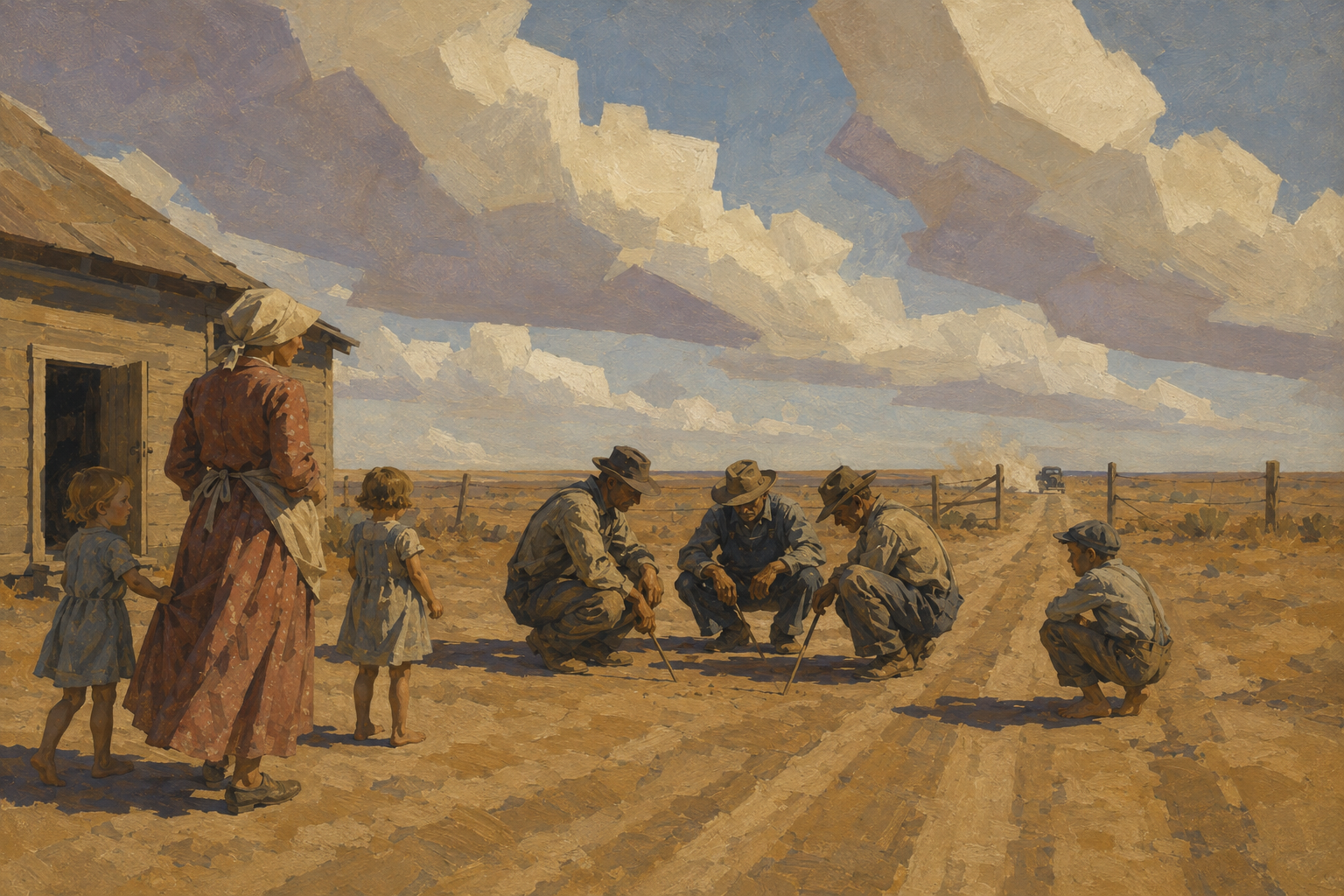
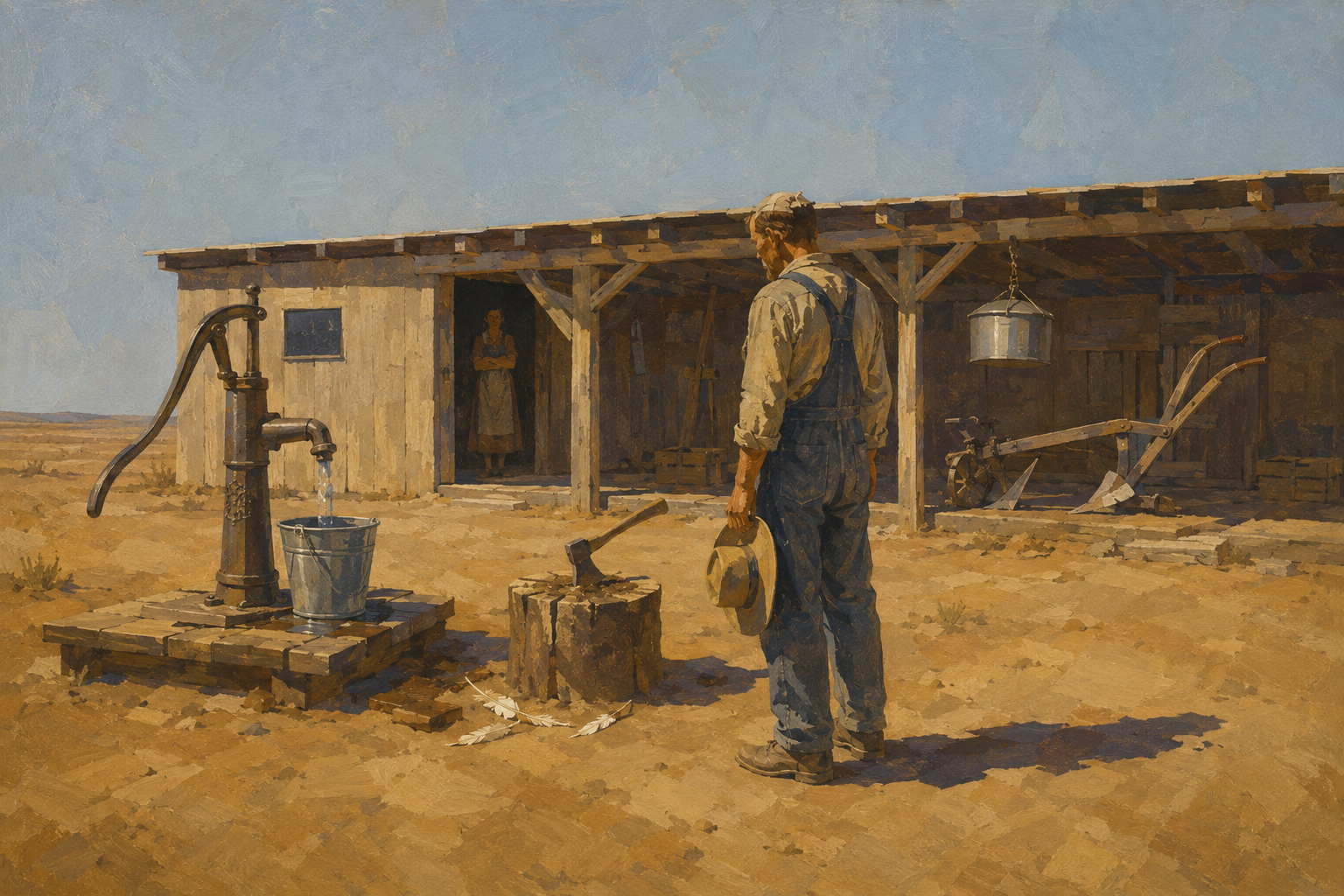
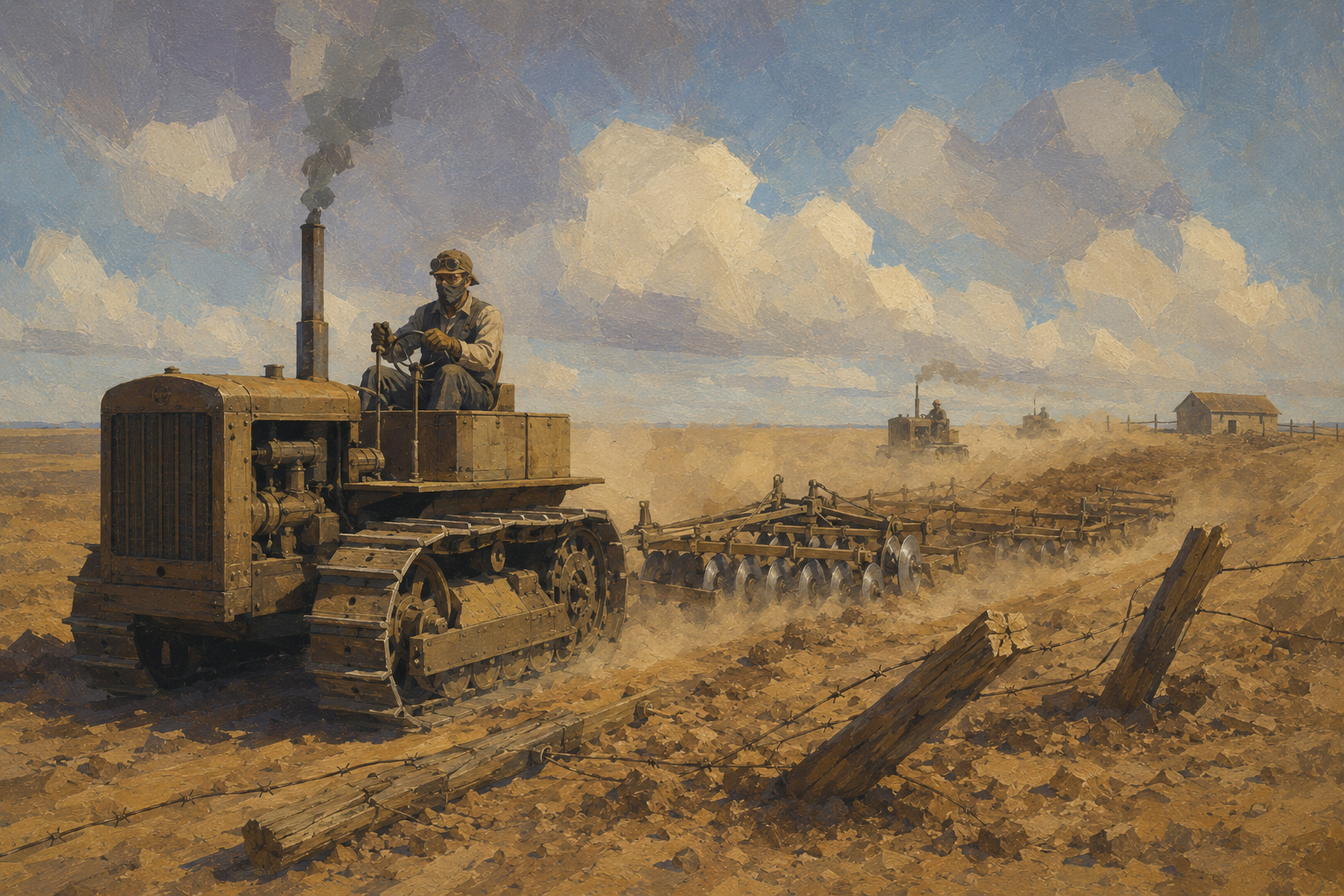
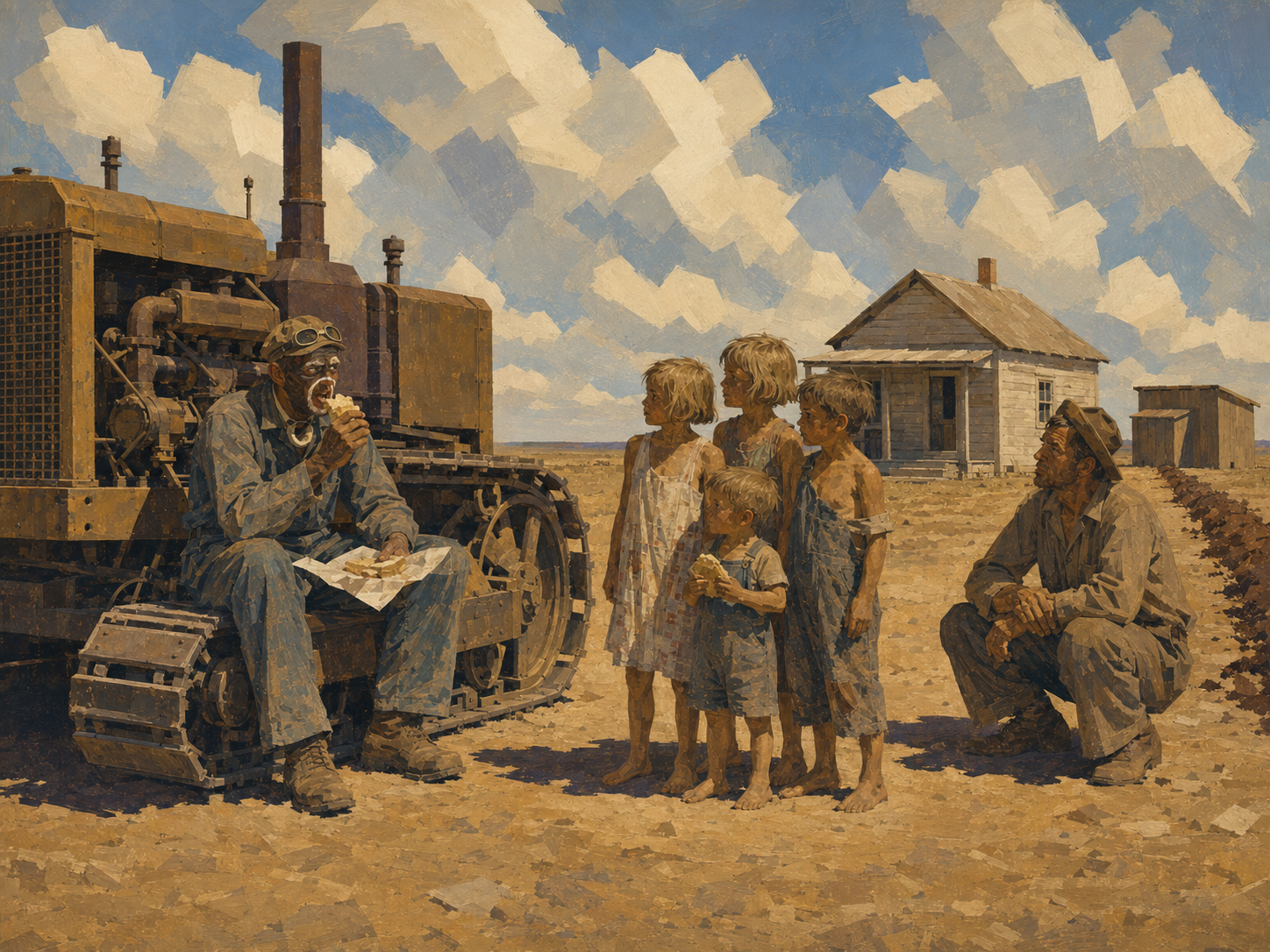
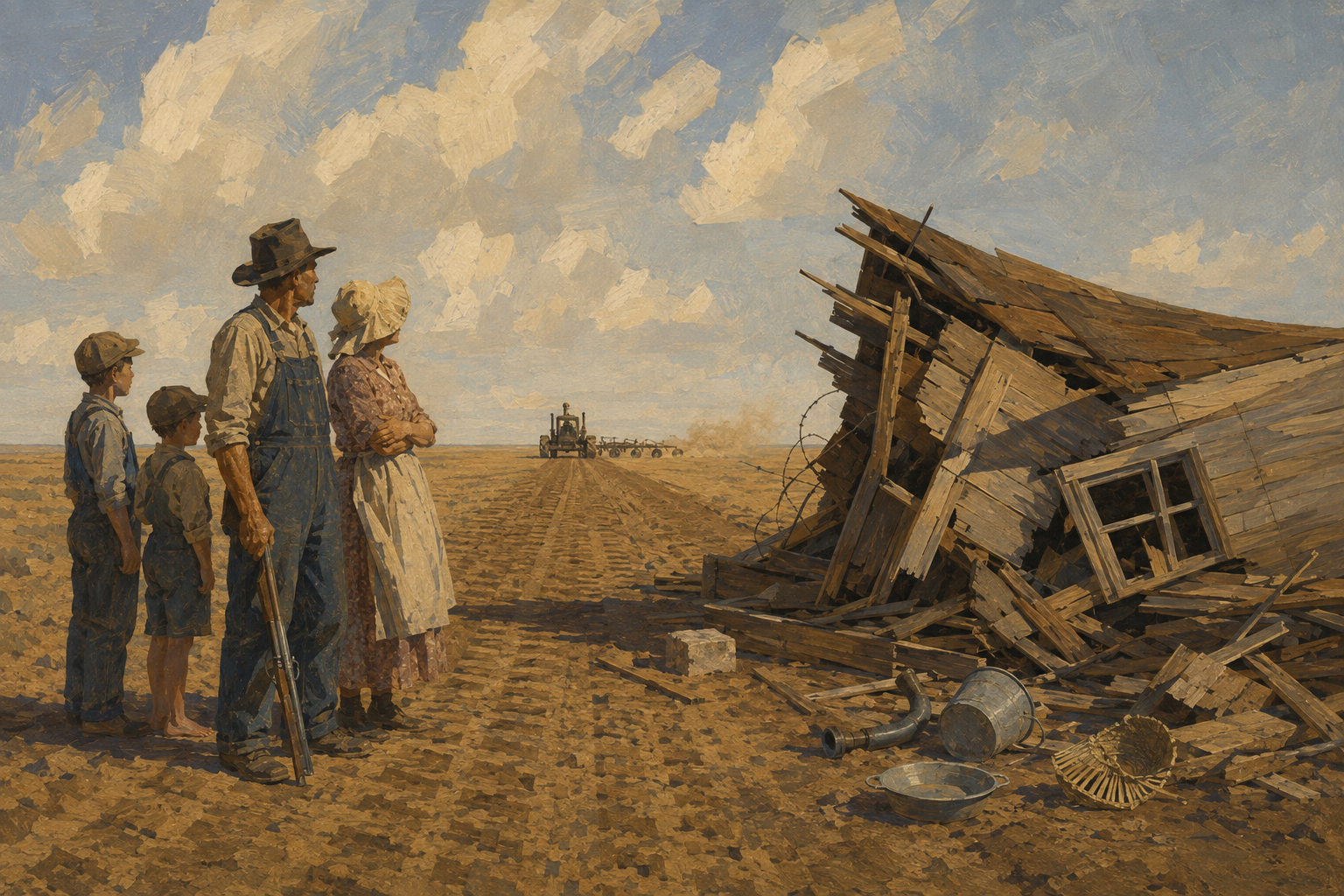
Composition
Written: 4 June 1938 to 7 June 1938 Journal entries: #6, #7, #8 Dating: from DeMott's editorial markers in Working Days
From the journal
4 June 1938, Saturday, 2:40 — Entry #6
Going to do a little work today—perhaps a page to finish the chapter of Casy and Joad. If it doesn’t get done, it doesn’t matter. But since the next chapter [Ed.—Chapter 5] tells of the coming of the tractors and must have a symphonic overtone, and, moreover, may not be more than four or five pages long, it would be […]
6 June 1938, Monday, 11:30 — Entry #7
[…] at all. Well—to work and if it doesn’t go well, I’ll wait until the washing machine stops and then do it. Try now though. Now the two pages are done and I think well done. But there is one more day of work on the inter-chapter 3 [Ed.— Chapter 5]. Have to make the sound of the tractors and the […]
7 June 1938, Tuesday, 11:00 — Entry #8
[…] to do it. I am not frightened of this any more. Too much a part of it finally. Letter from Rodman* this morning. My traffic fine was $2.50. Thought it might be twenty-five. But now to work. Well that is finished and I hope it is good [Ed.—second half of Chapter 5]. I think it is. Now back to the […]
Source: Working Days: The Journals of The Grapes of Wrath, 1938–1941, ed. Robert DeMott (Viking, 1989).