Chapter 1
Dust settles on the corn
Summary
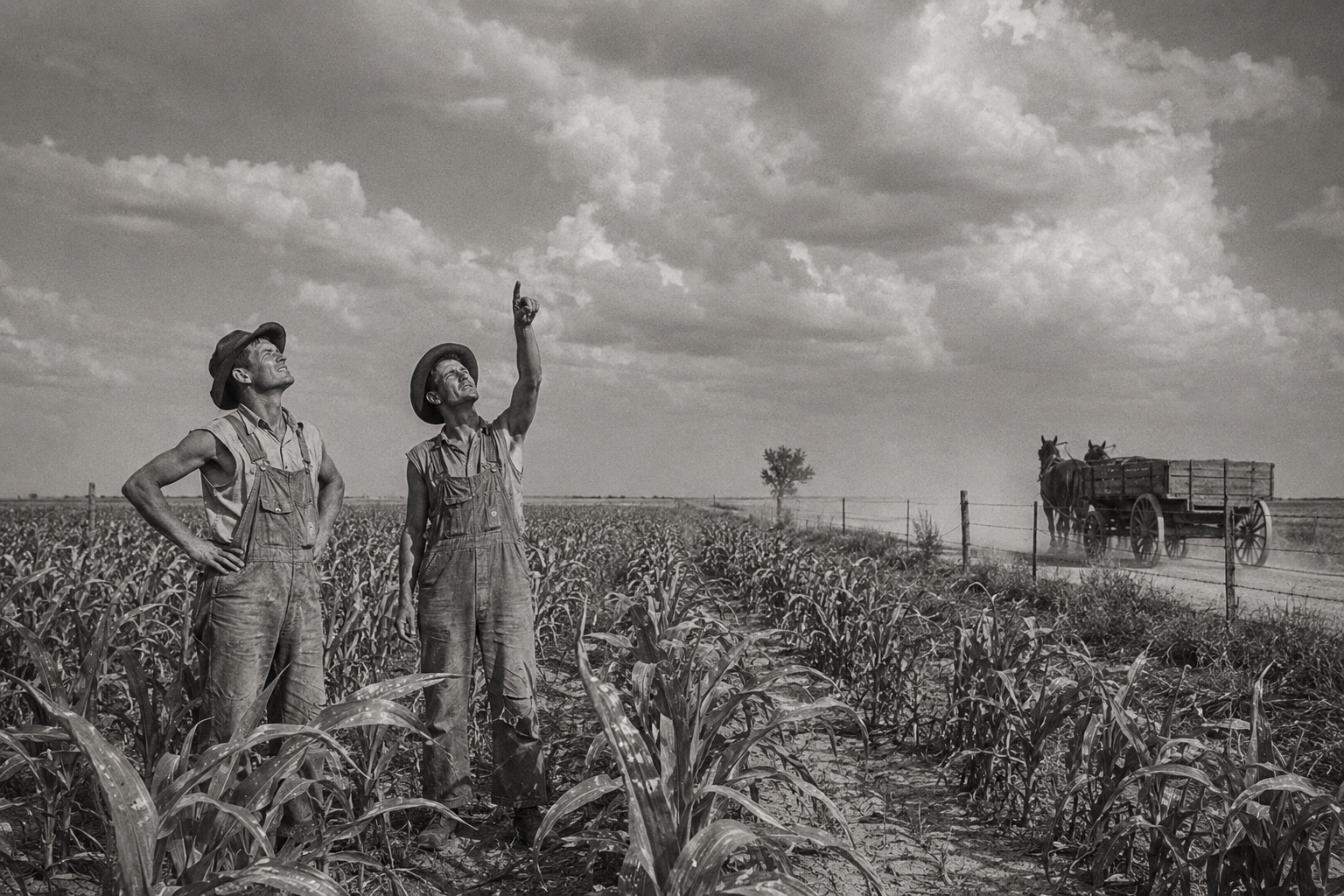
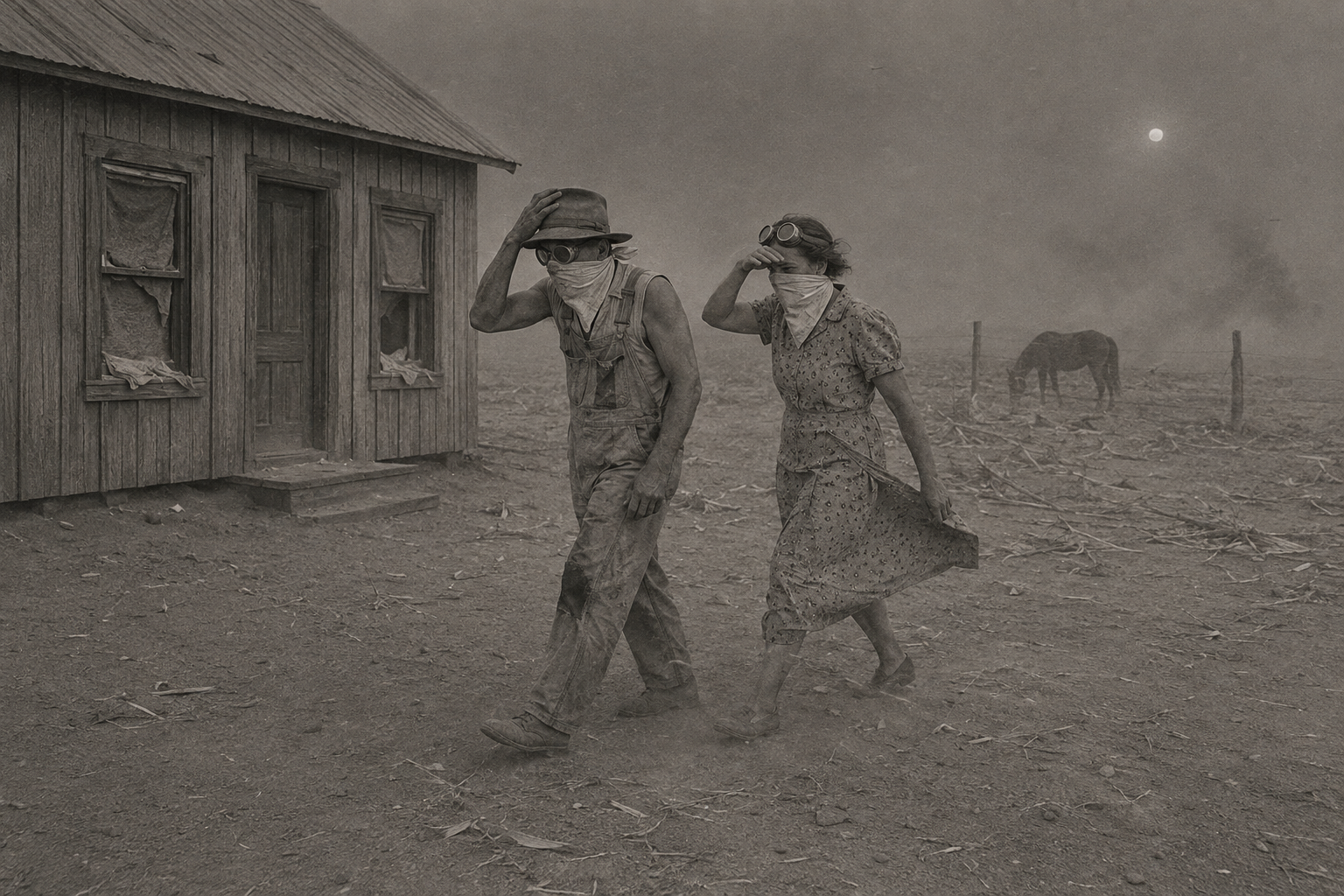
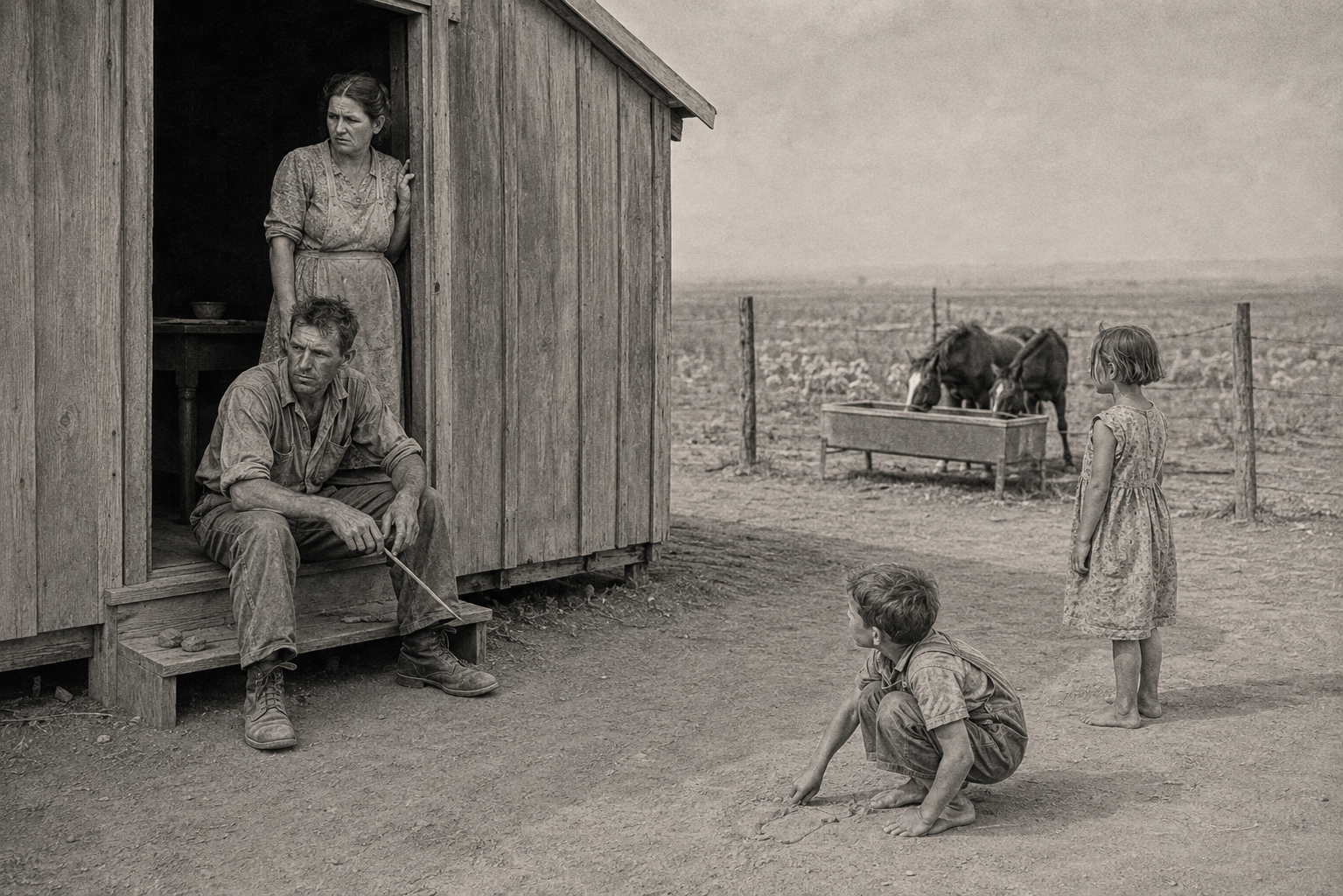
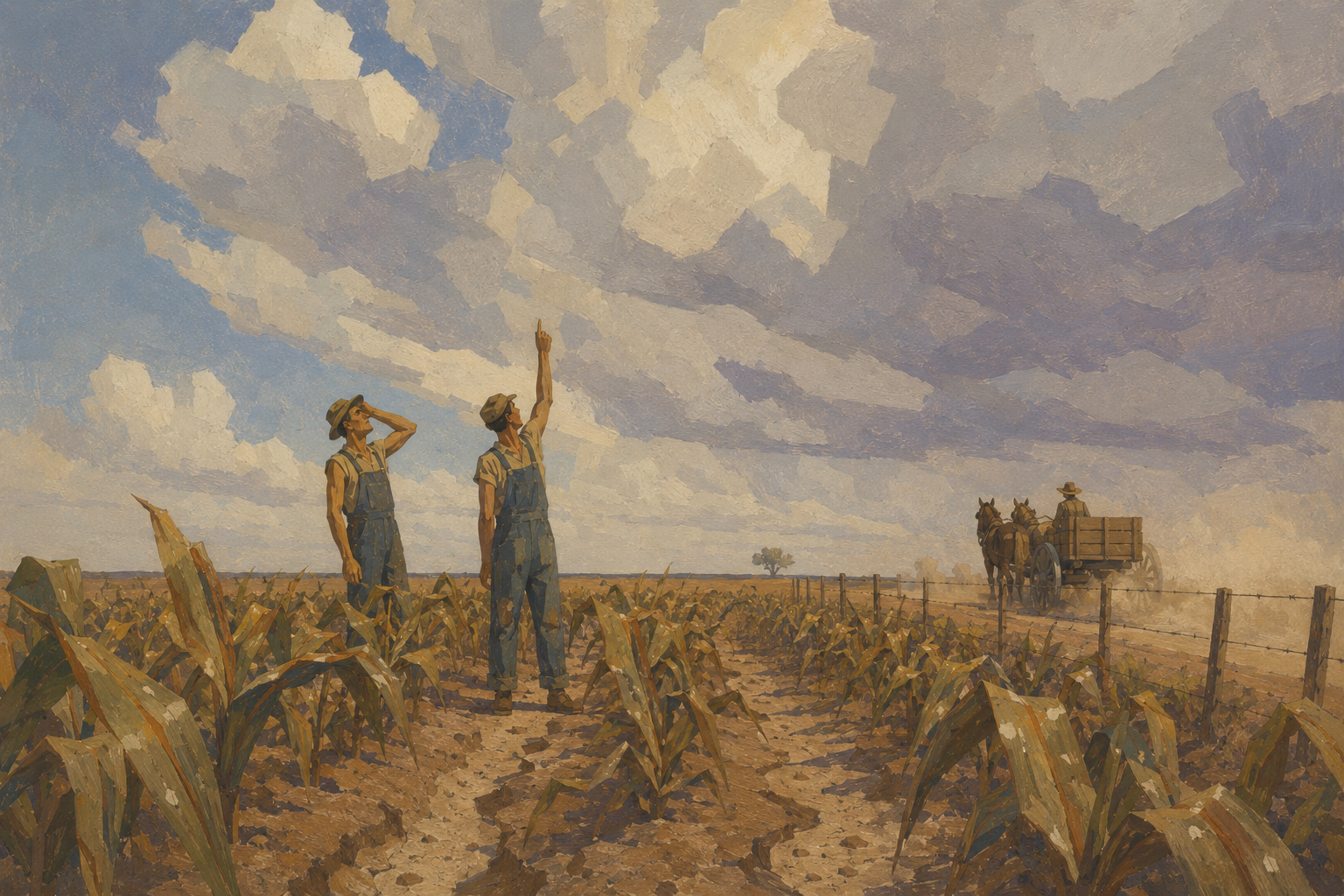
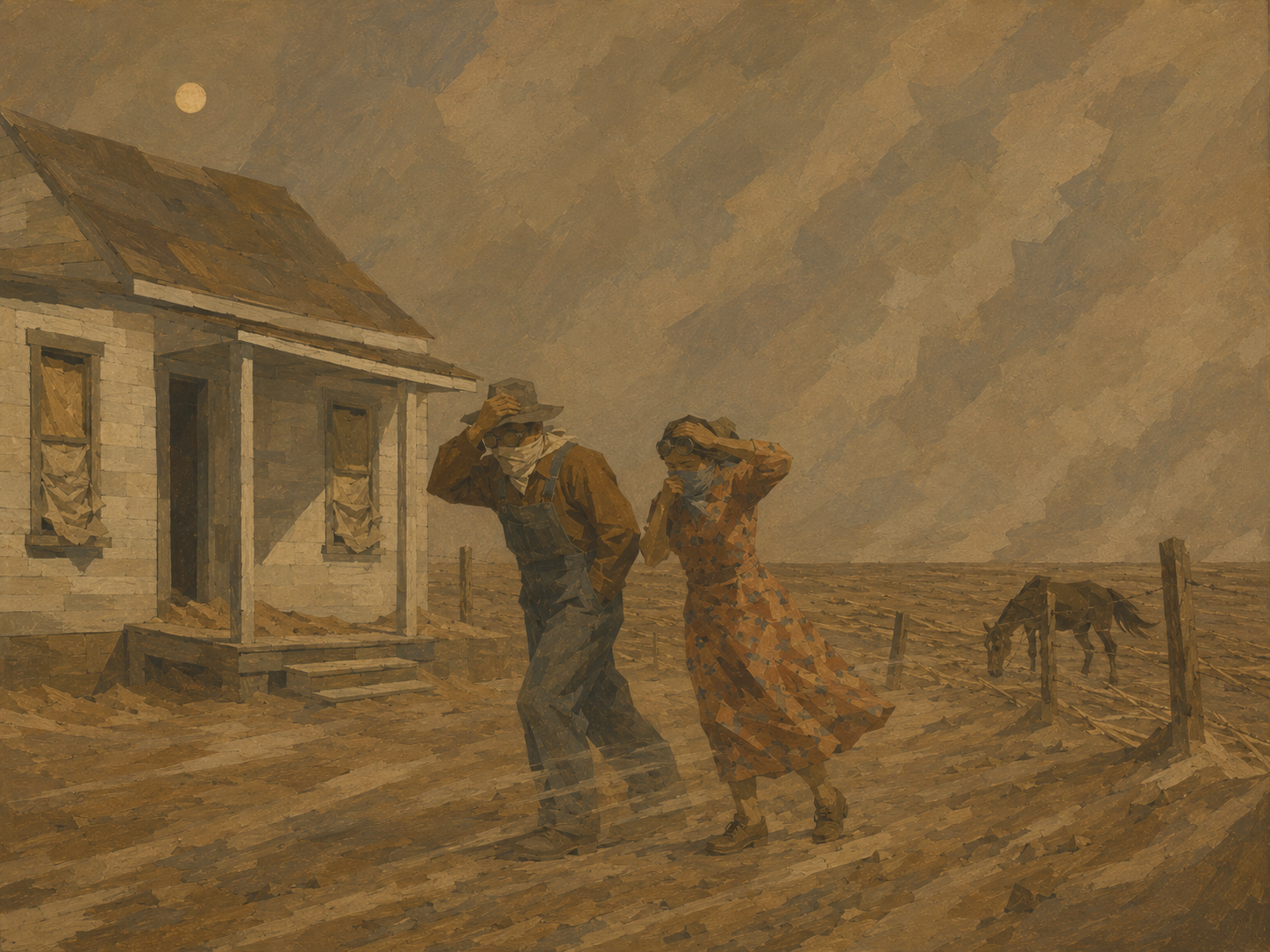
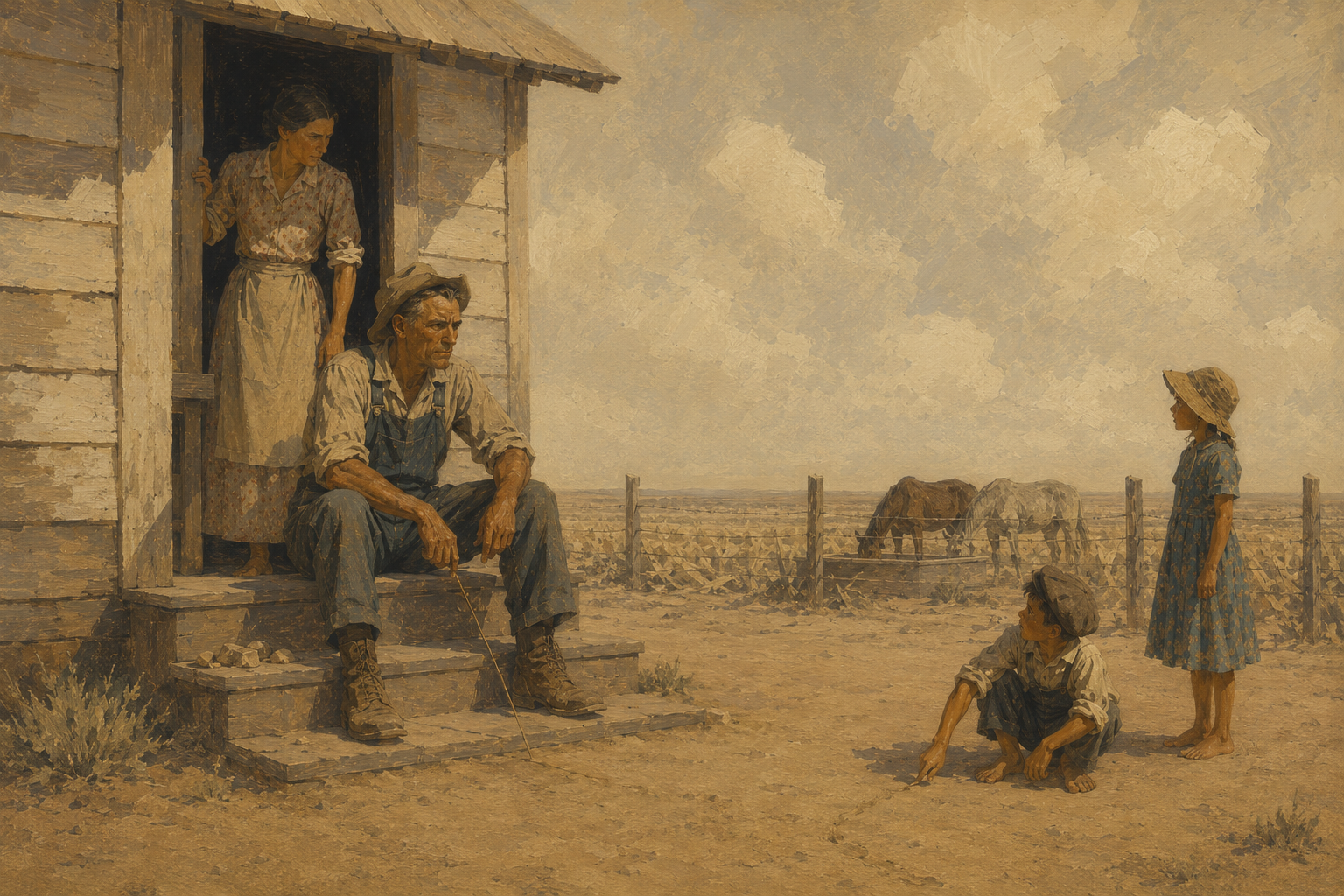
An intercalary chapter with no named characters. Drought settles over the red and grey country of Oklahoma: the last gentle rains give way to a pale sky, the corn browns from the leaf edges inward, and dust rises from every hoof and wheel. A steady wind strips the crust from the fields and turns day into a red-lit dusk; families seal their doors with cloth and tie handkerchiefs over their faces. When the wind stops, the men come out to stand at their fences and look at the ruined corn. The women watch their faces to see whether they will break, and the children watch the women. The men's bemusement hardens into anger, and the women know it is all right.
Analysis
Opens on catastrophe with no protagonist, establishing the method: the collective precedes the individual. The drought is narrated as weather, not villainy — blame arrives later. The chapter's only action is a gesture: women reading men's faces for the break. Anger, when it comes, signals survival rather than despair.
Plates
Illustration style
Composition
Written: 1938-05-26 to 1938-05-28 Dating: from DeMott's editorial markers in Working Days
From the journal
No journal entry falls in this span.
Source: Working Days: The Journals of The Grapes of Wrath, 1938–1941, ed. Robert DeMott (Viking, 1989).