Chapter 11
Where the whole scheme came from
Rus, whither art thou racing? Give an answer. She gives no answer.
Summary
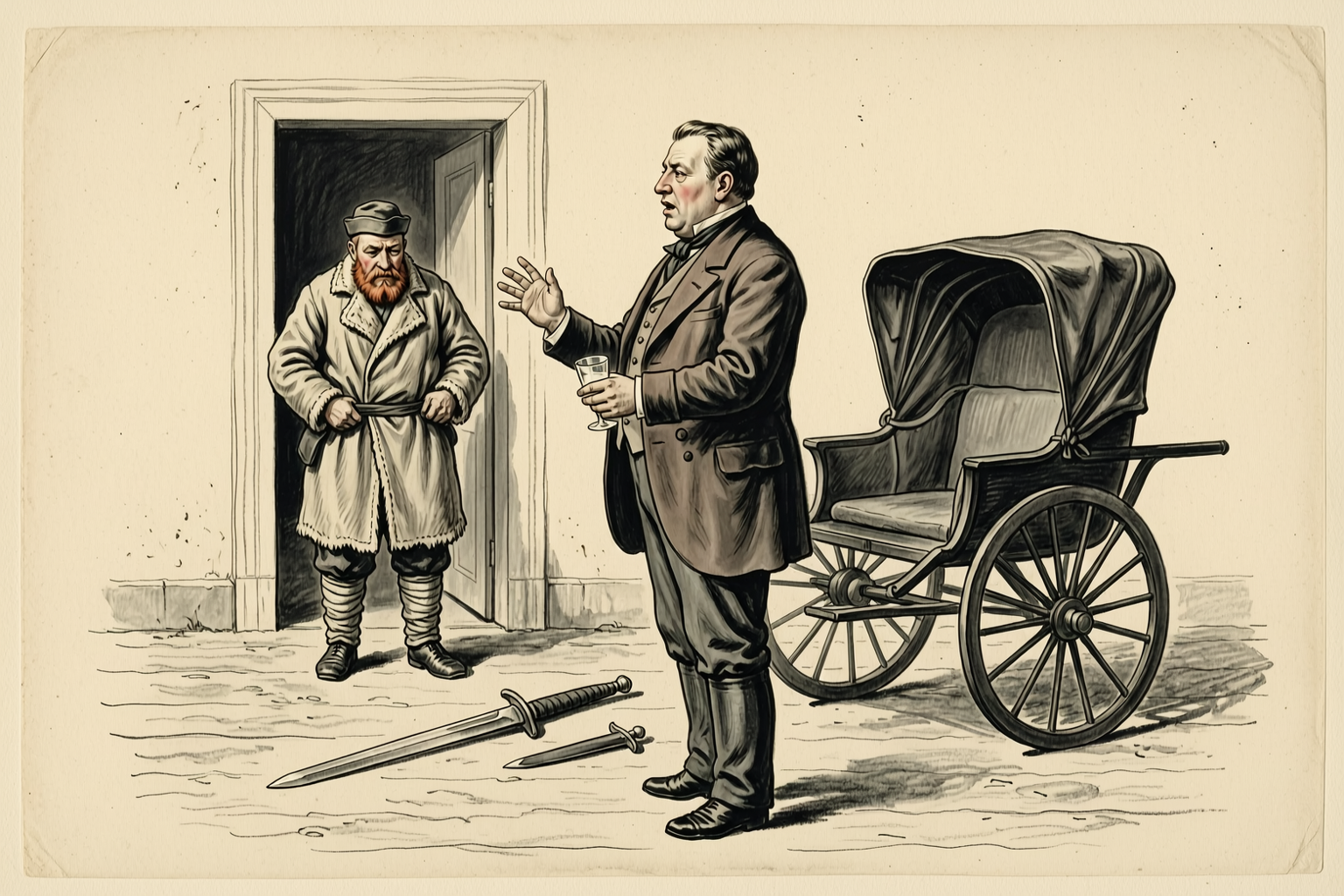
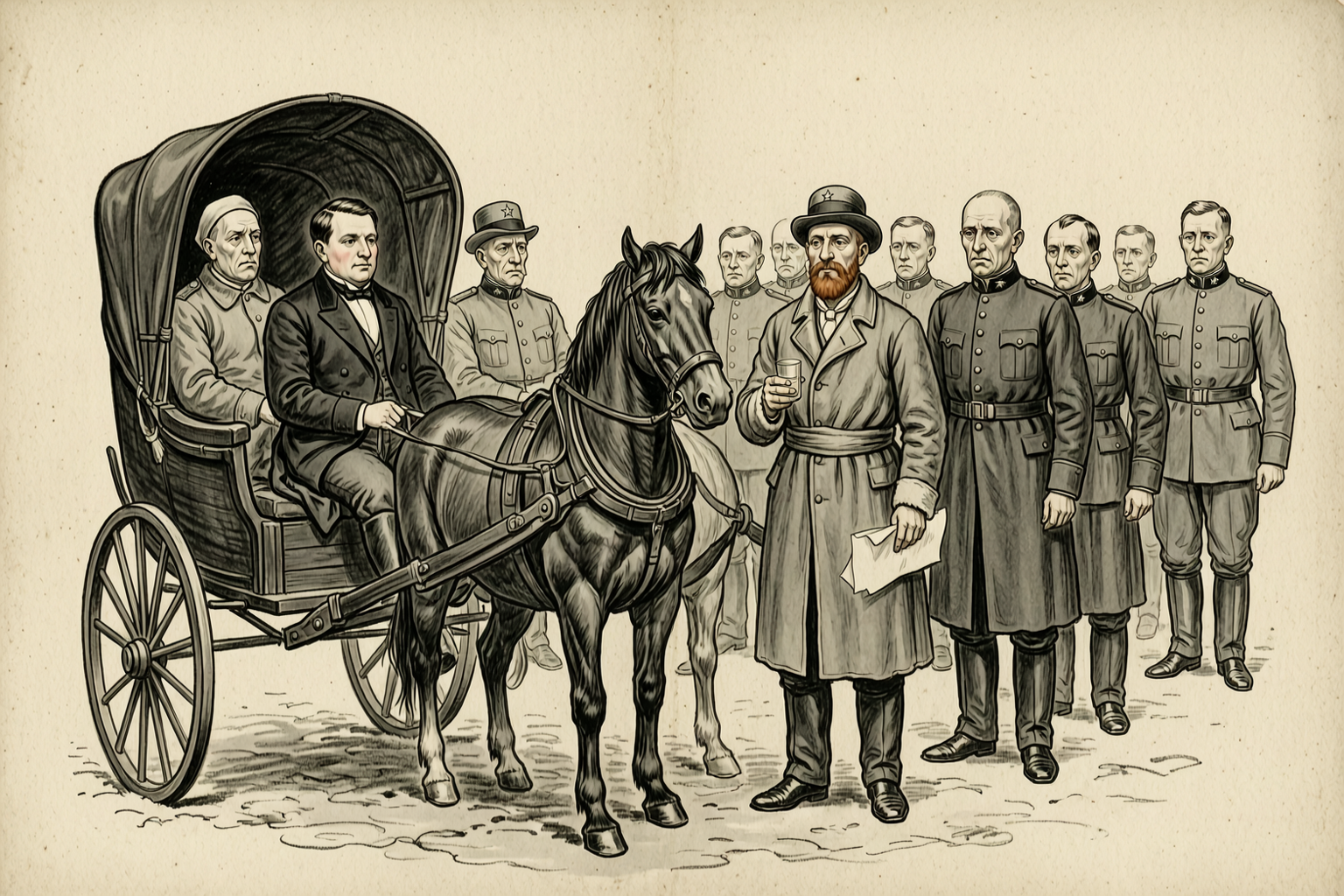
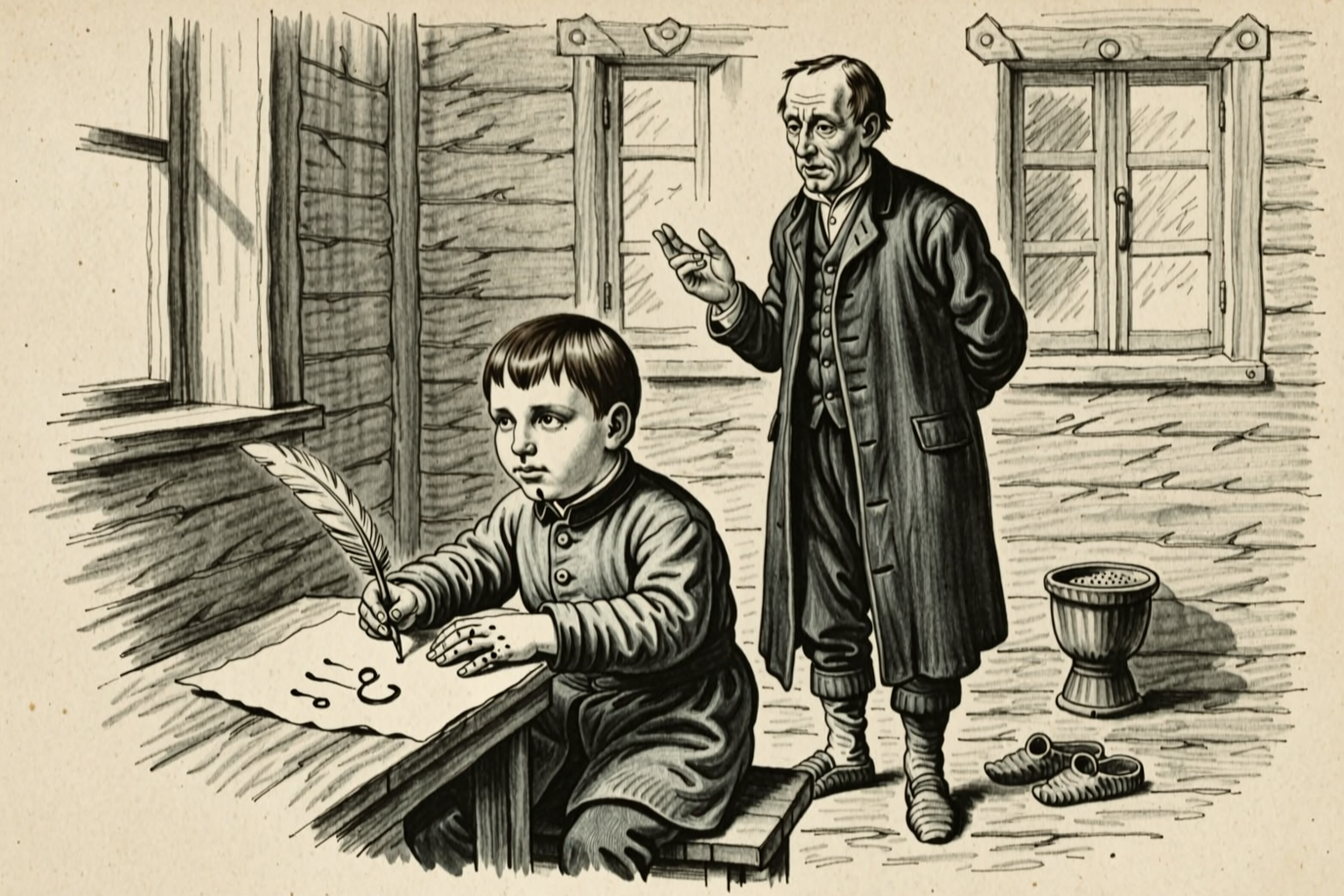
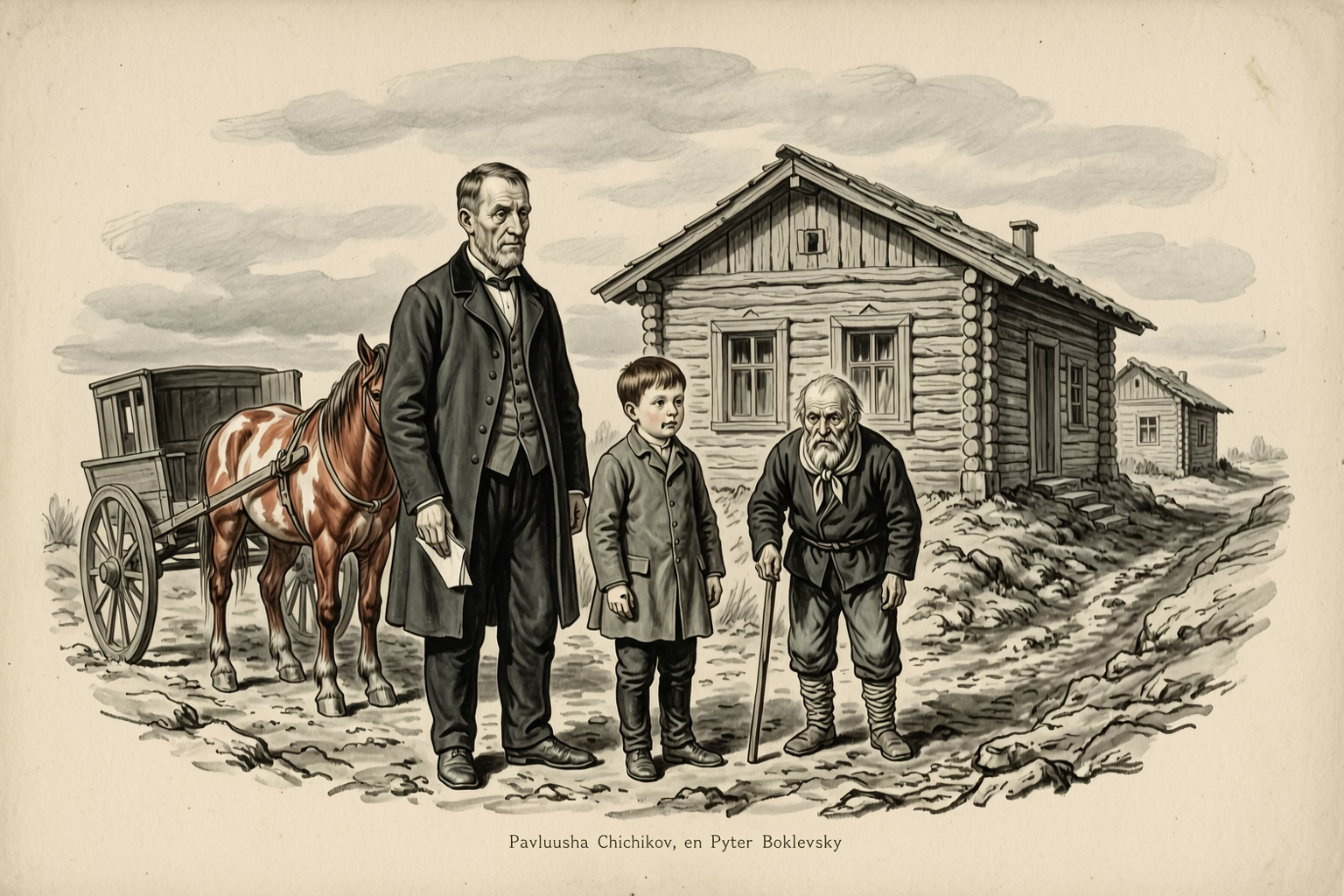
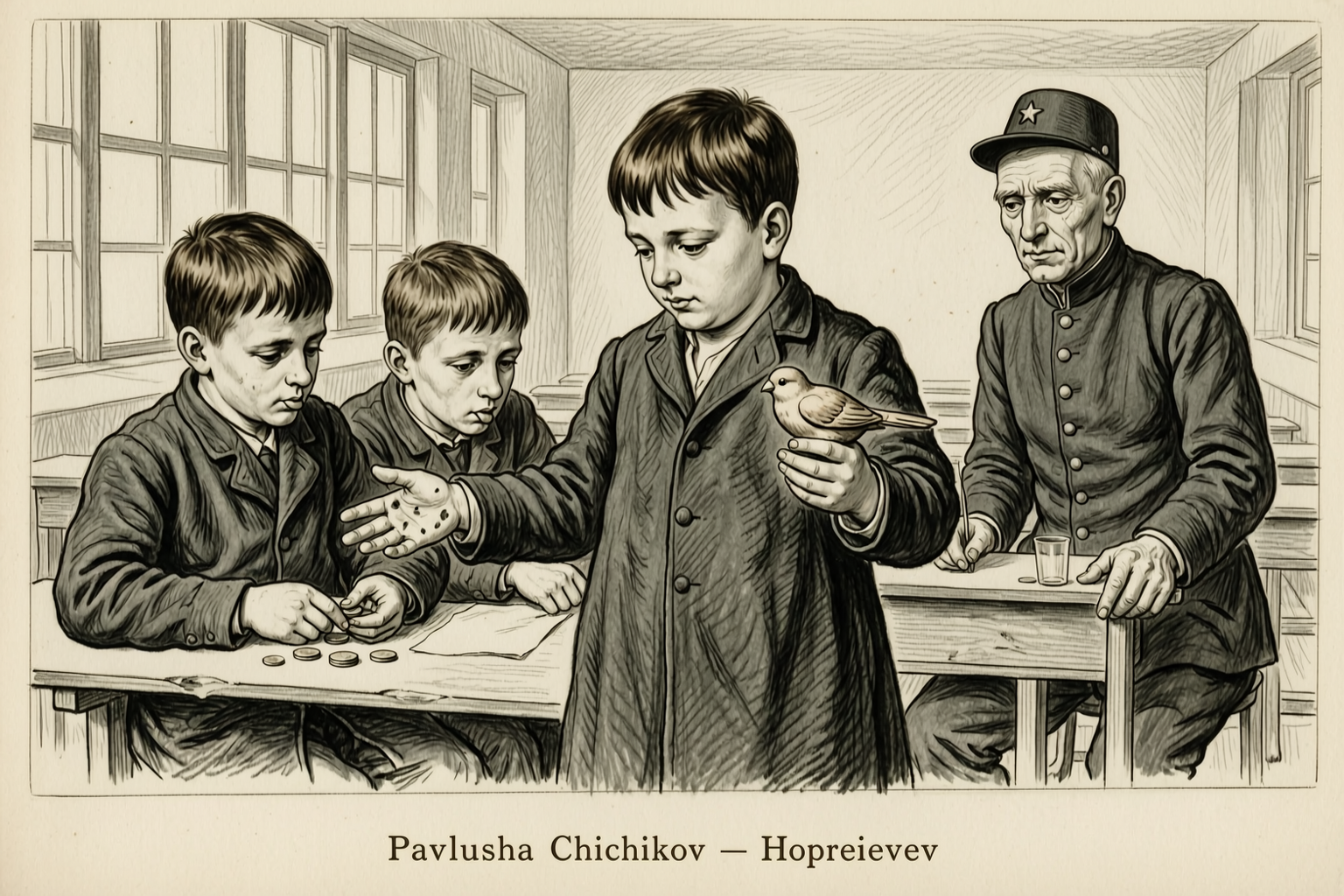
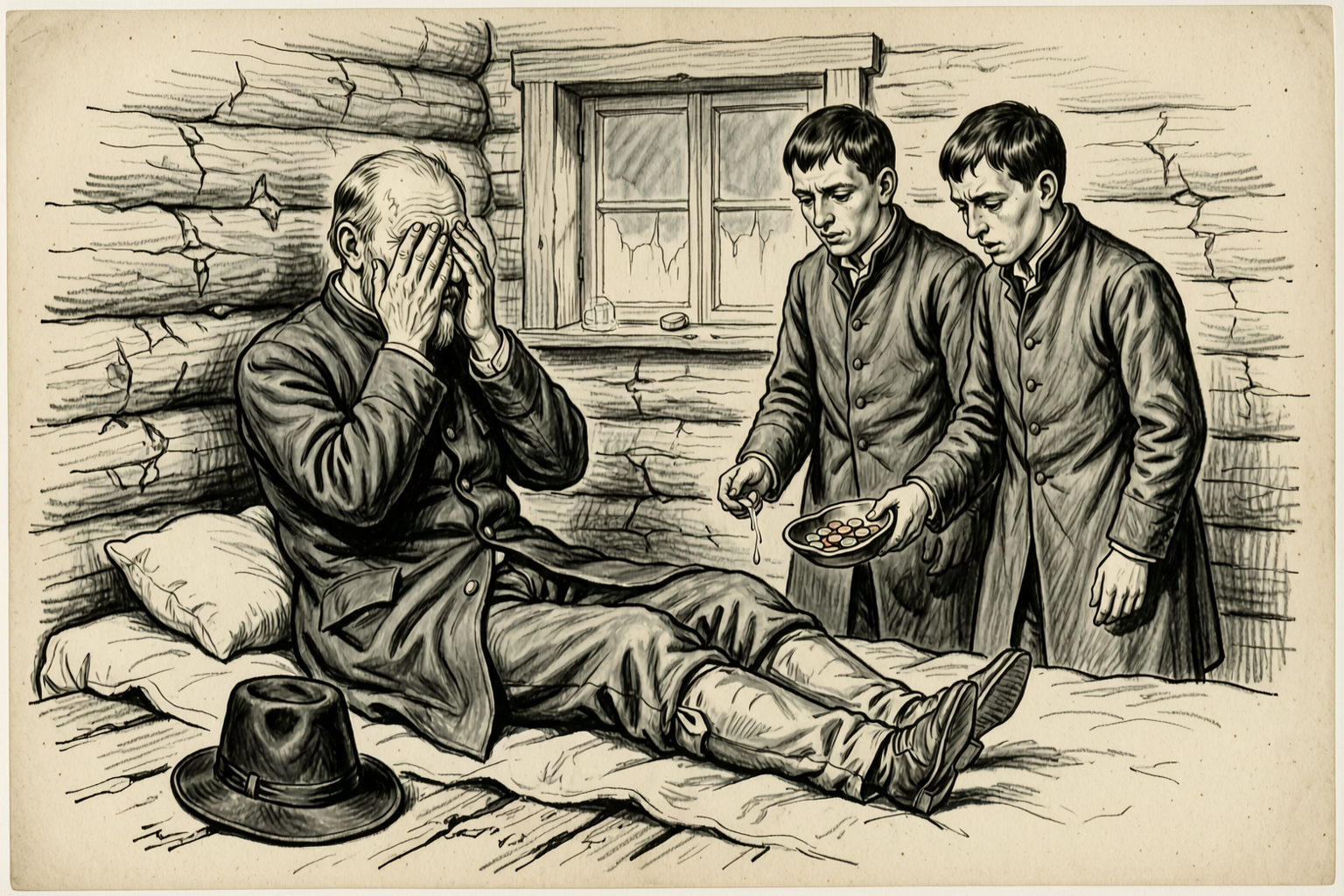
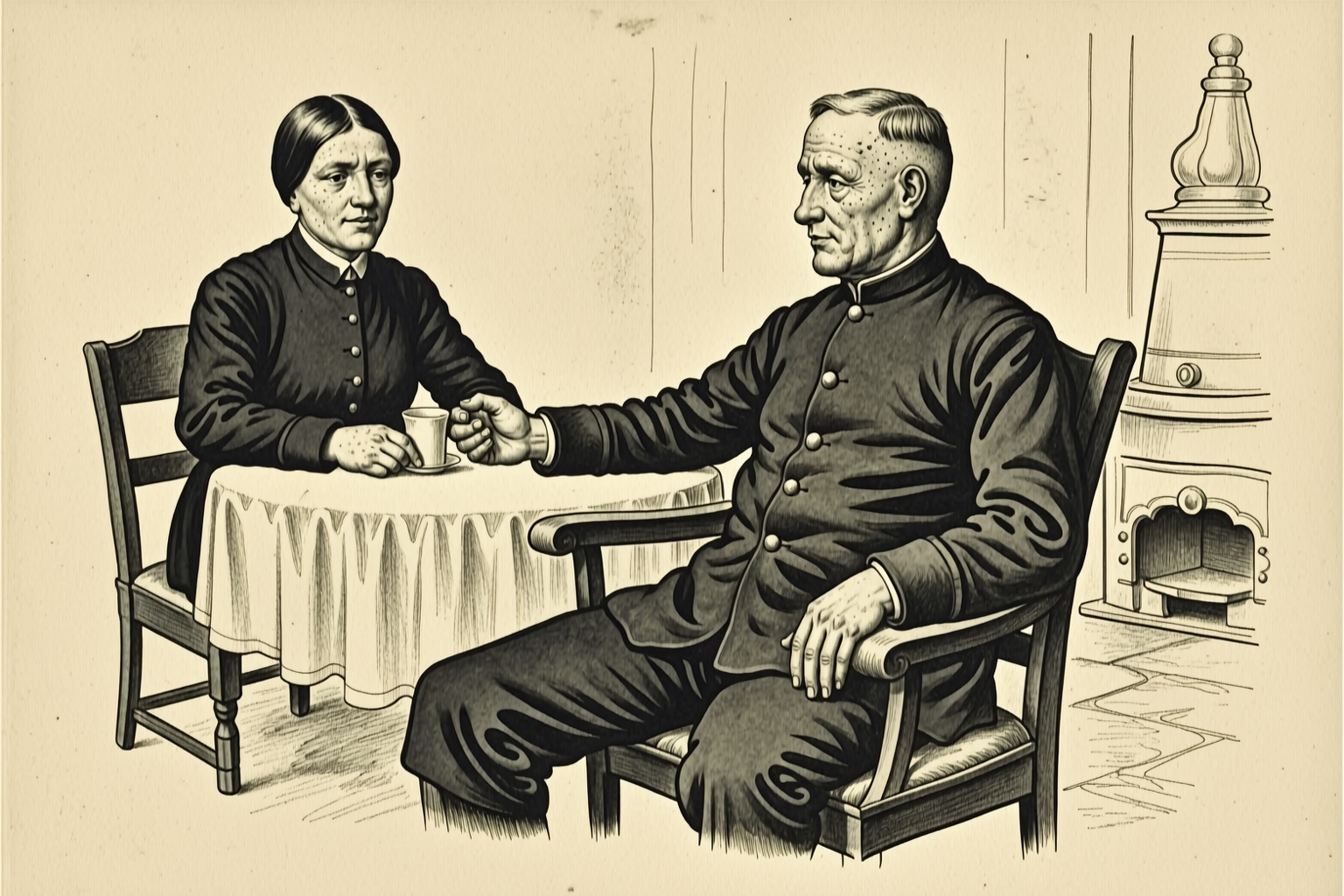
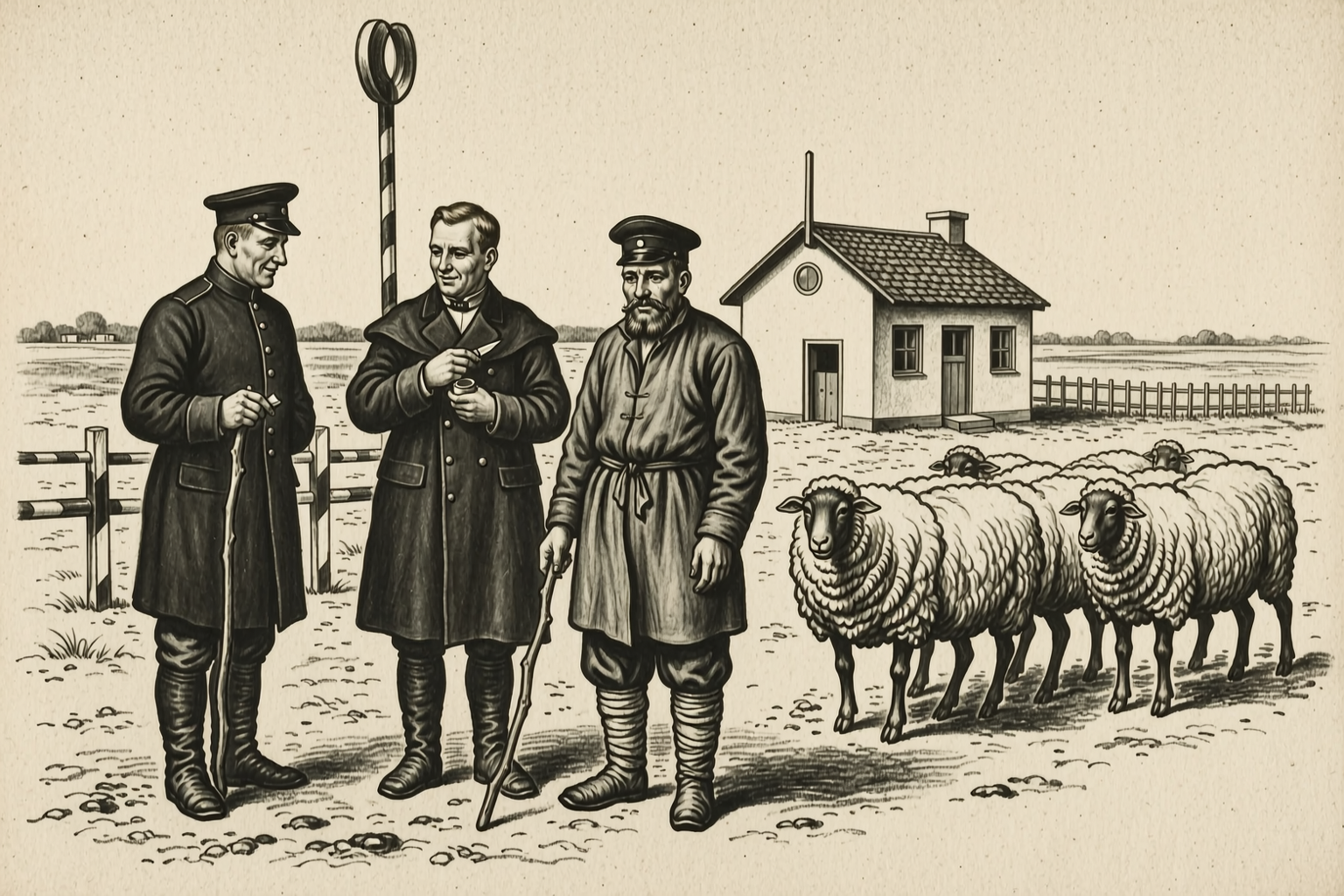
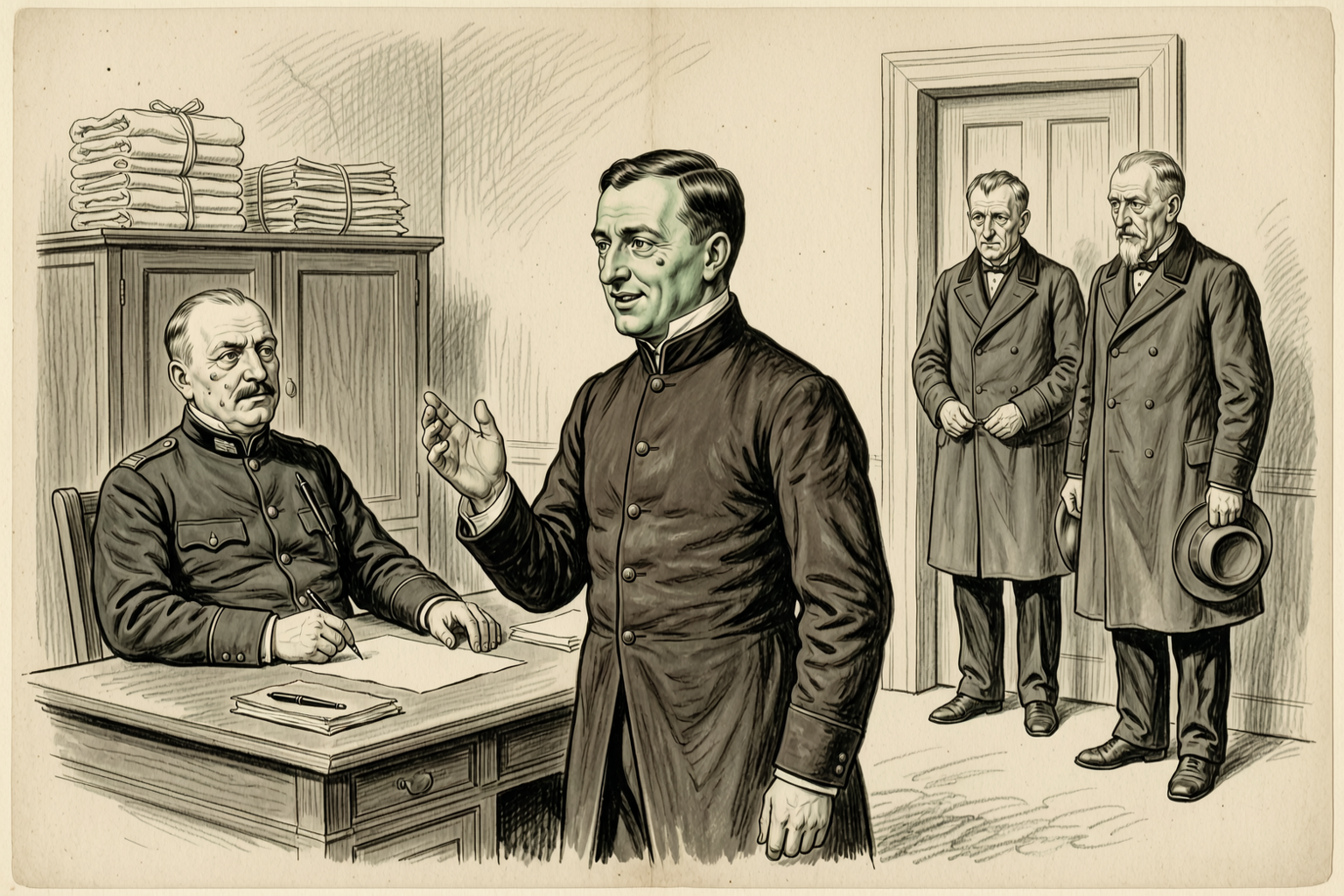
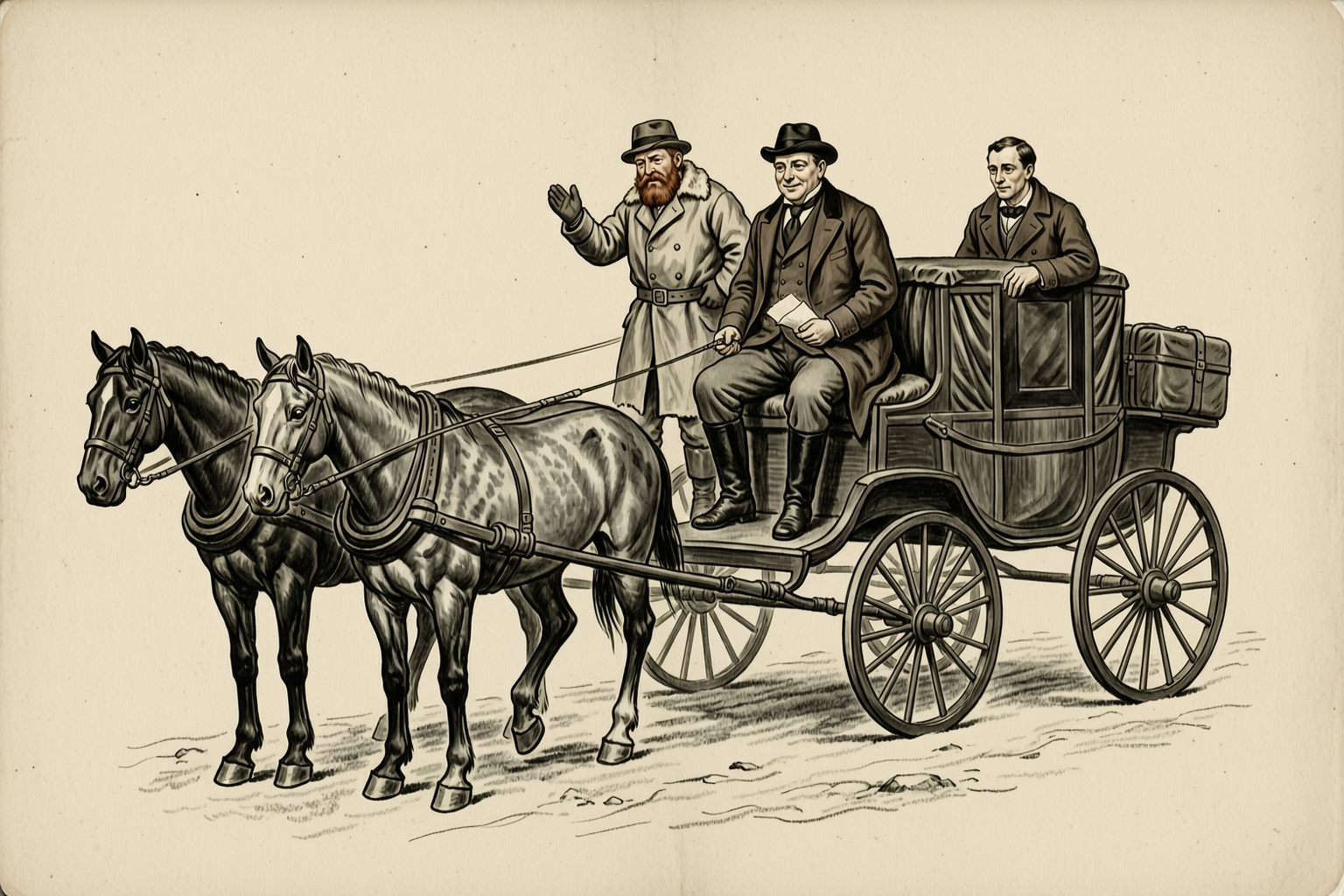
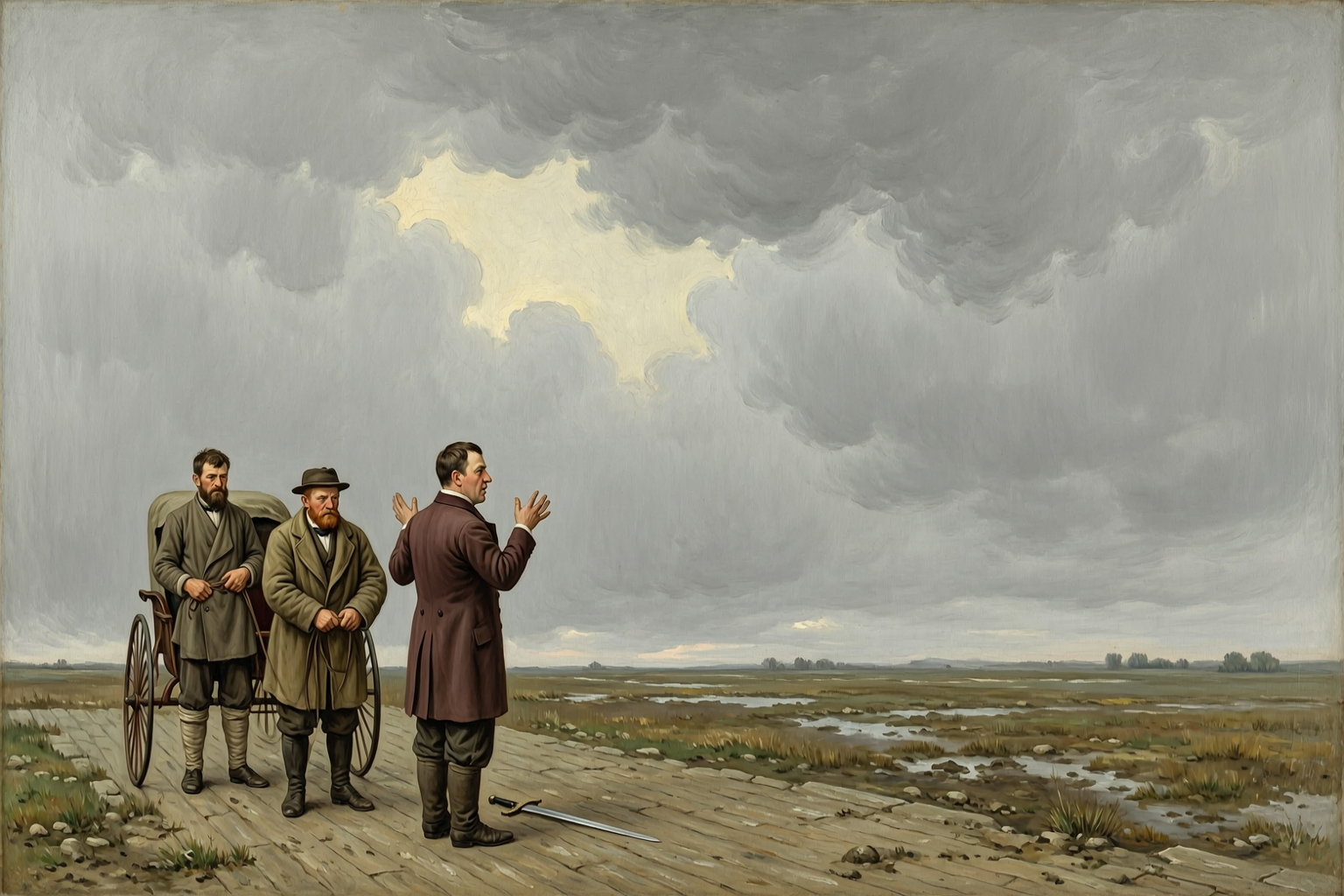
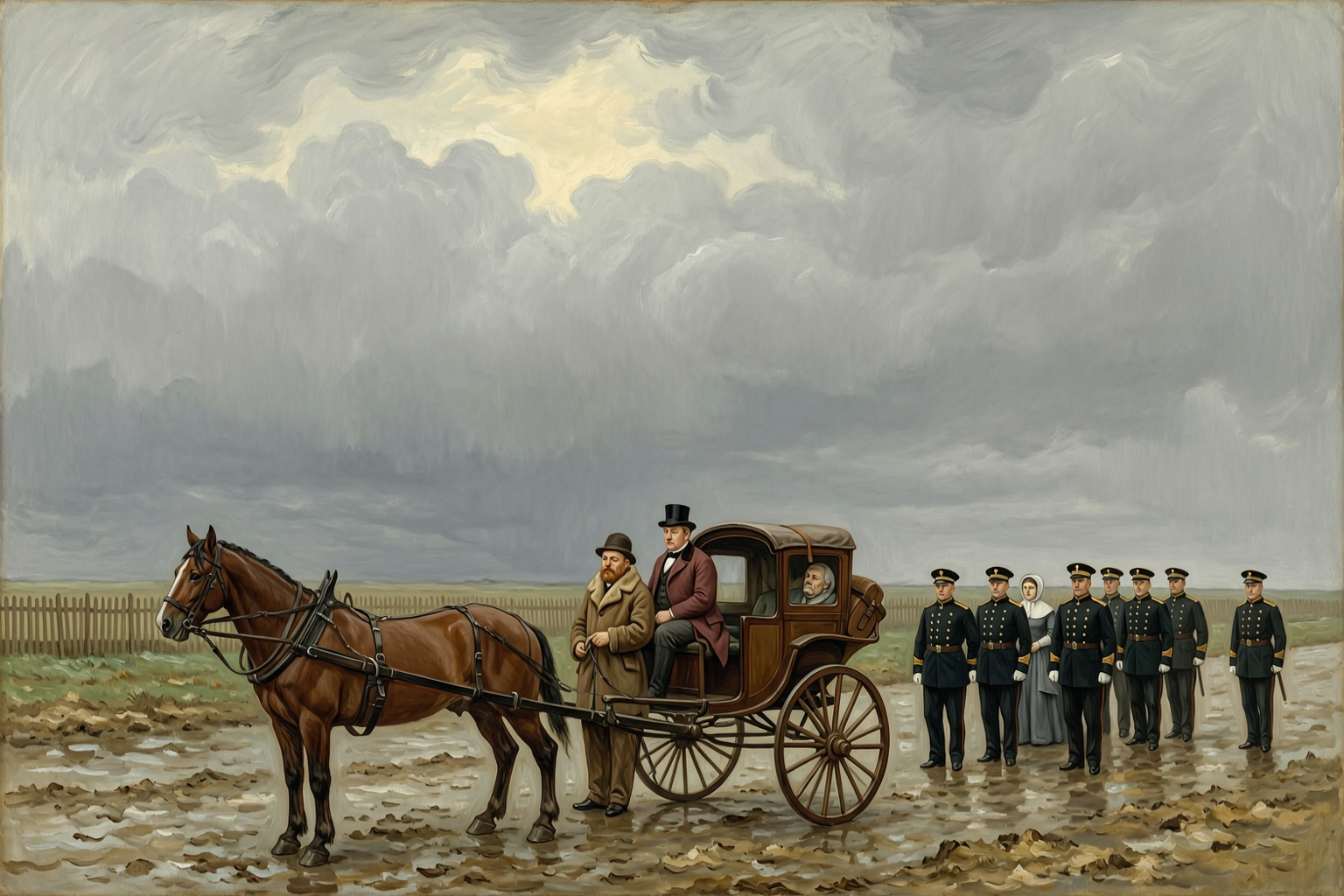
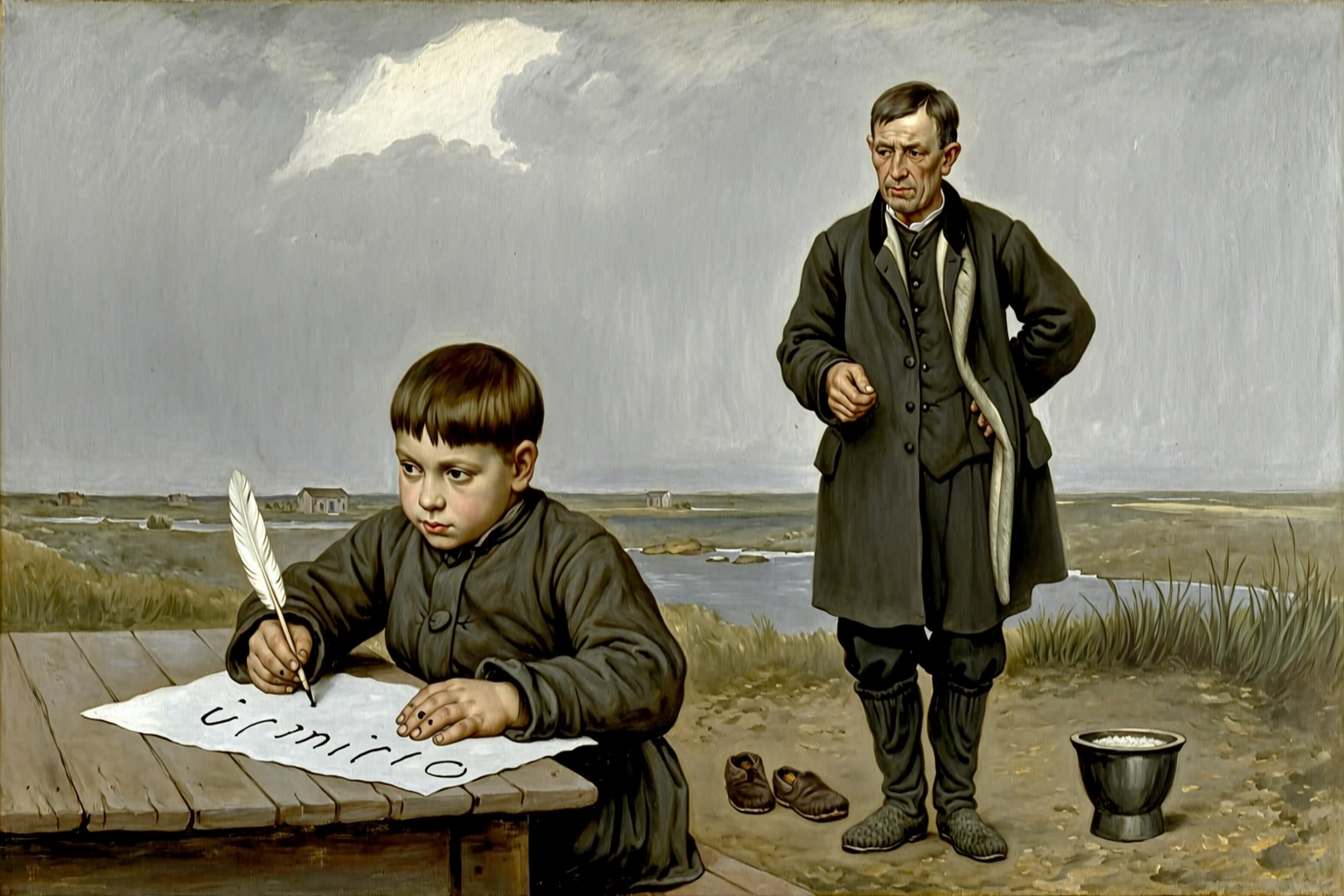
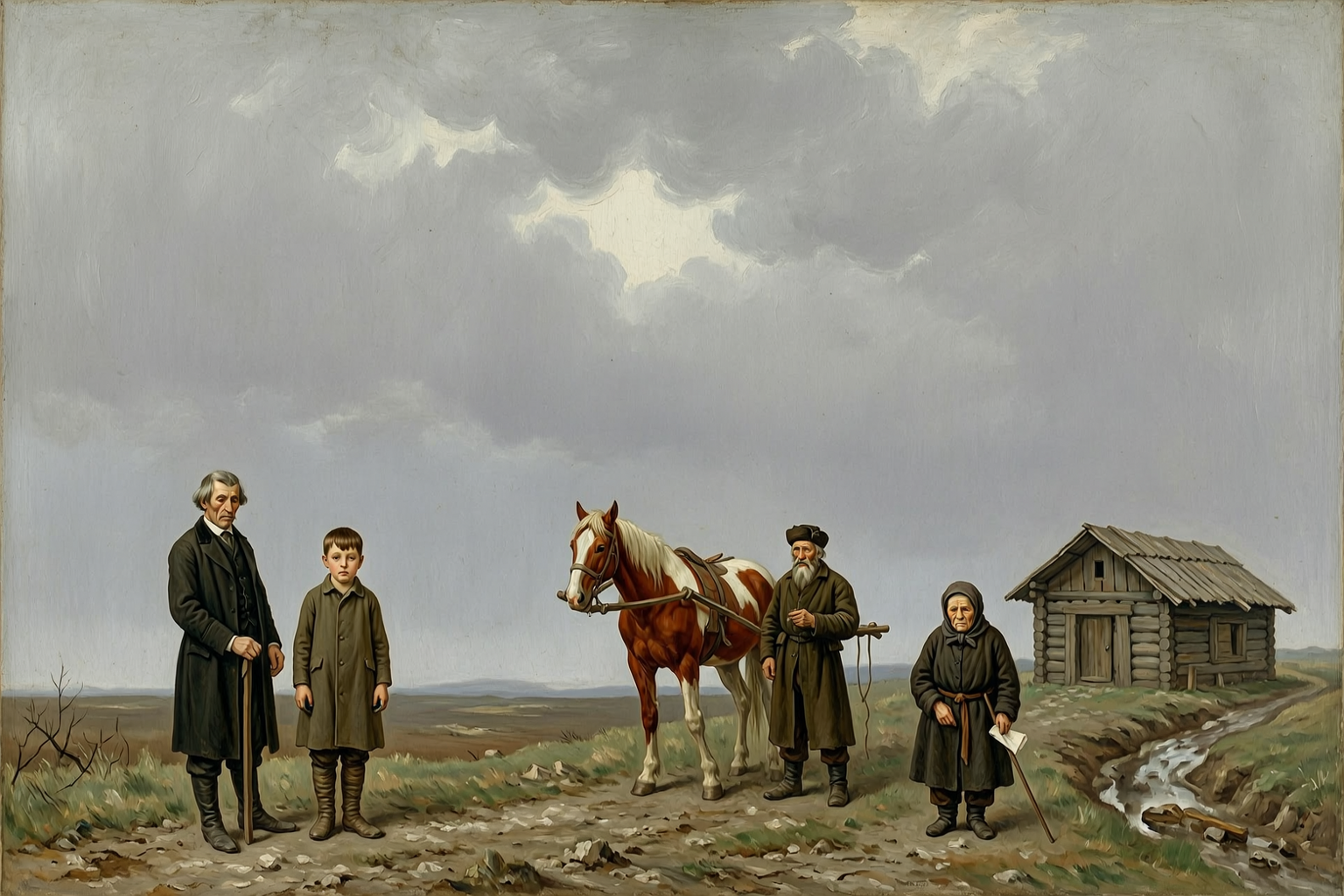
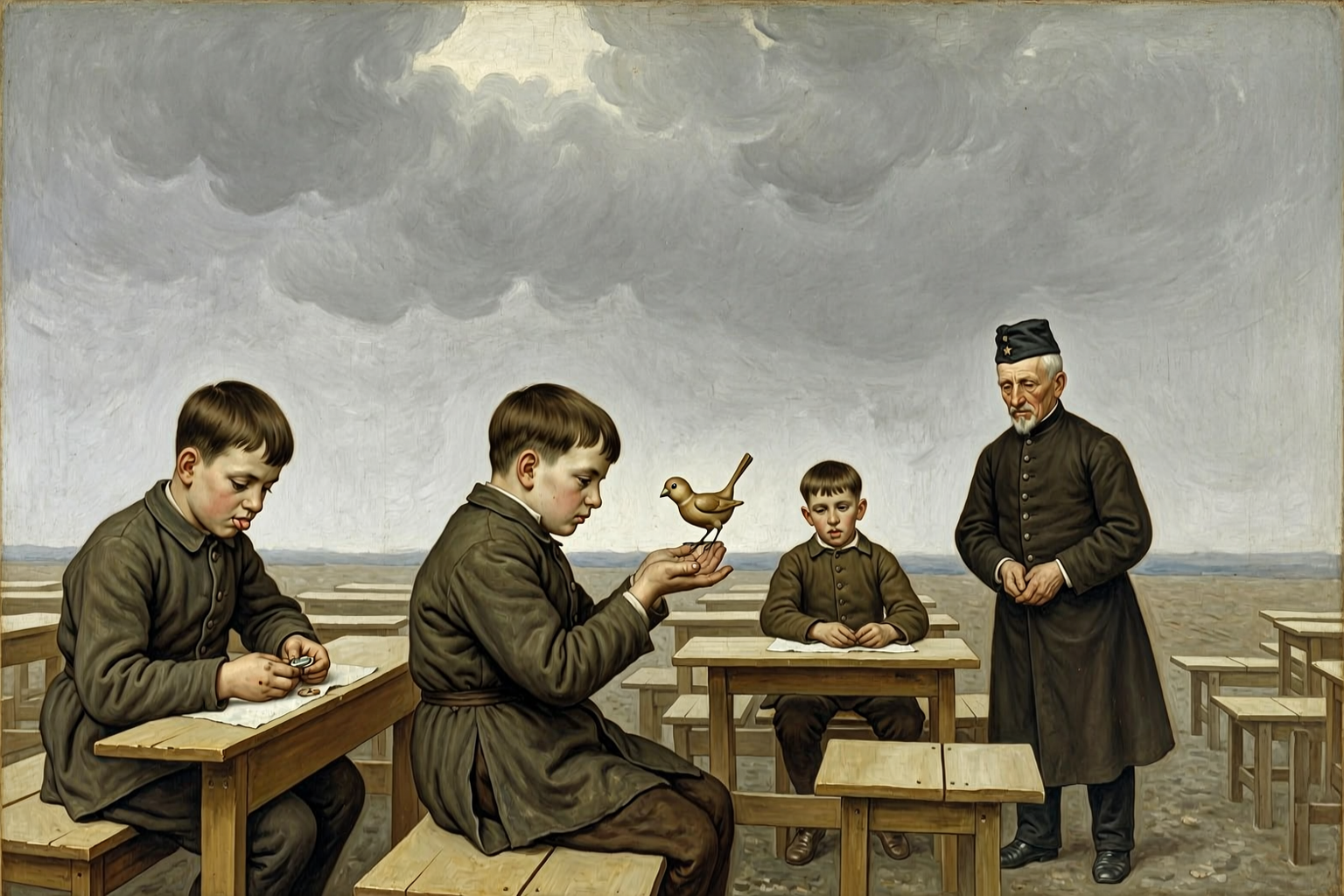
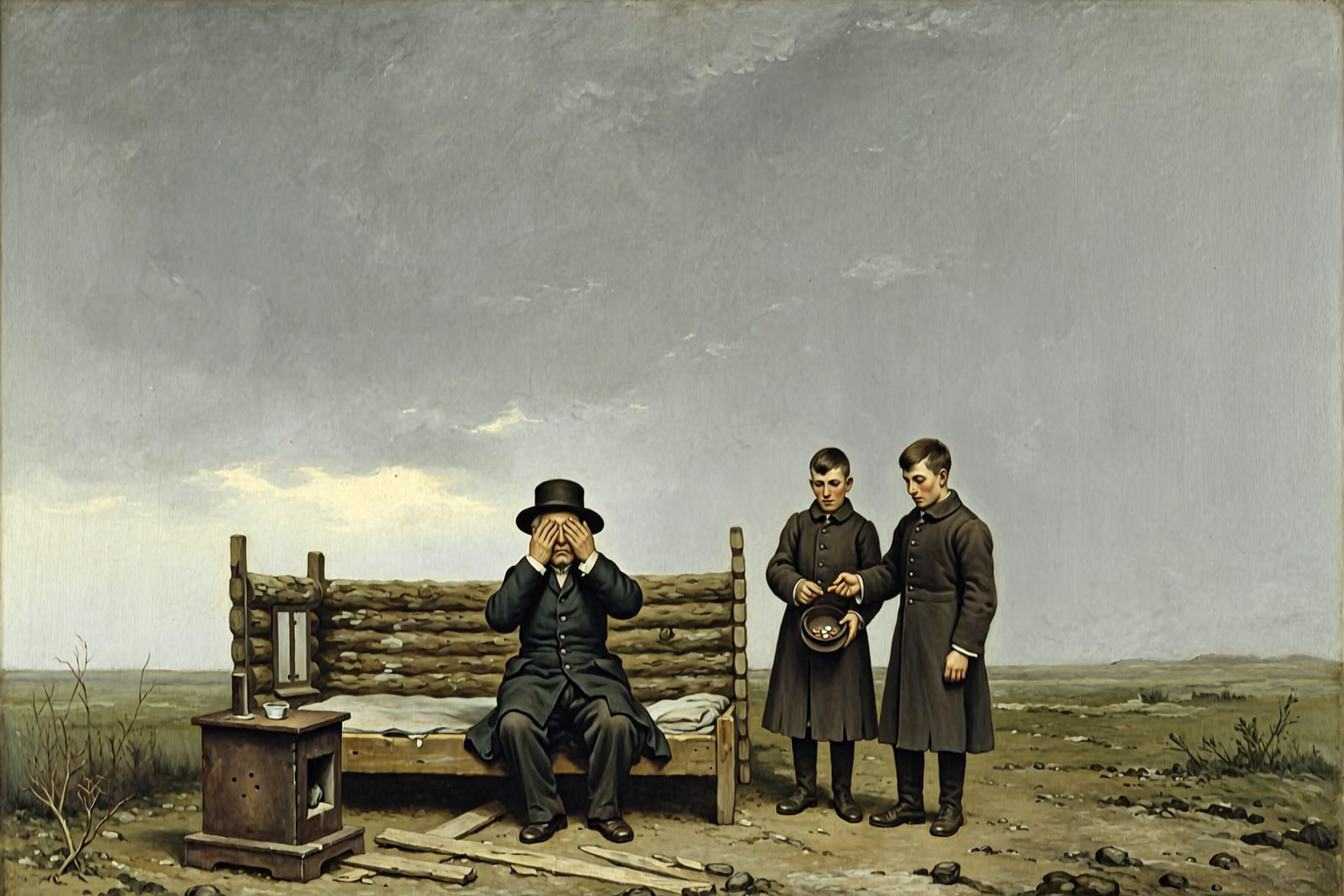
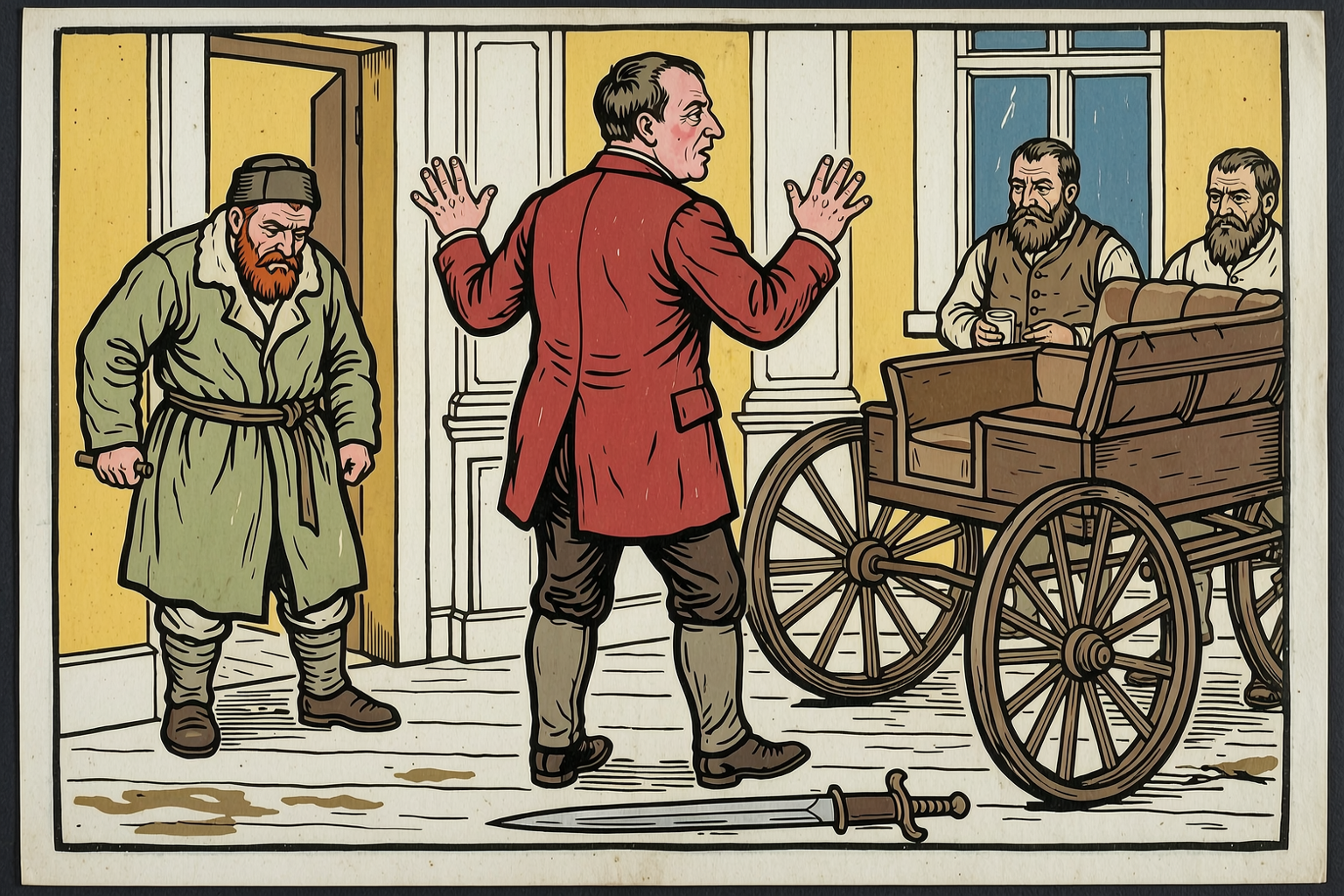
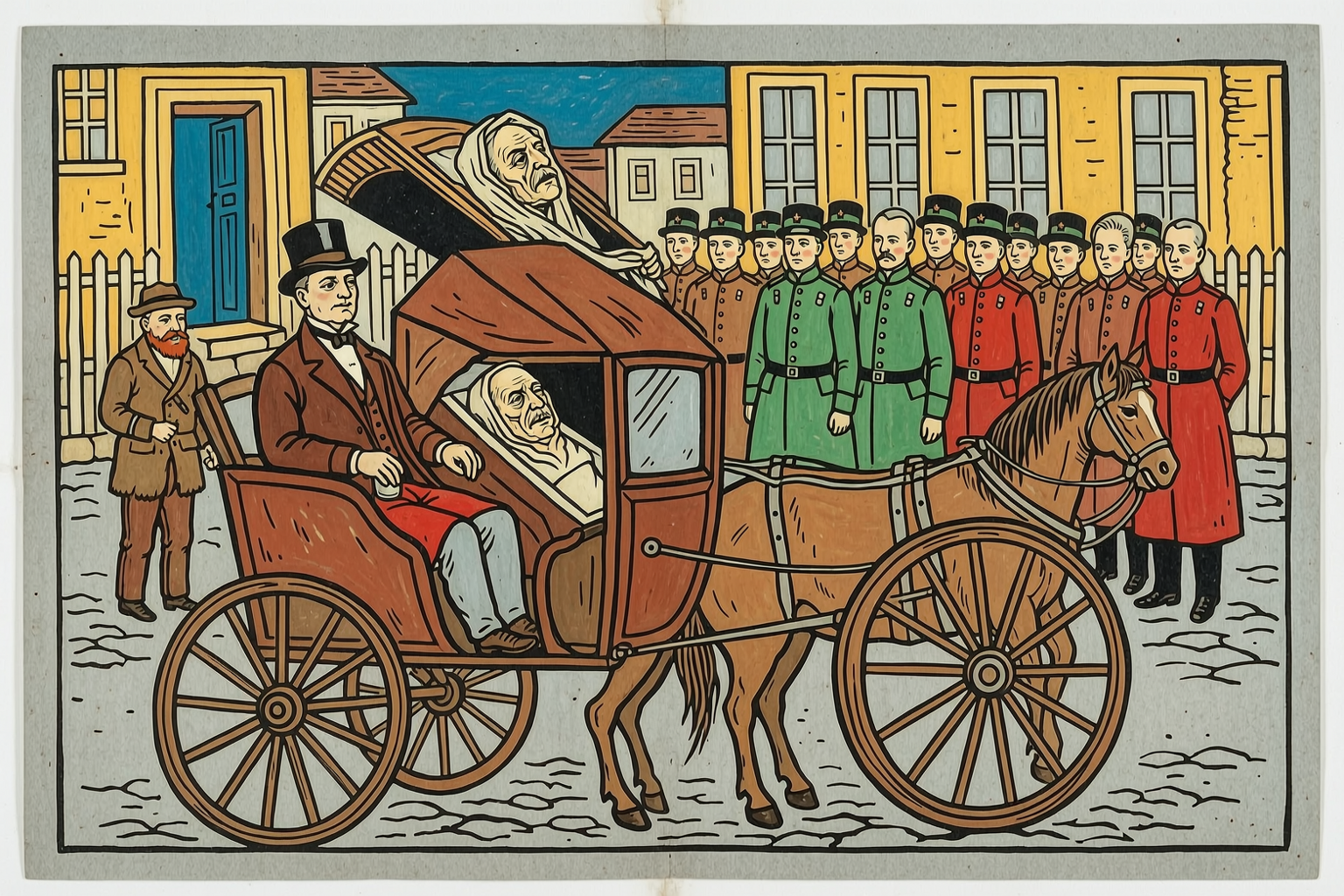
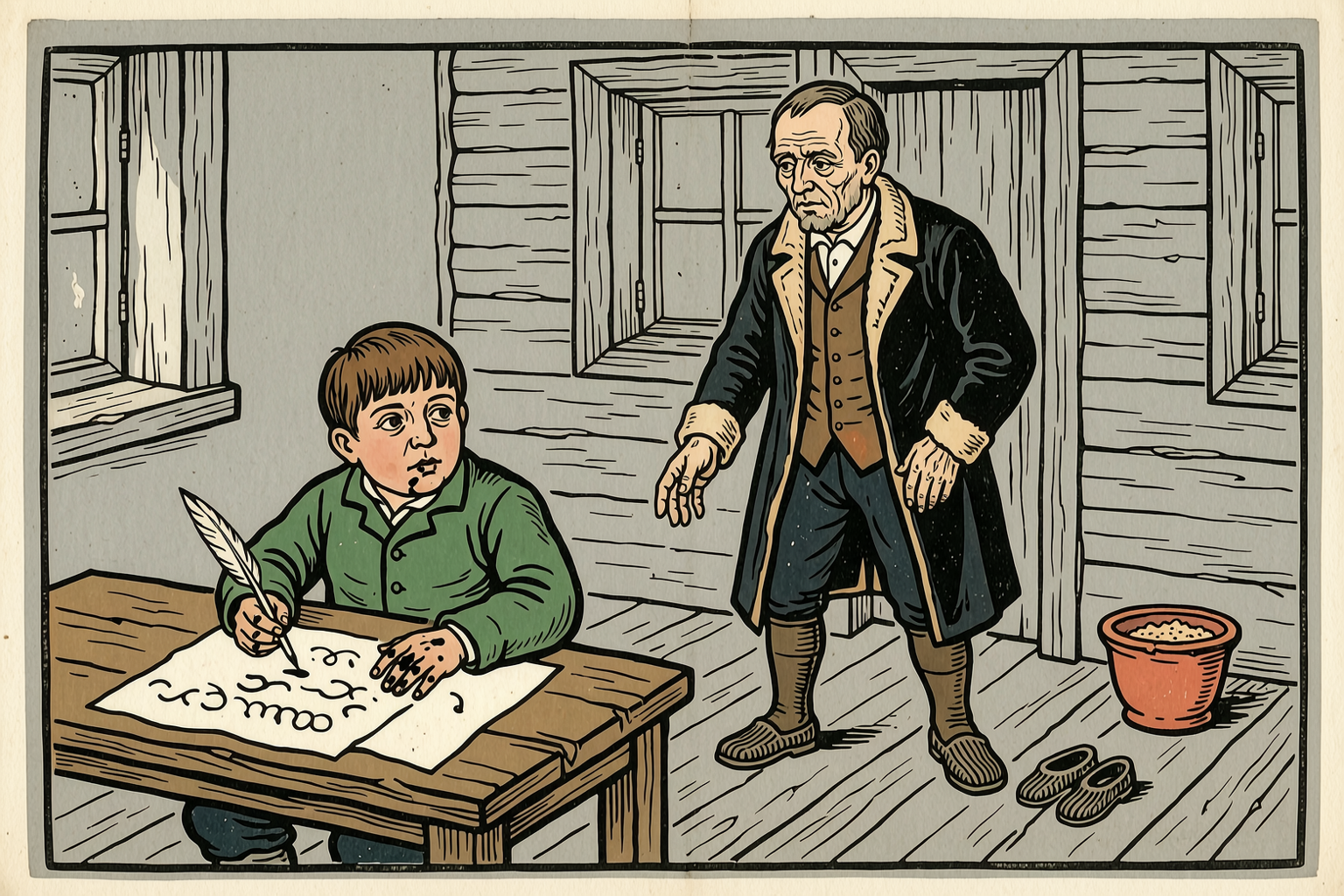
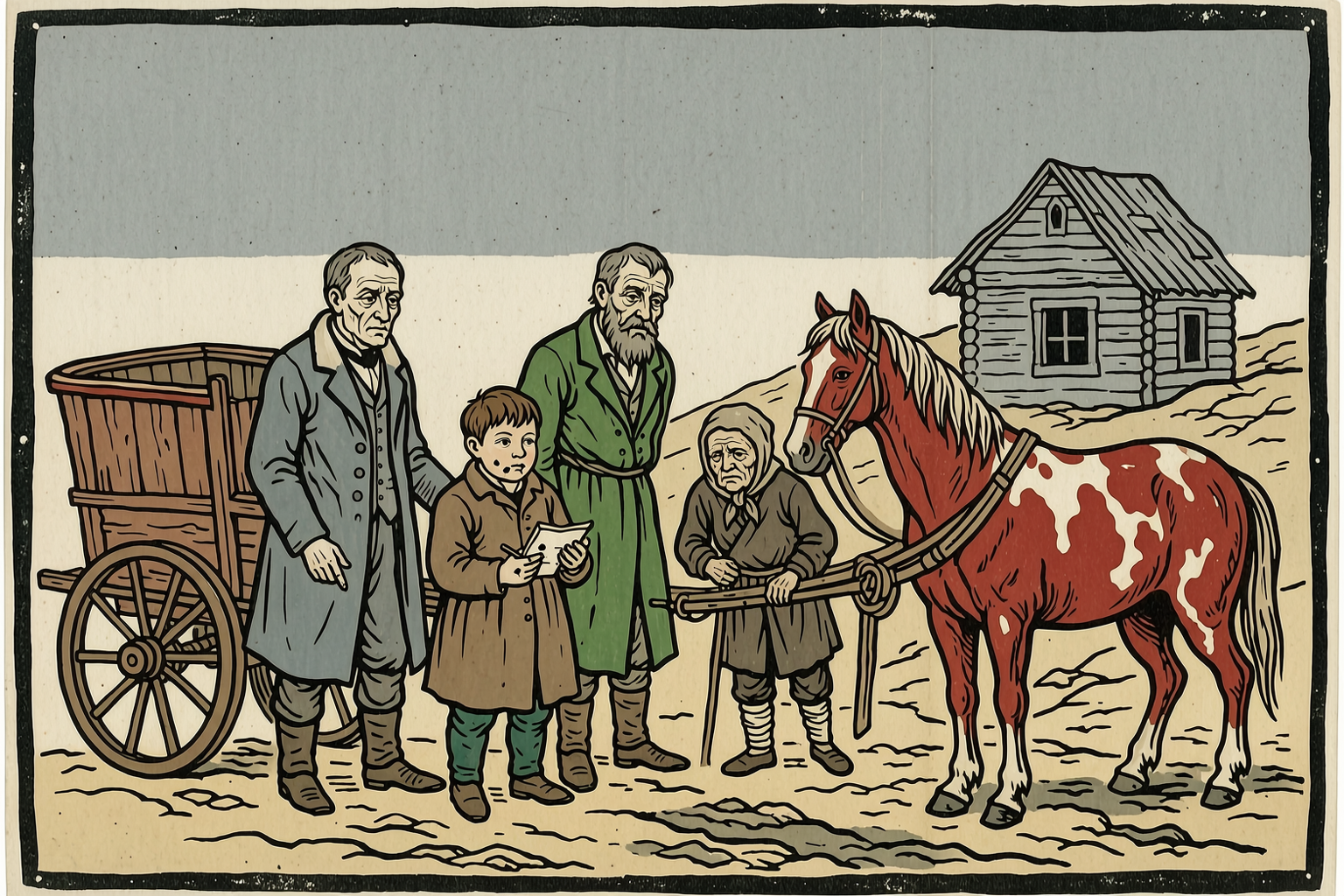
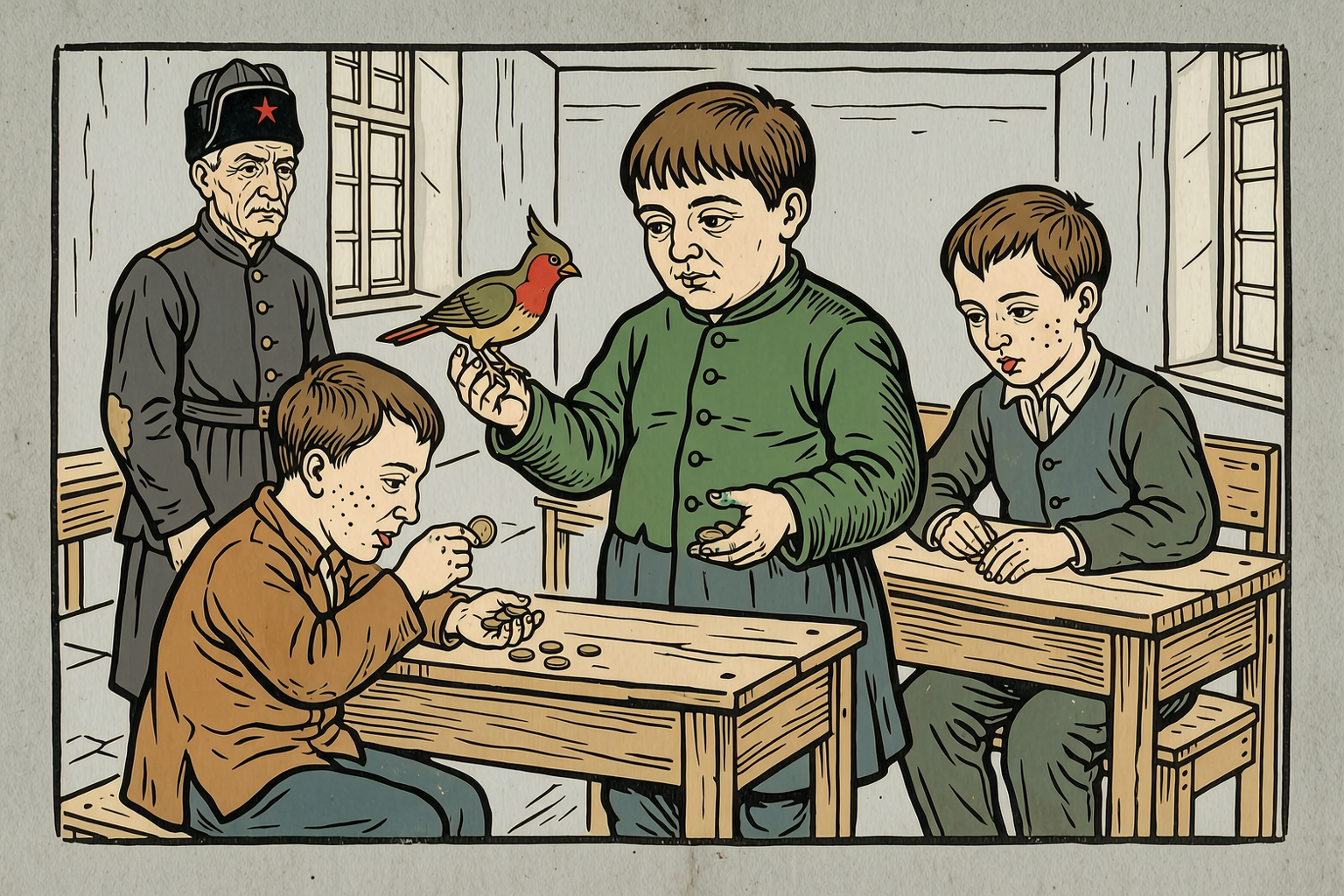
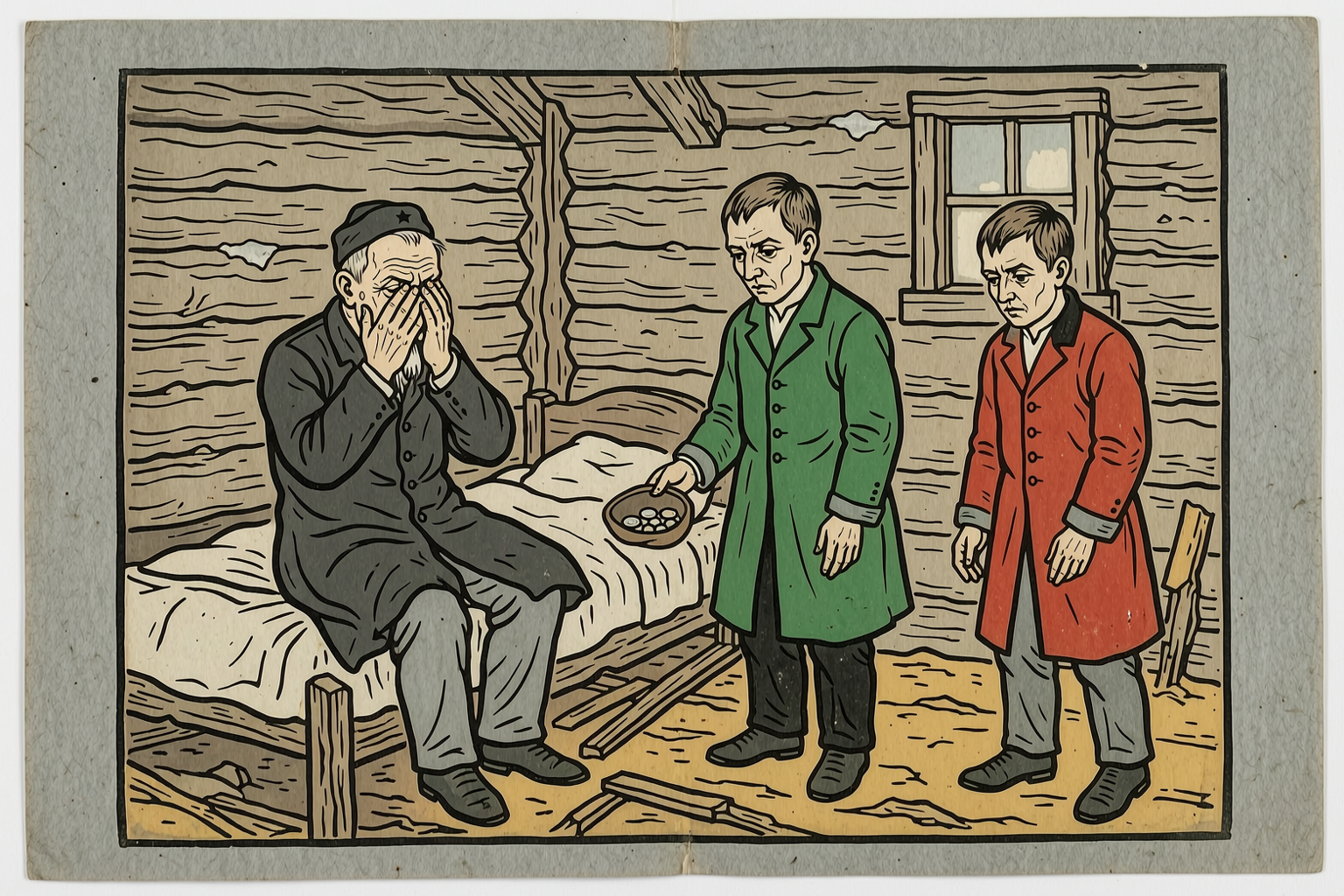
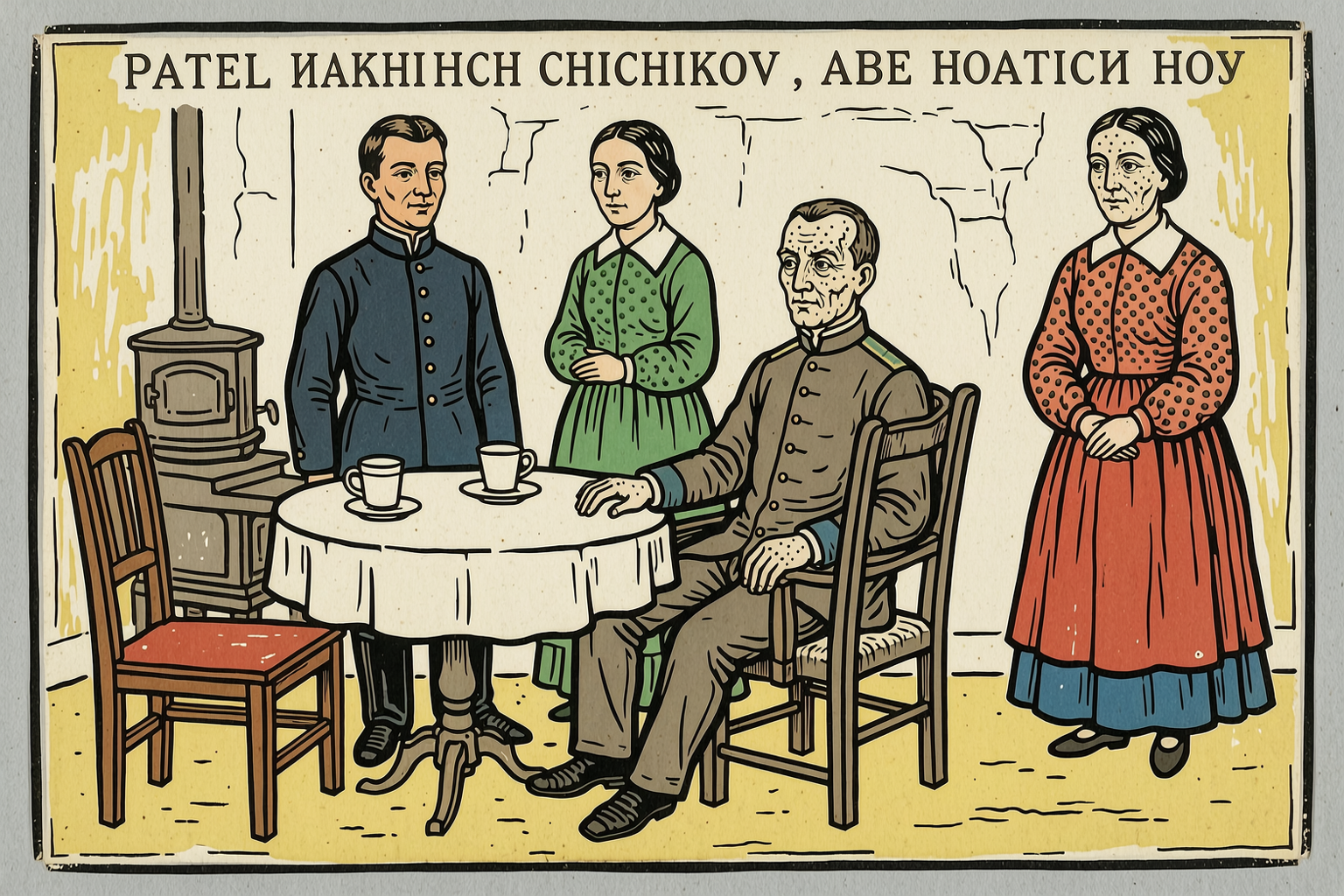
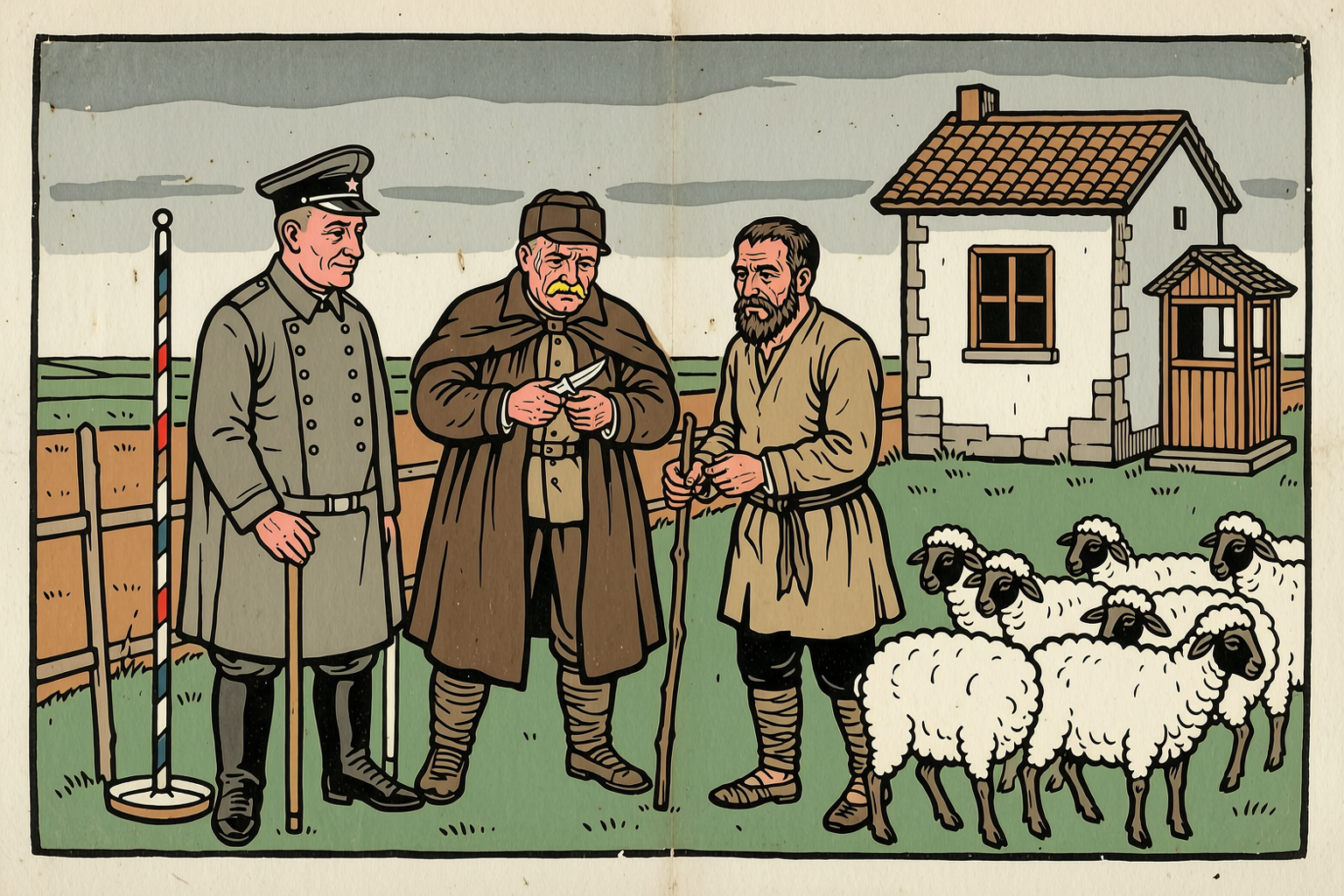
The departure is delayed: horses to shoe, a wheel to re-rim, blacksmiths charging six times the price. On the way out the britska is halted by the Public Prosecutor's funeral, which Chichikov watches from behind the curtains, concluding that the man's only distinction was thick eyebrows. Out on the road the narrator turns to address Rus itself, then finally gives his hero's history. Pavlusha is sent to school with fifty kopecks and his father's advice to please his superiors and save every kopeck; he sells a wax bullfinch and a trained mouse, betrays his old teacher, courts a head clerk's daughter to get the post and drops her, then makes half a million in the customs running lace across the border inside double-fleeced Spanish sheep — and loses it. Working a mortgage as a legal agent, he sees it: buy the dead still on the census. The chapter ends with Rus racing on, giving no answer.
Analysis
The keystone. Gogol withholds his hero's history until the reader has already judged him, then supplies the motive retrospectively and dares us to keep the verdict. The chapter defends its own method — the rogue harnessed because the virtuous man is worn out — before the troika passage converts a swindler's flight into a national question.
Plates
Illustration style
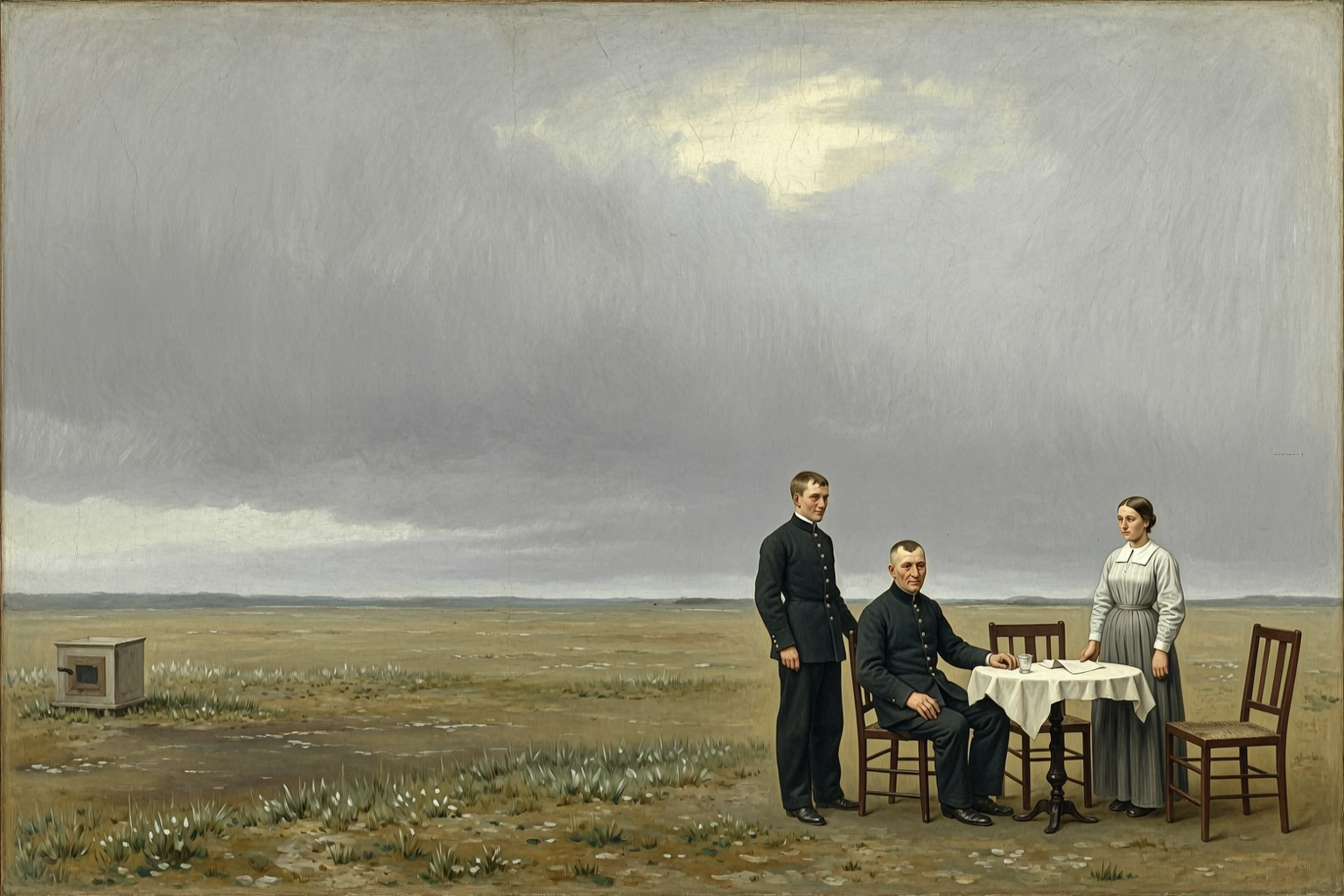
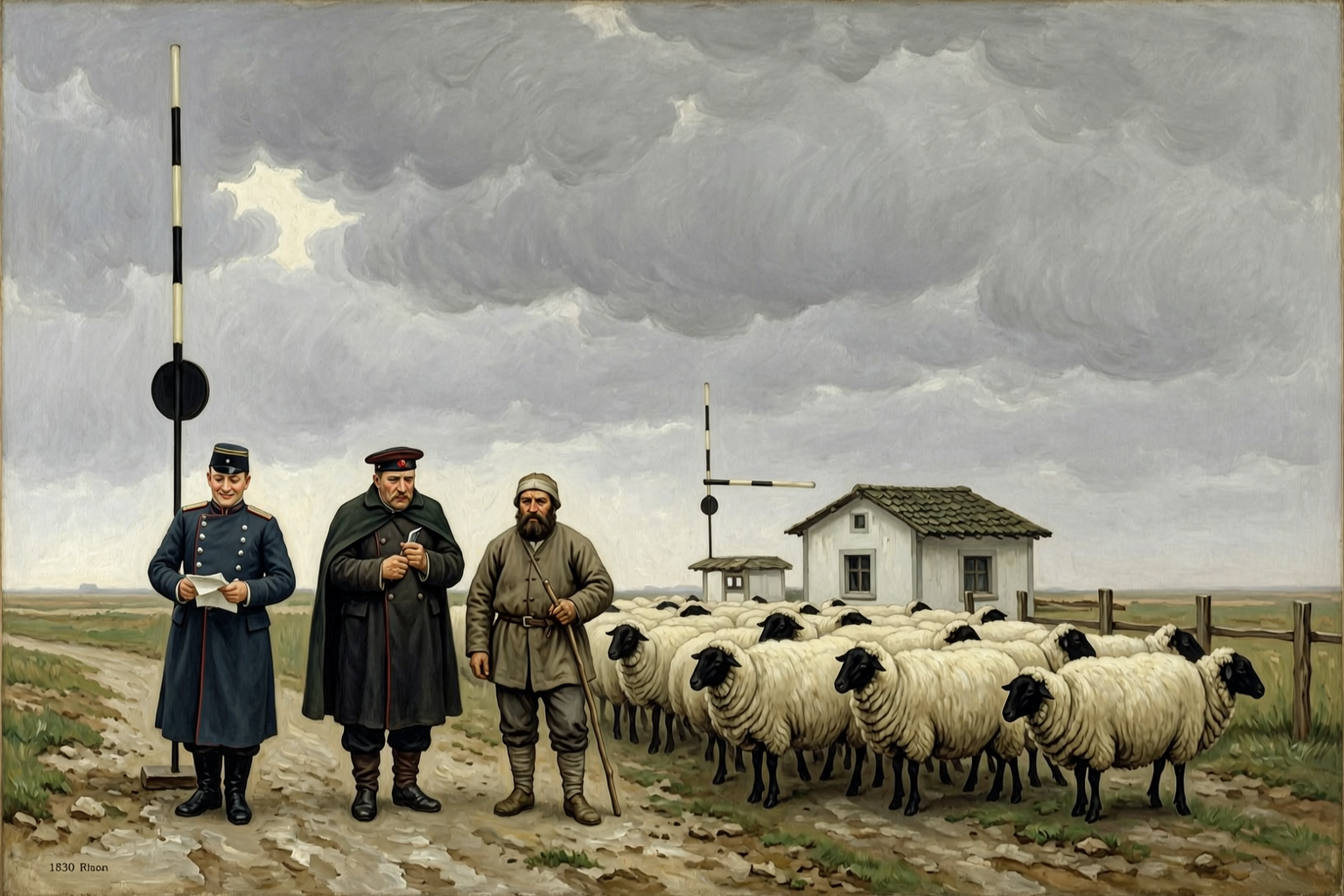
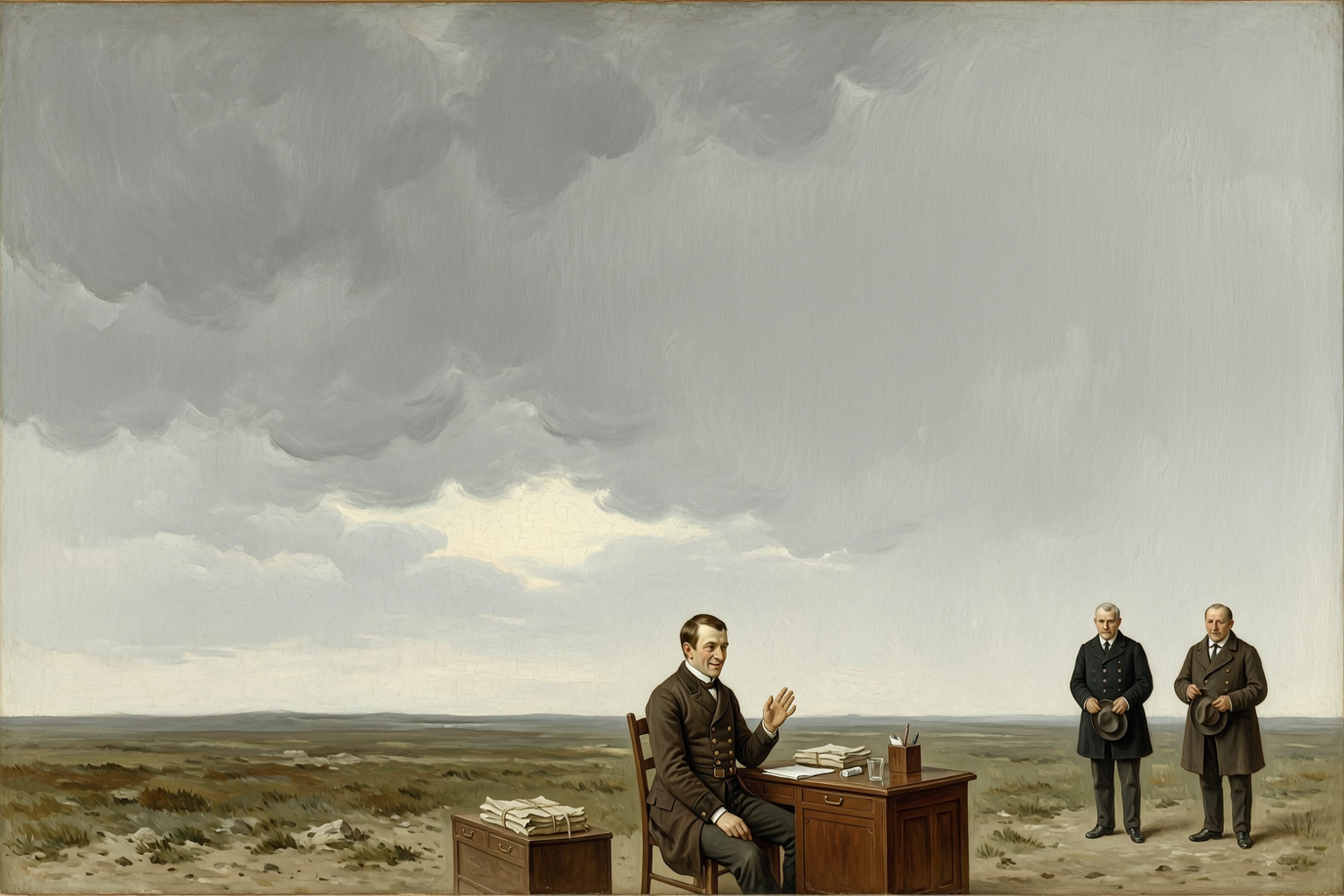
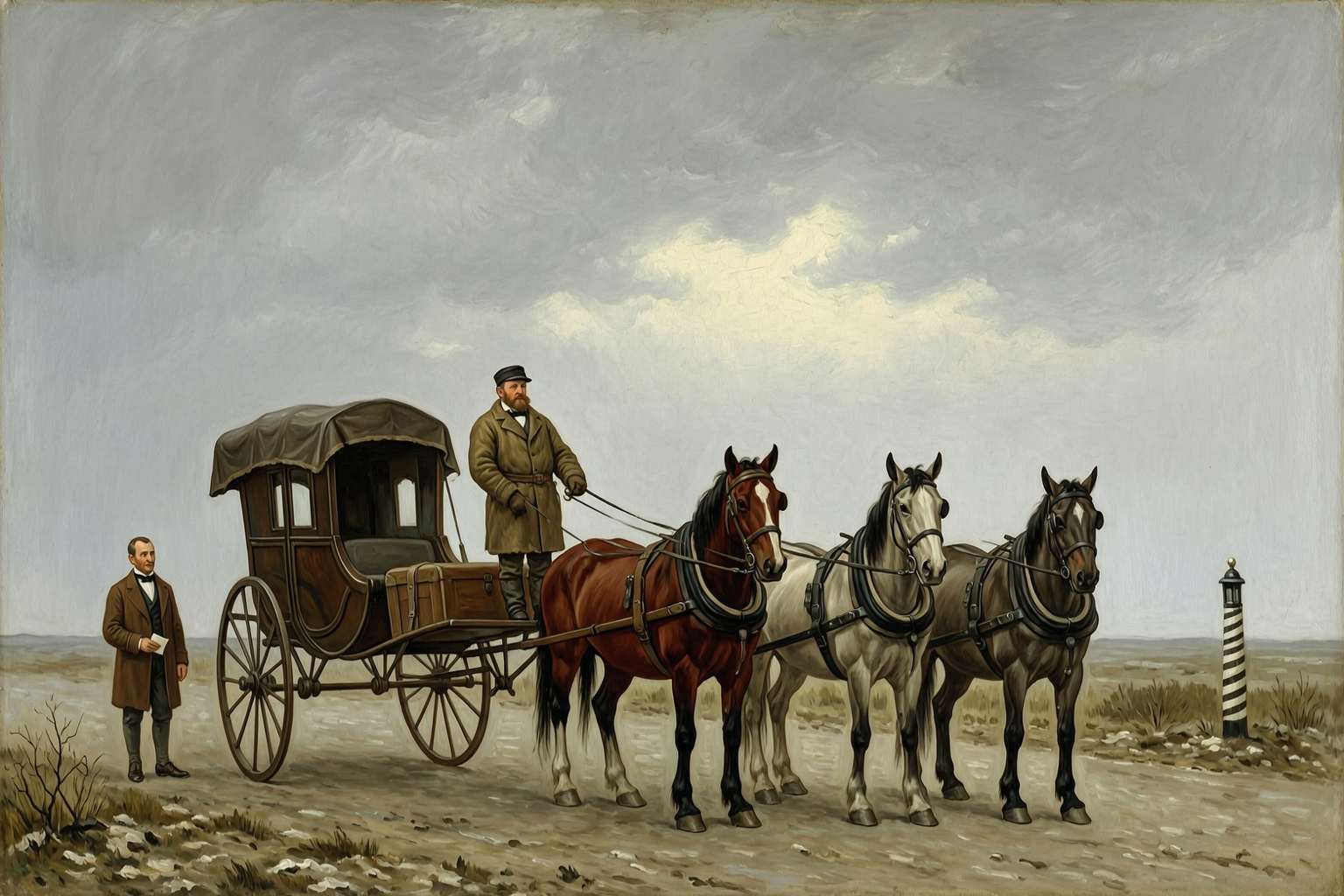
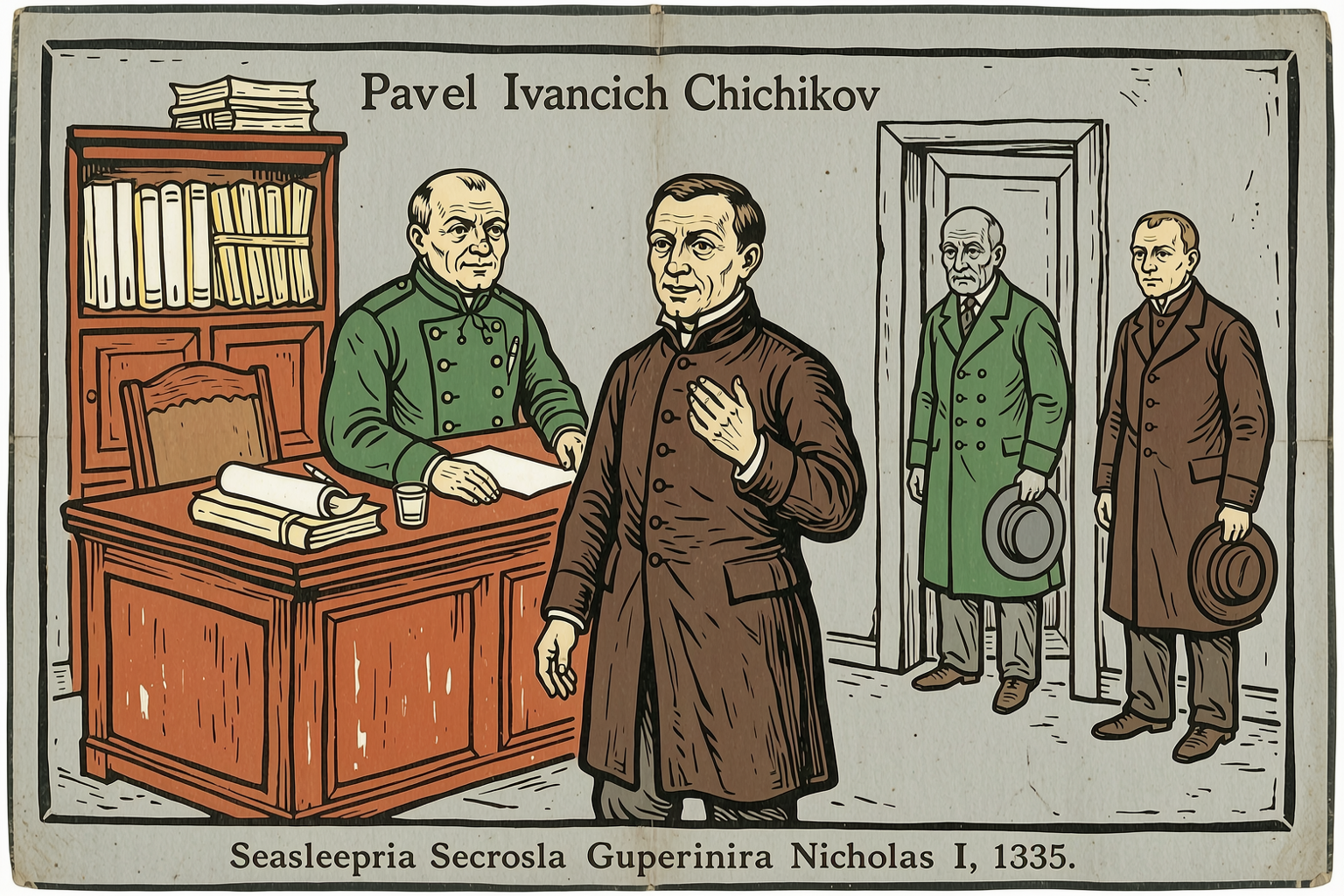
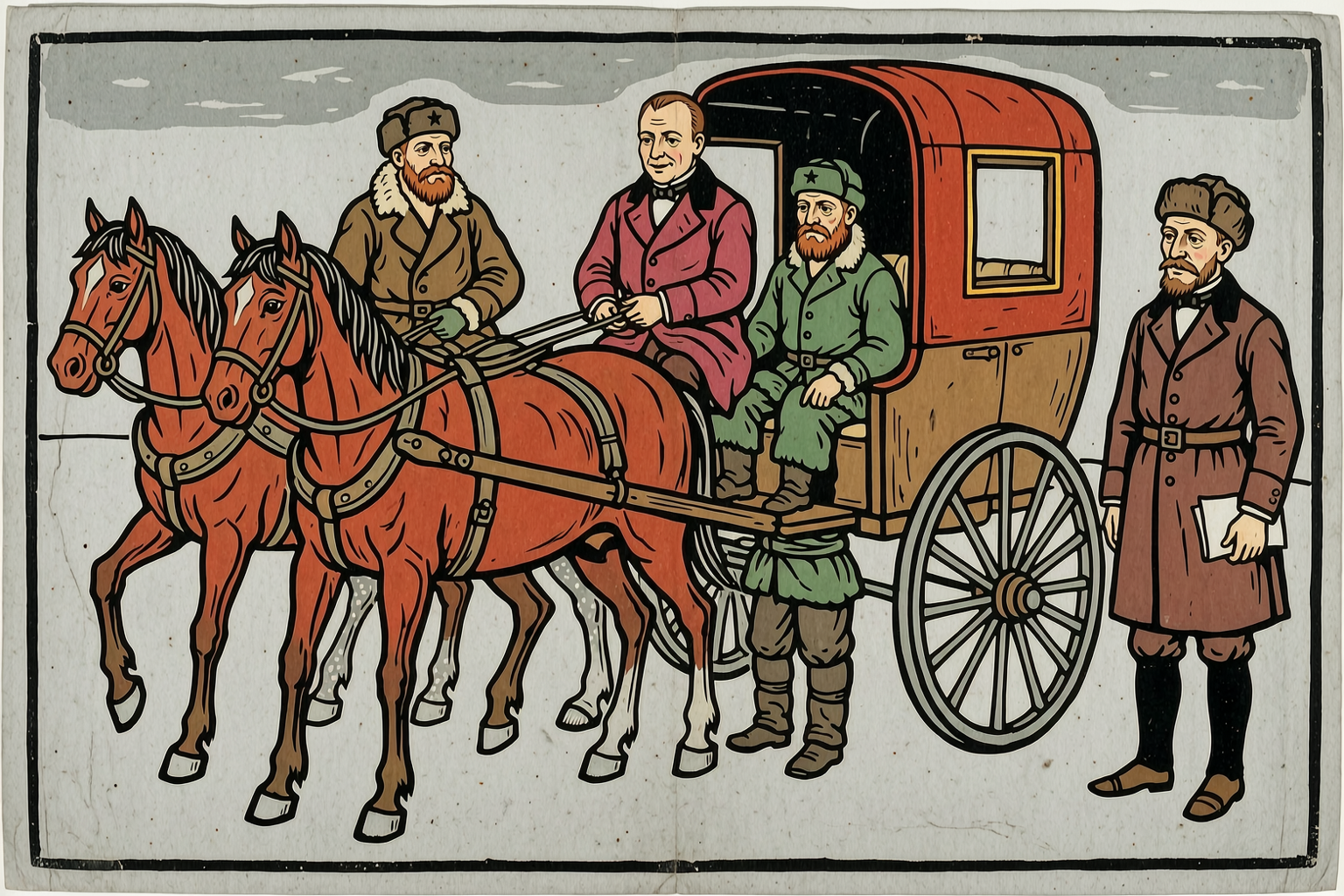
In the structure
Gogol withholds his hero's history until the reader has already judged him, then supplies the motive and dares us to keep the verdict.