Part One, Chapter 27
Levin alone in the old house
Levin
Summary
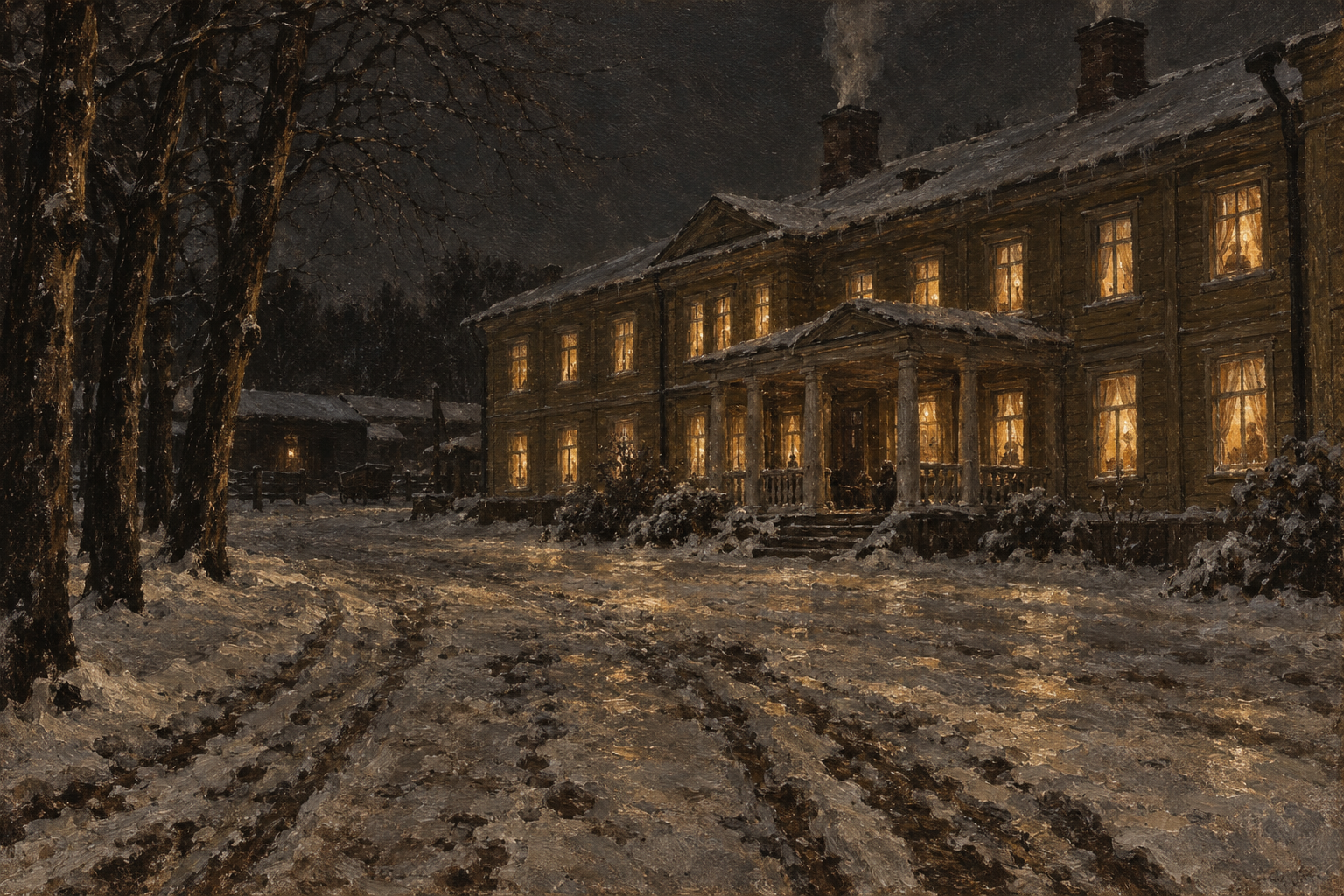
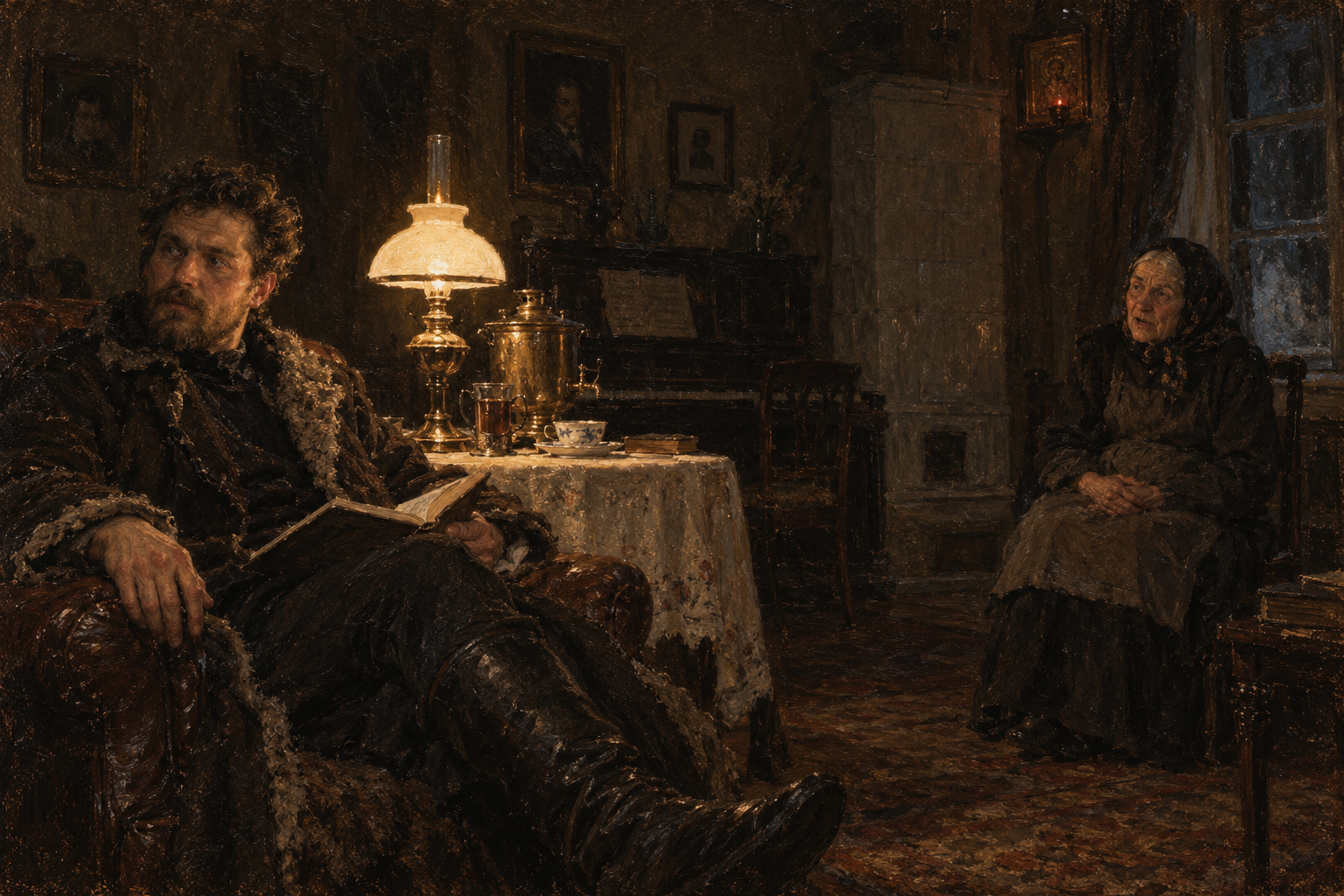
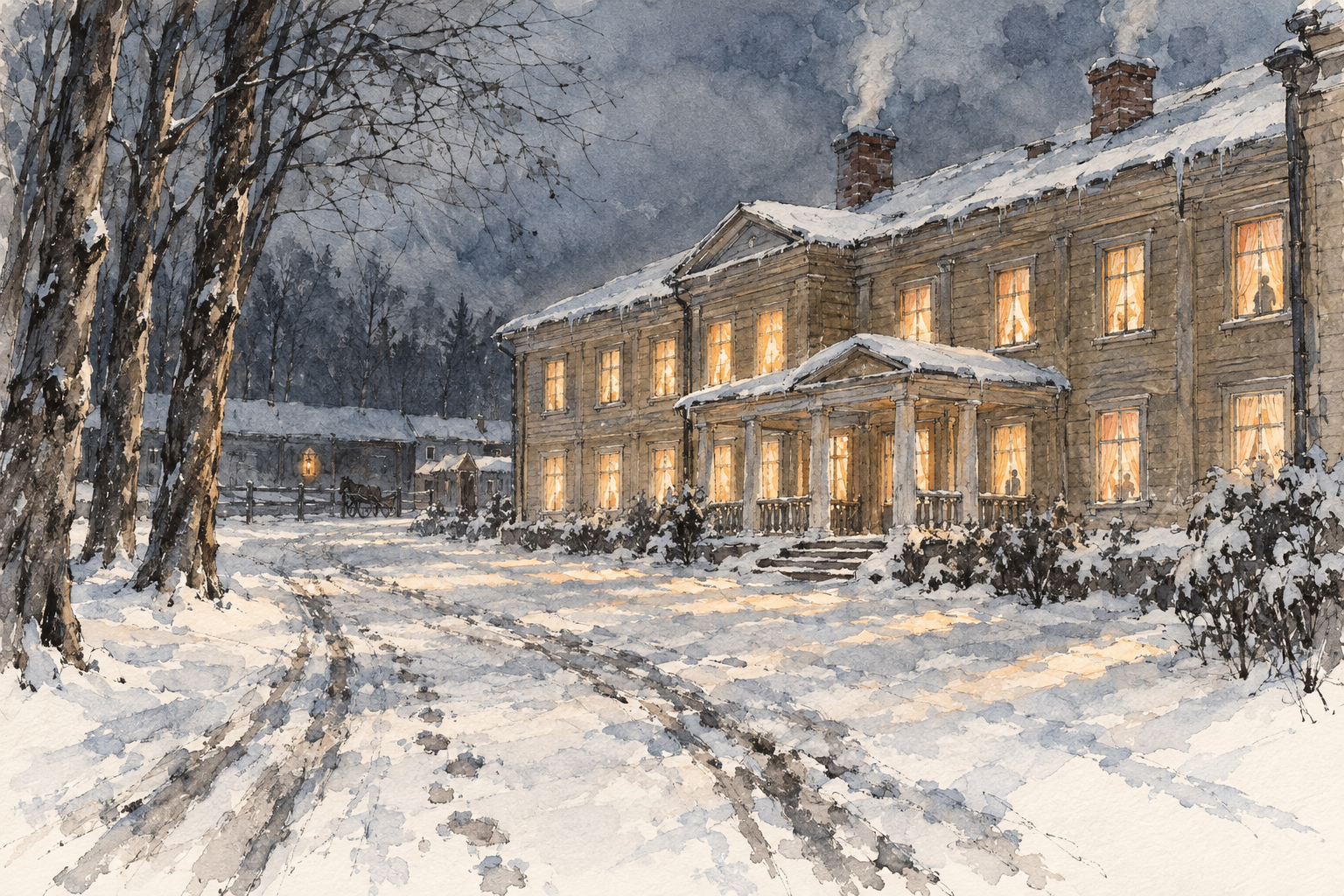
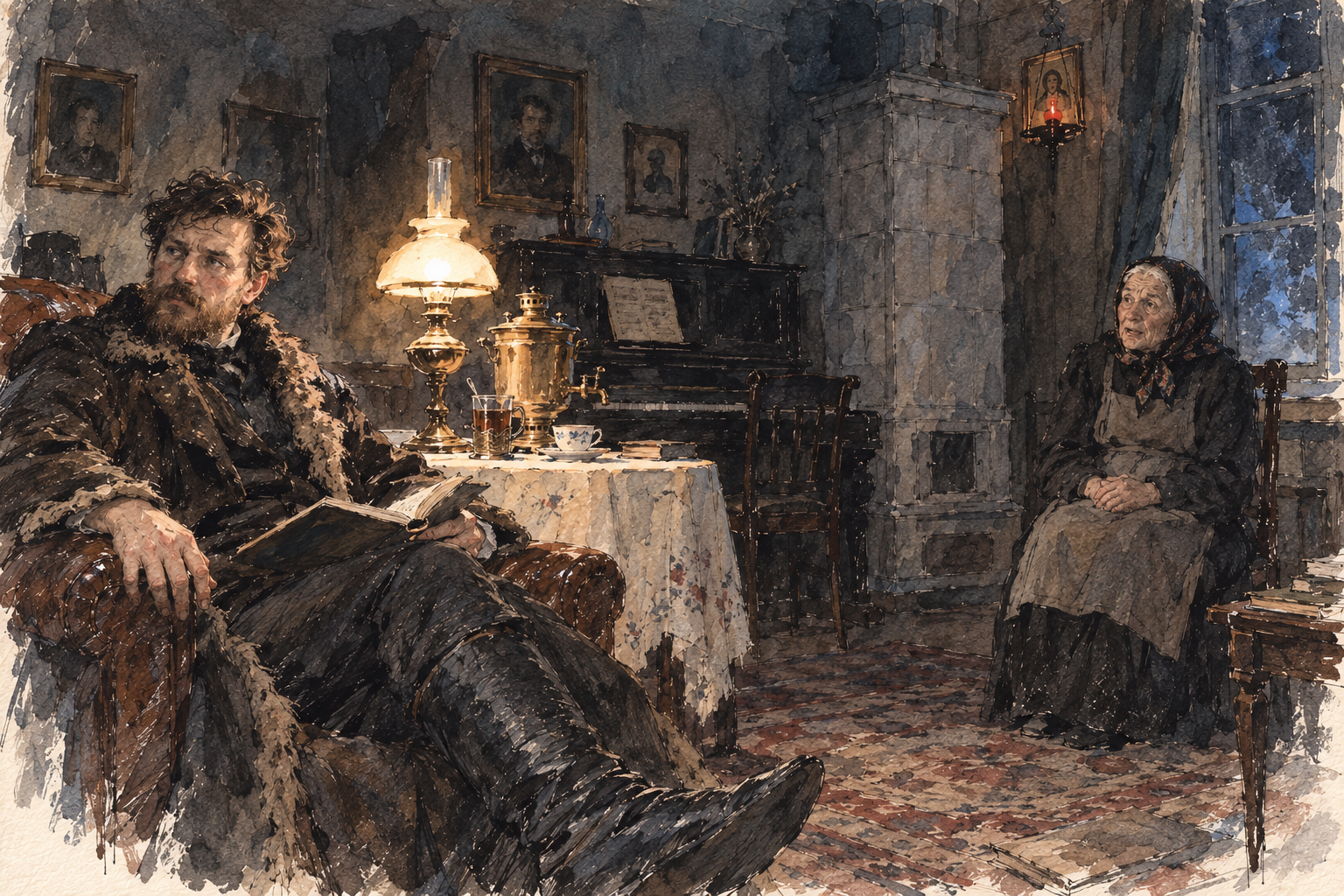
Levin lives alone in the large old-fashioned house and heats all of it, knowing it foolish, because it is the world where his father and mother lived and died a life he thought ideally perfect. He barely remembers his mother, and his future wife is imagined as a repetition of that holy ideal; he cannot conceive of a woman's love without marriage, and pictures the family first and the woman afterwards. Marriage is the chief thing in life for him, and he has just had to renounce it. Over tea, with Agatha Mikhaylovna chattering at the window about Prokhor who drank the horse money and beat his wife, he reads Tyndall on heat and disapproves of his self-conceit, while his mind drifts to the herd he will have in two years, Pava's calf grown red-mottled, and a wife who says 'We, Constantine and I, reared this calf like a baby.' Laska settles at his feet, and he decides all is well.
Analysis
Tolstoy interleaves Tyndall, a drunk peasant and an imagined herd in one unbroken paragraph, which is his method for showing a mind at rest rather than at work. Levin takes his consolation from watching a dog settle — the first of the novel's animal answers to questions philosophy refused, and the closing note of Part One's country movement.
Plates
Illustration style