Part One, Chapter 10
Oysters, and news of a rival
Levin
Summary
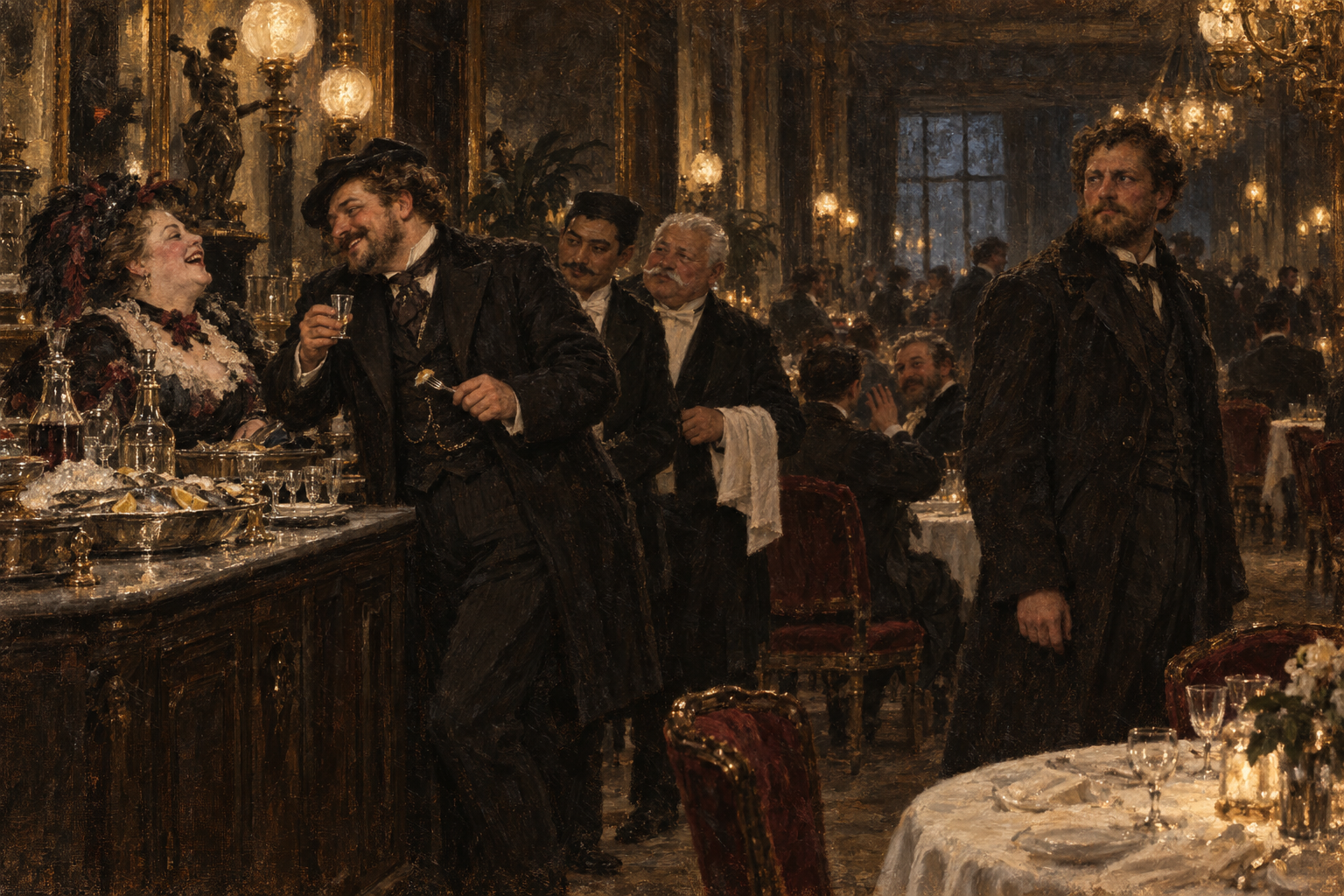
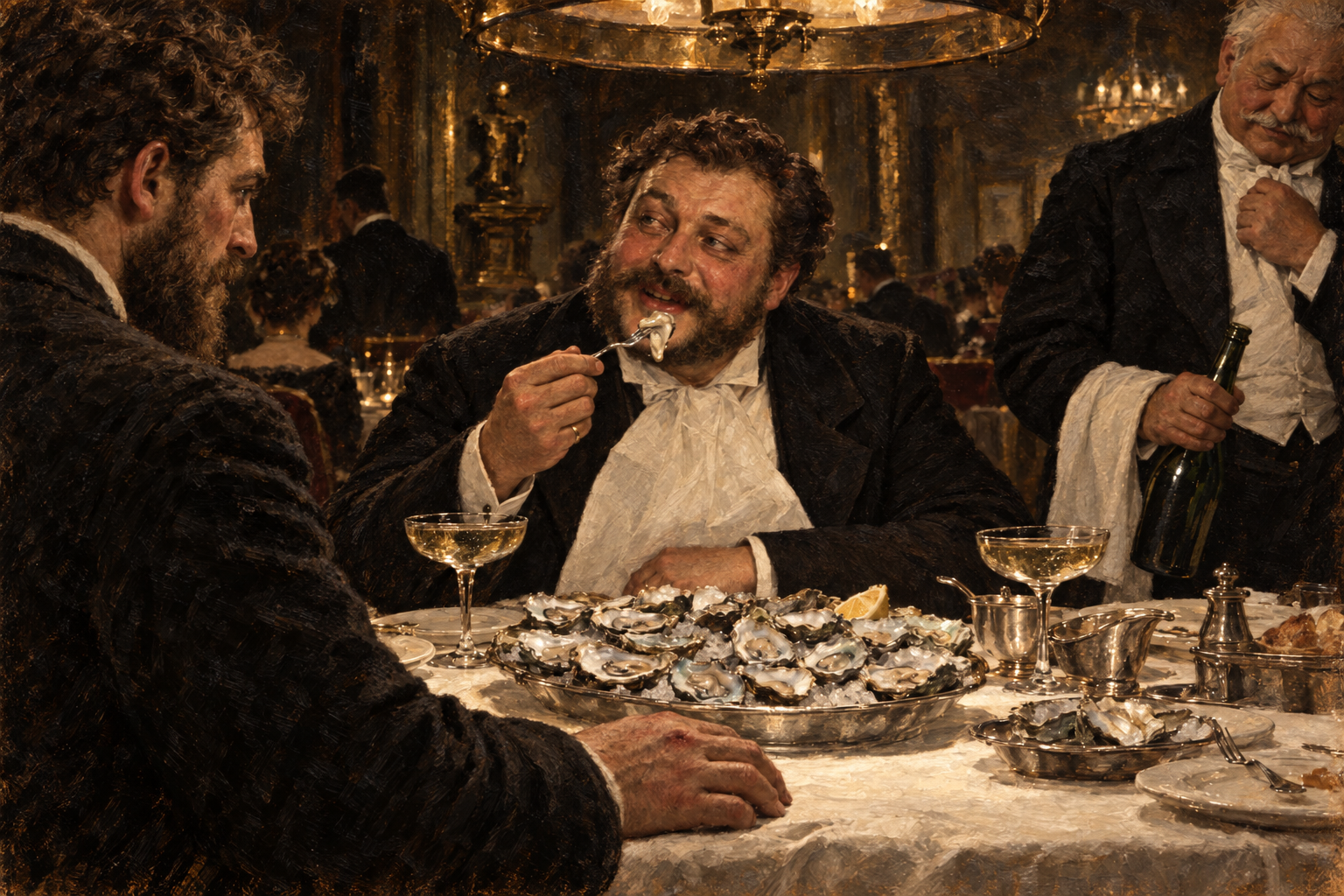
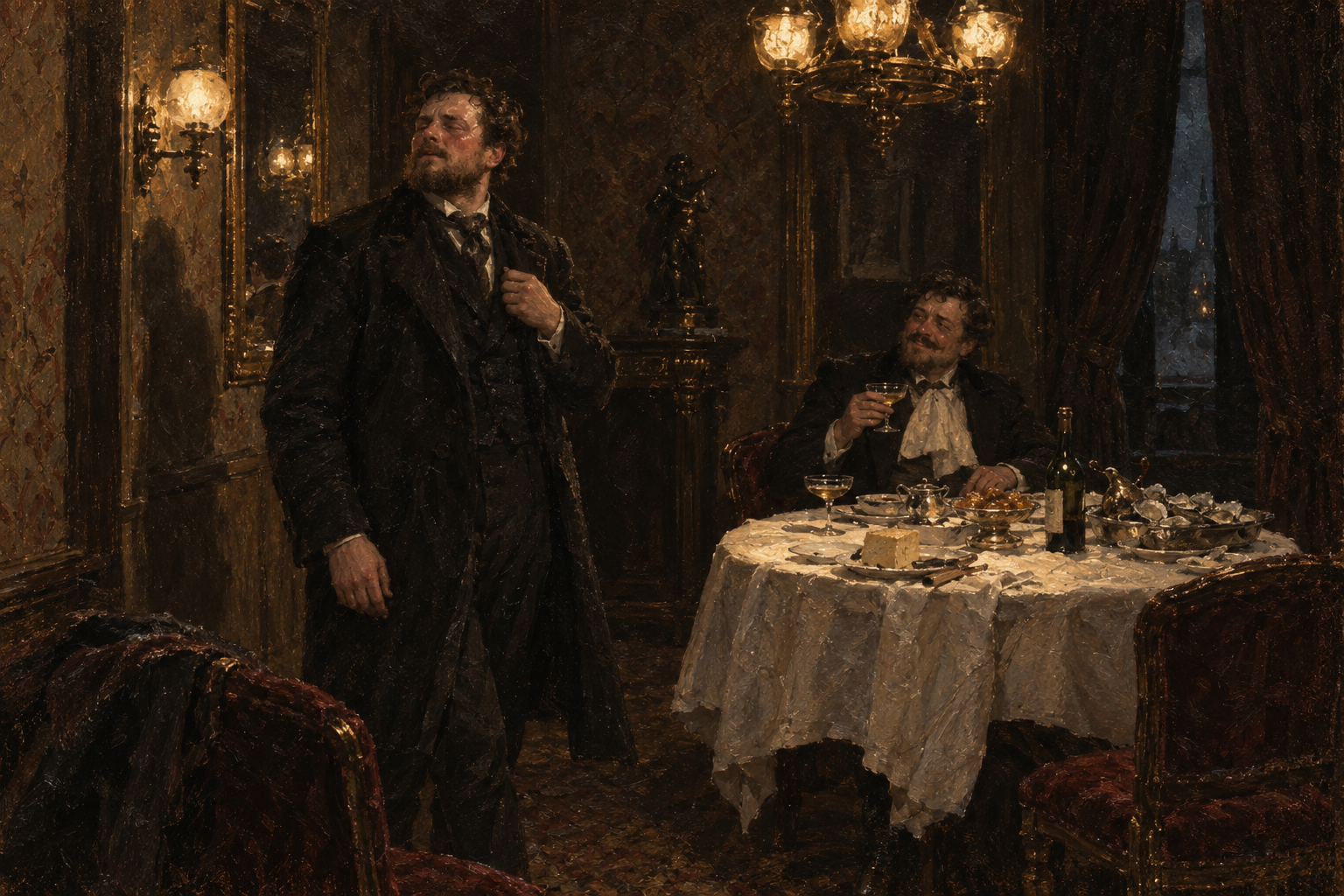
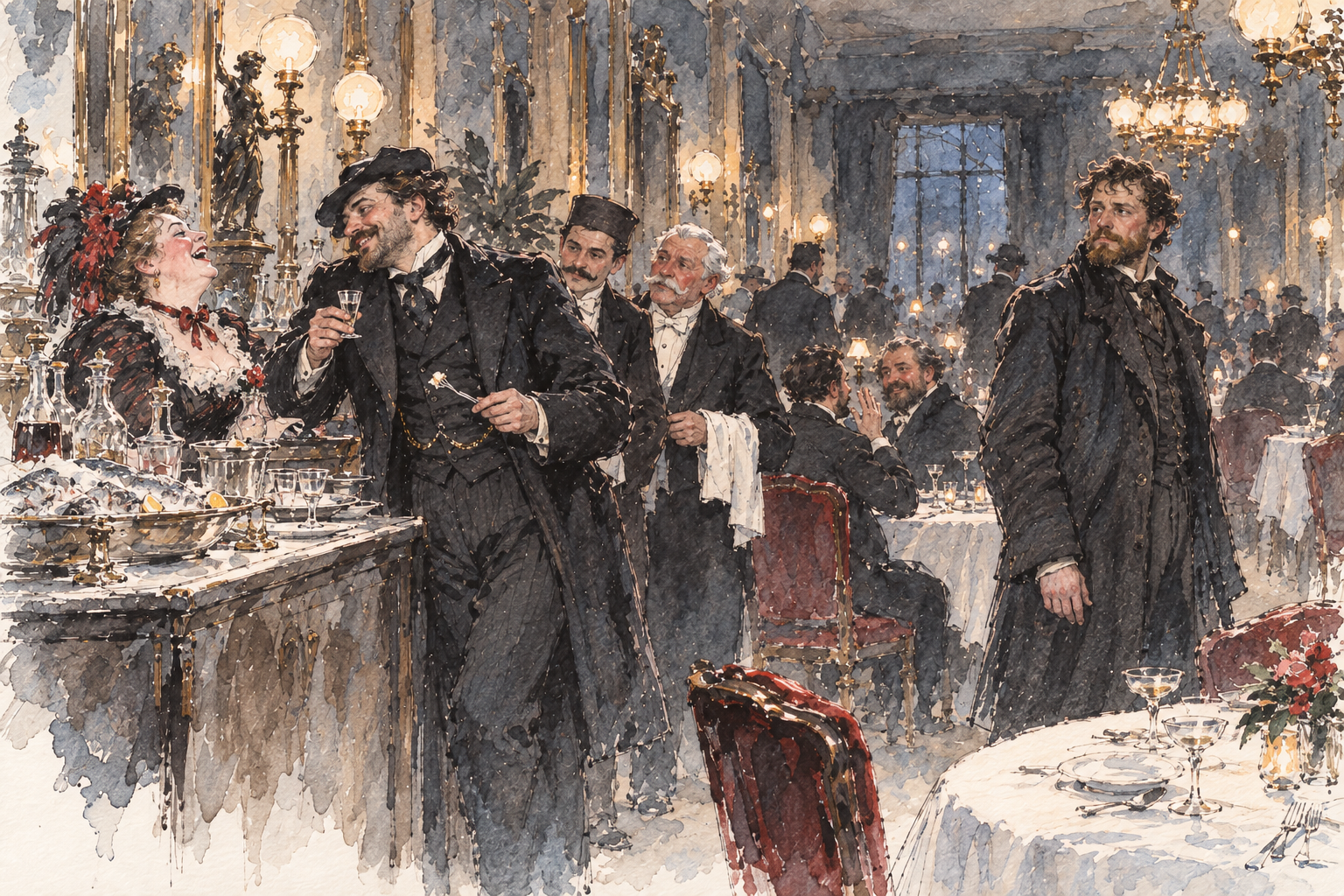
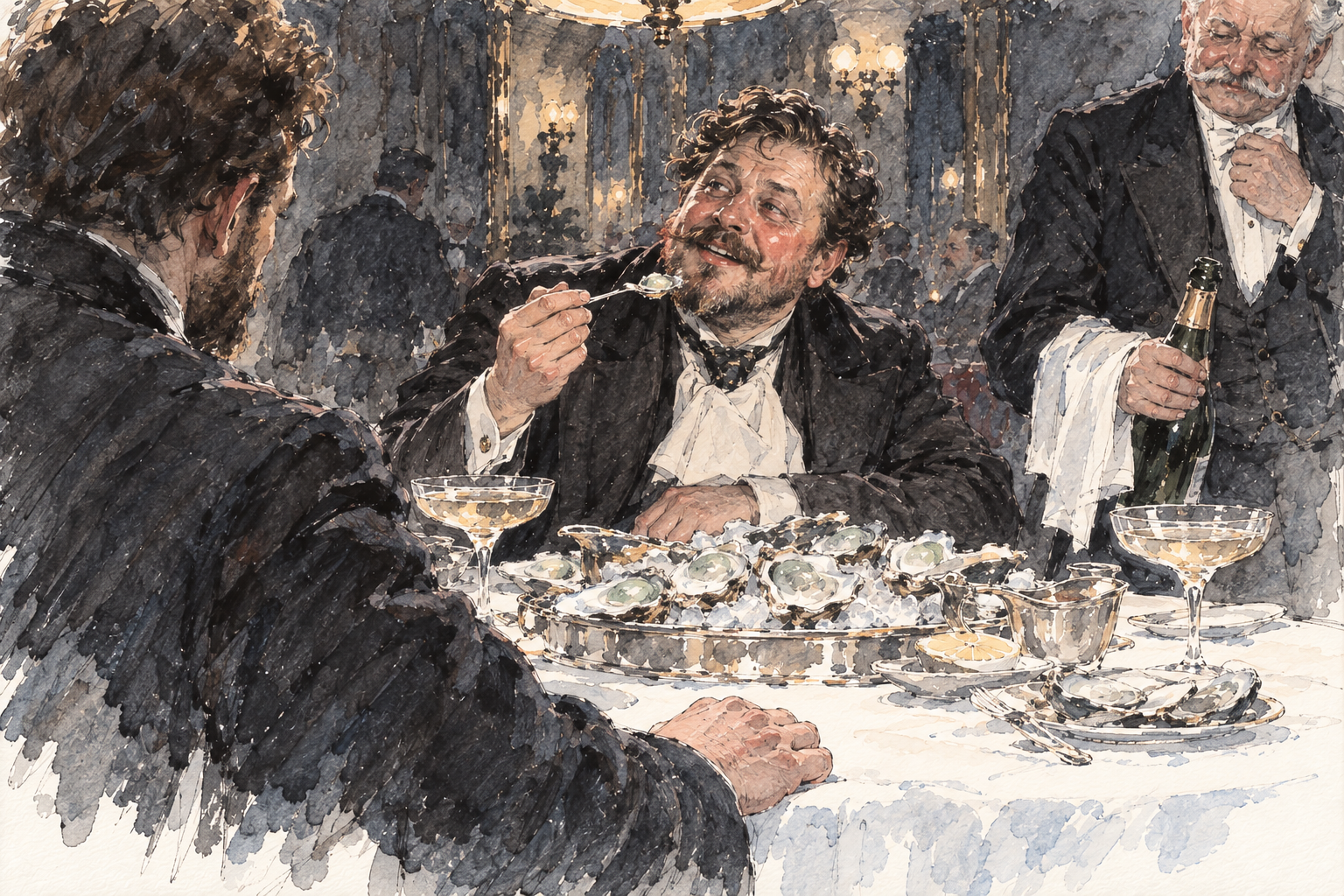
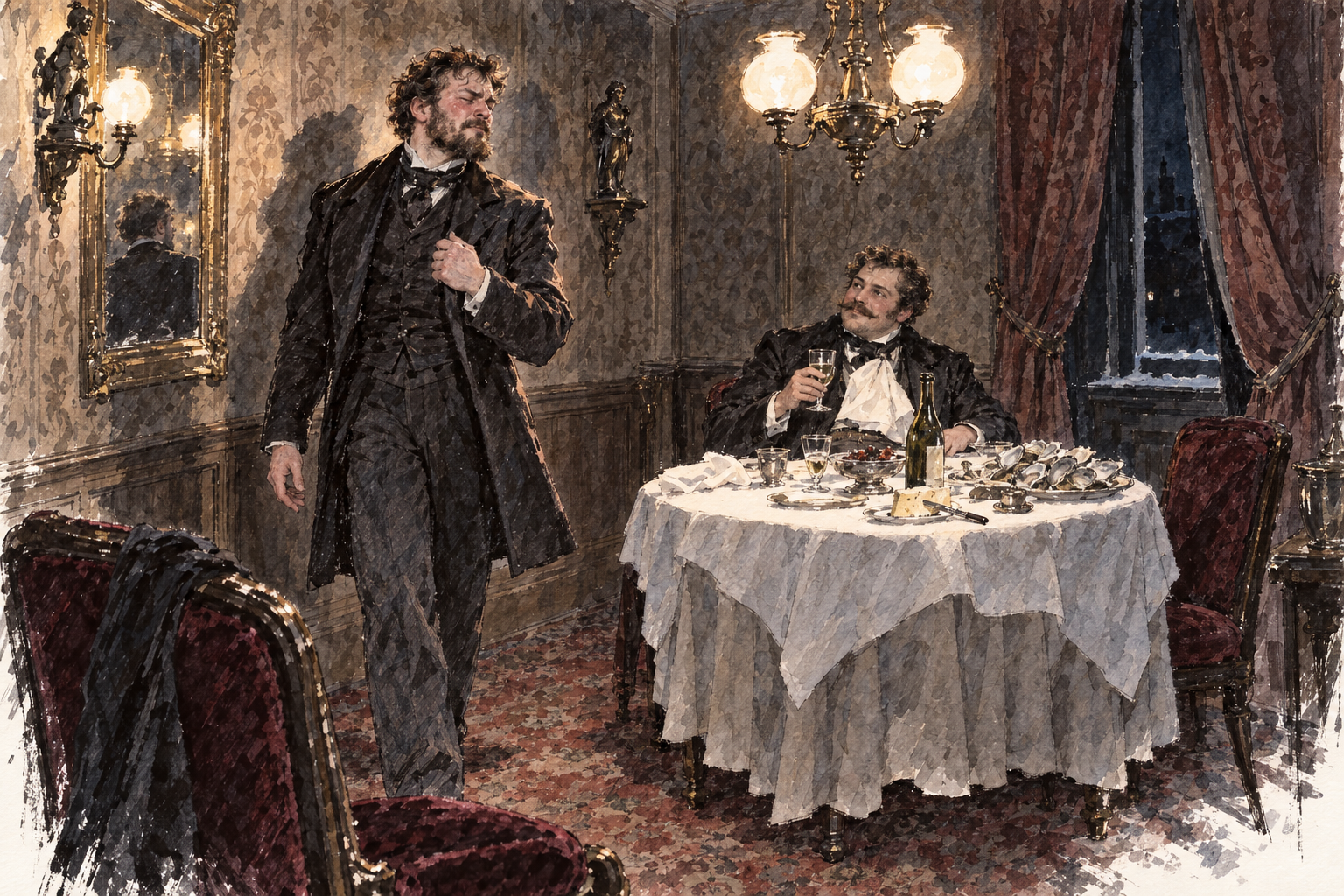
At the Angleterre, Oblonsky is greeted on all sides, jokes with the painted Frenchwoman at the counter — whom Levin avoids as he would a dirty place — and orders three dozen Flensburg oysters, soup, turbot, roast beef, capon and stewed fruit, giving the French dishes their Russian names while the old Tartar waiter takes his private revenge by repeating the order in French. Levin, who would rather have cabbage-soup and buckwheat, is made uneasy by the bronzes and the private rooms, and returns to the subject of Grinevich's fingernails: hands grown deliberately useless. Oblonsky answers that the aim of civilisation is enjoyment; Levin says he would rather be a savage. Then Oblonsky draws the real business out of him and says there is nothing he would like better, and that Dolly, who has the gift of clairvoyance about marriages, says Kitty is sure to be his wife. Levin paces the little room blinking back tears.
Analysis
The oyster dinner is the novel's clearest statement of its two moral economies — pleasure as an end, work as an end — and Tolstoy lets Stiva win the argument while quietly siding with Levin. Levin's horror at bringing his past to 'a pure innocent being' plants the confession scene in Part Four and the diaries he will hand over.
Plates
Illustration style